
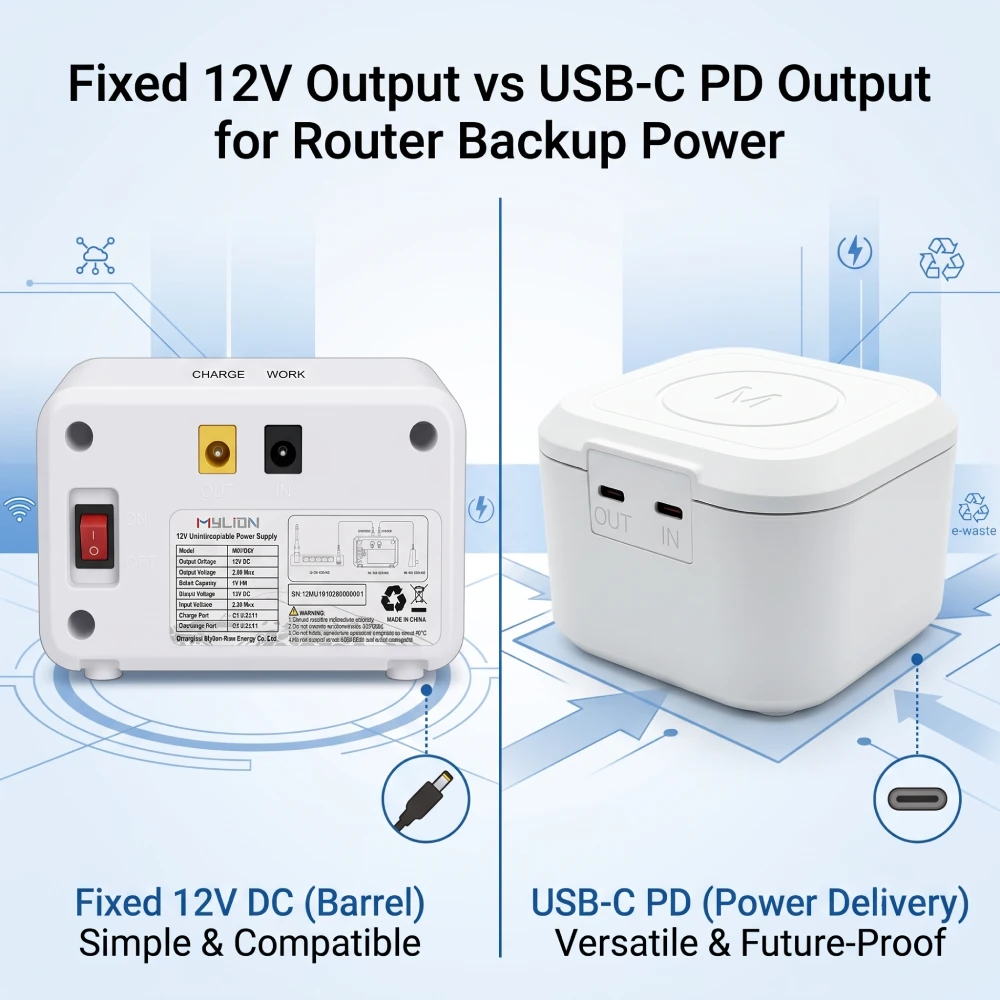
Einleitung: Das Energiedilemma für moderne Netzwerkinfrastrukturen
Bei einem Stromausfall fallen Router, Modem oder ONT als erste Geräte aus – und damit auch Ihr gesamtes Netzwerk. Für Internetanbieter, Telekommunikationsunternehmen und Systemintegratoren ist das nicht nur ärgerlich, sondern birgt die Gefahr eines Verstoßes gegen die Service-Level-Vereinbarung (SLA). Mini-USV-Lösungen haben sich als praktische Lösung herausgestellt, doch eine entscheidende Frage spaltet den Markt: Sollten Sie sich für eine Mini-USV mit festem 12-V-Gleichstromausgang oder für eine mit USB-C Power Delivery (PD)-Ausgang entscheiden?
Dieser Artikel vergleicht diese beiden Ansätze, untersucht ihre technischen Grundlagen und hilft Ihnen bei der Entscheidung, welche Architektur Ihre Anforderungen an die Notstromversorgung Ihres Routers am besten erfüllt. Außerdem wird erläutert, wie branchenführende Lösungen wie die … Mylion Mini-USV Sie decken den vielfältigen Energiebedarf moderner Unternehmensumgebungen ab.
Die zwei Energiearchitekturen verstehen
Was ist ein fester 12V-Gleichstromausgang?
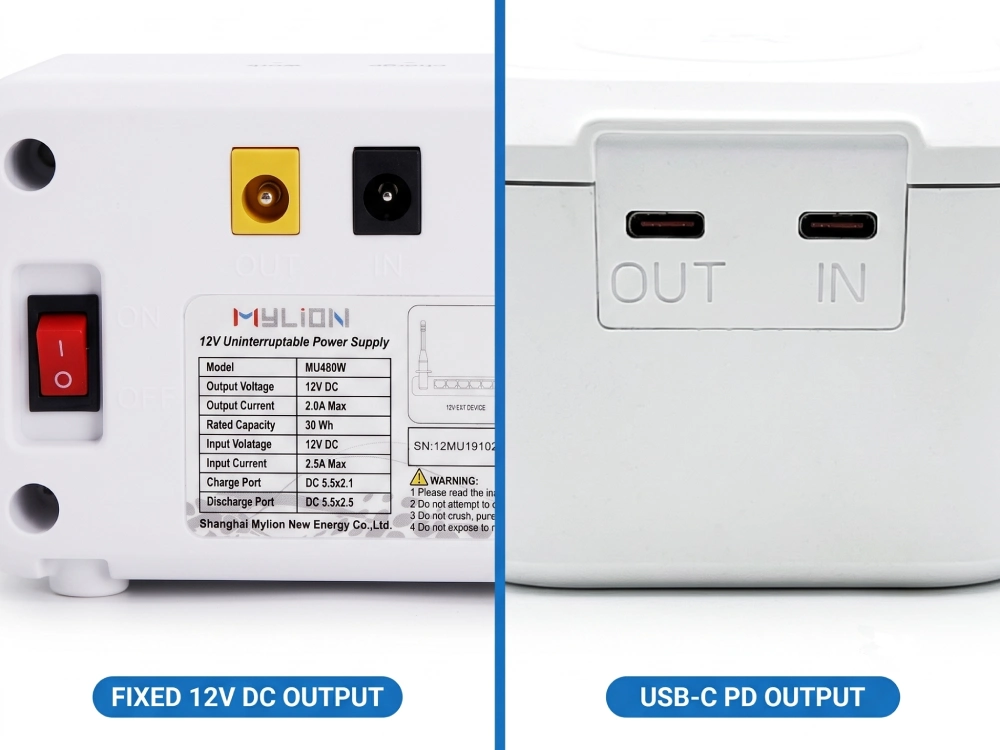
Die herkömmliche Lösung ist ein fester 12-V-Gleichstromausgang. Die Mini-USV liefert eine geregelte 12-V-Gleichspannung über einen Standard-Hohlstecker (typischerweise 5,5 mm x 2,1 mm oder 2,5 mm). Dies entspricht den Spannungsanforderungen der meisten Router, Modems, ONTs und ONUs.
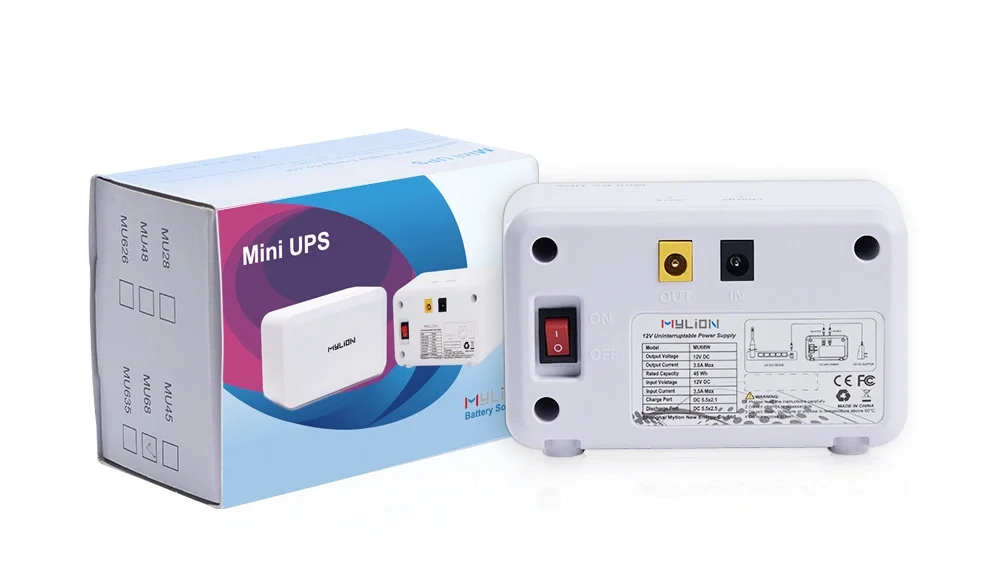
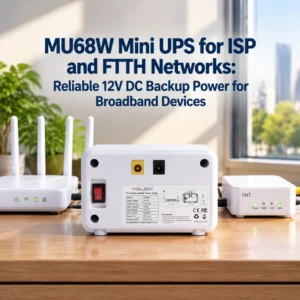
Seine Stärke liegt in seiner Einfachheit: keine Verhandlungen, kein Protokoll-Handschlag – einfach nur direkter Gleichstrom. MYLION MU68 Mini-USVBeispielsweise liefert es eine stabile 12-V-Gleichstrom-Notstromversorgung mit bis zu 3 A ohne Umschaltzeit und ist somit ein direkter Ersatz für das vorhandene Netzteil des Routers. Ebenso verhält es sich mit dem MUJ46 Mini-USV bietet einen 12V 2A Ausgang sowie USB-A und USB-C Anschlüsse für 5V Geräte.
Was ist USB-C PD-Ausgang?
USB-C Power Delivery ist ein Protokoll, das es Geräten ermöglicht, Spannungs- und Stromanforderungen über eine USB-C-Verbindung auszuhandeln. Eine USB-C-PD-Quelle stellt eine Reihe von Power Data Objects (PDOs) – verfügbare Spannungs- und Stromkombinationen – bereit, und die Senke (das zu versorgende Gerät) fordert ein passendes PDO aus dieser Menge an.
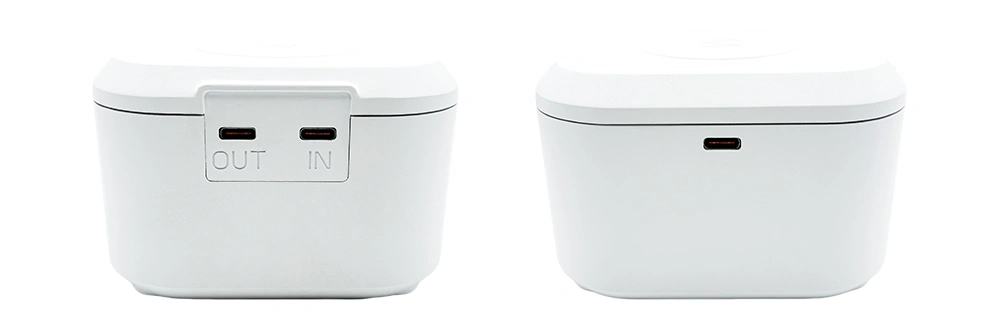
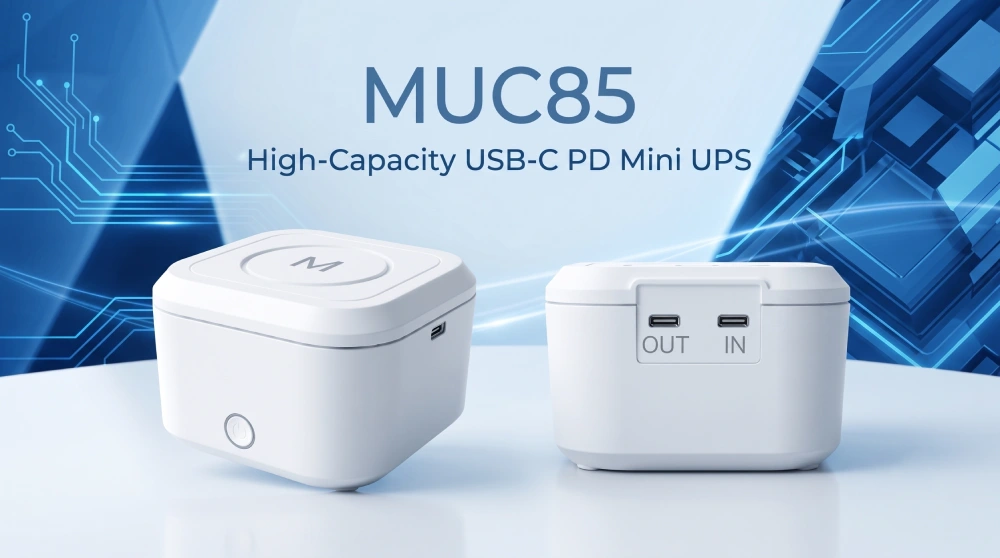
PD unterstützt feste Spannungen, darunter 5 V, 9 V, 12 V, 15 V und 20 V. Zum Beispiel: MYLION MUC85 65W PD Mini-USV Es kann 5 V/3 A, 9 V/3 A, 12 V/3 A, 15 V/3 A und 20 V/3,25 A liefern. Diese Flexibilität macht USB-C PD attraktiv – bringt aber auch Kompatibilitätsprobleme mit sich.
Feste 12V-Leitung vs. USB-C PD: Ein technischer Vergleich
Die folgende Tabelle bietet einen direkten Vergleich der beiden Stromversorgungsmethoden, um Sie bei Ihren Einsatzentscheidungen zu unterstützen:
Besonderheit | Fester 12V-Gleichstromausgang | USB-C PD-Ausgang |
Stromspannung | Statisch (immer 12 V) | Dynamisch (5 V, 9 V, 12 V, 15 V, 20 V) |
Anschlussstandard | DC-Lauf (verschiedene Größen) | Universeller USB Typ-C |
Kompatibilität | Funktioniert mit jedem 12V-Router | Erfordert einen PD-kompatiblen Router oder ein Triggerkabel. |
Komplexität | Plug-and-Play | Erfordert eine Verhandlung über die persönliche Präferenz. |
Effizienz | Direkt, ohne Umwandlungsverlust | Kann eine Spannungsumwandlung erfordern. |
Zukunftssicherung | Beschränkt auf 12V-Geräte | Unterstützt mehrere Spannungsstandards |
Ideales Einsatzszenario | Standardisierte Legacy-Routerflotten, ISP-Rollout | Umgebungen mit gemischten Geräten, moderne Edge-Gateways |
Verständnis der Anforderungen an die Router-Notstromversorgung im modernen Unternehmen
Bevor wir uns mit den Anschlussprotokollen befassen, ist es wichtig zu verstehen, warum DC-zu-DC-Mini-USV-Systeme zum Goldstandard für die Notstromversorgung von Routern geworden sind.
Eine DC/DC-Mini-USV umgeht die Ineffizienz herkömmlicher AC-USV-Systeme vollständig. Sie speichert Energie in Lithium-Ionen-Zellen mit hoher Energiedichte und liefert sauberen, geregelten Gleichstrom direkt an den Router. Dies ermöglicht deutlich längere Überbrückungszeiten bei wesentlich kleinerem Platzbedarf.
Die Bereitstellung von Gleichstrom erfordert jedoch einen Anschluss und einen Spannungsstandard. Router benötigen spezifische Spannungen für den korrekten Betrieb – ist die Spannung zu niedrig, kommt es zu Spannungseinbrüchen; ist sie zu hoch, wird die interne Schaltung irreparabel beschädigt. Damit kommen wir zur zentralen Hardware-Entscheidung: beim bewährten 12-V-Standard bleiben oder das vielseitige USB-C-PD-Protokoll einführen.
Der traditionelle Standard: Mini-USV mit festem 12-V-Ausgang
Seit Jahrzehnten verwenden die meisten Unternehmensrouter, Zugangspunkte und Glasfasermodems von Internetdienstanbietern einen festen 12-V-Gleichstromeingang über eine 5,5×2,1-mm- oder 5,5×2,5-mm-Hohlsteckerbuchse.
So funktioniert eine 12-V-Festverdrahtung
Die feste 12-V-Spannung ist eine ungesteuerte Stromversorgungsmethode. Das Batteriemanagementsystem (BMS) und die Wandler der USV erhöhen die interne Batteriespannung (z. B. 3,7 V oder 7,4 V) auf geregelte 12 V. Der Strom fließt sofort – es findet keine digitale Kommunikation zwischen den Geräten statt.
Vorteile für B2B-Implementierungen
- Keine Verhandlungszeit– Die sofortige Umschaltung (Sub-Millisekunden) verhindert Router-Neustarts und den Abbruch von VoIP-Sitzungen.
- Kompatibilität mit älteren Systemen – Funktioniert mit Tausenden von bestehenden 12V-Routern ohne Hardware-Upgrades.
- Hardware-Einfachheit – Keine PD-Controller-Chips, weniger Protokollfehler oder Firmware-Inkompatibilitäten.
Nachteile
- Unflexibel – Gibt nur 12 V aus; unbrauchbar für 9-V-Modems oder 15-V-Gateways.
- Anschlussvielfalt – Proprietäre Rohrgrößen erfordern ein optimiertes Zubehörlager für gemischte Fahrzeugflotten.
Die moderne Evolution: USB-C Power Delivery (PD)
USB-C PD ist ein intelligentes, aktives Protokoll. Quelle (USV) und Senke (Router) verhandeln digital die optimale Spannung und Stromstärke für einen sicheren Betrieb.
So funktioniert USB-C PD
Ein Controller-Chip im Kabel oder Port ermöglicht den Handshake. Der Router fordert eine bestimmte Spannung an (z. B. 12 V/2 A), die USV bestätigt, dass sie diese liefern kann, und erhöht dann die Ausgangsspannung stufenlos von 5 V auf den angeforderten Wert (12 V, 15 V oder 20 V).
Vorteile für B2B-Implementierungen
- Universeller Standard – Entspricht den EU- und globalen USB-Vorgaben und sichert die Infrastruktur für die Zukunft.
- Dynamische Flexibilität – Ein PD-Anschluss versorgt 5-V-Sensoren, 12-V-Router oder 20-V-Laptops mit Strom – das reduziert die Komplexität der Lagerhaltung.
- Höhere Leistungsgrenze – Unterstützt bis zu 100 W (240 W mit PD 3.1), ausreichend für 5G-Gateways, Wi-Fi 6E-Knoten und leistungsstarke Edge-Geräte.
Nachteile
- Verhandlungslatenz – Der Handshake dauert Millisekunden; schlecht konzipierte PD kann kurze Stromausfälle verursachen, die bei Übergängen vom Netz- zum Batteriebetrieb zu Router-Neustarts führen.
- Triggerkabel-Anforderung – Bei älteren Routern mit Hohlanschluss benötigen Sie ein PD-Triggerkabel (Decoy-Kabel) mit einem IC-Chip, um eine 12-V-Ausgabe zu erzwingen – was zusätzliche Kosten und eine potenzielle Fehlerquelle darstellt.
Warum Mylion Mini-USV die ideale Lösung für unterbrechungsfreie Konnektivität ist
Als führender Hersteller im Bereich der Notstromversorgung entwickelt Mylion Mini-USV-Systeme, die speziell auf die Bedürfnisse von Telekommunikationsunternehmen, Internetdienstanbietern und B2B-Infrastrukturen zugeschnitten sind. Die Mini-USV-Produkte von Mylion vereinen die Vorteile beider Welten.
MYLION Produktlinie für 12-V-Mini-USV-Anlagen
Die Modelle MU68, MU48, MU35 und MUJ46 sind allesamt Modelle mit fester 12-V-Ausgangsspannung, die für spezifische Leistungs- und Laufzeitanforderungen entwickelt wurden:
- MU4812 V, 3 A, 29,6 Wh – kompakte Notstromversorgung für ONT/ONU-Geräte mit geringem Stromverbrauch
- MU6812 V, 3 A, 44,4 Wh – Standard-12-V-Breitband-Backup
- MU3512 V 5 A, 77,7 Wh – Hochleistungs-Backup für Gateways und 5G-Router
- MUJ4612V 2A + 5V USB – Hybridausgang für Router und USB-Zubehör
MYLION USB-C PD Mini-USV
Für Organisationen, die neuere Netzwerkgeräte mit nativen USB-C PD-Eingängen einsetzen, MYLION MUC85 PD Mini-USV bietet mehrere Vorteile:
- Unterstützung mehrerer Spannungen: Der MUC85 liefert 65W PD mit 5V/9V/12V/15V3A, 20V3.25A.
- Dual Typ CAusgabedesign: Die beiden Typ-C-Anschlüsse (65W + 30W) ermöglichen die gleichzeitige Stromversorgung von zwei PD-Geräten mit unterschiedlichen Spannungsanforderungen.
- Nulltransferschaltung: Intelligentes IC-Management gewährleistet Umschaltzeiten von 0 ms und umfassenden Schutz.
- Hhohe KapazitätBatterieDer 92-Wh-Akku ermöglicht eine Laufzeit von 7–8 Stunden bei einer Last von 12 W.
Die richtige Wahl für Ihren Einsatz treffen
Wählen Sie 12V DC (fest), wenn:
- Ihre Router, ONTs und Modems verwenden standardmäßige 12V-Gleichstrom-Hohlstecker.
- Sie benötigen eine einfache, zuverlässige Bereitstellung ohne Kompatibilitätsprobleme.
- Sie setzen die Systeme in großem Umfang ein, wo Konsistenz entscheidend ist.
- Das Budget spielt eine Rolle (fest installierte 12V-Geräte sind im Allgemeinen kostengünstiger).
- Sie benötigen garantierte Laufzeitberechnungen.
Wählen Sie USB-C PD, wenn:
- Sie setzen neuere Netzwerkgeräte mit nativen USB-CPD-Eingängen ein.
- Sie benötigen eine einzige Backup-Lösung für Geräte mit unterschiedlichen Spannungsanforderungen.
- Sie rüsten sich für die Zukunft der USB-Einführung.
- Die Einhaltung gesetzlicher Vorschriften (z. B. EU-Standardladegerät) ist ein Faktor.
Häufig gestellte Fragen
Frage 1: Kann ich eine USB-C PD Powerbank verwenden, um meinen 12V-Router mit Strom zu versorgen?
Frage 2: Worin besteht der Unterschied zwischen USB-C 5V und USB-C PD?
Frage 3: Wie lange versorgt eine Mini-USV meinen Router mit Strom?
Frage 4: Ist USB-C PD effizienter als eine feste 12V-Übertragung?
Frage 5: Bietet MYLION sowohl eine Mini-USV mit fester 12-V-Spannung als auch eine mit USB-C PD an?
Abschluss
Die Wahl zwischen fest 12V DC-Ausgang Und USB-C PD-Ausgang Die Wahl der Notstromversorgung für Router hängt letztendlich von Ihren spezifischen Einsatzanforderungen ab. Eine feste 12-V-Versorgung bietet Einfachheit, Zuverlässigkeit und vorhersehbare Leistung für die überwiegende Mehrheit der aktuell im Einsatz befindlichen Router. USB-C PD bietet Zukunftssicherheit und Flexibilität, bringt jedoch Kompatibilitätsaspekte mit sich, die sorgfältig geprüft werden müssen.
Das umfassende Mini-USV-Portfolio von MYLION – vom kompakten MUJ46 bis zum hoch–Kapazität MUC85– stellt sicher, dass für jeden Netzwerk-Backup-Bedarf eine Lösung vorhanden ist. Ob Sie sich für die bewährte Zuverlässigkeit einer festen 12-V-Stromversorgung oder die zukunftsorientierte Flexibilität von USB-C PD entscheiden – entscheidend ist die Wahl einer Lösung, die zu Ihren Geräten, Ihrem Installationsumfang und Ihren betrieblichen Anforderungen passt.
 Deutsch
  English
  简体中文
简体中文  Français
  Italiano
  Español