
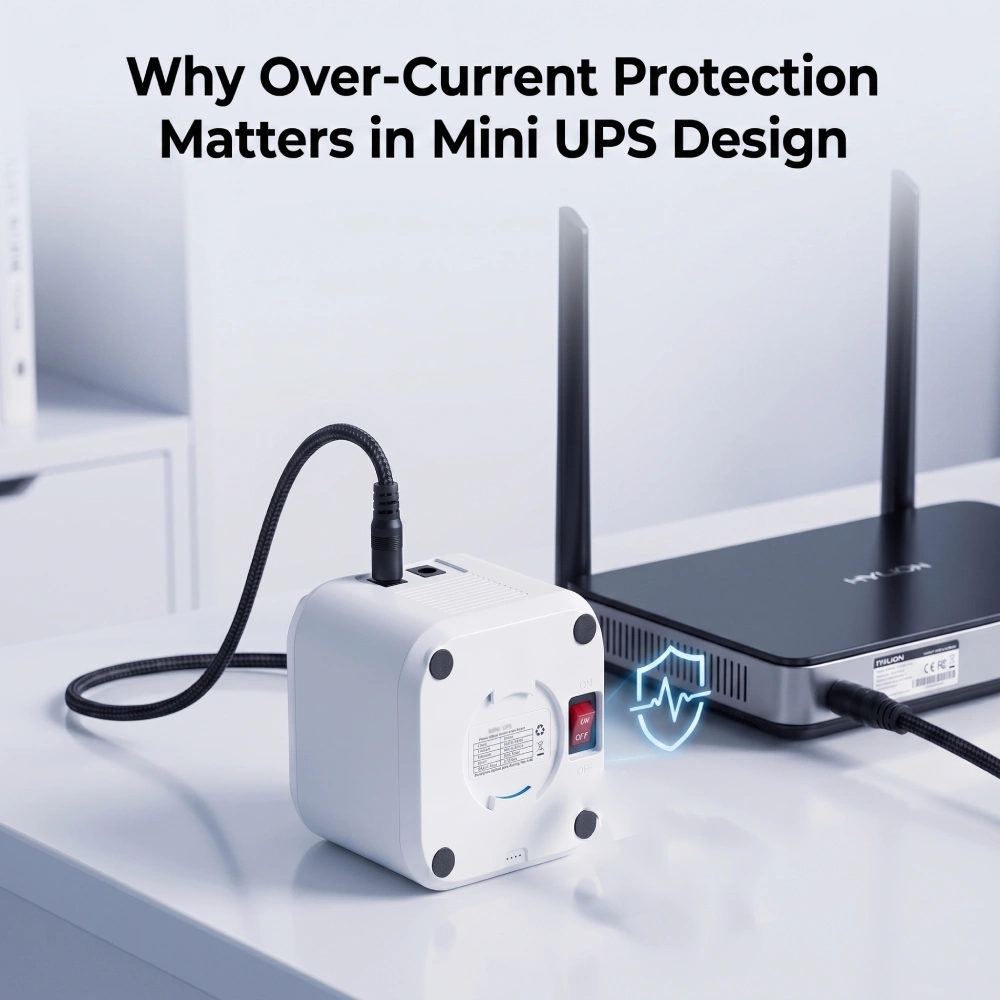
Un'elevata corrente di uscita è spesso considerata una caratteristica desiderabile in un Mini UPS, ma non è l'unico parametro per valutare la qualità di un prodotto. Per le applicazioni di telecomunicazione, ISP e reti industriali, la protezione da sovracorrente (OCP) è fondamentale. Questi dispositivi possono funzionare ininterrottamente per mesi ed essere esposti a carichi anomali, cablaggi errati o condizioni di test che vanno oltre il normale utilizzo. Senza un'adeguata OCP, entrambi i dispositivi possono subire danni. Mini-UPS e le apparecchiature collegate sono a rischio.
A cosa serve la protezione da sovracorrente
- Limita la corrente eccessivat– OCP limita il flusso di corrente quando il carico supera l'intervallo di progetto sicuro.
- Protegge più componenti– Protegge il Mini UPS, le apparecchiature collegate (ad esempio, router, ONT), il pacco batterie interno e i sistemi circostanti da stress termici ed elettrici.
- Trova un equilibrio tra usabilità e sicurezza– Un sistema di protezione ben progettato non deve intervenire durante i picchi di domanda normali (ad esempio, all'avvio del router o durante i picchi di trasmissione Wi-Fi), ma deve reagire in modo rapido e prevedibile in caso di guasti reali.
Perché l'alta corrente da sola non basta
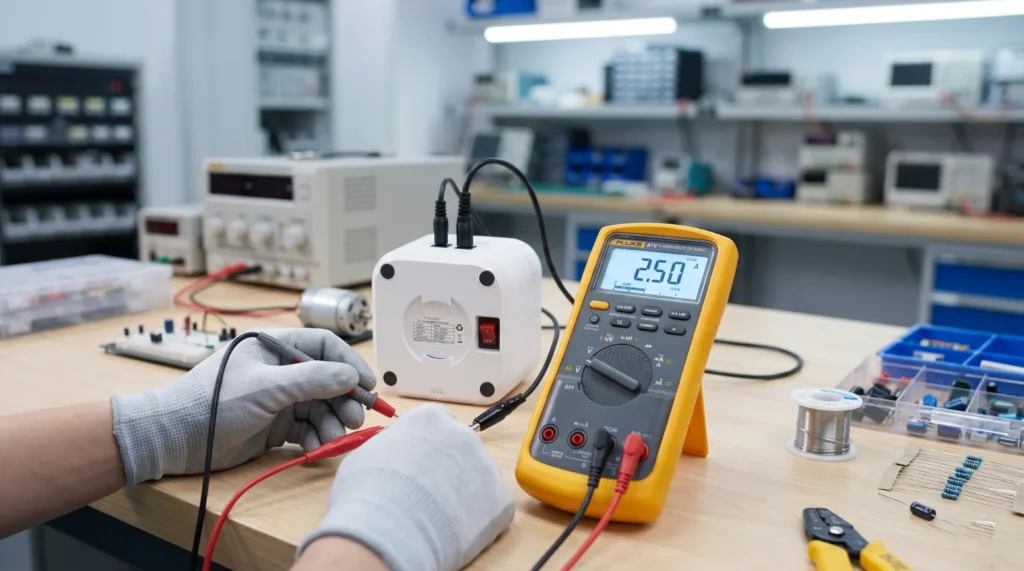
Un mini UPS in grado di erogare correnti elevate può comunque risultare pericoloso se le sue soglie di protezione non sono controllate correttamente. Nei progetti B2B, gli acquirenti apprezzano un comportamento prevedibile e ripetibile piuttosto che un singolo valore di potenza impressionante.
Il prodotto deve essere progettato per l'applicazione a cui è destinato, ovvero per il backup di un dispositivo ONT o CPE, e non per gestire picchi incontrollati che potrebbero danneggiare i dispositivi elettronici a valle o creare rischi di incendio.
Parametri chiave che gli acquirenti dovrebbero verificare
La tabella seguente riassume le specifiche essenziali relative alla protezione da verificare prima di approvare un Mini UPS per un'installazione in un'azienda di telecomunicazioni o in un ISP.
Parametro | Cosa controllare |
corrente di uscita continua nominale | Corrente massima che l'UPS può erogare indefinitamente alla temperatura nominale. |
Corrente di picco in uscita e durata | Limite di corrente a breve termine (ad esempio, 2 volte la corrente nominale per <1 secondo). |
Soglia di protezione da sovracorrente | Livello attuale al quale si attiva l'OCP (ad esempio, 120% del valore nominale). |
Protezione da cortocircuito | Arresto immediato o riduzione della corrente in caso di cortocircuito in uscita. |
Modalità di ripristino | Riavvio automatico, blocco o ripristino manuale dopo un guasto. |
comportamento termico sotto carico elevato | Come la temperatura influisce sul limite di corrente (curva di declassamento). |
Coerenza della produzione | Le unità di produzione di massa vengono testate secondo le stesse soglie OCP dei campioni di pre-produzione? |
Equilibrio progettuale per progetti ISP
Per un Mini UPS utilizzato con router, ONT o apparecchiature CPE, il progetto deve garantire un funzionamento stabile durante il normale carico (ad esempio, 12 V/1 A in continuo) definendo al contempo un chiaro limite di sicurezza per le condizioni anomale (ad esempio, un cavo in cortocircuito o un dispositivo collegato che assorbe 5 A).
Nei progetti di implementazione su larga scala, la soglia di protezione finale deve essere definita, convalidata con profili di carico reali e congelata prima della produzione di massa.
Soluzioni MYLION Mini UPS sono progettati con soglie OCP calibrate con precisione che corrispondono ai carichi di telecomunicazione reali.
- Ogni unità MYLION viene sottoposta a verifica termica e test di cortocircuito prima della spedizione.
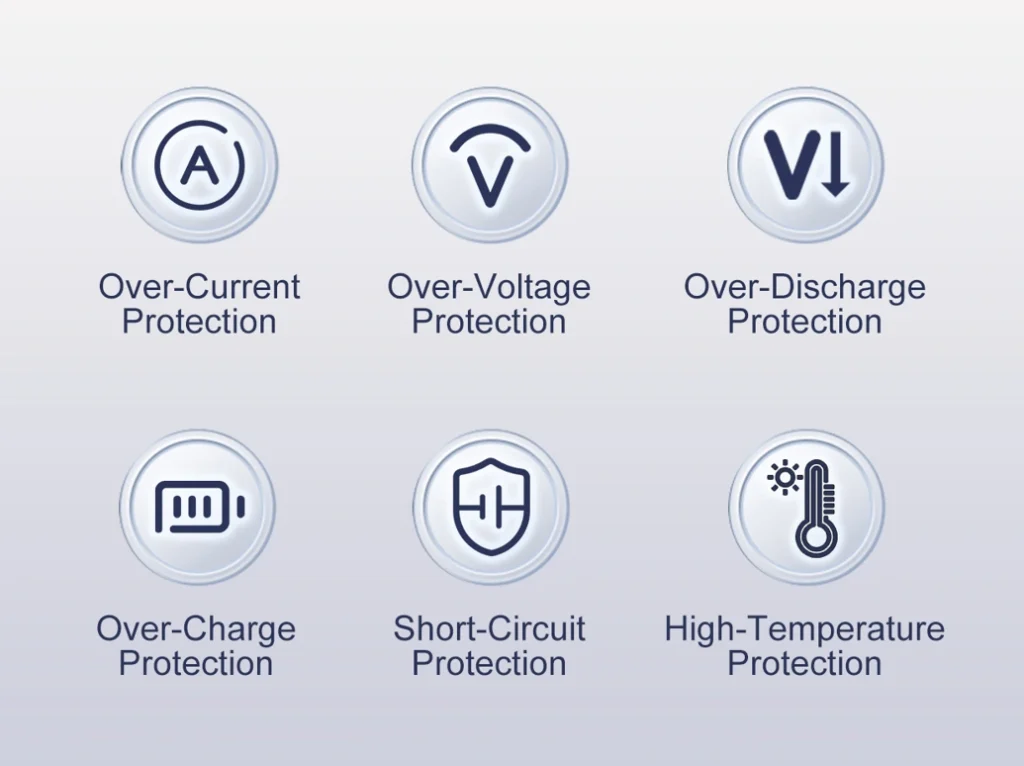
- I nostri prodotti MiniUPS sono dotati di protezione contro la scarica eccessiva della batteria, protezione contro il surriscaldamento e altre funzioni. Ciò garantisce un funzionamento sicuro e stabile anche in presenza di carichi anomali o guasti alla rete elettrica.
- Forniamo report di ispezione della produzione per garantire che le unità prodotte in serie si comportino in modo identico ai campioni approvati, eliminando sorprese di sicurezza dell'ultimo minuto e aiutando gli acquirenti a evitare ritardi nella messa in produzione.
Domande frequenti
D1: Una corrente di uscita più elevata è sempre preferibile?
D2: Perché due router con la stessa potenza dell'adattatore hanno tempi di backup diversi?
D3: Gli acquirenti dovrebbero includere un margine di sicurezza?
D4: In che modo la temperatura influisce sul tempo di backup?
Come MYLION supporta gli acquirenti B2B
MYLION è specializzata in soluzioni B2B di mini UPS CC e sistemi di backup con batterie al litio per applicazioni nel settore delle telecomunicazioni, ISP e industriale. Offriamo assistenza ai nostri clienti per:
- Selezione del prodotto in base a tensione, corrente di lavoro e autonomia.
- Validazione del campione, inclusi test di protezione e di carico anomalo.
- Assemblaggi di cavi personalizzati, etichette e requisiti di imballaggio
- Preparazione della documentazione di certificazione (CE, FCC, RoHS, UN38.3, ecc.).
- Ispezione della produzione e documentazione di spedizione.
Hai bisogno di un mini UPS o di una soluzione di backup con batteria al litio per ONT, ONU, router, CPE o apparecchiature di telecomunicazione? Contatta MYLION!
Nota di conformità
I requisiti di certificazione dipendono dalla configurazione del prodotto, dal mercato di destinazione, dall'alimentatore, dalla capacità della batteria e dall'applicazione finale. Gli acquirenti sono tenuti a verificare i requisiti applicabili prima della produzione di massa.
 Italiano
  English
  简体中文
简体中文  Deutsch
  Français
  Español