
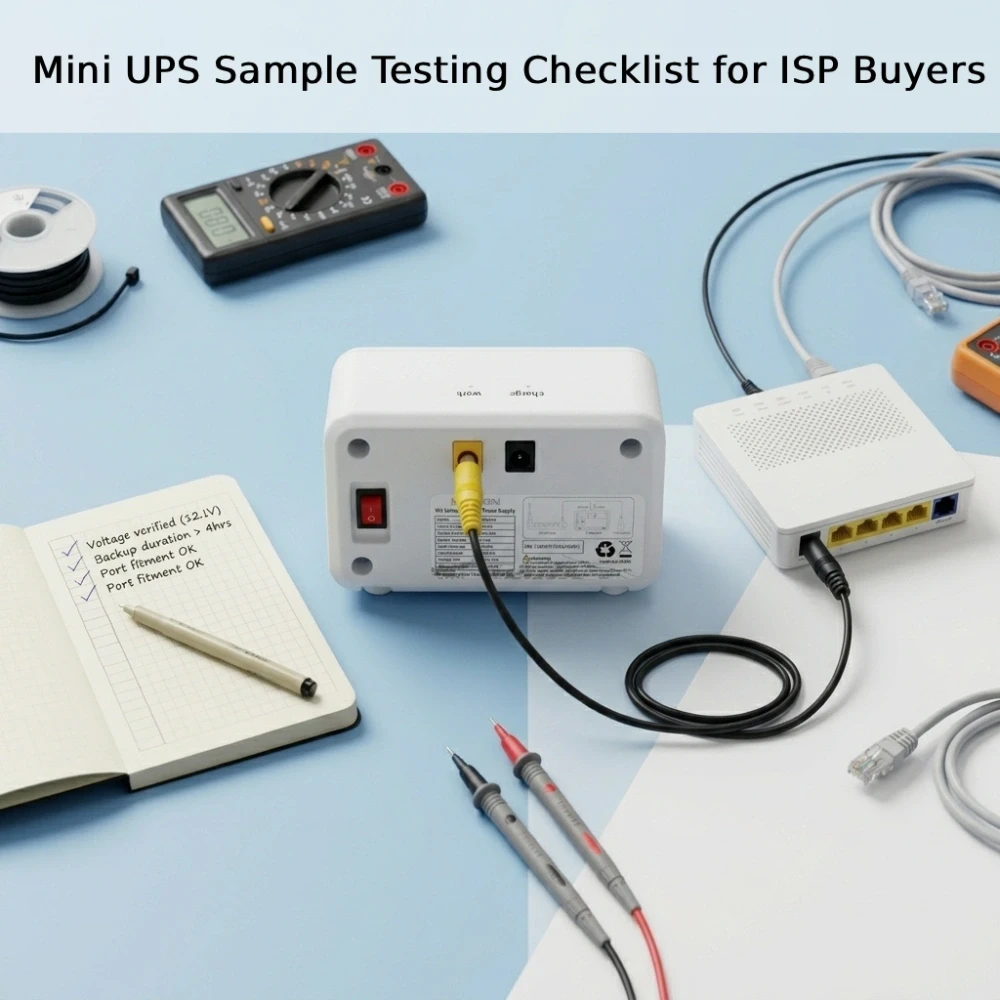
Stichprobenprüfungen sind die entscheidende Brücke zwischen Produktempfehlung und Freigabe für die Serienproduktion. Ohne eine strukturierte Checkliste riskieren Einkäufer Missverständnisse, inkonsistente Ergebnisse und wiederholte Testzyklen. Dieser Leitfaden bietet einen praktischen, wiederholbaren Rahmen für Auswertung von Mini-UPS-Proben — Wir helfen Ihnen, vor Projektabschluss fundierte, datengestützte Entscheidungen zu treffen.
Checkliste vor dem Test
Prüfen Sie anhand der untenstehenden Tabelle, ob alle Voraussetzungen erfüllt sind, bevor Sie ein Mini-USV-Muster in Betrieb nehmen.
Scheckartikel | Typische Werte / Hinweise |
Zielgerätemodell (ONT, ONU, Router, CPE usw.) | Genaue Marke und Modellnummer notieren |
Eingangsspannung des Zielgeräts | 5 V, 9 V, 12 V, 24 V, 48 V Gleichstrom (gängig) |
Steckertyp und Polarität | Hohlstecker (5,5 × 2,1 mm / 5,5 × 2,5 mm), USB-C, Schraubklemme |
Tatsächlicher Betriebsstrom (gemessen oder geschätzt) | mA oder A im Normalbetrieb |
Ziel-Backup-Zeit | z. B. 2 Stunden, 4 Stunden, 8 Stunden |
Anzahl der zu sichernden Geräte | Einzeln oder mehrfach (Gesamtlaststrom) |
Endgültiges Systemadaptermodell | Spannung, Stromstärke und Stecker prüfen. |
Während des Testens – Schritt für Schritt
Befolgen Sie diese Schritte genau, um reproduzierbare und aussagekräftige Ergebnisse zu erzielen.
- Aufzeichnung der Umgebungsbedingungen– Umgebungstemperatur, Belüftung und Prüfstandsaufbau.
- Laden Sie die Mini-USV vollständig auf.vor jedem Backup-Zeittest (verwenden Sie den vorgesehenen Adapter).
- Schließen Sie das/die Zielgerät(e) an. im realen Arbeitsmodus (keine Dummy-Lasten).
- Startzeitab dem Zeitpunkt, an dem die Stromzufuhr unterbrochen wird. Aufzeichnung:
- Startzeit und Endzeit (wenn sich das Gerät abschaltet)
- Lastspannung in regelmäßigen Abständen (z. B. alle 30 Minuten)
- Jegliches ungewöhnliches Verhalten (blinkende LEDs, Neustarts, Geräusche usw.)
- Testleistung–Fehlerumschaltverhalten– Trennen Sie den AC/DC-Eingang und prüfen Sie, ob das angeschlossene Gerät:
- Bleibt ohne Neustart online.
- Kurze Neustarts (für viele ISP-Anwendungen inakzeptabel)
- Zeigt Spannungsabfall oder Instabilität während der Übertragung (verwenden Sie gegebenenfalls ein Oszilloskop).
- Wiederholen Sie wichtige Testsmindestens dreimal wiederholen – falls die Ergebnisse deutlich voneinander abweichen, die Ursache untersuchen.
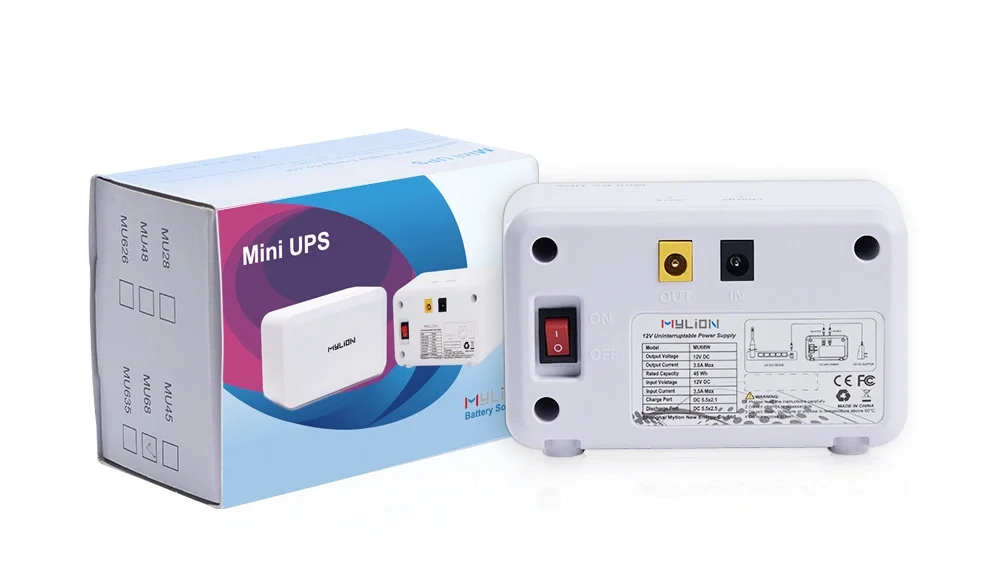
Sicherheits- und Schutzprüfungen
Überprüfen | Akzeptable Kriterien |
Temperaturanstieg unter normaler Last | Warm, aber nicht schmerzhaft heiß beim Anfassen (≤50°C Oberfläche) |
Stabilität der Ausgangsspannung | Innerhalb von ±5% der Nennspannung bei variierender Last |
Überstromschutz (falls angegeben) | Schaltet die Stromzufuhr ab oder begrenzt den Stromfluss, wenn der Nennwert überschritten wird. |
Kurzschlussschutz (falls angegeben) | Automatische Wiederherstellung oder Abschaltung (je nach Projektanforderung) |
Nach der Prüfung – Dokumentation & Genehmigung
Nach Abschluss der Tests dürfen Sie diese letzten Schritte nicht auslassen:
- Alle Daten teilen– Testberichte, Fotos und Videos (insbesondere wenn Probleme aufgetreten sind).
- Ursachenanalyse– feststellen, ob das Problem mit Folgendem zusammenhängt:
- Die Mini-USV selbst
- Der Adapter oder die Ladequelle
- Testbedingungen (Temperatur, Belüftung, Last)
- Lastfehlanpassung (z. B. Stromstärke überschreitet die Nennleistung der USV)
- Die genehmigte Musterversion einfrieren – Firmware, Batteriezellencharge und Leiterplattenrevision protokollieren. Diese Daten als Grundlage für die Serienproduktion verwenden.
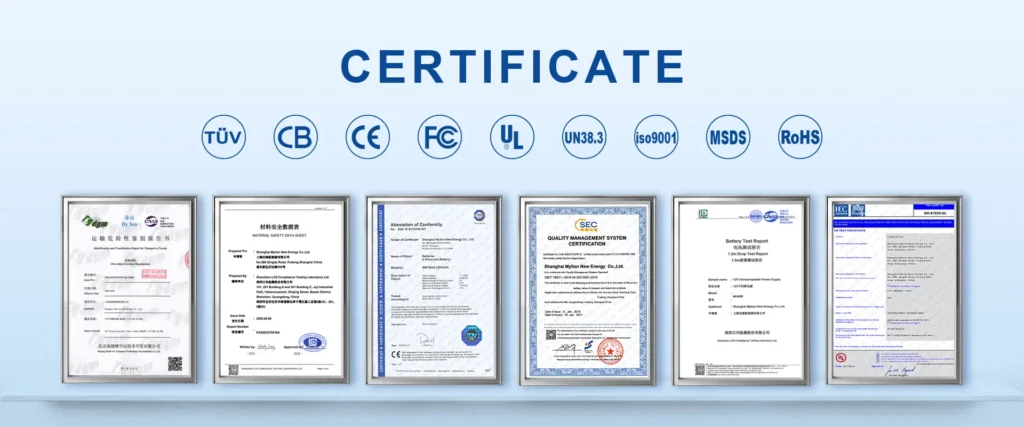
- Nichttechnische Punkte bestätigen– Kabellänge und -typ, Etikettengestaltung, Verpackung und Zertifizierungsdokumente (CE, FCC, RoHS, UN38.3 usw.).
Häufig gestellte Fragen
Frage 1: Warum sollten auffällige Testergebnisse im Voraus vereinbart werden?
Frage 2: Sollte die Backup-Zeit nur einmal getestet werden?
Frage 3: Was soll ich tun, wenn das Probenergebnis nicht den Erwartungen entspricht?
Frage 4: Wie viele Mini-USV-Muster sollte ich zum Testen anfordern?
Wie MYLION Käufer unterstützt
MYLION ist spezialisiert auf B2B Mini DC USV und Lithium-Batterie-Backup-Lösungen für Telekommunikations-, ISP- und IndustrieanwendungenWir unterstützen unsere Kunden während des gesamten Prozesses:
- Produktauswahl basierend auf Gerätespannung und Backup-Zeit
- Leitfaden zur Probenvalidierung (einschließlich benutzerdefinierter Checklisten)
- Kundenspezifische Kabel, Etiketten und Verpackungen
- Erstellung von Zertifizierungsdokumenten (CE, FCC, RoHS, UN38.3 usw.)
- Produktionsinspektionen und Versanddokumentation
Wir verkaufen nicht nur Komponenten – wir helfen Ihnen, diese mit Zuversicht zu testen, zu validieren und einzusetzen.
Benötigen Sie eine Mini-USV oder eine Lithium-Batterie-Backup-Lösung für ONT, ONU, Router, CPE oder Telekommunikationsgeräte? Kontaktieren Sie MYLION!
Hinweis zur Einhaltung der Vorschriften
Die Zertifizierungsanforderungen hängen von der Produktkonfiguration, dem Zielmarkt, dem Netzteil, der Akkukapazität und der endgültigen Anwendung ab. Käufer sollten die geltenden Anforderungen vor der Serienproduktion prüfen.
 Deutsch
  English
  简体中文
简体中文  Français
  Italiano
  Español