
Direkte Antwort
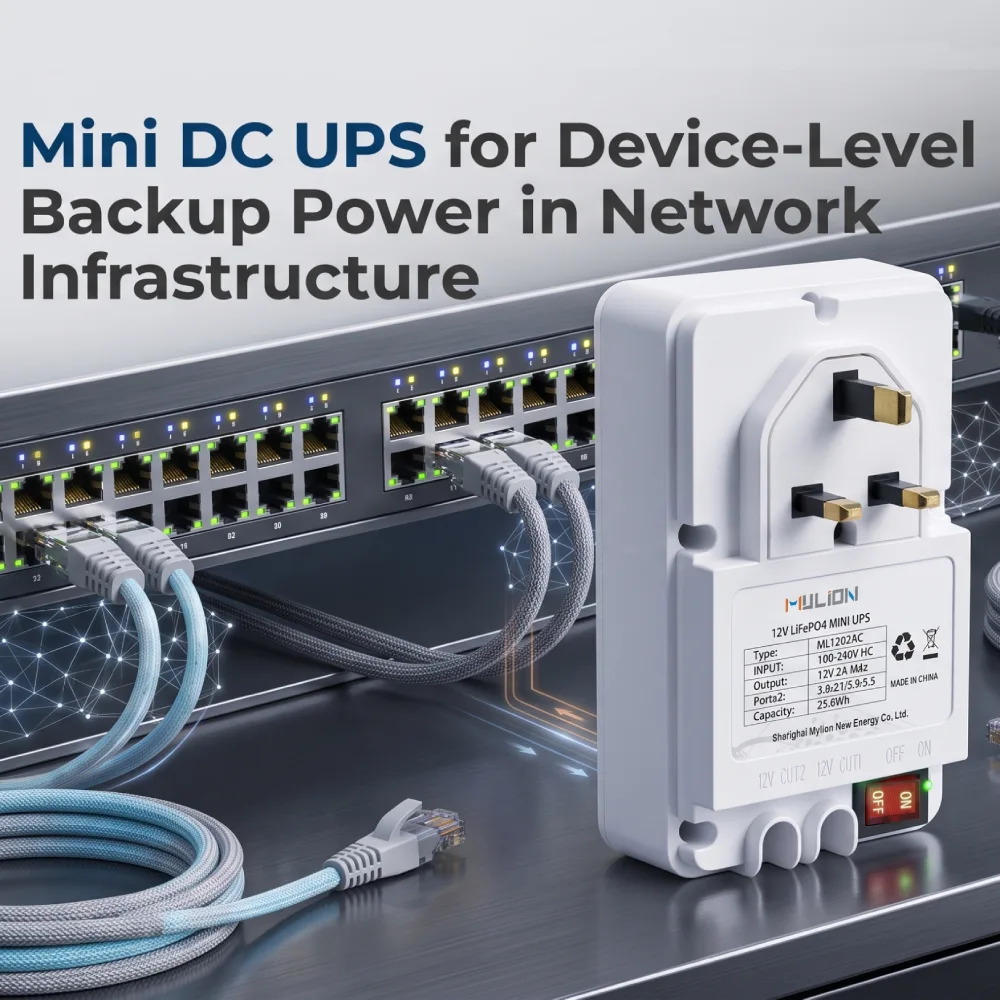
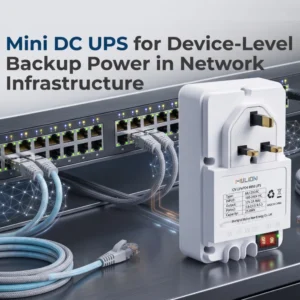
A Mini-DC-USV Es handelt sich um eine kompakte Notstromlösung, die den Betrieb kompatibler Niederspannungs-Gleichstromgeräte bei Ausfall der Hauptstromversorgung sicherstellt. In Netzwerkinfrastrukturen wird sie häufig für Router, Gateways, ONT/ONU-Terminals, CPE-Geräte, Modems und ausgewählte Kommunikationsgeräte eingesetzt.
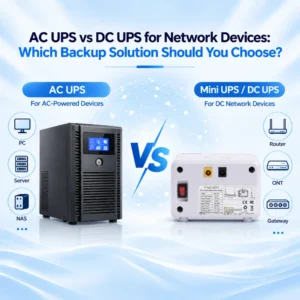
Im Gegensatz zu einer großen AC-USV, die ein ganzes Rack, einen Schrank oder einen Raum schützt, wird eine Mini-DC-USV üblicherweise in der Nähe des einzelnen Geräts installiert. Dadurch eignet sie sich besonders für verteilte Breitband-, FTTH-, ISP-, Telekommunikations- und kleinere Netzwerkinstallationen, bei denen viele kritische Endpunkte über verschiedene Standorte verteilt sind.
Die Auswahl der richtigen Mini-DC-USV sollte nicht allein anhand des Gerätenamens erfolgen. Spannung, Dauerlast, Anlaufstrom, Anschluss, Polarität, Kabelbelastbarkeit und erforderliche Überbrückungszeit müssen vor dem Einsatz im Projekt unbedingt geprüft werden.
Was ist eine Mini-DC-USV?
Eine Mini-DC-USV ist ein kleines, unterbrechungsfreies Stromversorgungssystem für kompatible Gleichstromgeräte. Sie vereint üblicherweise externe Stromzufuhr, internen Akkuspeicher, Energiemanagement, Schutzfunktionen und geregelten Gleichstromausgang in einem Gerät.
In einer typischen Konfiguration:
- Der externe Adapter versorgt das angeschlossene Gerät im Normalbetrieb mit Strom.
- Die Mini-DC-USV hält ihren internen Akku geladen.
- Bei Ausfall der externen Stromversorgung schaltet die Mini-DC-USV auf Batteriebetrieb um und versorgt das angeschlossene Gerät innerhalb ihrer zugelassenen Ausgangsgrenzen weiterhin mit Strom.
Für die Netzwerkinfrastruktur kann dies dazu beitragen, Neustartzyklen zu reduzieren, den Fernzugriff aufrechtzuerhalten und ausgewählte Breitbandendpunkte während kurzer oder instabiler Stromausfälle online zu halten.
Warum die Notstromversorgung auf Geräteebene wichtig ist
Moderne Netzwerkinfrastrukturen sind zunehmend dezentralisiert. Ein Breitband- oder Kommunikationsprojekt kann viele kleine, aber wichtige Geräte umfassen, die in verschiedenen Haushalten, Büros, Gebäuden oder an abgelegenen Standorten installiert sind.
Gängige Beispiele sind:
- Router
- Modems
- Netzwerk-Gateways
- ONT-/ONU-Terminals
- CPE-Geräte
- Ausgewählte drahtlose Kommunikationsgeräte
- Ausgewählte IoT- oder netzwerkverbundene Geräte
Fällt ein Endgerät aus, können die Auswirkungen gravierender sein, als die Größe des Geräts vermuten lässt. Der Internetzugang kann unterbrochen werden, die Fernverwaltung kann fehlschlagen, Überwachungsdaten können verloren gehen oder die Kundenservicequalität kann sich verschlechtern.
Eine zentrale USV schützt Geräte an einem Standort. Sie deckt jedoch möglicherweise nicht alle verteilten Endgeräte ab. Eine Mini-DC-USV bietet eine lokale Backup-Lösung für spezifische Geräte, die eine unterbrechungsfreie Stromversorgung benötigen.
Mini-DC-USV vs. zentrale USV
Backup-Architektur | Was es schützt | Stärken | Einschränkungen |
Zentrale Klimaanlage USV | Mehrere Geräte in einem Raum, Rack oder Schrank | Einfacher zu verwalten an einem Ort; geeignet für gruppierte Klimaanlagenlasten | Schützt möglicherweise keine entfernten Endpunkte; die Verkabelung kann komplex sein |
Mini-DC-USV | Ein kompatibles DC-Gerät oder eine kleine lokale Gerätegruppe | Nahe am Endpunkt; nützlich für verteilte Netzwerkgeräte; kann unnötige Wechselstromumwandlung reduzieren | Die Anforderungen an Spannung, Last, Stecker, Polarität und Laufzeit müssen übereinstimmen. |
Hybride Backup-Strategie | Kernausrüstung plus ausgewählte Endpunkte | Flexibel für größere Breitband- oder Telekommunikationsprojekte | Erfordert Planung, um Lücken oder doppelten Schutz zu vermeiden. |
Viele reale Projekte nutzen einen hybriden Ansatz: zentraler USV-Schutz für Kerngeräte plus Mini-DC-USV-Einheiten für kritische Router, ONT/ONU-Terminals, CPE-Geräte oder andere verteilte Endpunkte.
Wo eine Mini-DC-USV üblicherweise verwendet wird
Eine Mini-DC-USV kann hinsichtlich folgender Kriterien bewertet werden:
- Router-Backup in Heim-, Büro- oder kleinen Unternehmensnetzwerken
- ONT/ONU-Backup für FTTH-Breitbandzugang
- CPE-Backup für ISP- und Telekommunikationsinstallationen
- Gateway-Backup in intelligenten Gebäudesystemen
- Modem- und Netzwerk-Endpunkt-Backup
- Ausgewählte Niederspannungs-Kommunikationsgeräte
Wichtigste Auswahlkriterien
1. Ausgangsspannung
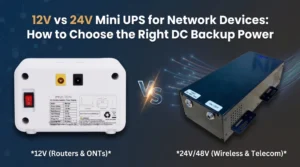
Die Ausgangsspannung der Mini-DC-USV muss den Eingangsanforderungen des Geräts entsprechen. Viele Breitbandgeräte benötigen 12 V Gleichstrom, aber nicht alle Netzwerkgeräte sind gleich. Manche Geräte benötigen 5 V, 9 V, 24 V, 48 V, USB-C PD, PoE oder andere Stromversorgungsoptionen.
Die Spannung sollte dem Geräteetikett, dem Originaladapter oder dem Datenblatt entnommen werden.
2. Dauerlast
Die Dauerstromstärke bzw. die Wattzahl ist eines der wichtigsten Auswahlkriterien. Das angeschlossene Gerät darf die Dauerausgangsleistung der Mini-DC-USV nicht überschreiten.
Die Nennleistung des Netzteils sollte nicht als alleiniger Nachweis für die tatsächliche Gerätelast herangezogen werden. Beispielsweise verbraucht ein Gerät, das mit einem 12-V-3-A-Netzteil geliefert wird, nicht immer dauerhaft 3 A. Für Projektentscheidungen sind gemessene Lastwerte oder verlässliche Gerätespezifikationen aussagekräftiger.
3. Anlauf- und Spitzenlast
Einige Geräte verbrauchen beim Start, bei drahtloser Übertragung, hohem Datenverkehr, im Nachtmodus, beim Betrieb von Zubehör oder beim Wiederverbinden mehr Strom. Wenn die Last nahe an der Leistungsgrenze des Produkts liegt, werden Stichprobenprüfungen oder eine technische Überprüfung empfohlen.
Die maximale Leistung sollte nicht als kontinuierliche Leistung bezeichnet werden.
4. Stecker und Polarität
Die physische Passform allein beweist keine elektrische Kompatibilität. Bei der Auswahl einer Mini-DC-USV sollte Folgendes berücksichtigt werden:
- DC-Steckergröße
- Polarität
- Kabelbewertung
- Kabellänge
- Spannungsabfallrisiko
- Ob Adapter oder Split-Kabel verwendet werden
Anschlussfehler können zu Ausfällen, instabilem Betrieb oder Geräteschäden führen.
5. Erforderliche Backup-Zeit
Die Backup-Zeit hängt von der Batterieenergie, der angeschlossenen Last, dem Wandlungspfad, dem Systemverbrauch, dem Batteriezustand, der Temperatur und den Schutzgrenzen ab.
Eine einfache Formel zur Schätzung kann verwendet werden:
Batterieenergie Wh ÷ Arbeitslast W
Dies ist lediglich eine Schätzung, keine garantierte Laufzeit. Die formale Backup-Zeit sollte an die spezifische Geräteauslastung, die Testbedingungen und den Genehmigungsumfang gekoppelt sein.
6. Einzelnes Gerät oder mehrere Geräte
Eine Mini-DC-USV kann ein Gerät oder, in bestimmten Konfigurationen, eine kleine Gruppe von Geräten versorgen. Bei der Sicherung mehrerer Geräte müssen folgende Punkte beachtet werden:
- Gesamte Dauerlast
- Maximale Auslastung aller Geräte
- Anforderungen an die Ausgangsspannung
- Gesamtleistungsgrenze des Systems
- Anschlussplan
- Kabelbewertung
- Erwartete Backup-Zeit
Gehen Sie nicht davon aus, dass „zwei Geräte“ unterstützt werden, es sei denn, die tatsächlichen elektrischen Bedingungen entsprechen den Produktfunktionen.
Wie MYLION Mini-DC-USV-Projekte unterstützt
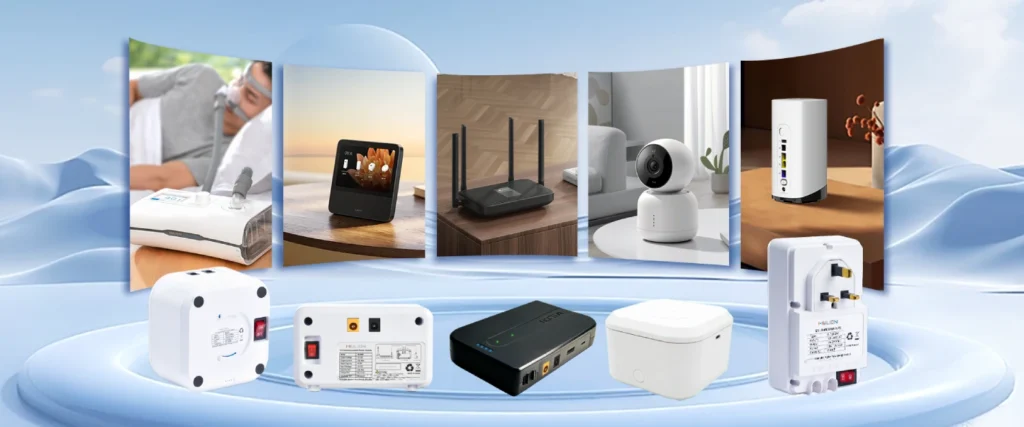
MYLION bietet Mini-DC-USV-Lösungen für Router, ONT/ONU-Terminals, Modems, CPE-Geräte und andere kompatible Niederspannungs-Netzwerkgeräte.
Unterschiedliche Netzwerkgeräte haben unterschiedliche Anforderungen an Stromversorgung und Installation, daher hängt die richtige Lösung eher von der konkreten Anwendung als von der Gerätekategorie allein ab.
Für gängige ISP-, FTTH- und Telekommunikationsprojekte bietet MYLION verschiedene Mini-USV-Optionen an:
- MU68– Konzipiert für Standard-12-V-Breitbandanwendungen wie Router, ONT/ONU-Terminals, Modems und CPE-Geräte. Es kann als Ausgangspunkt für viele 12-V-Backup-Projekte auf Teilnehmerseite betrachtet werden.
- MUJ46– geeignet für kompakte FTTH-Installationen, bei denen eine Inline-Verlegung, ein saubereres Kabelmanagement oder sowohl 12V DC- als auch 5V USB-Ausgänge benötigt werden.
- MU35– Konzipiert für Router, Gateways und CPE-Geräte mit höherer Last aus 12V-Systemen, bei denen eine Standard-12V-Mini-USV möglicherweise nicht genügend Ausgangsreserve bietet.
- MUC85– bietet eine Option für kompatible Netzwerkgeräte, die die USB-C PD-Stromversorgungsarchitektur anstelle des herkömmlichen Gleichspannungseingangs nutzen.
- ML1202AC– kann für ausgewählte Projekte evaluiert werden, bei denen zwei 12V-Geräte mit niedrigem Stromverbrauch, wie z. B. ein ONT und ein Router, eine Backup-Lösung benötigen.
Häufig gestellte Fragen
Frage 1: Was ist eine Mini-DC-USV?
Frage 2: Ist eine Mini-DC-USV dasselbe wie eine Powerbank?
Frage 3: Kann eine Mini-DC-USV gleichzeitig einen Router und ein ONT versorgen?
Frage 4: Kann ich eine Mini-DC-USV nur nach der Spannung auswählen?
Frage 5: Ist eine Mini-DC-USV für ISP- und Telekommunikationsprojekte geeignet?
Abschluss
Eine Mini-DC-USV kann eine praktische Backup-Ebene auf Geräteebene für verteilte Netzwerkinfrastrukturen bieten, bei denen Router, ONT/ONU-Terminals, CPE-Geräte und andere Endpunkte nicht vollständig durch eine zentrale USV geschützt werden können.
Bei ISP-, Telekommunikations- oder Systemintegrationsprojekten ermöglicht die Angabe der Spezifikationen des Zielgeräts und der Einsatzanforderungen MYLION, geeignete Modelle für weitere Evaluierungen und Stichprobenprüfungen zu empfehlen.
 Deutsch
  English
  简体中文
简体中文  Français
  Italiano
  Español