
Im Zeitalter von Cloud Computing und Telearbeit ist ein unterbrechungsfreier Internetzugang unerlässlich. Für Internetanbieter und Telekommunikationsunternehmen bedeuten Netzwerkausfälle beim Endkunden sofortige Kundenbeschwerden und eine erhöhte Kundenabwanderung.
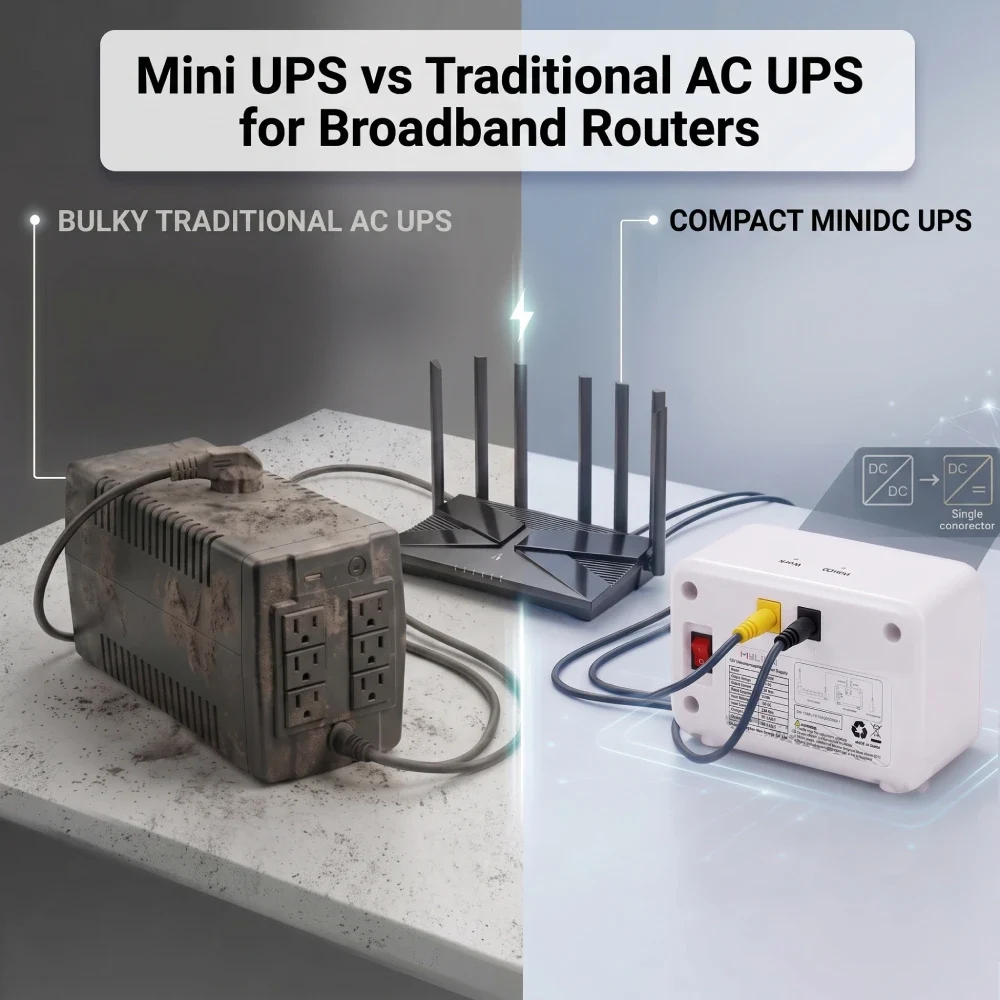
Herkömmliche AC-USV-Systeme sind seit langem die Standardlösung für die Notstromversorgung. Die Verwendung einer sperrigen AC-USV zur Stromversorgung von Niederspannungs-Gleichstrom-Netzwerkgeräten ist jedoch höchst ineffizient. Mini-DC-USV—eine kompakte, speziell entwickelte Lösung — hat sich als die optimale Wahl für die Aufrechterhaltung der Online-Verbindung von ONTs und Breitbandroutern bei Stromausfällen erwiesen.
Dieser Artikel vergleicht herkömmliche AC-USV-Anlagen und Mini-DC-USV Lösungen für die Router-Sicherung, wobei Effizienz, Implementierungskomplexität, Gesamtbetriebskosten und Leistung im realen Einsatz untersucht werden.
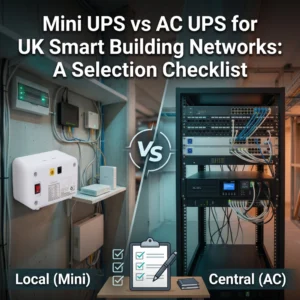
Der grundlegende Unterschied: Mini-USV vs. herkömmliche AC-USV
Was ist eine herkömmliche AC-USV?
Eine herkömmliche AC-USV ist für zentralisierte IT-Umgebungen konzipiert. Sie bezieht Wechselstrom aus der Steckdose, wandelt ihn in Gleichstrom um, um einen internen Akku zu laden, und wandelt ihn anschließend wieder in Wechselstrom um, um die Stromversorgung über Standardsteckdosen zu gewährleisten. Dieser doppelte Wandlungsprozess – Wechselstrom → Gleichstrom → Wechselstrom – führt zu erheblichen Energieverlusten.
Diese Geräte sind für Geräte mit hohem Stromverbrauch wie Server, Desktop-Computer und Monitore konzipiert. Sie sind sperrig, schwer und verwenden häufig Bleiakkumulatoren, die regelmäßige Wartung und Austausch erfordern.
Was ist eine Mini-DC-USV?
Eine Mini-DC-USV wurde speziell für moderne Netzwerkinfrastrukturen entwickelt. Sie nimmt Wechselstrom auf, wandelt ihn in Gleichstrom um, um die Batterie zu laden, aber Gibt direkt reinen Gleichstrom aus—entsprechend den nativen Eingangsanforderungen von Breitbandroutern, ONTs und ONUs.
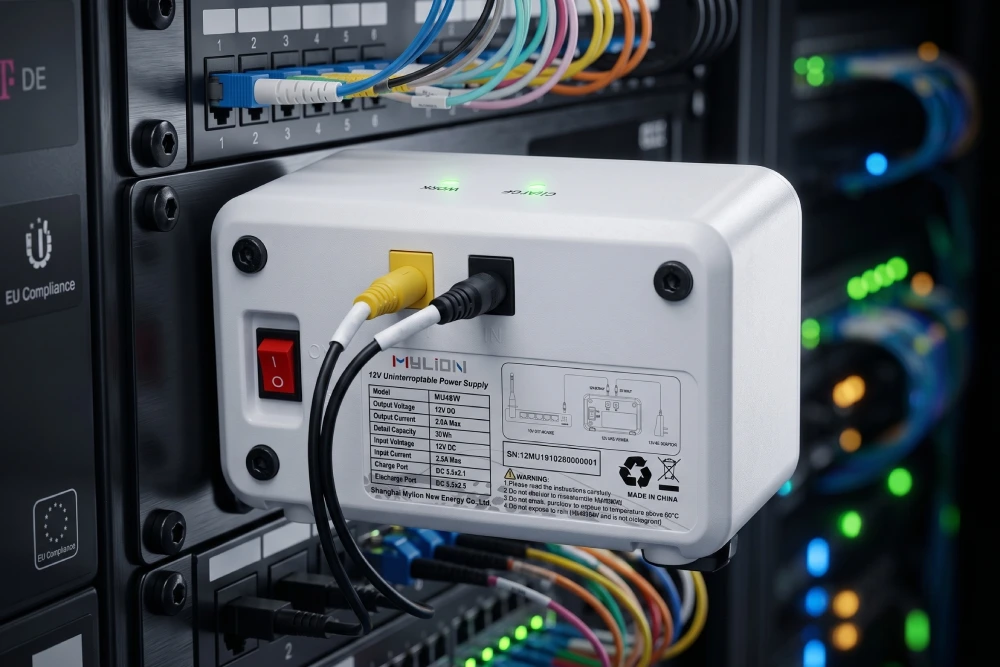
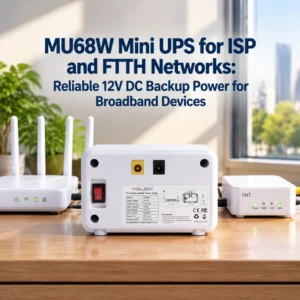
Mylions Mini-UPS-SerieBeispielsweise liefert es eine direkte Gleichspannung von 5 V, 9 V, 12 V oder 24 V und vermeidet so unnötige Stromwandlungsschritte. Produkte wie das MU68 Mini-USV bietet eine 12V DC-Notstromversorgung mit Umschaltzeit von null ms und kompakten Abmessungen von nur 112×70×60mm.
Besonderheit | Traditionelle AC-USV | Mini-DC-USV |
Ausgabetyp | AC (Geräteadapter erforderlich) | Gleichstrom (5V/9V/12V/24V) |
Leistungsumwandlung | AC→DC→AC→DC (mehrere) | AC→DC (einzeln) |
Effizienz | 70–85% für Niedrigleistungslasten | 90–95% |
Formfaktor | Groß, schwer | Kompakt, leicht |
Akku-Typ | Oft Blei-Säure | Li-Ionen oder LiFePO₄ |
Effizienz: Die versteckten Kosten der Energieumwandlung
Warum herkömmliche AC-USV-Anlagen Energie verschwenden
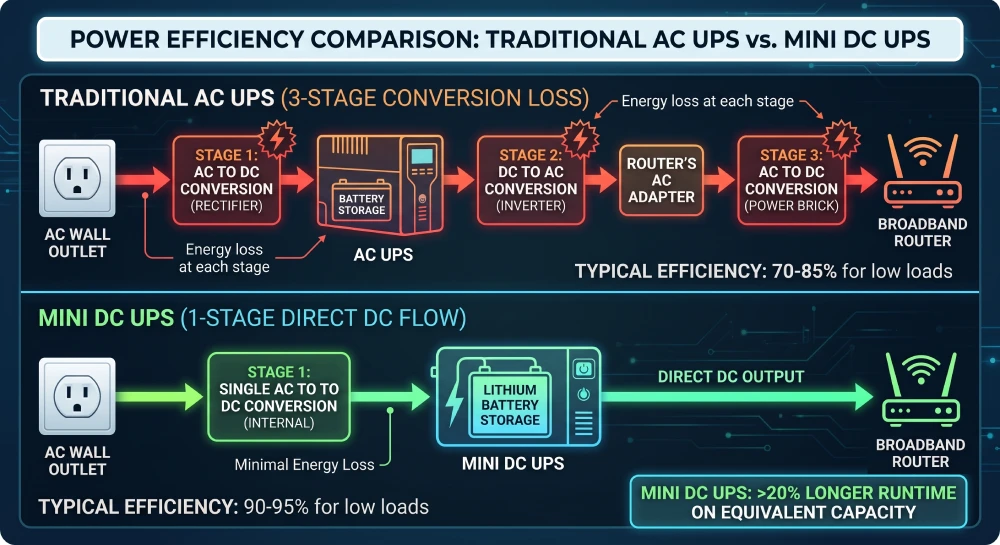
Wenn ein herkömmlicher AC-USV-Anschluss einen Breitbandrouter mit Strom versorgt, fließt die Energie durch drei Umwandlungsstufen:
- Wechselstrom → Gleichstrom (USV lädt Batterie)
- Gleichstrom → Wechselstrom (USV-Ausgangsleistung)
- Wechselstrom → Gleichstrom (Netzteil des Routers wandelt zurück)
Jede Umwandlungsstufe verliert Energie. Herkömmliche AC-USV-Anlagen arbeiten oft nur mit einer bestimmten Leistung. 70–85% Effizienz bei der Stromversorgung von Telekommunikationsgeräten mit geringer Wattzahl.
Der Vorteil der Mini-DC-USV
Netzteil. Der Strom fließt in Form von Gleichstrom direkt von der Batterie zum Router.
Das bedeutet, dass eine Mini-DC-USV die derselbe Router für 20–30% länger bei gleicher Batteriekapazität – ein entscheidender Vorteil bei längeren Stromausfällen. Die Mini-USV-Geräte von Mylion erreichen dies. 90–95% Effizienz für Telekommunikationsgeräte mit geringem Stromverbrauch.
Beispiel aus der PraxisDer Mylion MU68 bietet mit seiner Akkukapazität von 44,4 Wh eine Laufzeit von ca. 4–5 Stunden Datensicherung bei einer Last von 12 W – genug, um einen typischen Router auch bei den meisten Stromausfällen am Laufen zu halten.
Bereitstellung: Platzbedarf, Installation und Skalierbarkeit
Das Platzproblem bei herkömmlichen USV-Anlagen
Platz ist ein entscheidender Faktor in der Telekommunikationsinfrastruktur. Ein typischer FTTH-Verteilerschrank oder Außenverteiler verfügt oft nur über wenige Liter Innenvolumen. Eine Standard-USV mit 12 V und 7 Ah Bleiakkumulator kann die Hälfte dieses Platzes beanspruchen. Multipliziert man dies mit Hunderten oder Tausenden von Standorten, verschärft sich das Problem rapide.
Herkömmliche USV-Anlagen benötigen außerdem:
- Spezieller Platz und verstärkte Montage
- Komplexe Verkabelung und Kabelmanagement
- Klimatisierte Umgebungen für Blei-Säure-Batterien
Mini-USV: Konzipiert für den dezentralen Einsatz
Mini-DC-USV-Anlagen sind kompakt, leicht und einfach in bestehende Telekommunikationsschränke oder Wandgehäuse zu integrieren.
Der Mylion MU68 Es misst nur 112×70×60 mm und wiegt etwa 405 g. Es passt in schmale Verteilerkästen und bietet Notstrom für ONTs und Router bei kurzen Stromausfällen.
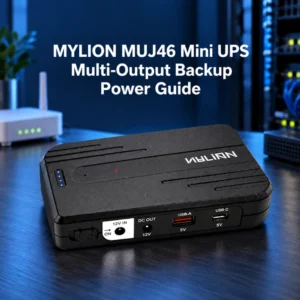
Mylion bietet flexible Spannungsoptionen von 5 V bis 24 V Es unterstützt alle gängigen Steckertypen – DC-Hohlstecker (2,1 mm, 2,5 mm), USB-A, USB-C und proprietäre Stecker. Diese Flexibilität vereinfacht den Einsatz in unterschiedlichen Gerätetypen und Installationsumgebungen.

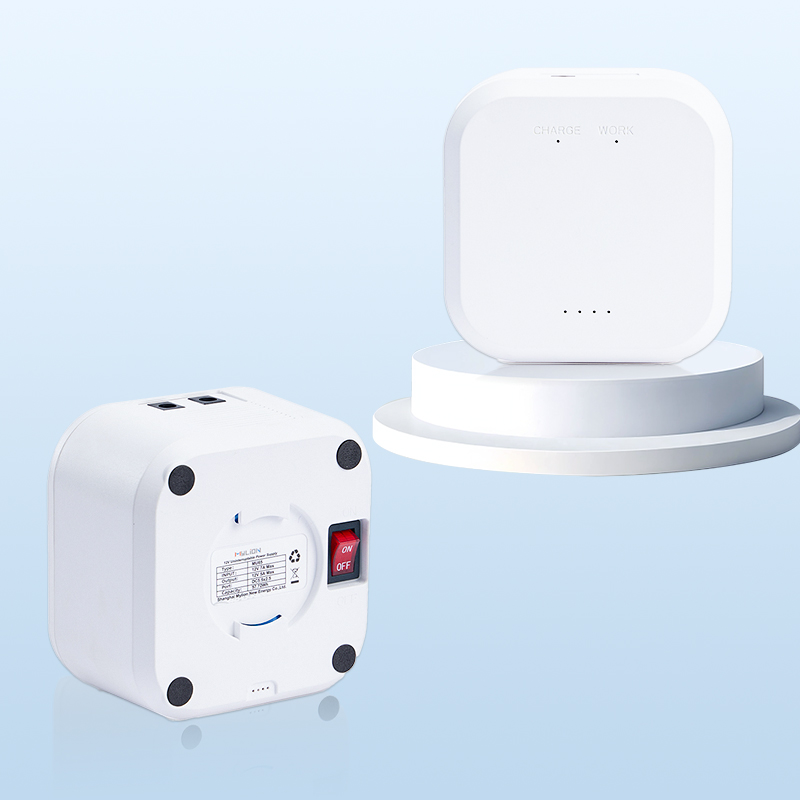
MU68 Mini-USV
MU35 Mini-USV
Gesamtbetriebskosten (TCO)
Versteckte Kosten herkömmlicher AC-USV-Anlagen
Auch wenn die Anschaffungskosten einer herkömmlichen AC-USV auf den ersten Blick wettbewerbsfähig erscheinen mögen, zeichnen die langfristigen Kosten ein anderes Bild:
- Energieverschwendung: 15–30% geringere Effizienz bedeutet höhere Stromrechnungen im Laufe der Zeit
- BatteriewechselBlei-Säure-Batterien verschlechtern sich in warmen Umgebungen schnell und müssen alle 1–2 Jahre ausgetauscht werden.
- LKW überschlägt sichJeder Batterieausfall an einem entfernten Standort erfordert einen Servicebesuch
- PlatzkostenGrößere Stellfläche bedeutet weniger Geräte pro Schrank
Mini-USV: Niedrigere Kosten auf lange Sicht
Mini-USV-Lösungen reduzieren:
- Energieverbrauch durch höhere Effizienz
- Installationsaufwand durch Plug-and-Play-Bereitstellung
- Wartungshäufigkeit über die Lebensdauer der Lithiumbatterie
- Austauschzyklen durch längere Batterielebensdauer
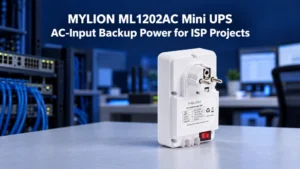
Mylions LiFePO₄-basierte Modelle wie die ML1202AC Mini-USV Erreichen über 2.000 Ladezyklen – 3- bis 5-mal länger als Bleiakkumulatoren. Integrierte Batteriemanagementsysteme (BMS) schützen vor Überladung, Tiefentladung, Kurzschlüssen und Überhitzung.
Wichtigste technische Merkmale: Worauf es bei Routern ankommt
Null Transferzeit
Netzwerkgeräte reagieren empfindlich auf selbst kurze Stromausfälle. Ein kurzzeitiger Stromausfall kann dazu führen, dass Router neu starten, was Paketverluste und Dienstunterbrechungen zur Folge hat.
Mylion Mini-USV-Geräte zeichnen sich durch folgende Merkmale aus: 0 ms (Null) ÜbertragungszeitBei einem Stromausfall schaltet sich der Akkubetrieb ohne messbare Unterbrechung ein. Dadurch werden Neustarts des CPE verhindert und eine nahtlose Verbindung gewährleistet.
Intelligentes Batteriemanagement
Alle Mylion Mini-USV-Anlagen sind für den vollautomatischen Betrieb ausgelegt. Sobald die Netzstromversorgung wiederhergestellt ist, kehren sie nahtlos in den Normalbetrieb zurück, und angeschlossene Geräte starten bei Bedarf automatisch neu.
Breite Kompatibilität
Das Produktportfolio von Mylion deckt jedes Modem- und Router-Backup-Szenario ab:
Modell | Batteriekapazität | Hauptmerkmal | Am besten geeignet für |
MU26 | 19,24 Wh | Ultrakompakt | Einzelner Router mit geringem Stromverbrauch |
MU48 | 29,6 Wh | Erweiterte Laufzeit | Standard-Breitbandgeräte |
MU68 | 44,4 Wh | Hohe Kapazität | Edge-Geräte und leichte Router |
ML1202AC | 25,6 Wh | LiFePO₄, Dualausgang | Zwei Geräte gleichzeitig |
92 Wh | USB-C PD 65W | Moderne USB-C-Netzwerkgeräte |
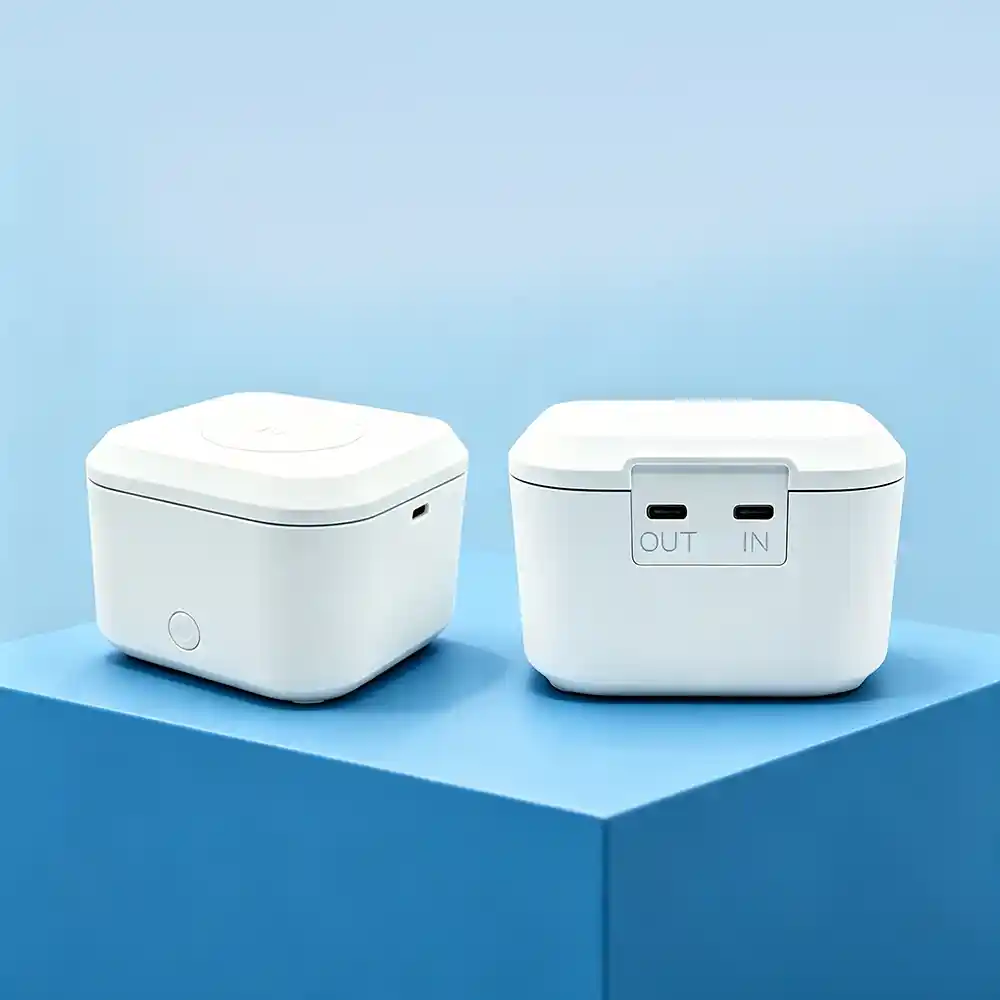
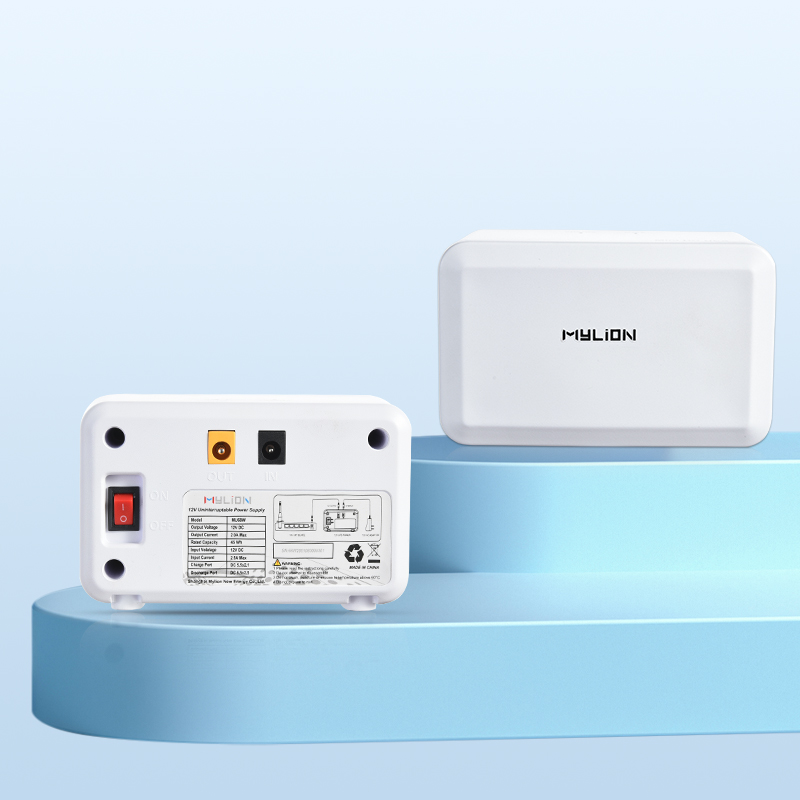
MUC85 Mini-USV
MU48 Mini-USV
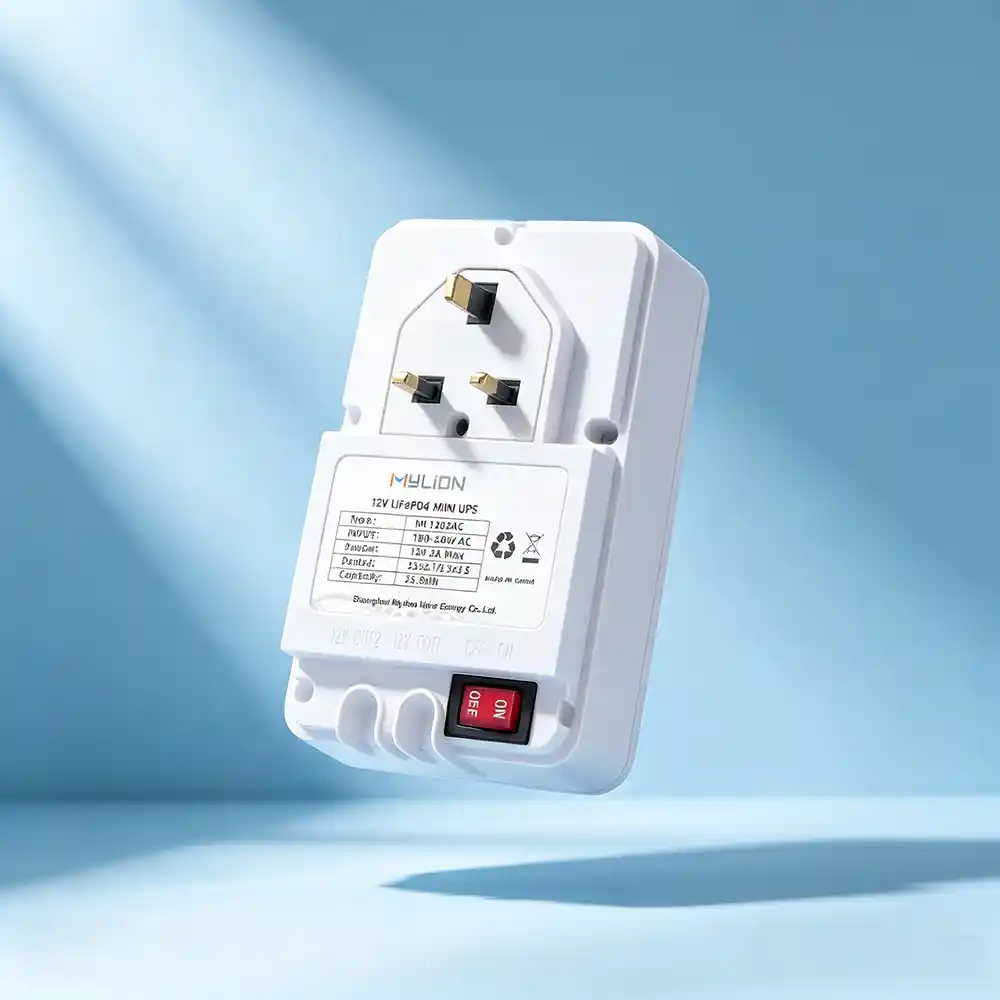
ML1202AC Mini-USV
MU35 Mini-USV
Warum Internetanbieter auf Mini-USV umsteigen
Für Internetdienstanbieter ist der Business Case für Mini-USV überzeugend:
- Weniger KundenbeschwerdenEin kurzer Stromausfall kann einen Router lahmlegen und einen Supportanruf auslösen. Mylion Mini-USV-Modelle wie MU26 und MU68 verhindern diese von Kunden gemeldeten Ausfälle.
- Niedrigere LKW-RollenJeder vermiedene Serviceeinsatz spart ISP-Betreibern erhebliche Betriebskosten.
- OFCOM-KonformitätIn Großbritannien müssen Anbieter mindestens eine Stunde Notstromversorgung gewährleisten. Unabhängige Tests ergaben, dass die Mylion Mini-USV über 1 Stunde durchhielt. 7 Stunden Dauerbetriebmit einem Router unter hoher Last – weit über den Anforderungen.
- Skalierbare BereitstellungMini-USV-Systeme sind für den Einsatz auf Projektebene über Tausende von Knotenpunkten hinweg konzipiert, nicht nur für Unterhaltungselektronik.
Häufig gestellte Fragen
Frage 1: Kann eine Mini-USV meinen vorhandenen Router mit Strom versorgen?
Frage 2: Wie lange kann eine Mini-USV meinen Router mit Strom versorgen?
Frage 3: Ist eine Mini-USV besser als eine herkömmliche AC-USV für meinen Router?
Frage 4: Kann eine Mini-USV mehrere Geräte mit Strom versorgen?
Frage 5: Welche Batterietechnologie verwenden Mini-USV-Geräte?
Frage 6: Passt eine Mini-USV in meine bestehende Konfiguration?
Abschluss
Für Breitbandrouter und andere Niederspannungsnetzwerkgeräte, Mini-DC-USV-Lösungen Sie übertreffen herkömmliche AC-USV-Systeme deutlich. Sie bieten eine höhere Effizienz, einen direkten Gleichstromausgang, der externe Netzteile überflüssig macht, und eine Umschaltzeit von null, die Router-Neustarts bei Stromschwankungen verhindert.
MYLION bietet ein Mini-USV-Lösung speziell entwickelt für BreitbandrouterOb Sie ein einzelnes Homeoffice absichern oder Tausende von Einheiten in einem regionalen Netzwerk ausrollen – Mylion bietet die Kontinuität, die Ihre Breitbandinfrastruktur verdient.
 Deutsch
  English
  简体中文
简体中文  Français
  Italiano
  Español