
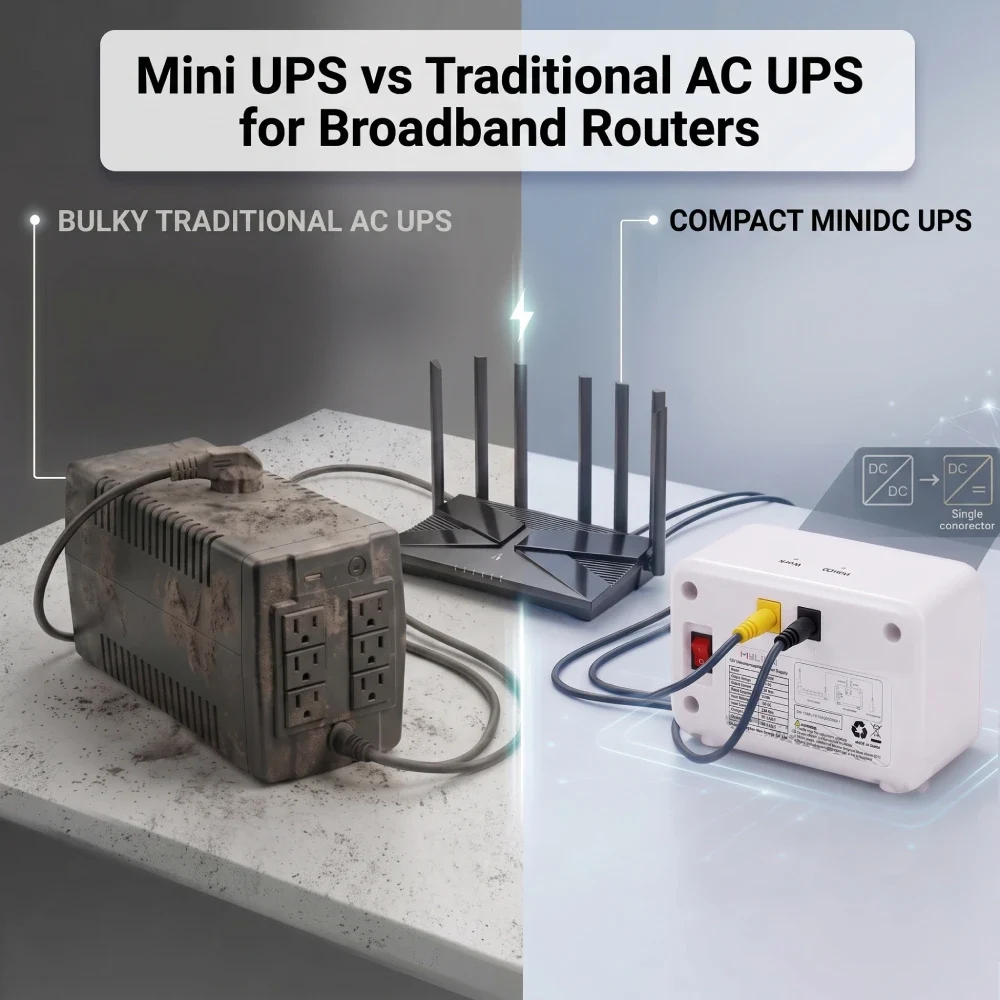
In the era of cloud computing and remote work, uninterrupted internet is a critical utility. For ISPs and telecom operators, network downtime at the subscriber level means immediate customer complaints and increased churn.
Traditional AC UPS systems have long been the default solution for power backup. However, using a bulky AC UPS to power low-voltage DC network equipment is highly inefficient. The Mini DC UPS—a compact, purpose-built solution—has emerged as the definitive choice for keeping ONTs and broadband routers online during grid failures.
This article compares traditional AC UPS and Mini DC UPS solutions for router backup, examining efficiency, deployment complexity, total cost of ownership, and real-world performance.
The Fundamental Difference: Mini UPS vs traditional AC UPS
What Is a Traditional AC UPS?
A traditional AC UPS is designed for centralized IT environments. It takes AC power from the wall outlet, converts it to DC to charge an internal battery, then converts it back to AC to supply power through standard outlets. This double-conversion process—AC to DC to AC—results in significant energy loss.
These units are built for high-wattage appliances like servers, desktop computers, and monitors. They are bulky, heavy, and often use lead-acid batteries that require regular maintenance and replacement.
What Is a Mini DC UPS?
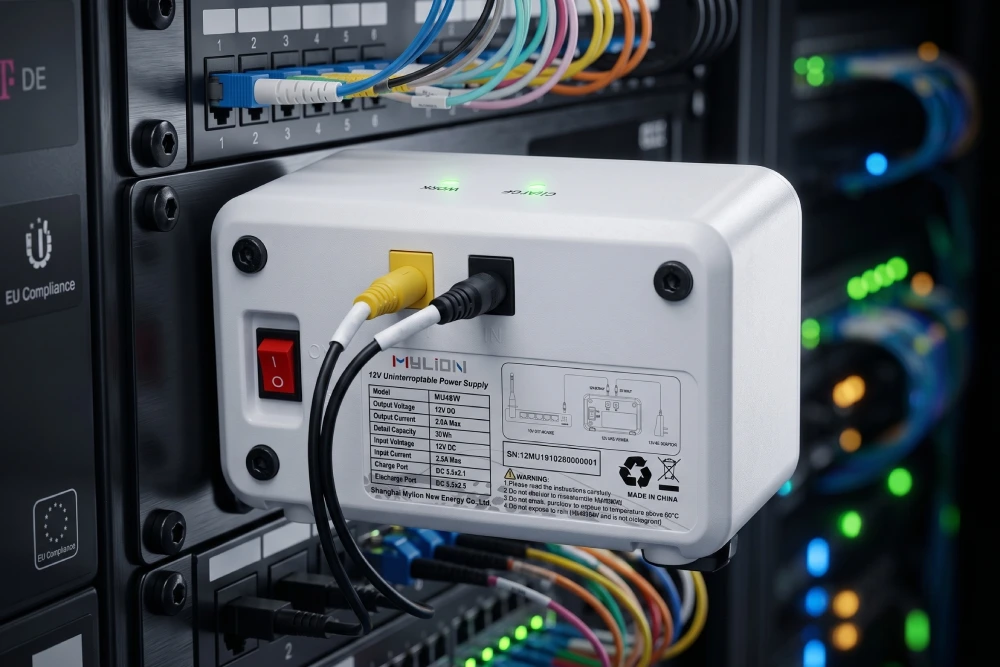
A Mini DC UPS is engineered specifically for modern network infrastructure. It accepts AC power, converts it to DC to charge the battery, but outputs pure DC power directly—matching the native input requirements of broadband routers, ONTs, and ONUs.
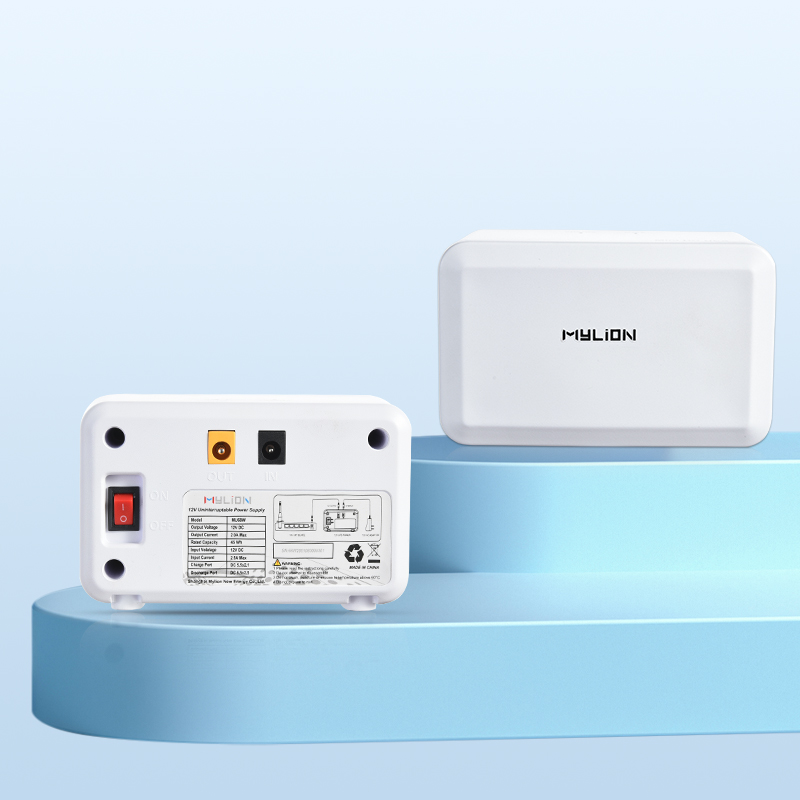
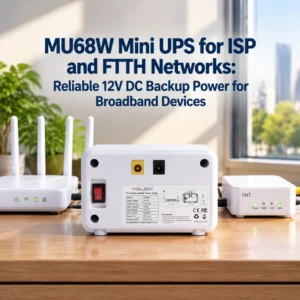
Mylion’s Mini UPS series, for example, delivers direct DC output at 5V, 9V, 12V, or 24V, eliminating unnecessary power conversion steps. Products like the MU68 Mini UPS provide 12V DC backup with zero transfer time (0ms) and compact dimensions of just 112×70×60mm.
Feature | Traditional AC UPS | Mini DC UPS |
Output type | AC (requires device adapter) | Direct DC (5V/9V/12V/24V) |
Power conversion | AC→DC→AC→DC (multiple) | AC→DC (single) |
Efficiency | 70–85% for low-power loads | 90–95% |
Form factor | Large, heavy | Compact, lightweight |
Battery type | Often lead-acid | Li-ion or LiFePO₄ |
Efficiency: The Hidden Cost of Power Conversion
Why Traditional AC UPS Wastes Energy
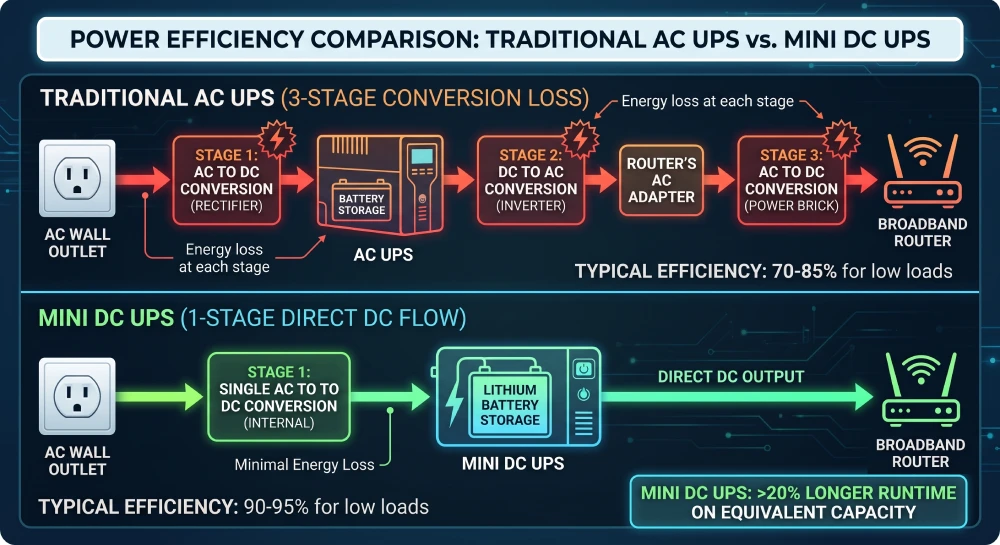
When a traditional AC UPS powers a broadband router, the energy travels through three conversion stages:
- AC → DC (UPS charges battery)
- DC → AC (UPS outputs power)
- AC → DC (router’s power adapter converts back)
Each conversion stage loses energy. Traditional AC UPS units often operate at only 70–85% efficiency when powering low-wattage telecom loads.
The Mini DC UPS Advantage
power adapter. Power flows directly from the battery to the router in DC form.
This means a Mini DC UPS can run the same router for 20–30% longer on equivalent battery capacity—a critical advantage during extended outages. Mylion’s Mini UPS units achieve 90–95% efficiency for low-power telecom loads.
Real-world example: The Mylion MU68, with its 44.4Wh battery capacity, provides approximately 4–5 hours of backup at a 12W load—enough to keep a typical router running through most power interruptions.
Deployment: Space, Installation, and Scalability
The Space Problem with Traditional UPS
Space is a critical constraint in telecom infrastructure. A typical FTTH cabinet or outdoor node may have only a few liters of internal volume. A standard 12V 7Ah lead-acid UPS can take up half of that space. Multiply by hundreds or thousands of sites, and the problem compounds rapidly.
Traditional UPS units also require:
- Dedicated space and reinforced mounting
- Complex wiring and cable management
- Climate-controlled environments for lead-acid batteries
Mini UPS: Designed for Distributed Deployment
Mini DC UPS units are compact, lightweight, and easy to integrate into existing telecom cabinets or wall-mounted enclosures.
The Mylion MU68 measures just 112×70×60mm and weighs approximately 405g. It fits into narrow distribution boxes, providing backup power for ONTs and routers during brief grid flickers.
Mylion offers flexible voltage options from 5V to 24V and supports all common connector types—DC barrel jacks (2.1mm, 2.5mm), USB-A, USB-C, and proprietary connectors. This flexibility simplifies deployment across diverse equipment types and installation environments.

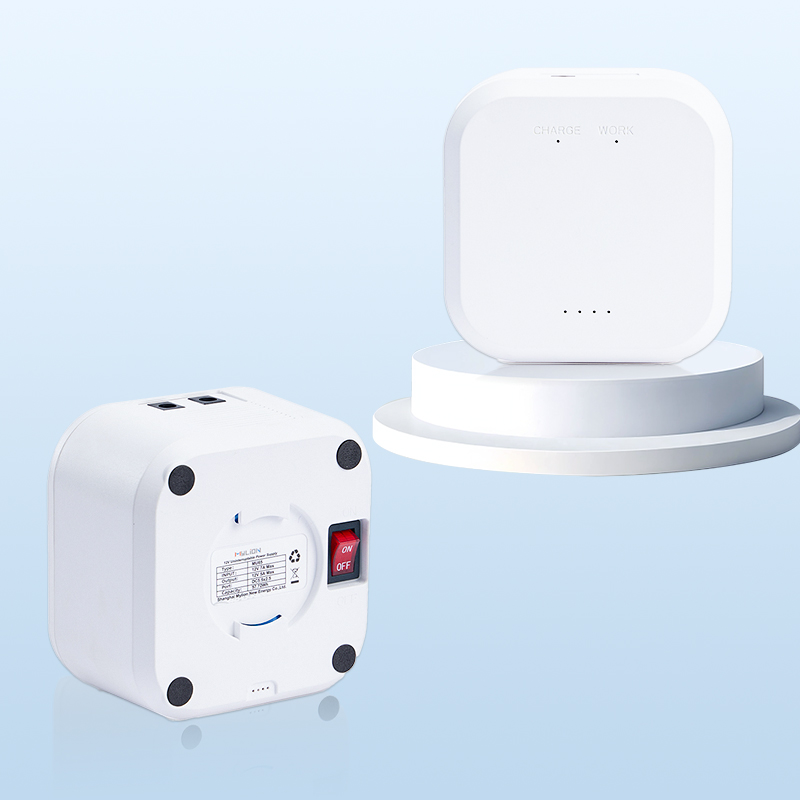
MU68 Mini UPS
MU35 Mini UPS
Total Cost of Ownership (TCO)
Hidden Costs of Traditional AC UPS
While the upfront cost of a traditional AC UPS may appear competitive, the long-term costs tell a different story:
- Energy waste: 15–30% lower efficiency means higher electricity bills over time
- Battery replacement: Lead-acid batteries degrade quickly in warm environments and need replacement every 1–2 years
- Truck rolls: Each battery failure at a remote site requires a service visit
- Space costs: Larger footprint means fewer devices per cabinet
Mini UPS: Lower Long-Term Costs
Mini UPS solutions reduce:
- Energy consumption through higher efficiency
- Installation labor through plug-and-play deployment
- Maintenance frequency through lithium battery longevity
- Replacement cycles through longer battery life
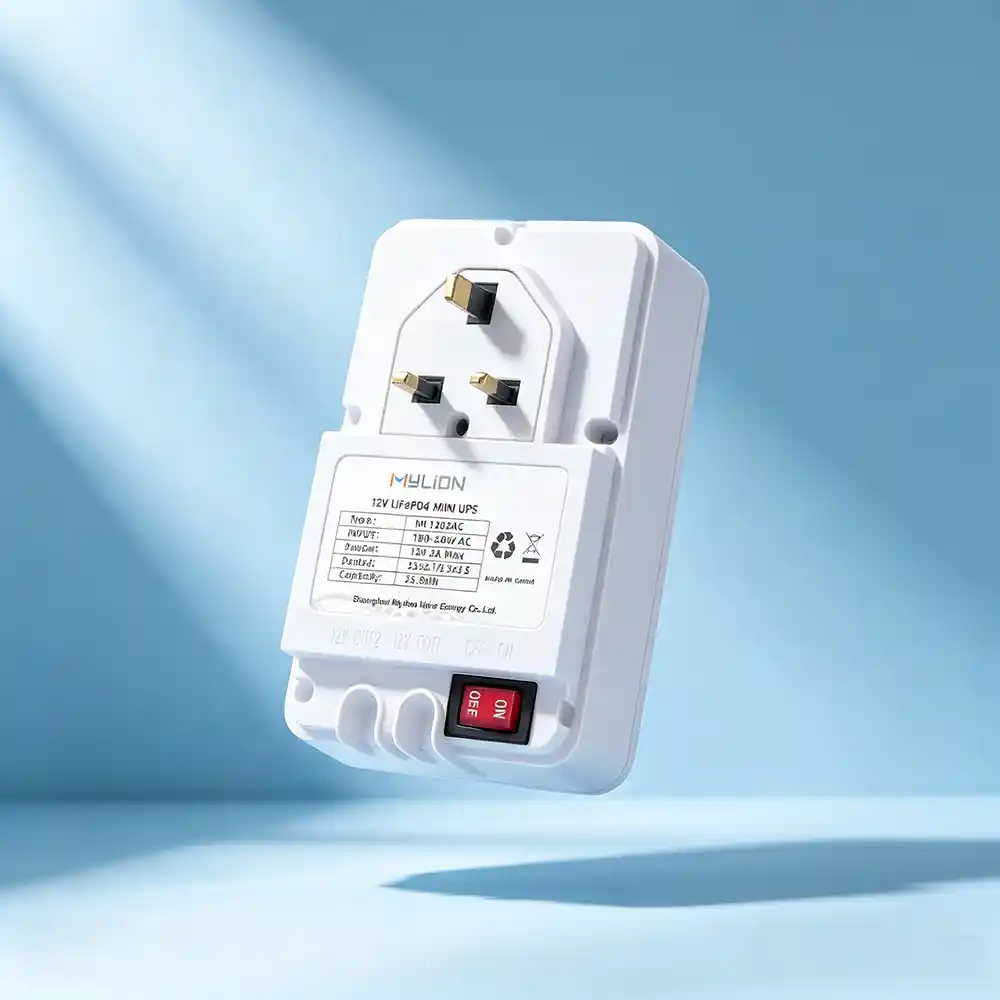
Mylion’s LiFePO₄-based models like the ML1202AC Mini UPS reach 2,000+ cycles—3 to 5 times longer than lead-acid batteries. Built-in Battery Management Systems (BMS) protect against overcharge, over-discharge, short circuits, and over-temperature.
Key Technical Features: What Matters for Routers
Zero Transfer Time
Network equipment is sensitive to even brief power interruptions. A momentary dropout can cause routers to reboot, resulting in packet loss and service disruption.
Mylion Mini UPS units feature 0ms (zero) transfer time. When mains power fails, the battery output engages without any measurable interruption. This prevents CPE reboots and ensures seamless connectivity.
Smart Battery Management
All Mylion Mini UPS units are designed for fully automatic operation. Once mains power is restored, they seamlessly return to normal mode, and any connected equipment reboots automatically if needed.
Wide Compatibility
Mylion’s product portfolio covers every modem and router backup scenario:
Model | Battery Capacity | Key Feature | Best For |
MU26 | 19.24Wh | Ultra-compact | Single low-power router |
MU48 | 29.6Wh | Extended runtime | Standard broadband devices |
MU68 | 44.4Wh | High capacity | Edge devices and light routers |
ML1202AC | 25.6Wh | LiFePO₄, dual output | Two devices simultaneously |
92Wh | USB-C PD 65W | Modern USB-C network devices |

MUC85 Mini UPS
MU48 Mini UPS
ML1202AC Mini UPS
MU35 Mini UPS
Why ISPs Are Switching to Mini UPS
For Internet Service Providers, the business case for Mini UPS is compelling:
- Reduced customer complaints: A brief power flicker can take down a router and trigger a support call. Mylion Mini UPS models like MU26 and MU68 prevent these customer-reported outages.
- Lower truck rolls: Each avoided service visit saves ISP operators significant operational costs.
- OFCOM compliance: In the UK, providers must offer at least 1 hour of backup power for emergency access. Independent testing found that the Mylion Mini UPS sustained over 7 hours of continuous usewith a router under heavy load—far exceeding the requirement.
- Scalable deployment: Mini UPS systems are designed for project-level deployment across thousands of nodes, not just consumer electronics.
FAQ
Q1: Can a Mini UPS power my existing router?
Q2: How long will a Mini UPS run my router?
Q3: Is a Mini UPS better than a traditional AC UPS for my router?
Q4: Can a Mini UPS power multiple devices?
Q5: What battery technology do Mini UPS units use?
Q6: Will a Mini UPS fit in my existing setup?
Conclusion
For broadband routers and other low-voltage network devices, Mini DC UPS solutions clearly outperform traditional AC UPS systems. They deliver higher efficiency, direct DC output that eliminates the need for external power adapters, and zero-transfer-time switching that prevents router reboots during power flickers.
MYLION offers a Mini UPS solution specifically designed for broadband routers. Whether you are safeguarding a single home office or rolling out thousands of units across a regional network, Mylion delivers the continuity your broadband infrastructure deserves.
 English
  简体中文
简体中文  Deutsch
  Français
  Italiano
  Español