Mini UPS for ONT, ONU, Router & ISP Backup Projects

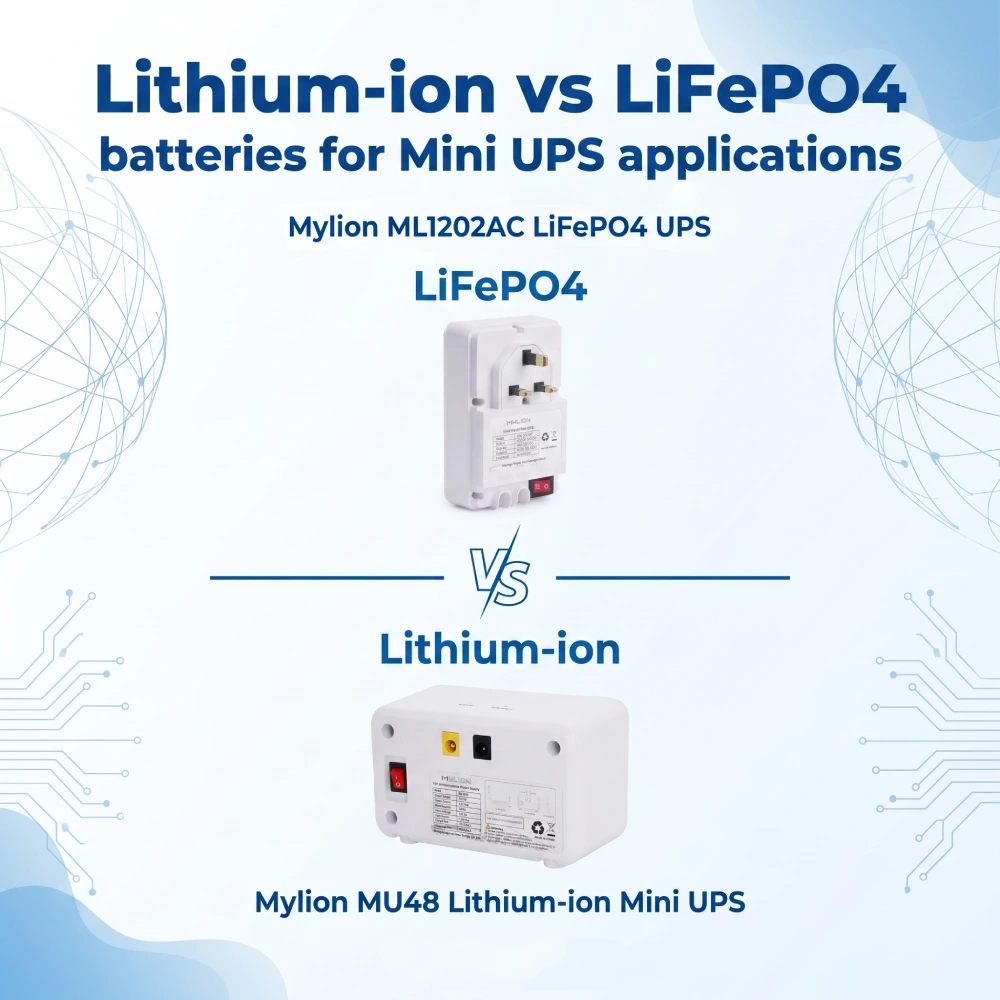
Lithium-ion vs LiFePO4 batteries for Mini UPS applications

Lithium-ion vs LiFePO4 batteries for Mini UPS applications

From sprawling telecom networks and FTTH infrastructure to edge IoT deployments, maintaining stable, continuous power has elevated the strategic importance of the Mini UPS. Two lithium-based chemistries dominate the Mini UPS market today: standard lithium-ion (typically NMC or LCO) and lithium iron phosphate (LiFePO4) . However, not all lithium batteries are engineered equally. For network operators, […]

Lithium-ion vs LiFePO4 batteries for Mini UPS applications Read More »
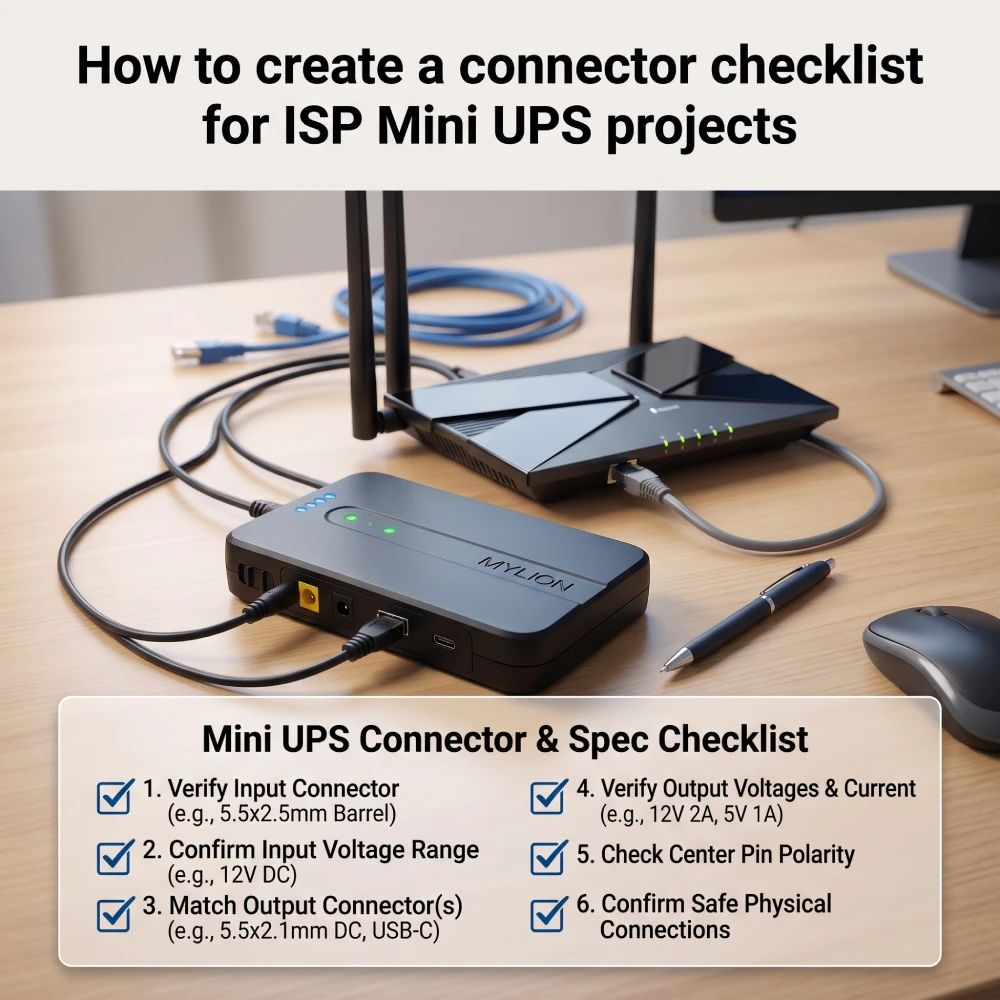
How to build a connector checklist for ISP Mini UPS projects

How to build a connector checklist for ISP Mini UPS projects

For ISPs deploying backup power at scale, few things generate more field failures than connector mismatches. A technically sound Mini UPS with the right voltage and ample battery capacity can still fail in the field if the DC plug is wrong, polarity is unclear, or the cable length doesn’t reach the equipment. A systematic connector checklist

How to build a connector checklist for ISP Mini UPS projects Read More »

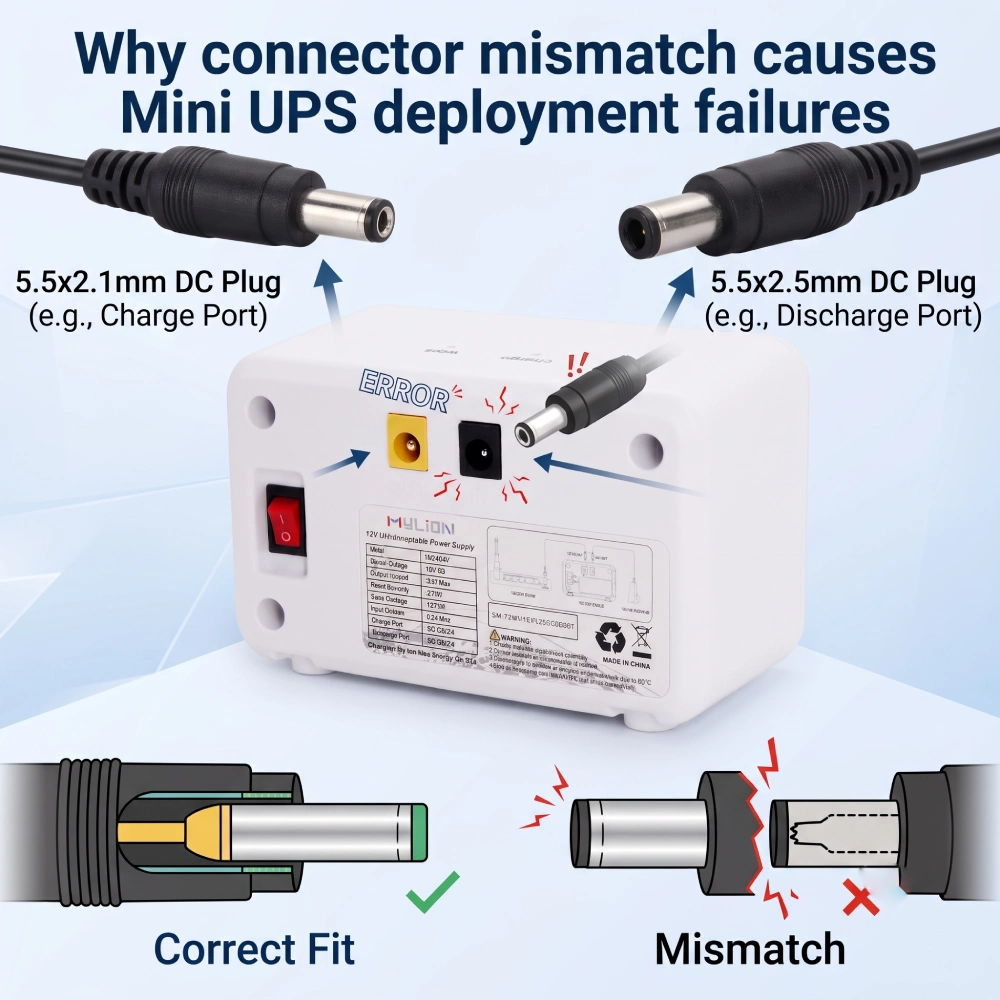
Why connector mismatch causes Mini UPS deployment failures

Why connector mismatch causes Mini UPS deployment failures

When ISPs and telecom operators roll out FTTH, power backup for ONTs, routers, and gateways is critical. Yet many Mini UPS deployments fail not because of battery capacity or output current, but because of a silent killer: connector mismatch. A technically suitable Mini UPS can still fail in the field if the DC plug is wrong, polarity is unclear,

Why connector mismatch causes Mini UPS deployment failures Read More »

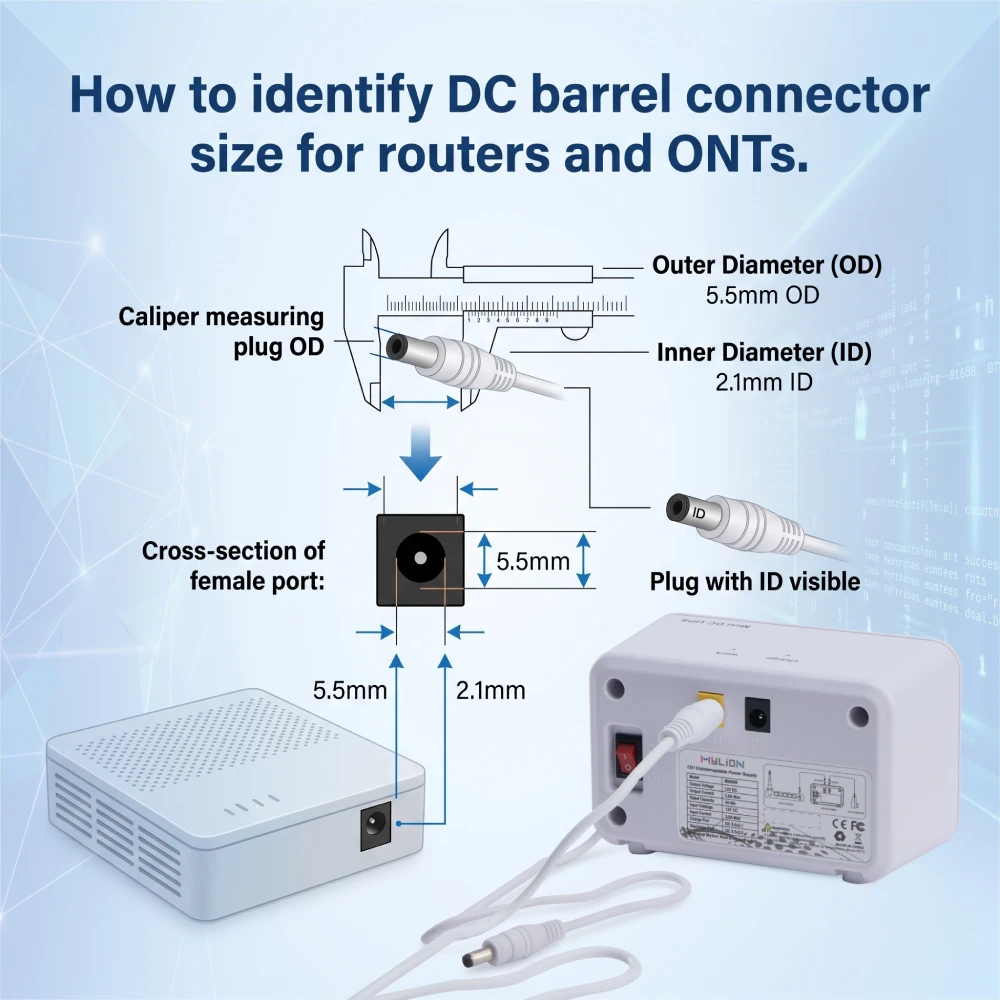
How to identify DC barrel connector size for routers and ONTs

How to identify DC barrel connector size for routers and ONTs

For ISPs and B2B hardware distributors, the reliability of a network often comes down to its smallest components. While multi-gigabit fiber connections and enterprise-grade Wi-Fi routers dominate the conversation, the physical power connection is the true gatekeeper of network uptime. Specifically, the DC barrel connector. Connecting a router or an ONT to a reliable power

How to identify DC barrel connector size for routers and ONTs Read More »

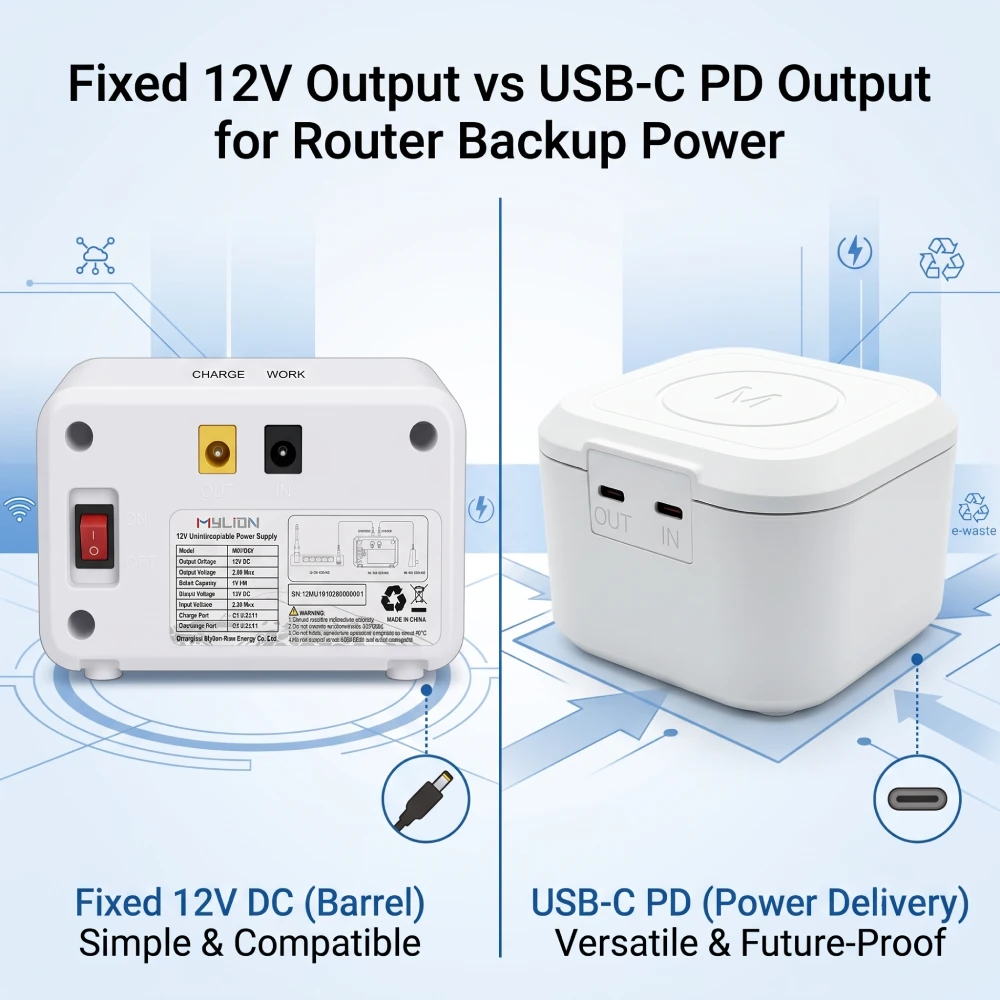
Fixed 12V Output vs USB-C PD Output for Router Backup Power

Fixed 12V Output vs USB-C PD Output for Router Backup Power

Introduction: The Power Dilemma for Modern Network Infrastructure When a power outage strikes, your router, modem, or ONT is the first to go dark—and with it, your entire network. For ISPs, telecom operators, and system integrators, this isn’t just an inconvenience; it’s a service-level agreement (SLA) violation waiting to happen. Mini UPS solutions have emerged as

Fixed 12V Output vs USB-C PD Output for Router Backup Power Read More »

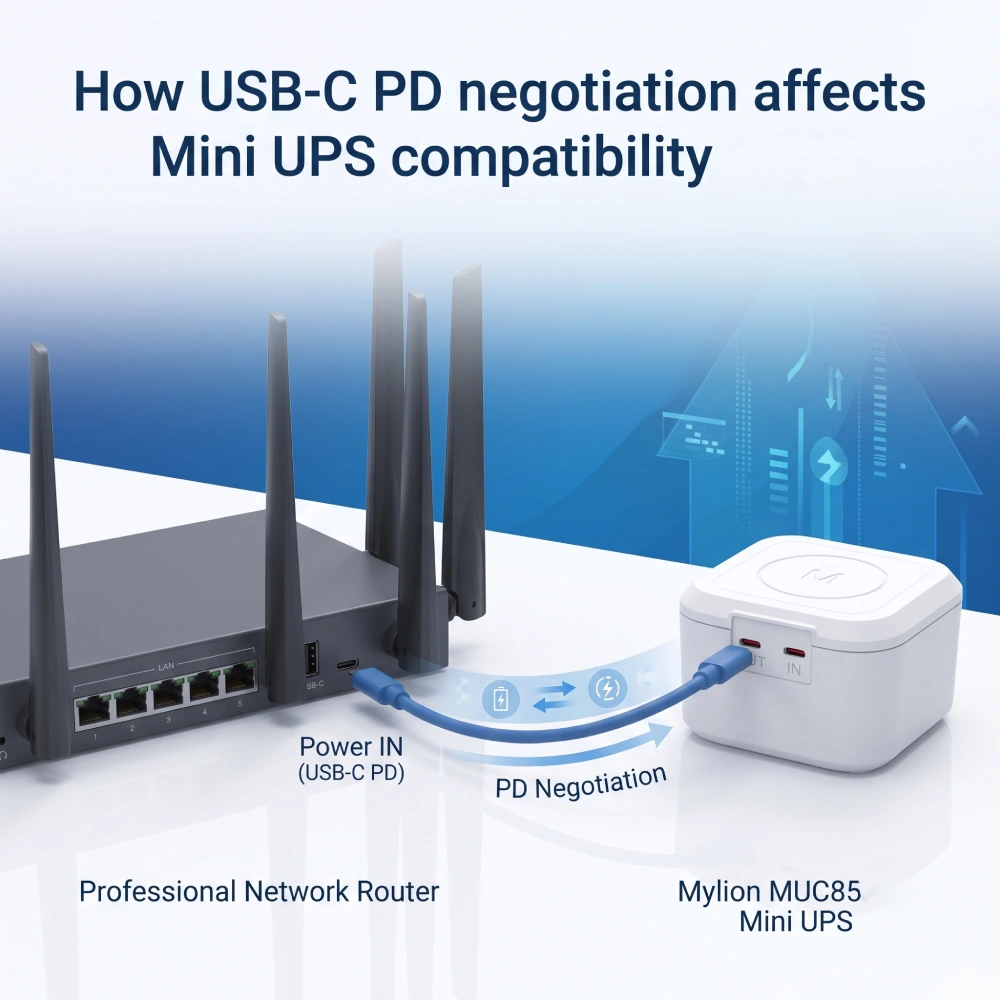
How USB-C PD negotiation affects Mini UPS compatibility

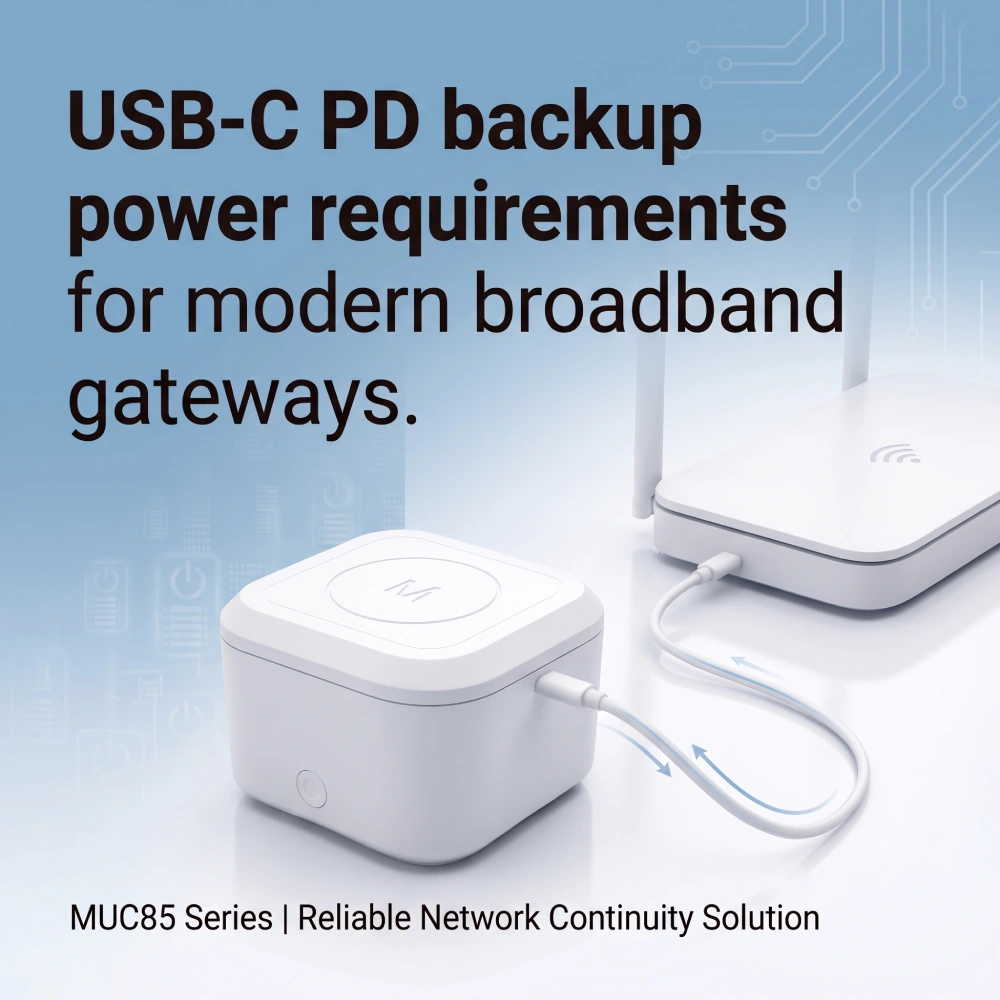
USB-C PD backup power requirements for modern broadband gateways

Today, the landscape of network hardware is undergoing a massive shift. The telecom and IT industries are rapidly adopting USB-C Power Delivery (PD) for modern network gateways, 5G CPE, and high-performance Wi-Fi 7 routers. While USB-C offers incredible versatility and power density, it introduces a complex digital communication layer that traditional backup batteries never had

USB-C PD backup power requirements for modern broadband gateways Read More »

USB-C PD backup power requirements for modern broadband gateways

USB-C PD backup power requirements for modern broadband gateways

The telecommunications landscape is shifting rapidly. ISPs are rolling out multi-gigabit fiber networks, and telecom operators are aggressively deploying 5G fixed wireless access (FWA). Beyond the obvious evolution from cable modems to fiber ONTs and from Wi-Fi 5 to Wi-Fi 7, this leap in bandwidth brings a massive change in power requirements: a rapid transition

USB-C PD backup power requirements for modern broadband gateways Read More »

AC UPS vs DC Mini UPS for ISP_ Which to Choose_

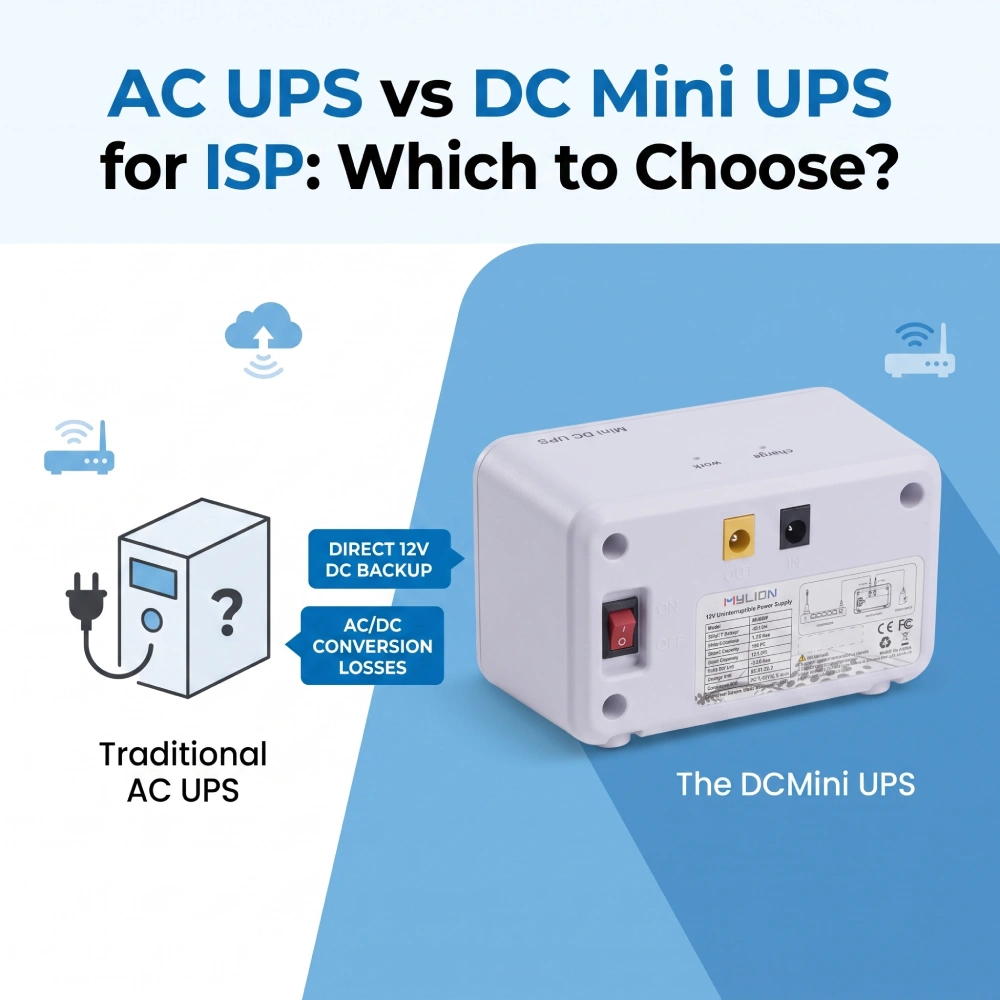
AC UPS vs DC Mini UPS for ISP: Which to Choose?

For ISPs, network uptime is not just a technical metric; it is the foundation of customer retention and brand reputation. To combat power fluctuations and grid outages, ISPs deploy UPS systems across their infrastructure. However, network architects face a critical choice: deploying traditional AC UPS for ISP core infrastructure versus modern DC Mini UPS systems at the

AC UPS vs DC Mini UPS for ISP: Which to Choose? Read More »

Why DC-side backup is more efficient for routers and ONTs

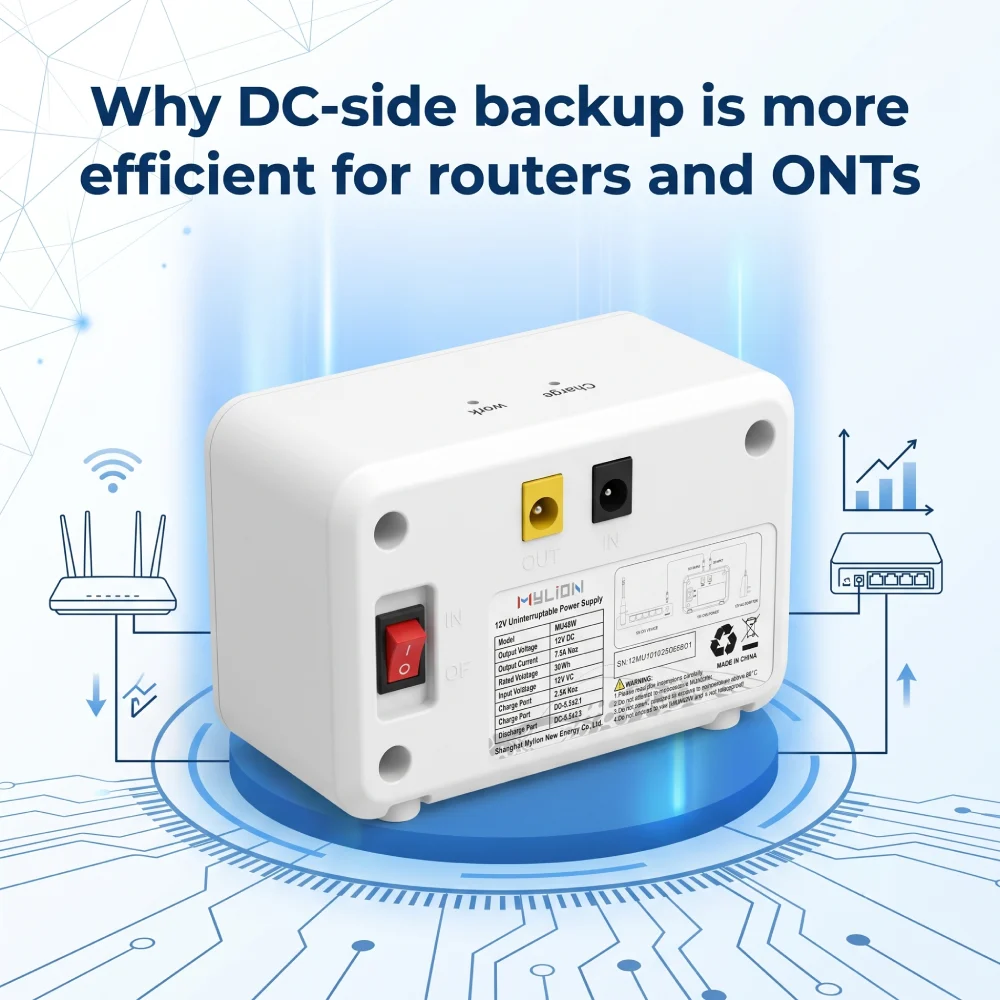
Why DC-side backup is more efficient for routers and ONTs

As internet connectivity transforms from a convenience into critical infrastructure, network continuity is a top priority for businesses, ISPs, and remote professionals. The standard approach to power backup has traditionally been a UPS that outputs AC. While AC UPS systems are excellent for high-power enterprise servers and legacy hardware, they are remarkably inefficient when paired

Why DC-side backup is more efficient for routers and ONTs Read More »

en_USEnglish
滚动至顶部

Get A Quotation