
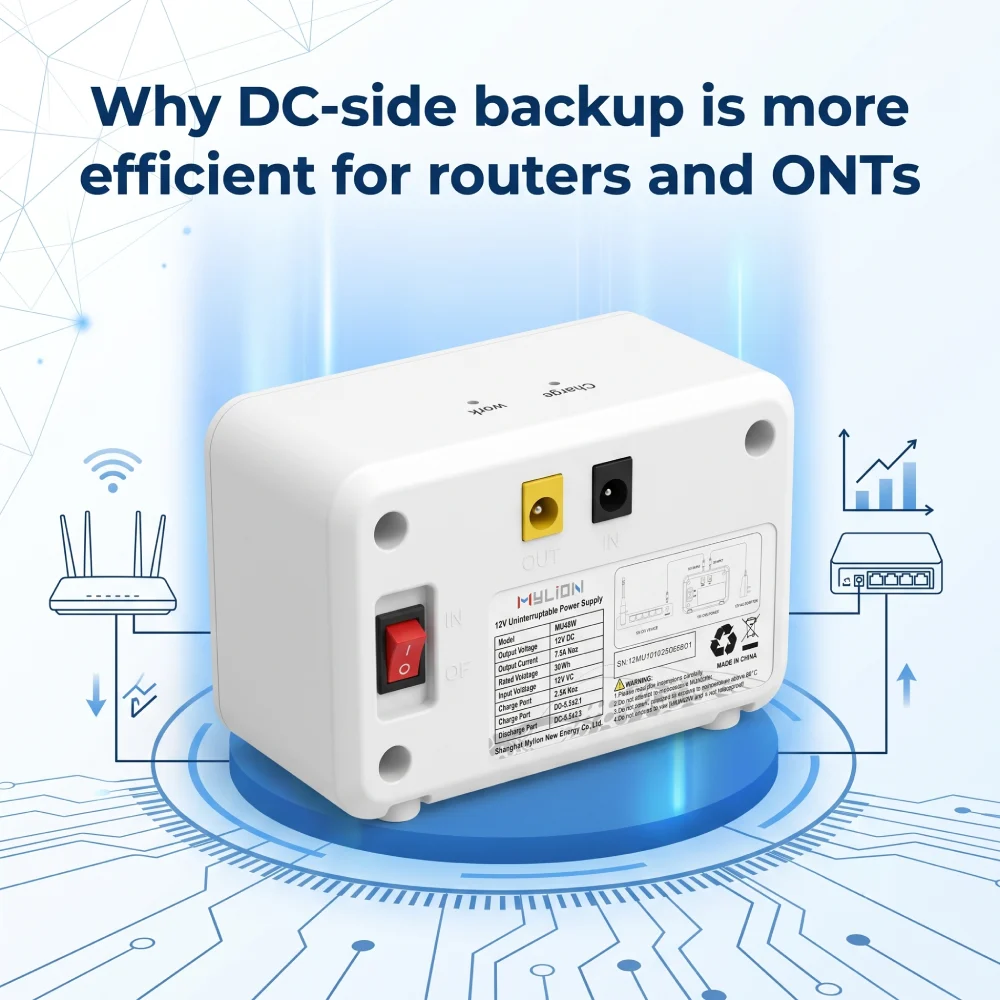
As internet connectivity transforms from a convenience into critical infrastructure, network continuity is a top priority for businesses, ISPs, and remote professionals. The standard approach to power backup has traditionally been a UPS that outputs AC. While AC UPS systems are excellent for high-power enterprise servers and legacy hardware, they are remarkably inefficient when paired with modern, low-power edge network devices like Wi-Fi routers and ONTs.
This is where DC backup solutions step in. A DC UPS for routers and ONTs eliminates unnecessary power conversions, drastically extending backup runtime, reducing thermal footprint, and lowering overall deployment costs. In this article, we will explore why DC-side backup is more efficient for routers and ONTs.
The Energy Conversion Penalty: Why AC UPS Wastes Power
The Three-Conversion Problem
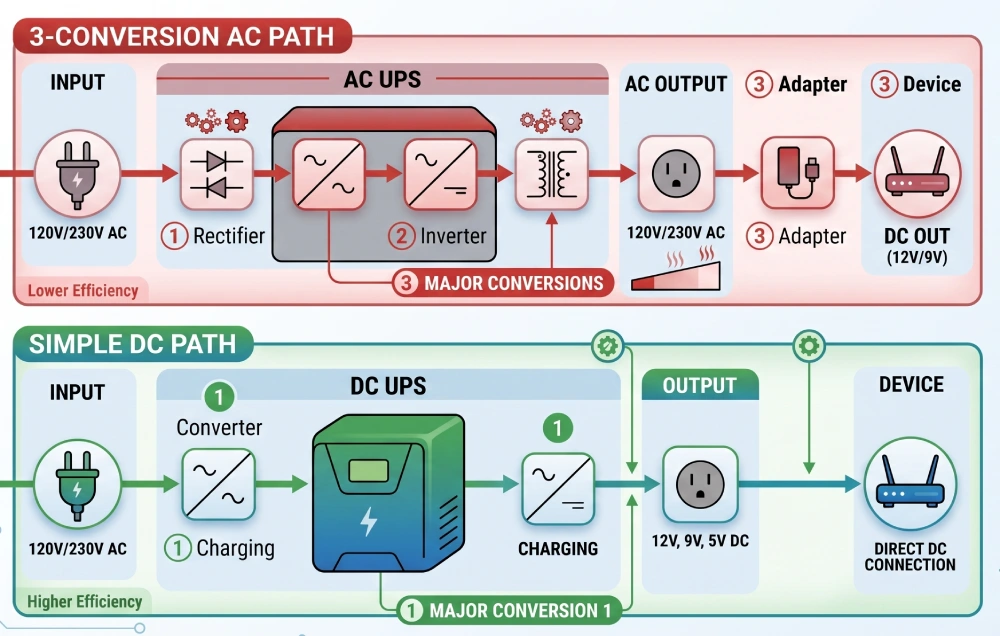
To understand why DC-side backup is more efficient, you need to follow the energy path. When a traditional AC UPS powers a broadband router, here’s what happens:
- AC → DC: The UPS converts wall AC power to DC to charge its internal battery
- DC → AC: During an outage, the UPS inverts DC battery power back to AC
- AC → DC: The router’s external power adapter converts AC back to DC for the device
This is the double-conversion penalty—energy is converted twice before it ever reaches the device. Each conversion stage introduces losses. For low-power telecom loads, traditional AC UPS units typically operate at only 70–85% efficiency.
The DC Mini UPS Advantage
A DC Mini UPS follows a radically simpler path:
- AC → DC: The UPS converts wall AC to DC to charge the battery
- DC → DC: During an outage, the battery outputs DC power directly to the device
This simplified AC-to-DC pipeline eliminates the double-conversion process, ensuring that every watt of stored battery capacity is delivered straight to the networking hardware without being wasted in unnecessary electrical translations.
Why Routers and ONTs Are DC Devices
Native DC Architecture
Modern broadband equipment is designed around DC power for a simple reason: every electronic component inside—processors, memory chips, radios, and optical transceivers—operates on low-voltage DC. Typical requirements include:
- Routers: 12V DC, 0.5A–2A (6W–24W)
- ONTs/ONUs: 12V DC, typically 5W–12W
- Modems: 9V or 12V DC
- Small switches:12V or 24V DC
The external power adapter that ships with every router and ONT is nothing more than an AC-to-DC converter. When you plug a router into an AC UPS, you’re effectively using two power supplies in series—the UPS’s inverter and the device’s adapter—both introducing losses.
The advantages of DC Mini UPS for router and ONT backup
Beyond energy efficiency, implementing a DC Mini UPS introduces a host of operational and physical advantages tailored specifically to modern broadband deployments.
Zero Transfer Time
When the power fails, every millisecond matters. Traditional AC UPS systems typically have transfer times measured in milliseconds—enough to cause brief interruptions that can reset sensitive network equipment.
Mylion’s DC Mini UPS solutions, feature zero transfer time (0ms) switching. The transition from mains power to battery backup is seamless and instantaneous. The router never experiences a voltage drop, ensuring seamless, uninterrupted broadband service.
Reduced Footprint
Standard AC UPS units are bulky, heavy, and require significant floor or desk space. They also require you to plug the router’s original bulky power adapter into the UPS chassis.
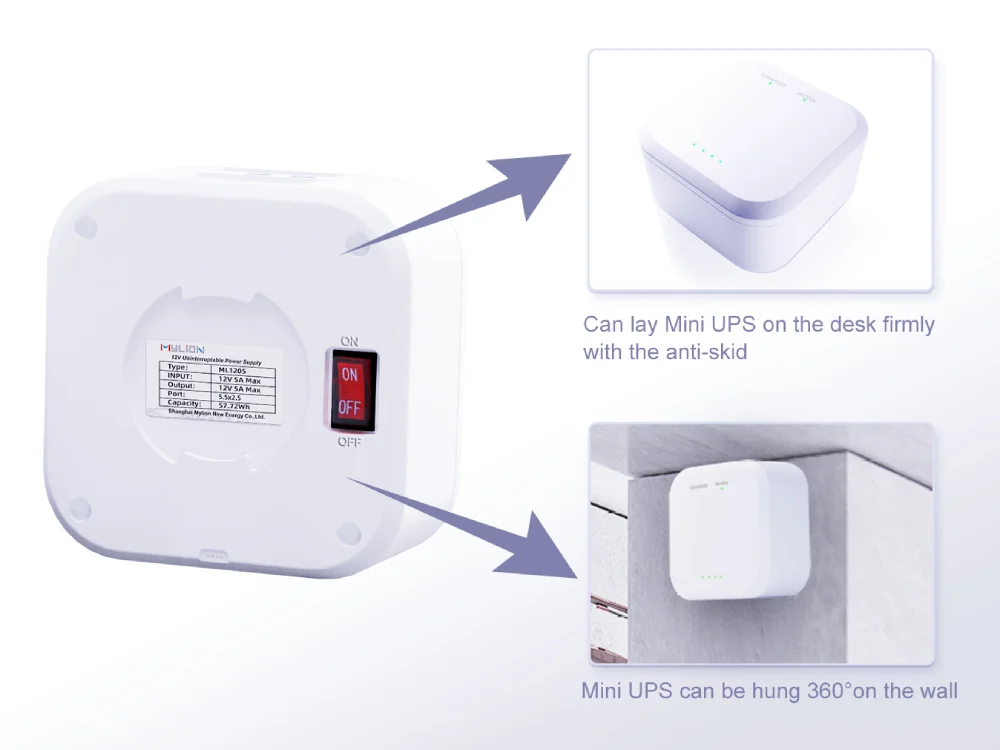
A DC-side backup is radically smaller. Devices like mini UPS systems are often no larger than a standard power bank. They can be mounted directly to a wall, tucked into small structured wiring enclosures alongside the ONT, or placed discreetly on a desk.
Longer Lifespan of Hardware
Because DC-side backups generate less heat, the ambient temperature around the networking equipment remains lower. Heat is the primary enemy of electrical components; keeping the operating environment cooler directly contributes to the longevity of the router, the ONT, and the backup battery itself.
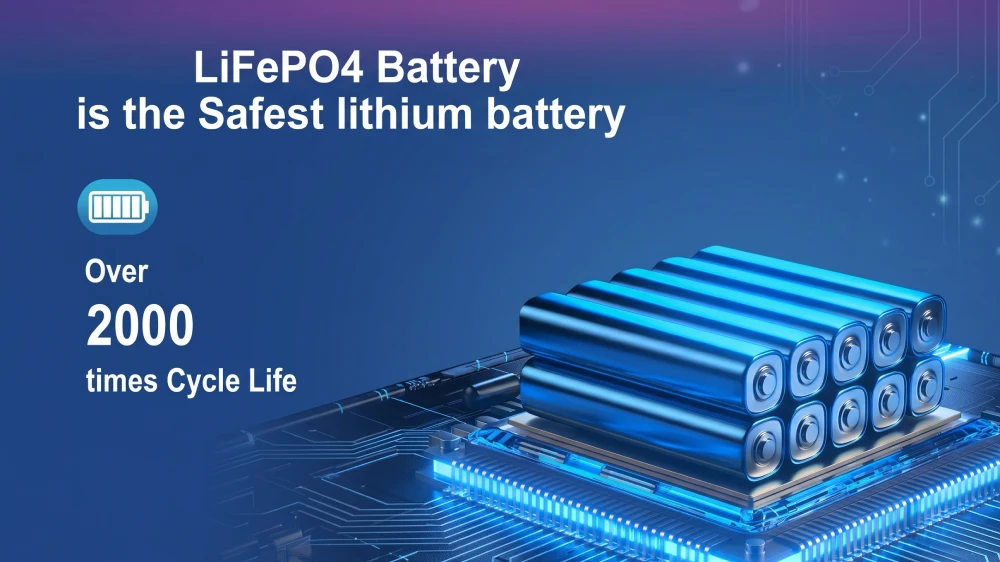
Furthermore, premium DC UPS systems utilize advanced lithium-ion or LiFePO4 batteries, which offer significantly longer lifecycles than the heavy SLA (Sealed Lead Acid) batteries found in traditional AC units.
Total Cost of Ownership: The Business Case for DC-Side Backup
Lower Hardware Costs
DC Mini UPS units are inherently simpler than their AC counterparts. They require:
- No heavy inverter components
- No bulky transformers
- Smaller, lighter enclosures
- Fewer cooling requirements
The result is a lower bill of materials that translates into more affordable pricing for bulk procurement. For ISPs deploying backup power across thousands of subscriber locations, these per-unit savings add up quickly.
Reduced Battery Replacement Costs
Battery technology matters as much as conversion architecture. Many traditional AC UPS systems still use lead-acid batteries, which:
- Require replacement every 3–5 years
- Have limited cycle life (300–500 cycles)
- Perform poorly in high-temperature environments
- Are heavy and difficult to ship
Modern DC Mini UPS solutions increasingly use LiFePO₄ (lithium iron phosphate) or lithium-ion batteries, offering:
- 2000+ cycle life—4 to 6 times longer than lead-acid
- Higher thermal stability and lower failure risk
- Lightweight, compact form factors
- Faster charging and deeper discharge capability
Mylion’s product line includes models with LiFePO₄ battery options, providing extended operational lifespan and lower total cost of ownership over the deployment lifetime.
Lower Energy Bills
While the wattage of individual routers and ONTs is modest—typically 5W to 15W—the aggregate energy consumption across an ISP’s subscriber base is substantial. The efficiency gap between AC UPS and DC Mini UPS means:
- 15–25% less energy drawn from the grid for the same backup runtime
- Reduced standby power consumption during normal operation
- Lower carbon footprint across the network
As energy efficiency regulations for broadband equipment continue to tighten—with the EU Broadband Equipment Code of Conduct and similar frameworks setting increasingly stringent consumption limits—DC-side backup solutions offer a clear path to compliance.
Mylion Mini UPS: Optimizing Efficiency for Continuous Connectivity
When selecting a DC UPS for routers and ONTs, both B2B integrators and end-users need hardware that is reliable, scalable, and built for real-world broadband deployments.
Mylion, a global manufacturer with over a decade of expertise in advanced battery technologies, engineers mini UPS solutions explicitly designed to bridge the gap between efficiency and continuous connectivity.
1.Structured for Real Deployment Needs
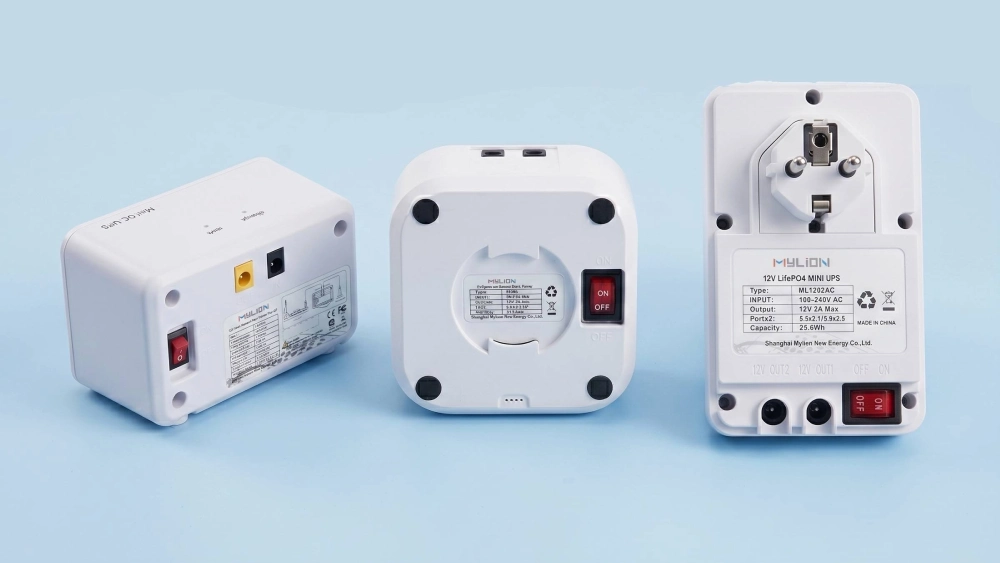
Unlike generic battery suppliers, Mylion organizes its Mini UPS product line to meet the exact technical specifications of ISPs, telecom operators, and system integrators. The Mylion Mini UPS lineup includes specialized models such as:
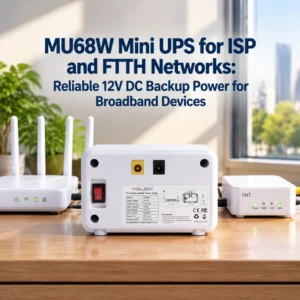
- MU68W Mini UPS(12V 3A): Designed for high-performance Wi-Fi routers and ONTs, offering an intelligent constant voltage output to ensure device stability even as the battery depletes.
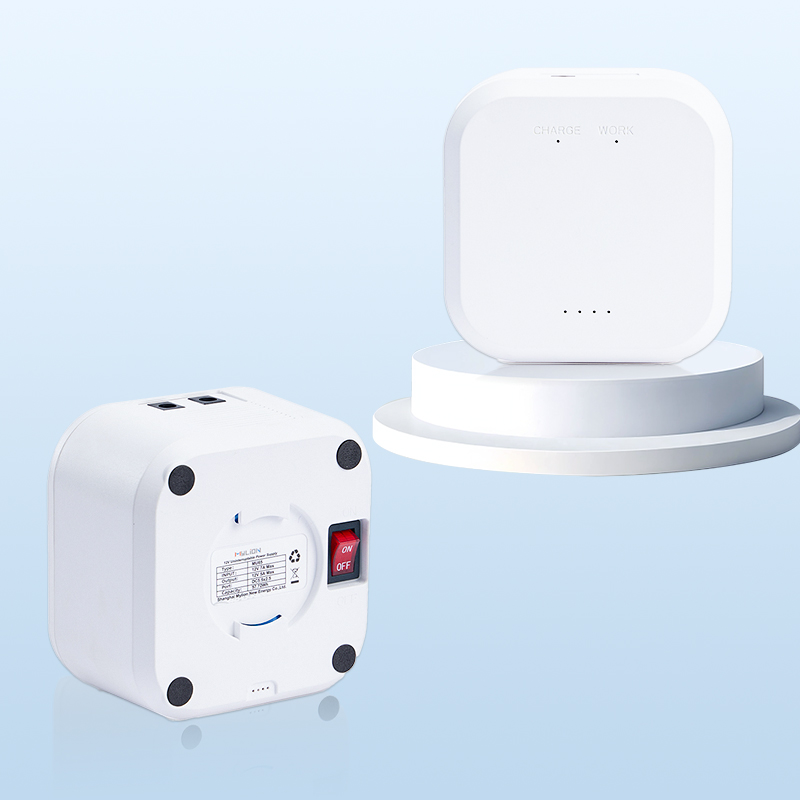
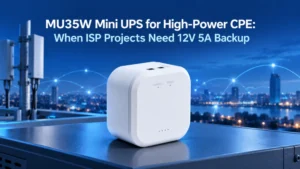
- MU35W Mini UPS (12V 5A):Built for higher-power gateway devices and multi-device setups.
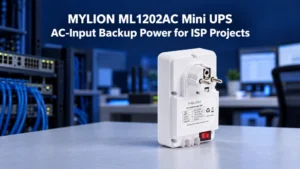
- ML1202AC Mini UPS(12V 2A): A dual-output LiFePO4 mini DC UPS for ONT, router, modem, and low-power broadband CPE
2.High-Capacity Lithium and Smart Protection
Mylion integrates premium lithium-ion and LiFePO4 battery chemistries into their units. These batteries provide exceptional energy density, allowing devices to run for up to 13 to 14 hours on a single charge (depending on the device’s power draw and the specific Mylion model).
Furthermore, Mylion Mini UPS units feature smart IC control systems. These built-in management systems offer comprehensive safety protections, including over-charge, over-discharge, over-current, short-circuit, and temperature protection. They are encased in anti-fire ABS plastic for maximum safety in residential and enterprise environments.
3.The Ideal ISP and Telecom Partner
For telecom operators looking to reduce subscriber downtime and comply with connectivity regulations, Mylion offers project-ready backup solutions. We provide OEM/ODM support and custom branding. By adopting Mylion’s mini UPS products, integrators can deploy a highly efficient, aesthetically pleasing, and robust power backup solution directly to the subscriber side.

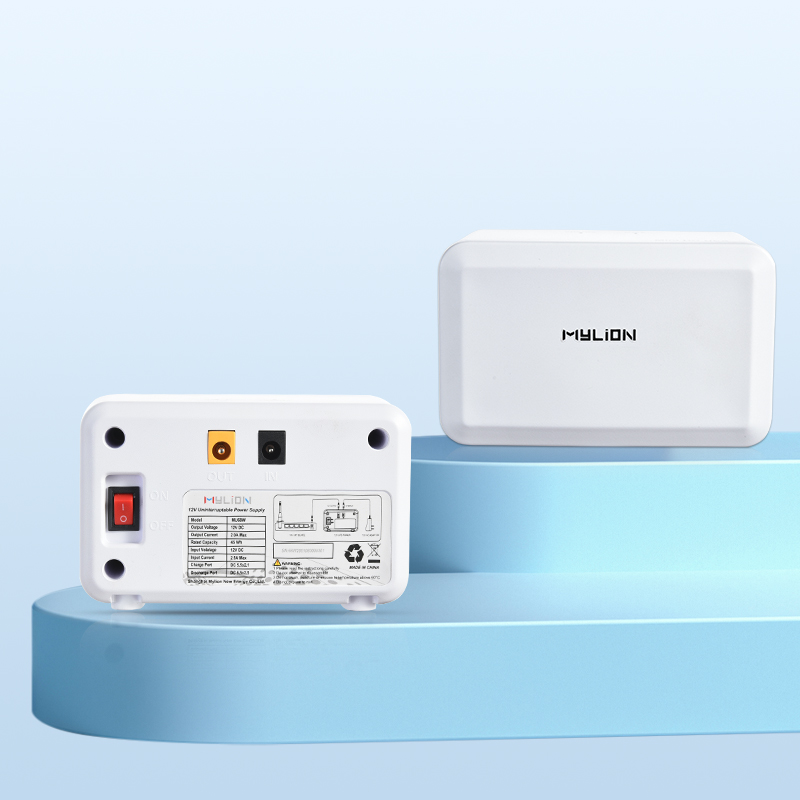
MU68 Mini UPS
MU48 Mini UPS
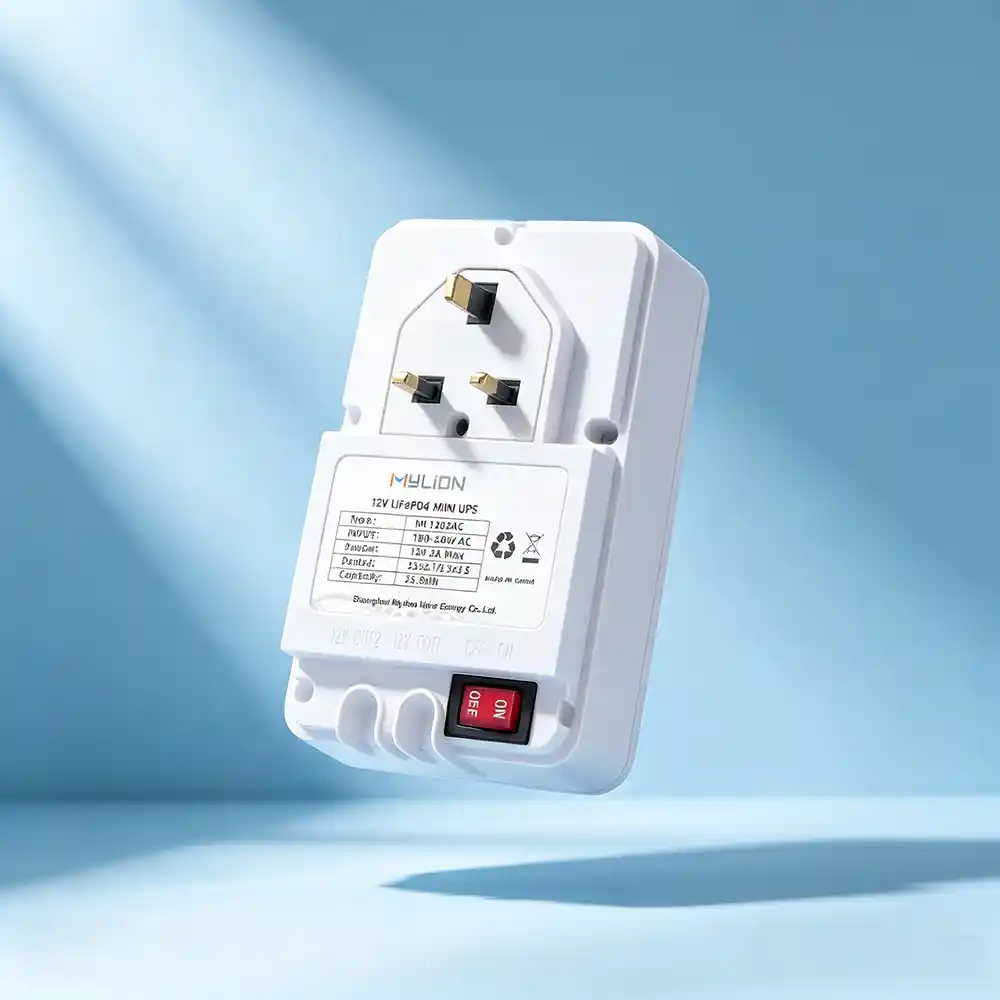
ML1202AC Mini UPS
MU35 Mini UPS
FAQ
Q1: What is the difference between a DC Mini UPS and a traditional AC UPS?
Q2: How much more efficient is a DC Mini UPS compared to an AC UPS?
Q3: Will a DC Mini UPS work with my router or ONT?
Q4: How long will a DC Mini UPS keep my router running during an outage?
Q5: Can a DC Mini UPS be used 24/7 in continuous operation?
Q6: Are DC Mini UPS solutions suitable for ISP-scale deployments?
Conclusion
The shift toward edge networking and continuous broadband access demands a smarter approach to power backup. Relying on bulky, inefficient AC UPS systems to power lightweight 12V devices is an outdated strategy that wastes energy, generates excess heat, and occupies valuable physical space.
By leveraging a DC UPS for routers and ONTs, you eliminate power conversion losses, ensure zero-millisecond failover, and drastically extend the runtime of your critical network infrastructure. With specialized, high-quality hardware like the Mylion Mini UPS, ISPs, businesses, and remote workers can secure stable, efficient, and long-lasting connectivity against the growing threat of power instability.
 English
  简体中文
简体中文  Deutsch
  Français
  Italiano
  Español