
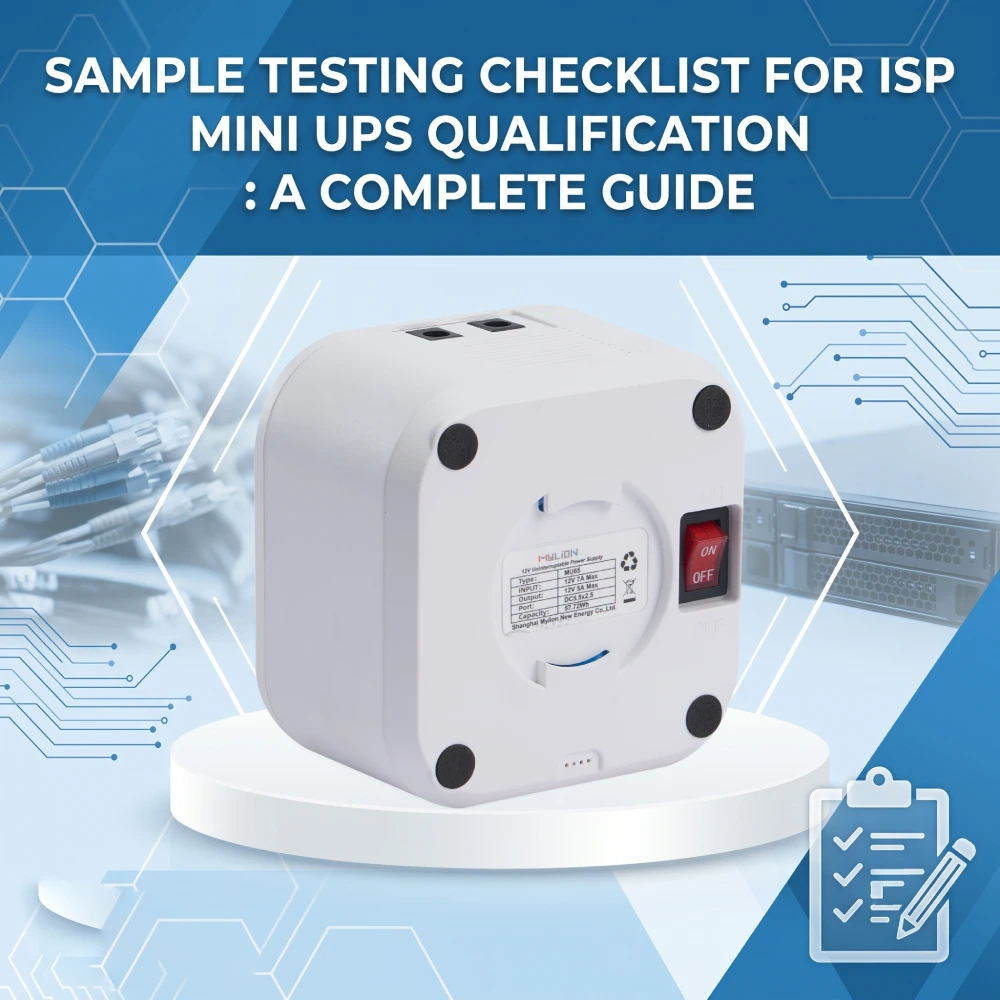
When rolling out high-speed broadband or FTTH (Fiber to the Home) services, power outages represent a massive vulnerability. To bridge this gap, deploying a Mini DC UPS alongside ONTs and routers has become an industry standard.
However, bulk-purchasing backup power solutions without rigorous sample qualification can lead to catastrophic network failures, increased truck rolls, and severe SLA (Service Level Agreement) violations. This comprehensive guide outlines the definitive testing checklist for evaluating Mini UPS samples, ensuring your deployment delivers flawless service continuity.
ISP Mini UPS Qualification Testing Overview
A complete Mini UPS qualification program normally includes four stages:
- Requirement review
- Sample verification
- Field application testing
- Production approval
Each stage answers a different business question:
Qualification Stage | Key Question |
Requirement Review | Is the Mini UPS technically suitable for the target equipment? |
Sample Verification | Does the product perform according to specifications? |
Field Testing | Does it work reliably in real ISP environments? |
Production Approval | Can the supplier support stable long-term deployment? |
For ISP customers, sample testing is not only an engineering activity. It is a vital risk-control process before committing to bulk deployments of hundreds or thousands of units.
A reliable qualification checklist should combine electrical testing, compatibility validation, user experience evaluation, and supplier assessment.
Core Technical Specifications to Evaluate in Mini UPS Samples
Before physically testing a unit, you must verify that the engineering specifications align with your network hardware requirements. Focus your initial review on these core parameters:
1. Input and Output Electrical Compatibility
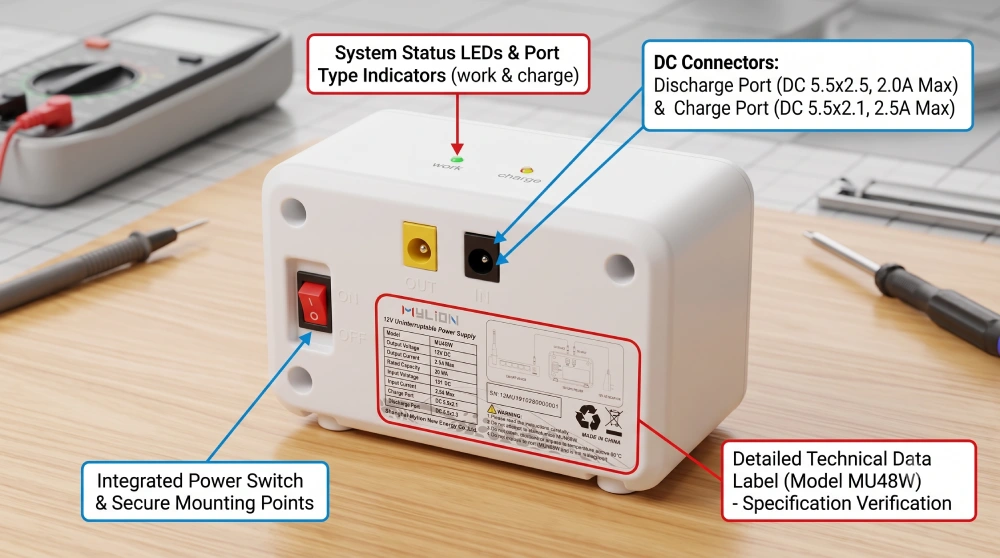
The first evaluation point is electrical compatibility between the Mini UPS and the target network equipment.
The key parameters include:
- Input voltage range
- Output voltage
- Continuous output current
- Maximum output current
- Total power capability
- Charging requirements
For ISP applications, the connected equipment should always be considered first.
Typical devices include:Typical devices include routers, ONUs, ONTs, CPEs, and gateways.
A 12V device does not automatically mean every 12V Mini UPS is suitable. Different devices may have different current requirements, startup power consumption, and operating conditions.
2. Battery Capacity and Backup Time Performance
Backup time is one of the most important factors for ISP Mini UPS qualification. However, backup performance cannot be evaluated only by battery capacity.
Actual runtime depends on:
- Connected equipment power consumption
- Battery capacity
- Conversion efficiency
- Load variation
- Operating temperature
- Battery condition
During sample testing, the ISP should define:
- Target backup duration
- Typical network load
- Maximum expected load
- Operating environment
3. Automatic Switching Performance
Automatic switching is a core function of a Mini UPS. During qualification, ISPs should verify whether the connected network equipment continues operating when external power is removed.
The test should include:
- Connect AC power input
- Connect the target router, ONU, ONT, or CPE device
- Remove AC power
- Observe switching behavior
- Restore AC power
- Confirm charging recovery
Important evaluation points:
- Did the network device restart?
- Was the output voltage stable?
- Was the switching process consistent?
- Did the device reconnect normally?
MYLION Mini UPS products are designed with power management functions including external power handling, battery charging management, automatic switching, and DC output control.
4. Interface and Device Compatibility
Interface compatibility is another critical qualification factor.
Before approval, check:
- DC connector type
- Connector polarity
- Cable length
- Adapter compatibility
- Output interface configuration
Common Mini UPS connection requirements include:
- DC5521
- DC5525
- USB-C
- DC conversion cables
- Dual-device power cables
For ISP projects, the Mini UPS should be tested with the actual equipment model that will be deployed.
The Comprehensive Step-by-Step Mini UPS Sample Testing Checklist
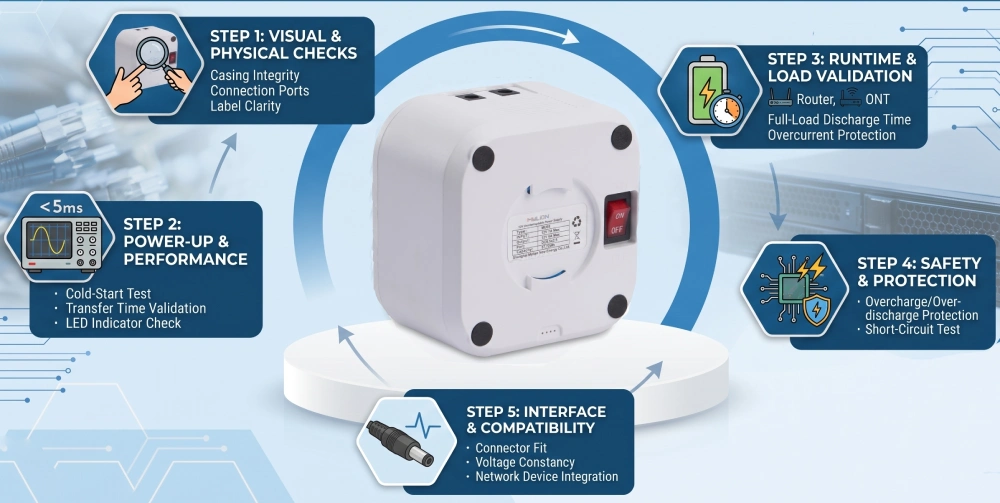
A complete Mini UPS qualification process should follow a structured testing sequence.
The following checklist can help ISPs, telecom companies, and network equipment providers evaluate samples before bulk purchasing.
Test Item | Testing Method | Key Evaluation |
Appearance Inspection | Visual check | Product consistency, labels, accessories |
Electrical Test | Measure input/output performance | Voltage and current stability |
Load Test | Connect actual equipment | Continuous operation capability |
Switching Test | Simulate power failure | Device continuity |
Backup Test | Battery discharge test | Runtime performance |
Compatibility Test | Use real network devices | Application suitability |
Reliability Test | Long-duration operation | Stability and thermal behavior |
Step 1: Visual and Configuration Inspection
Before electrical testing, confirm the sample configuration.
Check:
- Model number
- Product label
- Housing condition
- Included accessories
- Adapter specification
- Cable type
- User documentation
The tested sample should match the expected production configuration.
Any differences between sample and future production version should be identified before approval.
Step 2: No-Load Testing
No-load testing verifies basic system behavior.
Check:
- Output voltage
- Charging status
- Indicator operation
- Abnormal noise
- Initial power behavior
This step helps identify basic hardware issues before connecting expensive network equipment.
Step 3: Load Testing
Load testing evaluates actual operating capability. Recommended test conditions:
Normal Load Test
Simulate typical ISP operation.
Example:
- Router only
- ONU only
- ONT only
Maximum Load Test
Evaluate performance under higher demand.
Check:
- Output stability
- Temperature increase
- Protection activation
- Long-term operation
Step 4: Power Failure Simulation Test
This is one of the most important ISP qualification steps.
Testing procedure:
- Connect Mini UPS to the network device
- Ensure normal operation
- Remove AC input power
- Monitor device status
- Record switching performance
- Restore AC power
The qualification report should record:
- Device remained online or restarted
- Switching behavior
- Output stability
- Recovery performance
Step 5: Long-Duration Backup Test
A short demonstration is not enough for ISP deployment. A longer test should evaluate:
- Battery discharge behavior
- Output consistency
- Temperature change
- Device operation status
For large-scale ISP deployment, long-term stability is usually more important than maximum short-term performance.
Step 6: Real Network Equipment Validation
Laboratory testing should be followed by actual equipment testing.
Recommended devices:
- Router
- ONU
- ONT
- CPE
- Gateway
Testing should confirm:
- Network connection continuity
- Device stability
- Restart behavior
- Installation suitability
A Mini UPS should be evaluated as part of the complete network system, not as an isolated power product.
Protection and Safety Verification
Protection performance is essential because Mini UPS products combine battery systems and electronic power management functions.
A qualification checklist should include safety verification.
Battery Protection Verification
Confirm applicable protection functions:
- Over-charge protection
- Over-discharge protection
- Over-current protection
- Short-circuit protection
- Temperature-related protection
The specific protection design depends on the approved product configuration.
Power Management Protection
Evaluate:
- Input abnormal conditions
- Output stability
- Charging management
- Load response
The goal is to ensure that the Mini UPS can operate safely during normal and abnormal conditions.
Thermal and Reliability Testing
Temperature performance should be considered, especially for:
- Telecom cabinets
- Outdoor communication environments
- High-temperature regions
- Long-duration operation
Evaluate:
- Temperature rise
- Continuous operation
- Housing temperature
- Performance stability
Documentation and Compliance Review
Before final approval, review supplier documentation:
- Datasheet
- Product specifications
- Test information
- Installation instructions
- Certification documents where applicable
Documentation consistency is important for future deployment, maintenance, and supplier management.
Integrating Mylion Mini UPS Products into Your Network
For ISPs looking for verified, commercial-grade hardware, Mylion offers a structured product line designed specifically for telecom and FTTH applications. Testing their flagship models reveals specialized engineering for different deployment tiers:
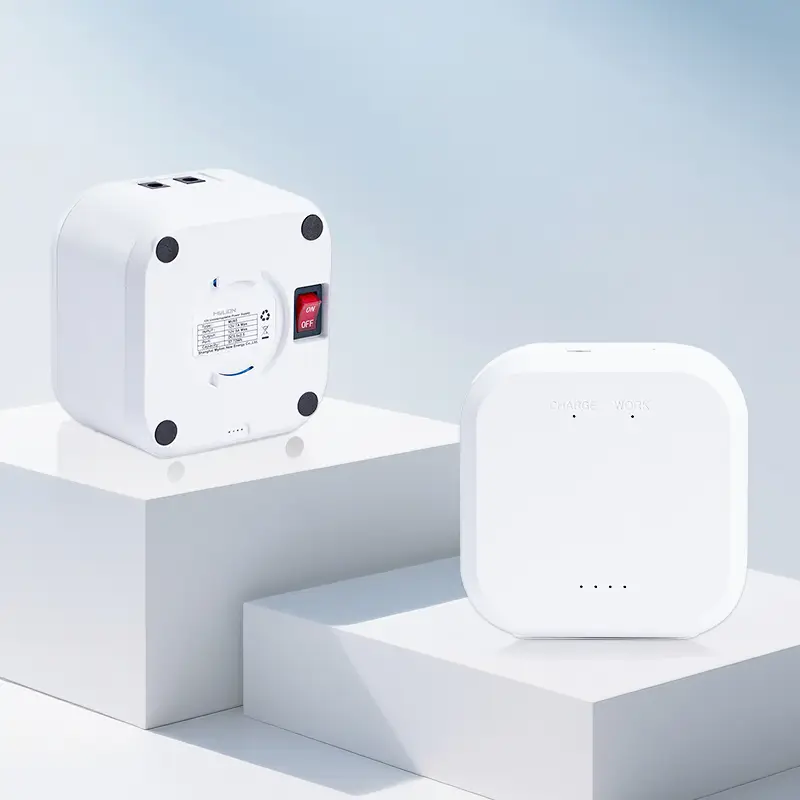
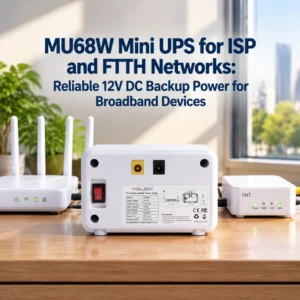
Mylion MU68 (Standard FTTH Deployment): This compact unit features a 44.4Wh lithium-ion battery delivering a constant 12V 3A output. It reliably provides 6 to 10 hours of runtime for standard CPE, making it a cost-effective workhorse for residential ISPs.
Mylion MU35 (High-Current / Multi-Device): Designed with a 12V 5A high-power output, the MU35 can safely output up to 60 watts. It features instant 0ms power switching and intelligent temperature control.
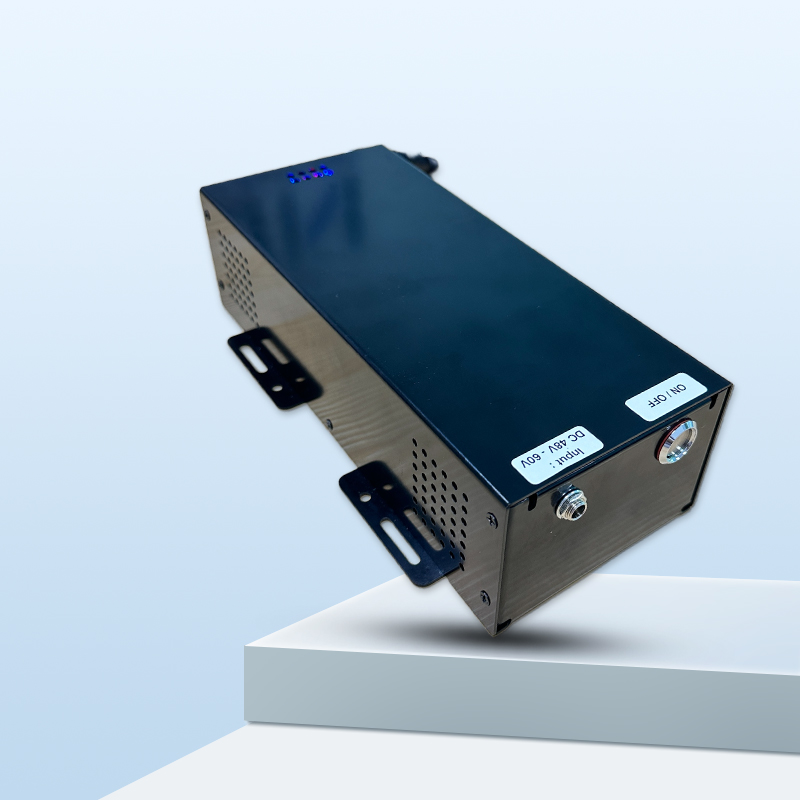
Mylion MU248 (Telecom Edge / High Capacity): Built for heavier infrastructure, this unit houses a massive 102.4Wh LiFePO4 battery. It supports non-standard DC network devices with 24V/4A or 48V/2A outputs, delivering 14 to 17 hours of backup. It is the definitive choice for outdoor wireless bridges, small telecom terminals, and CCTV deployments.
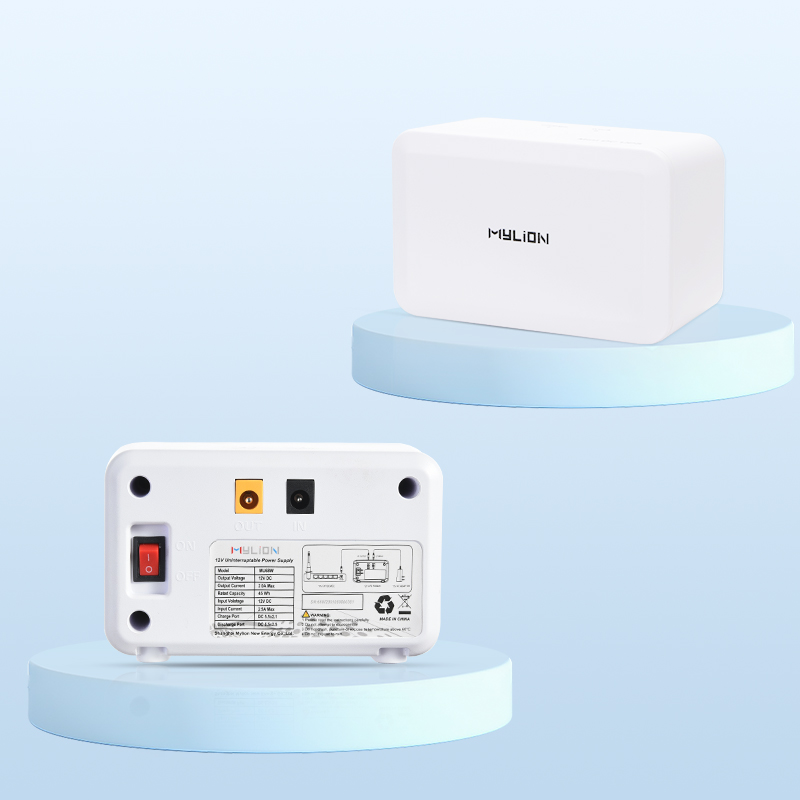
MU68 Mini UPS
MU35 Mini UPS
MU248 Mini UPS
FAQ
Q1: What should ISPs test before approving a Mini UPS sample?
Q2: Can a Mini UPS be selected only by voltage?
Q3: Why should Mini UPS samples be tested with real routers or ONU devices?
Q4: How long should Mini UPS qualification testing take?
Q5: How does MYLION support ISP Mini UPS qualification?
Conclusion
A professional ISP Mini UPS qualification process reduces deployment risk and helps ensure stable network service continuity.
For ISPs, telecom companies, and network equipment providers, the ideal Mini UPS solution is one that matches the equipment, deployment environment, operational requirements, and long-term business objectives.
MYLION focuses on Mini UPS solutions that support customers through application analysis, product matching, sample validation, and long-term supply cooperation.
 English
  简体中文
简体中文  Deutsch
  Français
  Italiano
  Español