
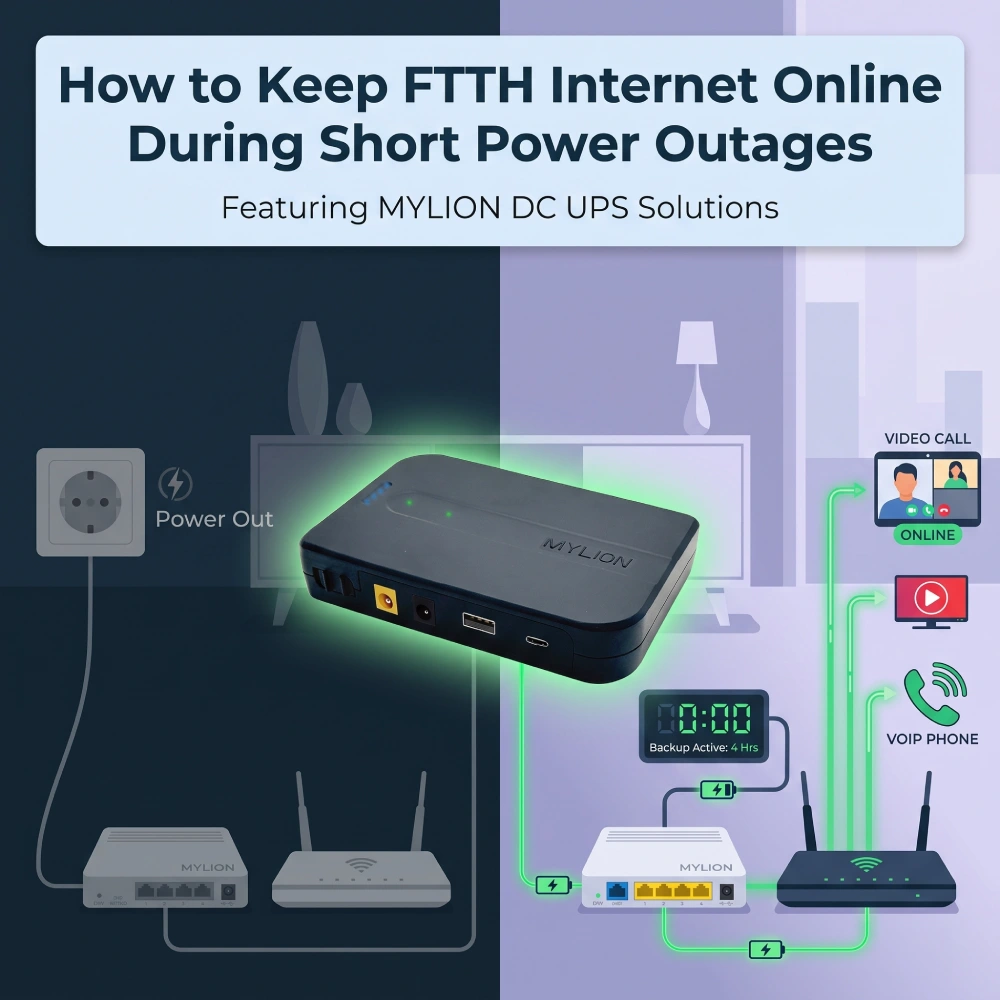
Introducción: El riesgo oculto en la alimentación de respaldo de la puerta de enlace
La fibra hasta el hogar (FTTH) ha revolucionado la conectividad de banda ancha, ofreciendo velocidades de gigabits con una fiabilidad sin precedentes. Sin embargo, incluso las redes de fibra hasta el hogar (FTTH) y fibra hasta el domicilio (FTTP) más robustas comparten una debilidad fundamental: dependen completamente de la red eléctrica local.
Cuando un apagón rotativo, un evento de conmutación de la red o una perturbación climática severa causa una interrupción breve del suministro eléctrico, la línea de fibra óptica en sí no falla. En cambio, el CPE local se apaga. Mantener el internet FTTH en línea durante estos períodos de interrupción requiere una estrategia de energía específica y altamente eficiente. Para los ISP, distribuidores y administradores de TI empresariales, implementar redes dedicadas Mini UPS de CC Se está convirtiendo rápidamente en el estándar de la industria.
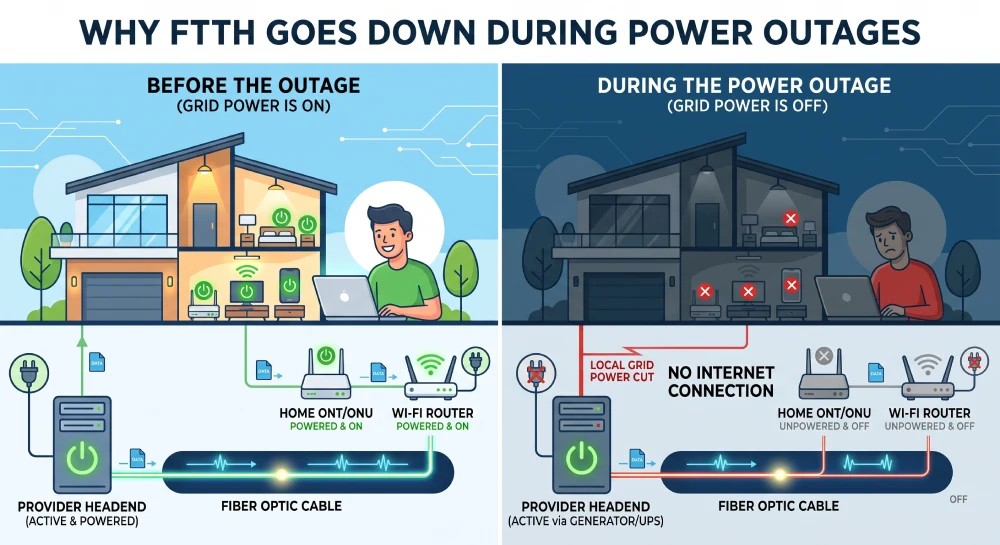
¿Por qué falla la fibra óptica hasta el hogar (FTTH) durante los cortes de energía?
El problema de la energía en la última milla
En una arquitectura de red FTTH, la fibra óptica transmite señales luminosas hasta su hogar. Esta red óptica pasiva (PON) no requiere energía para transmitir luz. El problema radica en el punto de terminación: la ONT u ONU, que convierte las señales ópticas en señales eléctricas Ethernet.
La mayoría de los dispositivos ONT funcionan con alimentación de 12 V CC y consumen entre 5 W y 15 W, según el modelo y sus características. Un ONT GPON típico consume entre 5 W y 9 W en funcionamiento normal, con un consumo máximo de hasta 15,5 W. En caso de fallo de la red eléctrica, estos dispositivos se apagan inmediatamente. La línea de fibra óptica permanece activa, pero el equipo necesario para acceder a ella queda inoperativo.
El efecto dominó en los usuarios y los proveedores de servicios de Internet
- Interrupción de las comunicaciones:Las llamadas VoIP, las reuniones de Microsoft Teams y los túneles VPN se interrumpen de inmediato.
- Ciclos de reinicio prolongados: Aunque se restablezca la energía en segundos, un ONT y un enrutador pueden tardar entre tres y cinco minutos en reiniciarse por completo, establecer la conexión con el ISP y restablecer el enrutamiento IP.
- Fallos de seguridadLas cámaras de seguridad conectadas a la nube y los paneles de control de acceso inteligentes pierden su conexión con las estaciones de monitoreo centrales.
Para los proveedores de servicios de Internet (ISP), estas microinterrupciones constantes generan una avalancha de costosas solicitudes de soporte de nivel 1 por parte de clientes que creen erróneamente que la culpa es de su servicio de Internet, en lugar de la red eléctrica local.
Opciones de respaldo tradicionales frente a mini UPS de CC dedicados
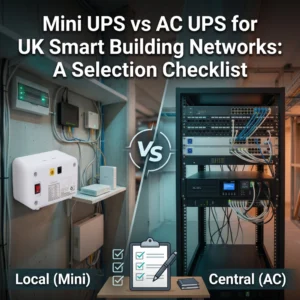
Históricamente, las empresas y los usuarios intensivos dependían de los sistemas de alimentación ininterrumpida (SAI) de CA tradicionales para mantener sus equipos de red en funcionamiento. Si bien son eficaces para racks de servidores y ordenadores de sobremesa, los SAI de CA tradicionales presentan fallos fundamentales cuando se aplican a equipos FTTH de bajo consumo.
El problema de la ineficiencia de los sistemas UPS de CA:
Las baterías de respaldo tradicionales almacenan energía en corriente continua (CC), pero la suministran en corriente alterna (CA) para adaptarse a las tomas de corriente. Al conectar un router Wi-Fi a un SAI (Sistema de Alimentación Ininterrumpida) de CA, la energía sufre una "doble conversión" altamente ineficiente. El SAI convierte la CC de la batería en CA. A continuación, el adaptador de corriente del router convierte inmediatamente esa CA de nuevo en CC para alimentar el dispositivo. Este proceso de conversión redundante provoca una pérdida de entre 20% y 30% de la energía de la batería en forma de calor. Por consiguiente, un SAI de plomo-ácido, grande y pesado, podría mantener un router de 12 V funcionando solo durante una o dos horas.
La ventaja del mini SAI de CC:
Un mini SAI de CC dedicado evita por completo esta conversión. Toma la energía de la toma de corriente, la almacena en celdas de iones de litio de alta densidad y suministra energía de CC pura directamente al ONT y al router con el voltaje exacto que requieren (normalmente 9 V o 12 V).
Característica | UPS de CA tradicional | Mini UPS de CC |
Conversión de potencia | CC-CA-CC | CC-CC |
Eficiencia energética | Bajo (~70-80%) | Muy alto (~95%+) |
Química de las baterías | Plomo-ácido pesado (SLA) | Iones de litio de alto ciclo |
Huella | Voluminoso, requiere espacio en el suelo | Compacto, cabe sobre un escritorio o en la pared. |
Tiempo de transferencia | De 2 a 10 milisegundos | 0 milisegundos (Transferencia cero) |
Mini UPS de CC moderno Estas unidades también ofrecen un tiempo de transferencia de 0 ms, lo que significa que los dispositivos conectados nunca perciben una caída de voltaje, evitando reinicios y la pérdida de sesiones PPPoE. Son compactas, se pueden montar en la pared y están diseñadas para cumplir con los requisitos de voltaje específicos de los equipos FTTH.
Cómo Mylion Mini UPS resuelve el desafío del respaldo de FTTH
Una solución diseñada específicamente para telecomunicaciones y banda ancha.
Mylion se ha consolidado como especialista en mini UPS y soluciones de respaldo de CC para operadores de telecomunicaciones, proveedores de servicios de Internet e integradores de sistemas. A diferencia de los proveedores de baterías genéricos, Mylion organiza su línea de productos por nivel de potencia, autonomía, estilo de instalación, arquitectura de salida y composición química de la batería, lo que facilita la selección del modelo adecuado para su implementación en entornos reales.
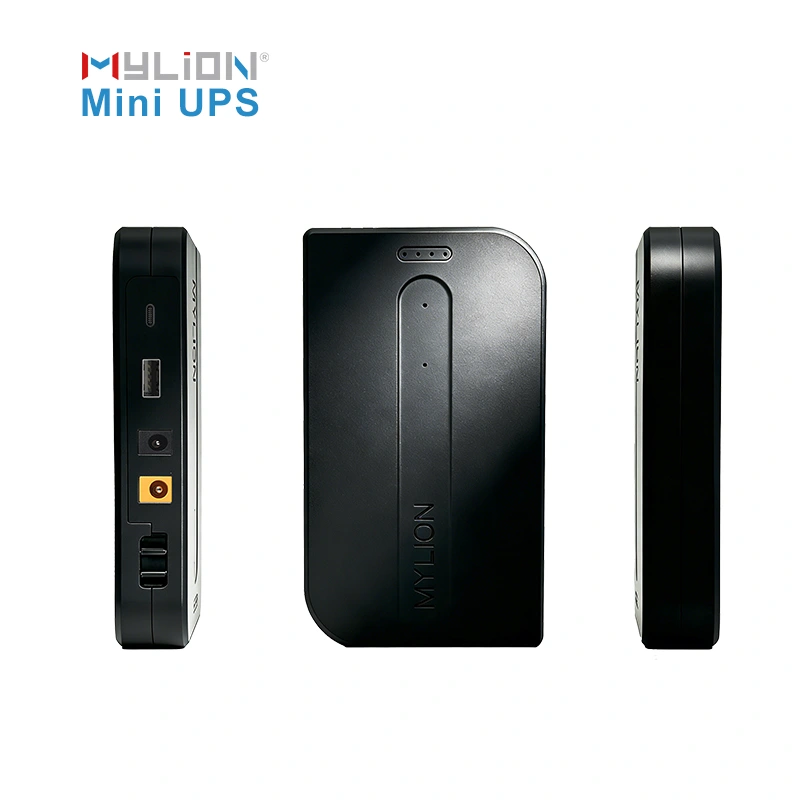
Modelos clave de mini UPS Mylion para FTTH
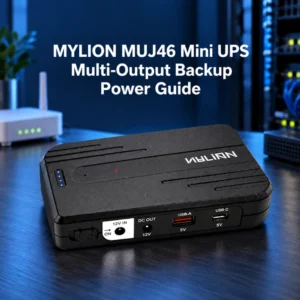
- Mini UPS de CC MUJ46Está diseñado para redes locales complejas. Este modelo puede proporcionar simultáneamente múltiples voltajes (por ejemplo, 5 V, 9 V y 12 V) junto con salidas USB. Es ideal para entornos de pequeñas empresas donde un ONT y una red Wi-Fi de alto rendimiento deben permanecer en línea simultáneamente durante un apagón.
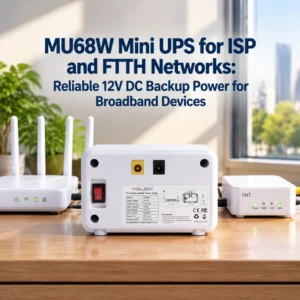
- Mini SAI de CC MU68– Este suele ser el punto de partida recomendado para aplicaciones de respaldo de banda ancha de 12 V convencionales. El MU68 proporciona 12 V CC a un máximo de 3 A con una capacidad de batería de 44,4 Wh. Con una carga de 12 W (típica para un ONT más un enrutador de baja potencia), ofrece aproximadamente 4 horas de funcionamiento.
- SAI mini DC MU48– Una opción más compacta con capacidad de 29,6 Wh, que proporciona 12 V a 3 A. Con una carga de 6 W, ofrece aproximadamente 6 horas de autonomía; con 12 W, unas 3 horas. Este modelo es ideal para la alimentación de un solo dispositivo o para instalaciones FTTH de baja potencia.
- Mini SAI de CC MU35Para requisitos de mayor potencia o configuraciones con varios dispositivos, el MU35 proporciona 12 V a 5 A con una batería de 77,7 Wh. Puede alimentar un dispositivo de 6 W durante 13-14 horas o uno de 12 W durante 4-5 horas. Este modelo admite dos o más dispositivos simultáneamente.
Ventajas de las baterías de litio
Todas las unidades Mylion Mini UPS utilizan baterías de iones de litio o LiFePO₄. En comparación con las baterías tradicionales de plomo-ácido, las baterías de litio ofrecen varias ventajas cruciales para el despliegue de FTTH:
- Mayor vida útil del ciclo– El LiFePO₄ alcanza más de 2000 ciclos, en comparación con los 2-3 años de las baterías de plomo-ácido.
- Mantenimiento cero– No requiere análisis ni riego periódicos.
- Factor de forma compacto– Mucho más pequeñas y ligeras que las soluciones equivalentes de plomo-ácido.
- Mayor tolerancia a la temperatura– Funciona de manera fiable en ambientes cálidos donde el plomo-ácido se degrada rápidamente.
Protección y seguridad inteligentes
Las unidades UPS Mylion Mini incorporan mecanismos de seguridad integrales: protección contra sobrecarga, sobredescarga, cortocircuito y sobrecalentamiento. Las carcasas están fabricadas con material ABS ignífugo, y los modelos de mayor potencia incluyen un ventilador silencioso para la disipación del calor.
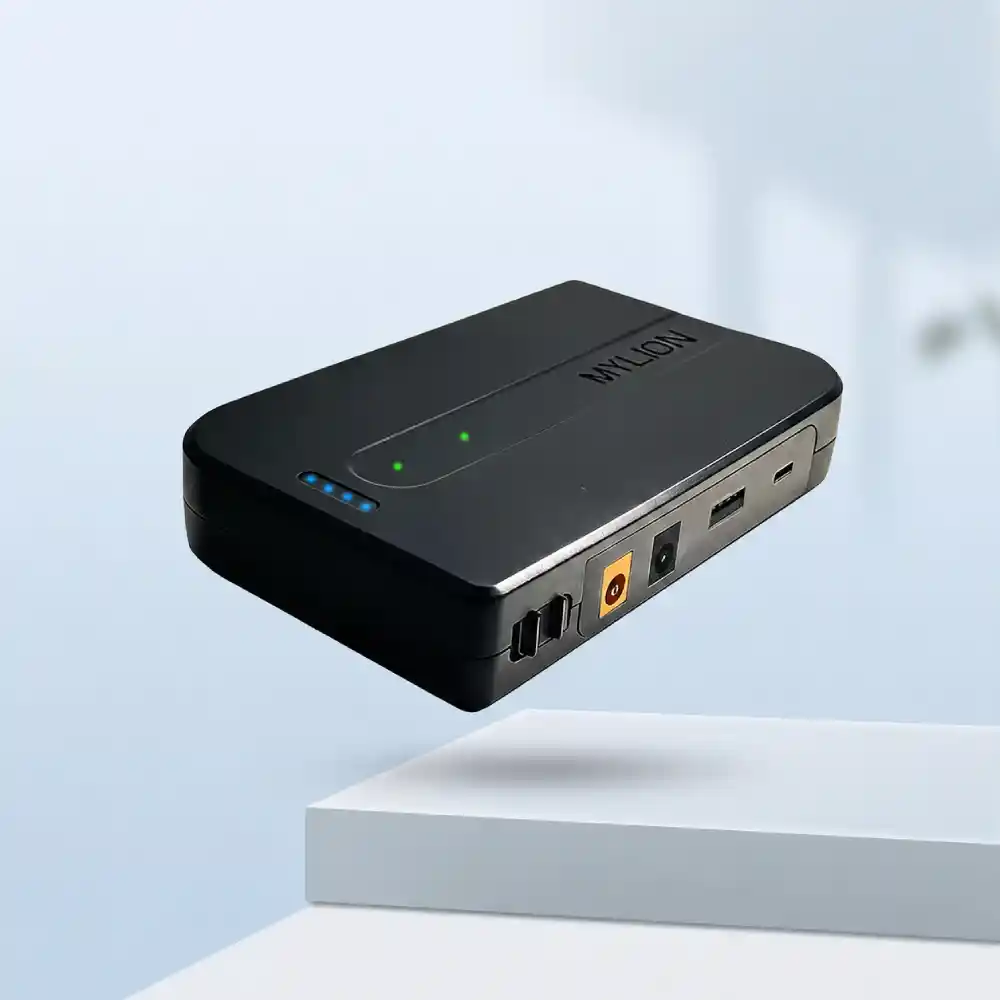
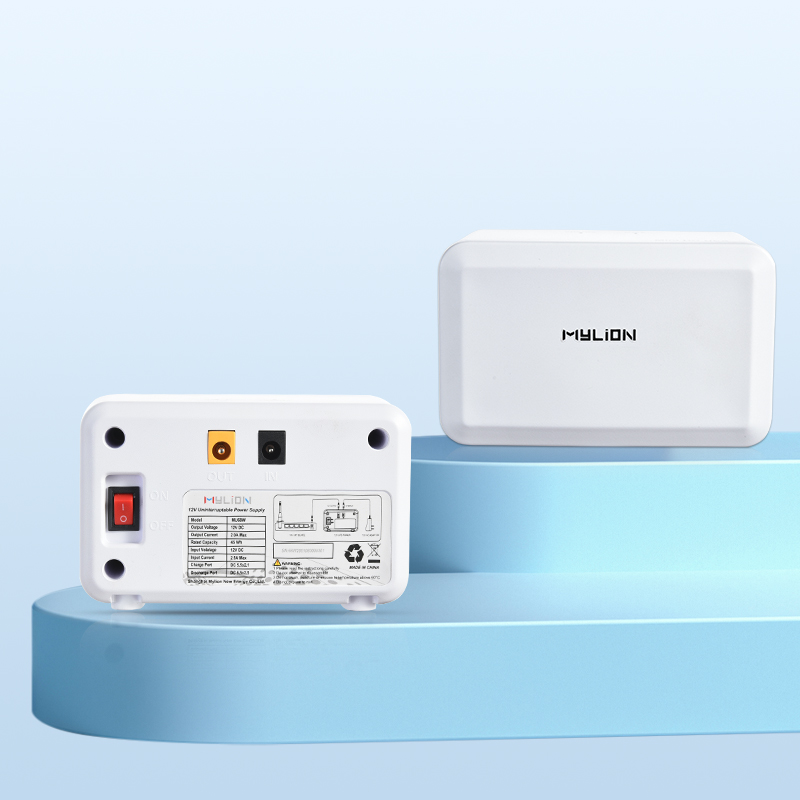
Mini UPS MUJ46
Mini SAI MU48

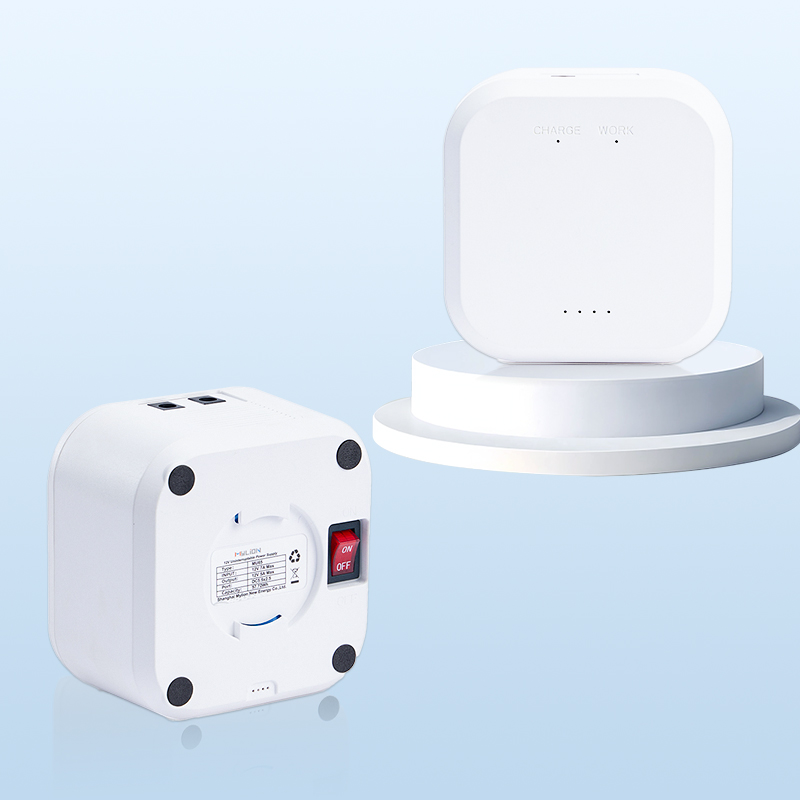
Mini SAI MU68
Mini SAI MU35
Cómo elegir e instalar el mini SAI adecuado para su instalación FTTH
Despliegue de un Solución de mini UPSYa sea para la oficina en casa de un solo ejecutivo o para mil equipos empresariales, se requiere un conocimiento básico de la compatibilidad de potencia. A continuación, se explica cómo especificar e instalar una unidad Mylion.
Paso 1: Identifique los requisitos de su dispositivo
Fíjese en las etiquetas del fabricante que se encuentran en la parte posterior tanto del ONT (módem de fibra) como del router Wi-Fi. Busque dos valores específicos: Voltaje (V) y Amperaje (A). La mayoría de los equipos FTTH utilizan 12 V CC con una corriente nominal de entre 0,5 A y 2 A.
Paso 2: Seleccione el modelo correcto
Para asegurarte de que el SAI Mylion Mini elegido pueda soportar la carga, multiplica los voltios por los amperios para calcular la potencia en vatios.
- ONT: 12V × 1.0A = 12 vatios
- Router: 12V × 1.5A = 18 vatios totales
- Carga: 30 vatios.
Para evitar sobrecargar los circuitos del SAI, deberá seleccionar un modelo Mylion con una potencia de salida máxima de al menos 30 W.
- Para la mayoría de las configuraciones residenciales FTTH con un solo ONT y un enrutadorEl MU68 o el MU48 proporcionan una amplia capacidad de respaldo.
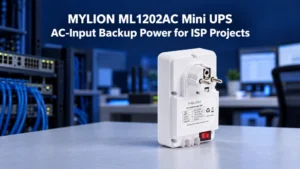
- Para escenarios de mayor potencia o respaldo de dos dispositivos, el MU35W o modelos como el ML1202AC (LiFePO₄, salidas duales de 2A) son apropiados.
Paso 3: Instalación sencilla Plug-and-Play
Las unidades Mylion Mini UPS están diseñadas para una instalación sin configuración. Simplemente inserte la Mini UPS entre el adaptador de corriente original y el dispositivo.
El SAI se carga mientras hay suministro eléctrico de la red y cambia automáticamente al modo de batería cuando falla la alimentación, con un tiempo de transferencia de 0 ms que mantiene el ONT y el router funcionando sin interrupciones.
Paso 4: Considere escenarios con dos dispositivos.
Si necesita realizar copias de seguridad tanto del ONT como del enrutador, tiene dos opciones: un único Mini UPS con salidas duales, como el ML1202AC, o un Mini UPS de 5 A de mayor capacidad, como el MU35.
- Enchufe el Mini SAI ML1202ACConéctalo directamente a la toma de corriente de la pared e inserta el ONT y el router en diferentes puertos de salida.
- Utilice los cables de CC suministrados (a menudo incluyen un “divisor en Y” para alimentar dos dispositivos de 12 V simultáneamente) para conectar la salida delMini SAI MU35 a su ONT y enrutador.
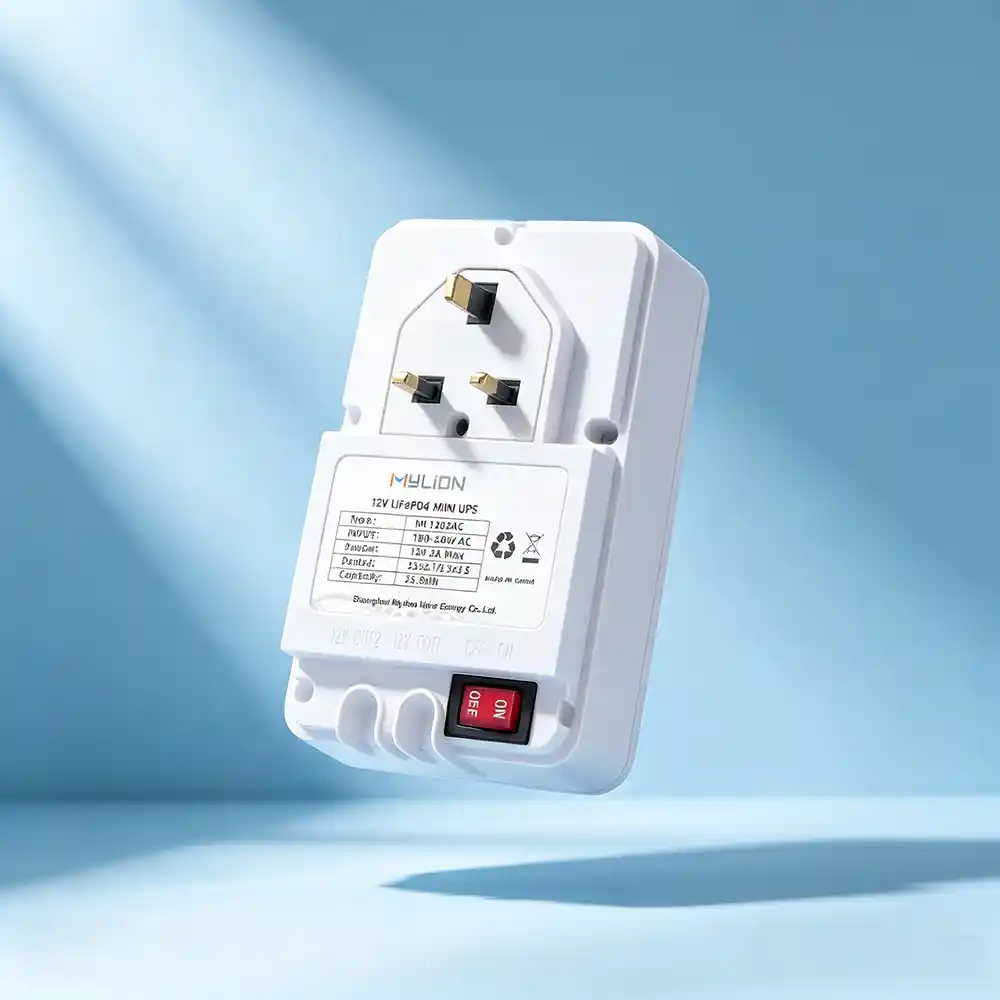
Mini UPS ML1202AC
Mini SAI MU35
Preguntas frecuentes
P1: ¿Cuánto tiempo mantendrá funcionando mi internet FTTH un Mylion Mini UPS durante un corte de energía?
P2: ¿Funcionará el Mini UPS con mi modelo específico de ONT?
P3: ¿Es complicada la instalación? ¿Necesito un técnico?
P4: ¿Cómo se compara el Mini UPS con una batería externa tradicional?
P5: ¿Qué sucede cuando se restablece el suministro eléctrico de la red?
P6: ¿Son las unidades Mylion Mini UPS adecuadas para implementaciones a escala de ISP?
Conclusión
La fibra óptica hasta el hogar (FTTH) ofrece un rendimiento de internet excepcional, pero este rendimiento depende de la fiabilidad del suministro eléctrico en los equipos de sus instalaciones. Un breve corte de energía, ya sea por una tormenta, una fluctuación en la red o un cortocircuito, puede desconectar instantáneamente su ONT y su router, dejando toda su red fuera de servicio.
La solución es sencilla: instale un mini SAI de CC diseñado específicamente entre su adaptador de corriente y su equipo FTTH. Mi león Mini de CCS soluciónObtendrás horas de energía de respaldo, conmutación sin interrupciones en 0 ms y la tranquilidad de saber que tu conexión a Internet permanece activa cuando más la necesitas.
 Español
  English
  简体中文
简体中文  Deutsch
  Français
  Italiano