
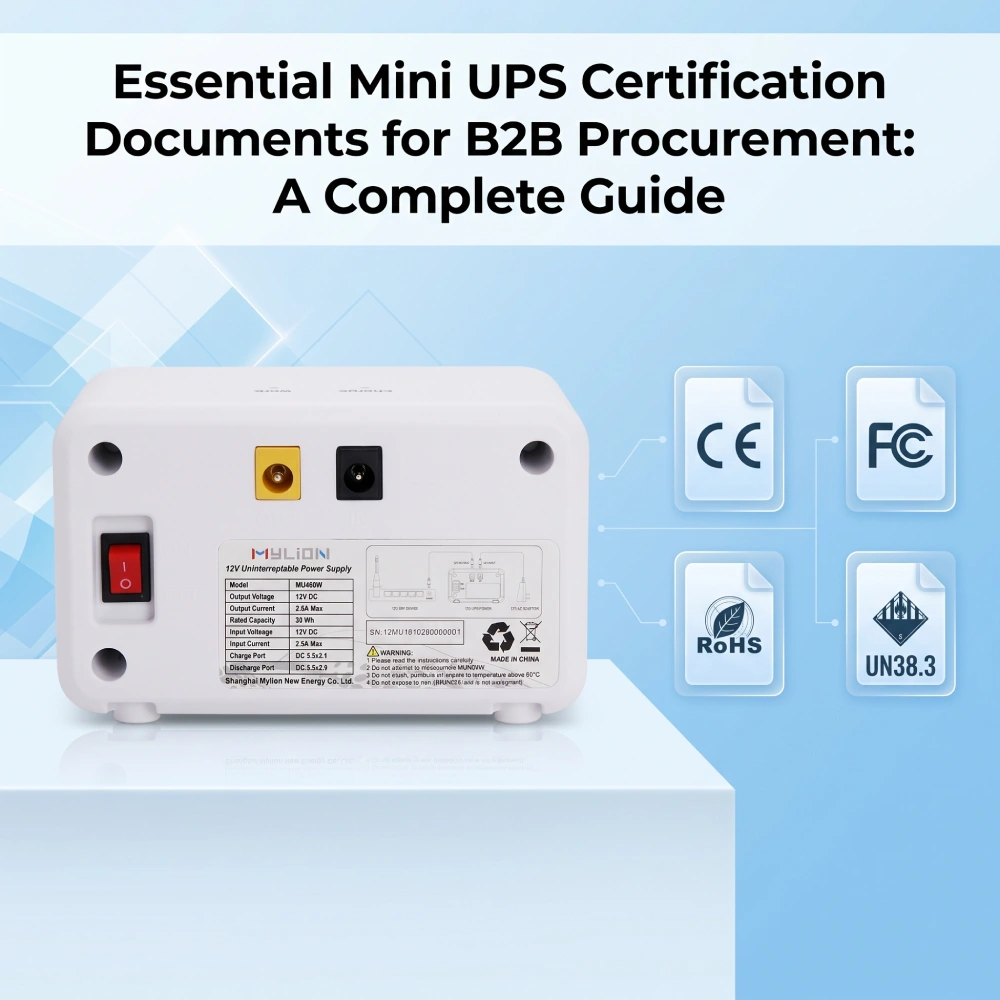
Cuando los proveedores de servicios de Internet (ISP), los operadores de telecomunicaciones y los integradores de sistemas implementan equipos de cliente (CPE), como ONT, ONU y enrutadores Wi-Fi, garantizar un tiempo de actividad ininterrumpido (24/7) es fundamental. Un mini SAI de CC Sirve como salvavidas para estos dispositivos durante fallas en la red eléctrica.
Sin embargo, adquirir estas soluciones de energía de respaldo a escala comercial conlleva una enorme responsabilidad. El uso de baterías de iones de litio no certificadas o con documentación deficiente puede provocar retenciones en aduanas, rechazo de proyectos y graves riesgos de incendio.
Esta guía completa desglosa los aspectos esenciales Documentos de certificación de Mini UPS Requisitos para la contratación B2B y cómo protegen sus proyectos de infraestructura de telecomunicaciones.
Por qué son importantes las certificaciones de baterías en la adquisición de mini UPS B2B
En implementaciones a nivel empresarial, un Mini UPS funciona las 24 horas del día en hogares, edificios de oficinas y gabinetes de telecomunicaciones. Cuando los proveedores de servicios de Internet (ISP) adquieren miles de unidades para despliegues de fibra hasta el hogar (FTTH), el riesgo se multiplica.
Las certificaciones sirven como verificación independiente de que un producto cumple con estrictos estándares de seguridad, medioambientales y de rendimiento. Adquirir unidades Mini UPS sin certificar puede resultar en:
- Para un proveedor de servicios de Internet o un operador de telecomunicaciones, la documentación incompleta puede retrasar el despliegue de una red.
- Para un distribuidor, esto puede generar riesgos relacionados con la importación o la aprobación del cliente.
- Para un fabricante de routers, ONU, ONT o CPE, esto puede afectar la estrategia de cumplimiento normativo del paquete completo de equipos.
Guía rápida: Contenido de cada documento
Documento | Propósito principal | Lo que el comprador debe comprobar |
Documentación de conformidad CE | Garantiza el cumplimiento de la legislación aplicable de la UE. | Modelo de producto, empresa responsable, requisitos aplicables, informes de apoyo y adaptador incluido. |
Evidencia de cumplimiento de la FCC | Aborda los requisitos aplicables de emisión de radiofrecuencia. | Modelo, configuración electrónica, cables, puertos, adaptador y responsable |
Informe IEC 62133-2 | Cubre las pruebas de seguridad para pilas y baterías de litio portátiles aplicables. | Si el informe abarca la celda, el paquete de baterías o ambos. |
Certificado e informe de la prueba CB | Permite el reconocimiento de los resultados de las pruebas a través del esquema de certificación IECEE CB. | Alcance del producto, estándar, estado de la certificación y requisitos de aprobación nacional |
Resumen de la prueba UN38.3 | Confirma la finalización de las pruebas de transporte de baterías de litio requeridas. | Tipo de batería, fabricante, referencia de prueba y relación con el producto enviado. |
Hoja de datos de seguridad | Proporciona información sobre peligros, manipulación, almacenamiento y emergencias. | Identidad del producto, composición química, proveedor y revisión actual. |
Documentación RoHS | Apoya el cumplimiento de las normas sobre sustancias restringidas. | Ya sea que la evidencia abarque el Mini UPS terminado o solo componentes individuales. |
1. Documentación CE: Compruebe el alcance real.
CE es una marca de conformidad, no un certificado de producto universal.
La empresa responsable debe identificar qué requisitos de la UE se aplican al producto, completar la evaluación de conformidad correspondiente y preparar la documentación técnica necesaria.
Para un proyecto de Mini UPS, el comprador normalmente debería revisar:
- La Declaración de Conformidad de la UE
- El modelo exacto del producto o la familia de modelos
- La legislación y las normas aplicables
- Informes de pruebas o evidencia técnica que lo respalden
- La empresa responsable de la declaración
- El adaptador de corriente y los accesorios incluidos en el paquete
Un mini SAI de CC de baja tensión y su adaptador externo de CA/CC pueden tener diferentes alcances de conformidad. Por lo tanto, el adaptador debe revisarse por separado cuando se incluye con el producto.
Un logotipo CE o un documento de una página sin una referencia clara al modelo no son suficientes para una revisión técnica.
2. Cumplimiento con la FCC: Coincidencia con la configuración probada.
Los mini sistemas electrónicos UPS suministrados a los Estados Unidos pueden estar sujetos a los requisitos de la Parte 15 de la FCC como radiadores no intencionados.
El procedimiento de autorización aplicable depende del producto y su configuración. Los compradores deben solicitar la documentación que acredite el cumplimiento de la normativa, en lugar de asumir que todos los Mini UPS requieren el mismo tipo de documento.
Comprueba si la evidencia coincide:
- El modelo exacto
- La configuración electrónica o de la placa de circuito impreso
- El recinto
- Los puertos de entrada y salida
- El conjunto de cables probados
- El adaptador de corriente incluido
- La parte responsable
Un cambio en los componentes electrónicos, la carcasa, el conjunto de cables o el adaptador puede afectar la aplicabilidad de un informe existente.
3. IEC 62133-2: ¿Celda, paquete de baterías o producto completo?
La norma IEC 62133-2 aborda los requisitos de seguridad y las pruebas para pilas y baterías de litio selladas portátiles en condiciones de uso previsto y uso indebido razonablemente previsible.
El alcance del informe es importante.
Un informe a nivel celular no cubre automáticamente:
- El paquete de baterías ensamblado
- El circuito de protección de la batería
- La electrónica de gestión de energía Mini UPS
- El recinto
- El sistema de carga
- El producto terminado completo
Los compradores deben confirmar si la evidencia presentada se aplica a la celda, al paquete de baterías o a ambos.
Dependiendo del mercado objetivo y las especificaciones del cliente, el Mini UPS completo puede requerir una evaluación eléctrica, de compatibilidad electromagnética o a nivel de producto adicional.
4. El esquema CB: útil, pero no una aprobación global.
El esquema de certificación IECEE CB respalda el reconocimiento de los resultados de las pruebas entre los organismos de certificación participantes.
Un certificado de prueba CB y su informe correspondiente pueden facilitar la solicitud de certificaciones nacionales en diferentes mercados. Sin embargo, no sustituye automáticamente todas las aprobaciones, registros o requisitos específicos del cliente a nivel local.
Antes de confiar en los documentos de CB, revise:
- La norma aplicable
- El producto probado y la configuración
- El estado del certificado
- El organismo certificador emisor
- Cualquier diferencia nacional
- Requisitos adicionales en el país de destino.
El informe completo suele ser más útil para la revisión técnica que la página del certificado por sí sola.
5. UN38.3: Pruebas de transporte requeridas
La norma UN38.3 se refiere a las pruebas de transporte de pilas y baterías de litio.
El resumen de la prueba UN38.3 debe identificar el tipo de batería probada y proporcionar la información pertinente sobre el fabricante, el laboratorio y la prueba.
El comprador deberá confirmar que coincide con la batería utilizada en el Mini UPS que se envía.
Revise los siguientes detalles:
- Fabricante de baterías
- Tipo de pila o batería
- Química
- Referencia del informe de prueba
- Laboratorio de pruebas
- Modelo de producto o batería
- Relación con el proveedor
- Configuración enviada
La norma UN38.3 respalda el cumplimiento de las normas de transporte. No demuestra que el Mini UPS completo cumpla con los requisitos de seguridad eléctrica, compatibilidad electromagnética (CEM) o acceso al mercado.
La aceptación del envío también puede depender de la energía de la batería, el embalaje, la cantidad, el modo de transporte, la ruta y los requisitos del transportista.
6. SDS: Información importante de seguridad, no certificación.
Una ficha de datos de seguridad (SDS) proporciona información sobre:
- Identificación de productos y sustancias químicas
- Peligros potenciales
- Manipulación y almacenamiento seguros
- Medidas de lucha contra incendios
- Procedimientos en caso de liberación accidental
- Información de transporte
- Consideraciones sobre la eliminación
Brinda soporte para revisiones de logística, seguridad en el lugar de trabajo y respuesta ante emergencias.
Sin embargo, una ficha de datos de seguridad (SDS) no es una certificación de producto y no sustituye un resumen de pruebas UN38.3, un informe de seguridad eléctrica ni la documentación de conformidad con el mercado.
La identidad del producto y la composición química de la batería que se muestran en la ficha de datos de seguridad deben coincidir con las del producto que se envía.
7. RoHS: Revisar el producto terminado
La directiva RoHS restringe el uso de determinadas sustancias peligrosas en equipos eléctricos y electrónicos dentro de su ámbito de aplicación.
Para un Mini UPS, los materiales relevantes pueden incluir:
- Ensamblajes de circuitos impresos
- Soldar
- Cables
- Conectores
- Carcasa de plástico
- Componentes relacionados con la batería
- Accesorios incluidos
Una declaración de un proveedor de componentes puede respaldar el expediente técnico, pero no debe presentarse automáticamente como prueba de la integridad del Mini UPS.
Los compradores deben confirmar si la documentación RoHS cubre el producto terminado, los componentes seleccionados o los materiales específicos.
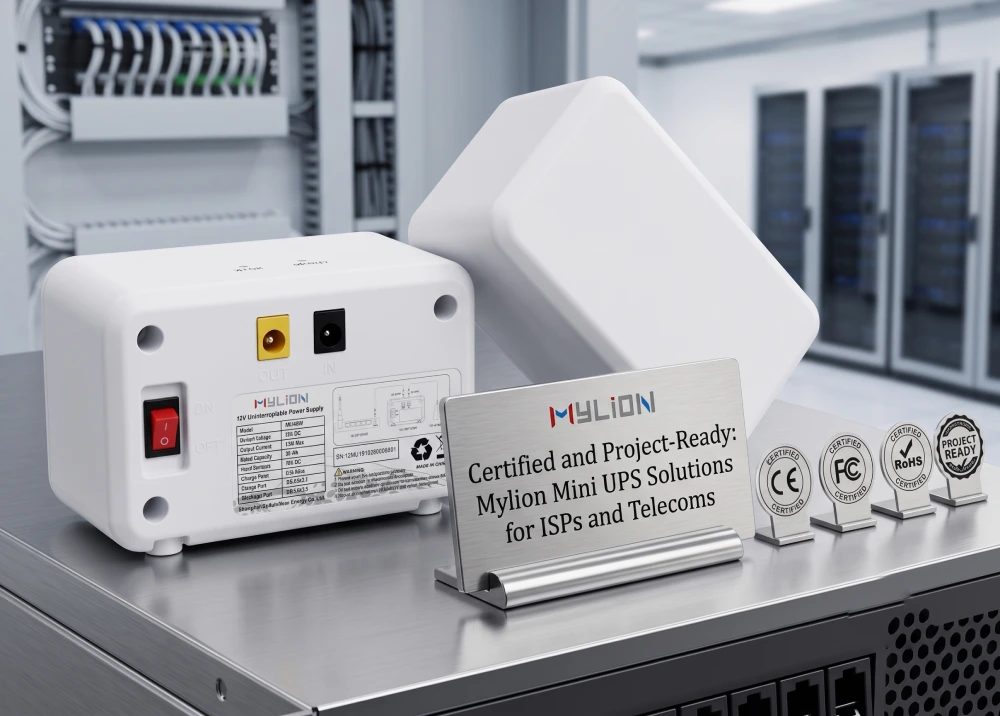
Soluciones MYLION Mini UPS certificadas y listas para su uso en proyectos, para proveedores de servicios de Internet y empresas de telecomunicaciones.
A la hora de adquirir sistemas de alimentación de respaldo para infraestructuras de telecomunicaciones críticas, es fundamental asociarse con un fabricante que priorice el cumplimiento normativo y el control de calidad. MILION es un fabricante líder de Soluciones mini UPS Diseñado específicamente para proveedores de servicios de Internet, operadores de telecomunicaciones y proyectos de banda ancha.
La completa línea de productos Mini UPS de MYLION, que incluye el popular MU68 para respaldo de banda ancha estándar de 12 V, MU35 para pasarelas de 12 V de alta potencia y MUC85 para respaldo USB-C PD moderno, está diseñado con iones de litio certificados y de primera calidad. LiFePO4 celdas de batería.
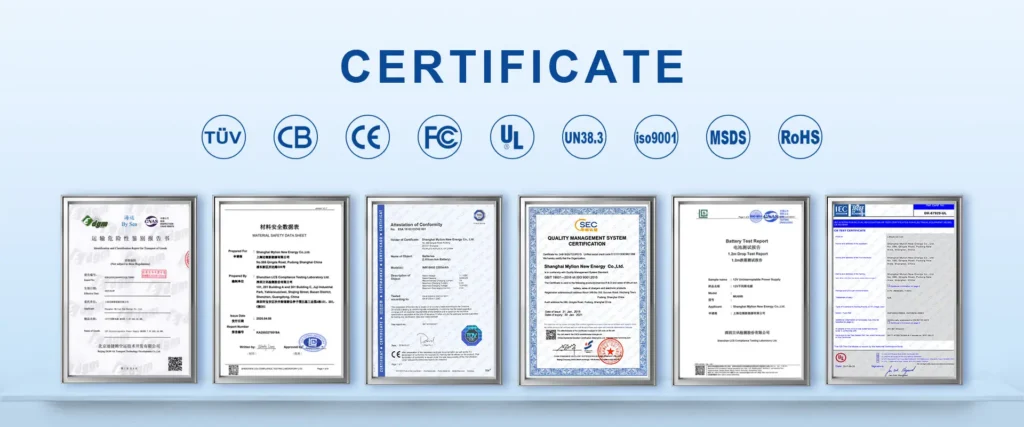
Cada mini UPS de MYLION diseñado para la exportación B2B cuenta con el respaldo de un amplio portafolio de certificaciones verificables. MYLION garantiza el cumplimiento mediante:
- CE y FCCCertificaciones para garantizar una entrada impecable en el mercado y cero interferencias electromagnéticas con las señales críticas de Wi-Fi y de red.
- IEC 62133 y esquema CBinformes que garantizan el más alto estándar internacional de seguridad de las baterías contra la sobrecarga y los eventos térmicos.
UN38.3 y documentación MSDS Actualizado según los estándares de envío actuales, lo que garantiza una logística impecable y cero retrasos en la aduana.
- RoHSCumplimiento de las normas de abastecimiento ambientalmente responsable y sostenible.
Al elegir MYLION, los integradores de sistemas eliminan las trabas regulatorias de las adquisiciones transfronterizas y obtienen acceso a soluciones de respaldo listas para el proyecto y perfectamente adaptadas para ONT, ONU y enrutadores.
Preguntas frecuentes
P1: ¿Todos los mini SAI necesitan los mismos documentos de certificación?
P2: ¿La certificación UN38.3 corresponde a un producto Mini UPS?
P3: ¿Es suficiente una ficha de datos de seguridad (MSDS) para enviar un Mini UPS?
P4: ¿Un solo certificado puede cubrir varios modelos de Mini UPS?
P5: ¿Por qué el proveedor necesita conocer el país de destino?
P6: ¿Son suficientes los documentos de certificación para confirmar la compatibilidad del dispositivo?
Conclusión
El Mini UPS Los documentos de certificación necesarios para las compras B2B dependen del producto, la aplicación, el mercado y el método de envío.
Para los operadores de telecomunicaciones y los proveedores de servicios de Internet que implementan miles de unidades de alimentación de respaldo para ONT y enrutadores, la verificación rigurosa de la documentación es la única manera de garantizar operaciones confiables y sin riesgos.

 Español
  English
  简体中文
简体中文  Deutsch
  Français
  Italiano