
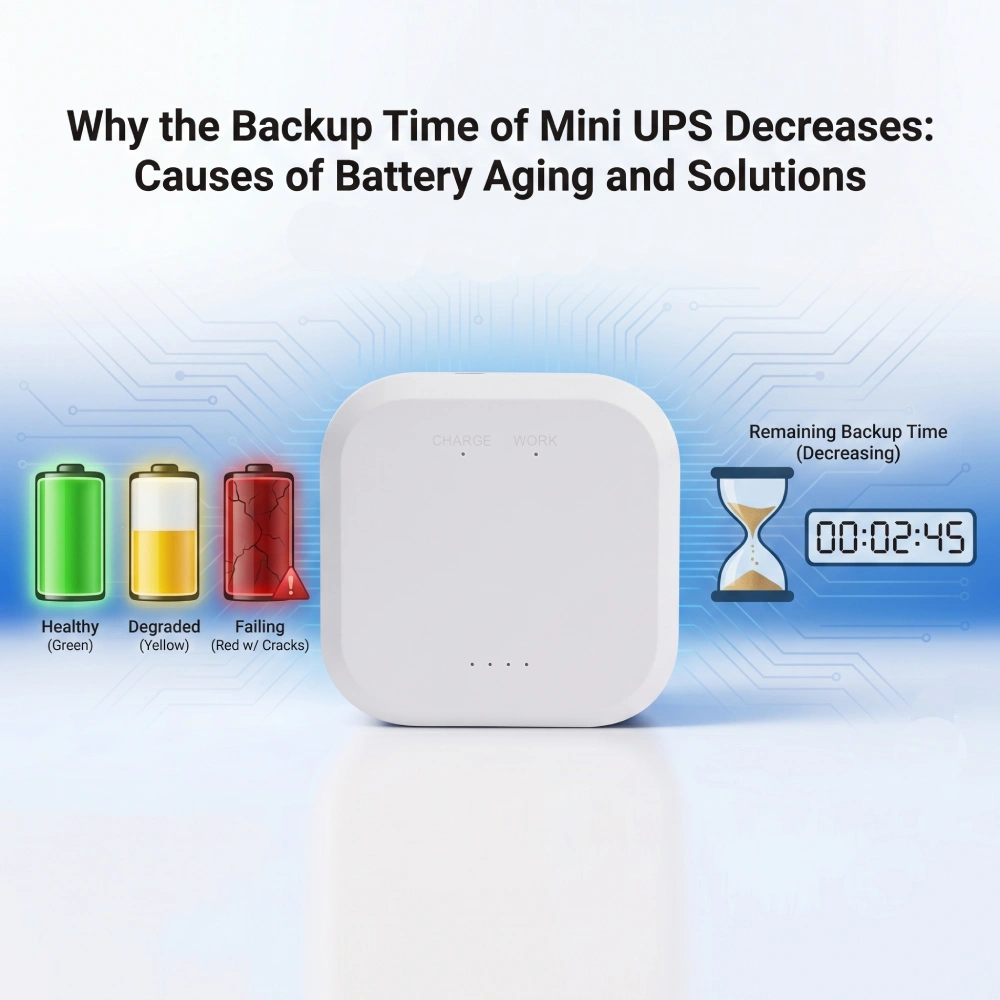
Los productos Mini UPS están diseñados para mantener la continuidad de la energía para dispositivos críticos de bajo voltaje, como por ejemplo: enrutadores, dispositivos ONT/ONU, pasarelas, equipos CPE y terminales de comunicaciónSin embargo, un problema generalizado que afecta comúnmente a los operadores de telecomunicaciones y a los proveedores de servicios de Internet es el envejecimiento de las baterías y la consiguiente reducción del tiempo de respaldo.
Comprender por qué disminuye el tiempo de respaldo ayuda a los proveedores de equipos de red, distribuidores y equipos de ingeniería a seleccionar el La solución Mini UPS adecuada y mejorar la fiabilidad del despliegue a largo plazo.
MYLION desarrolla Soluciones mini UPS para aplicaciones de respaldo de telecomunicaciones y banda ancha, incluidos productos UPS de 12 V CC, Soluciones de respaldo USB-C PD, y sistemas de respaldo de múltiples salidas.
Comprender el envejecimiento de las baterías en los sistemas mini UPS
Para comprender por qué disminuye el tiempo de respaldo, debemos analizar la química de la batería. La mayoría de los sistemas Mini UPS utilizan baterías de iones de litio o LiFePO4. Ambas experimentan cambios químicos y físicos irreversibles con el tiempo, aunque a ritmos muy diferentes.
1. Pérdida de materiales activos
En cada ciclo de carga y descarga, los iones de litio (o los iones de sulfato en los sistemas de plomo-ácido) se desplazan entre el ánodo y el cátodo. Con el tiempo, las reacciones secundarias atrapan estos iones, reduciendo la cantidad de material activo disponible para almacenar energía eléctrica. Esto se traduce directamente en una pérdida permanente de la capacidad total.
2. Aumento de la resistencia interna
Con el paso del tiempo, las baterías envejecen y se forma una barrera engrosada dentro de las celdas, conocida como capa de interfase de electrolito sólido (SEI). Esta capa aumenta la resistencia eléctrica interna. Cuando la resistencia interna es alta, la batería no puede suministrar energía de manera eficiente. Incluso si la batería aún conserva una capacidad de carga medible, el voltaje cae bruscamente bajo carga, lo que provoca que el Mini UPS se apague prematuramente.
3. Envejecimiento según el calendario frente al envejecimiento cíclico
El envejecimiento de las baterías generalmente se divide en dos categorías: envejecimiento por calendario y envejecimiento por ciclos de carga y descarga.
Envejecimiento del calendario
El envejecimiento de la batería se refiere a la degradación causada por el paso del tiempo, incluso cuando la batería no se usa con frecuencia.
En las aplicaciones de mini SAI (Sistema de Alimentación Ininterrumpida), puede producirse un envejecimiento por antigüedad debido a que el dispositivo suele estar conectado continuamente a la corriente alterna mientras mantiene la carga de la batería.
Entre los factores que afectan al envejecimiento del calendario se incluyen:
- Temperatura de almacenamiento
- Temperatura de funcionamiento
- Estado de carga promedio (SOC)
- Voltaje de carga
- Condiciones de espera a largo plazo
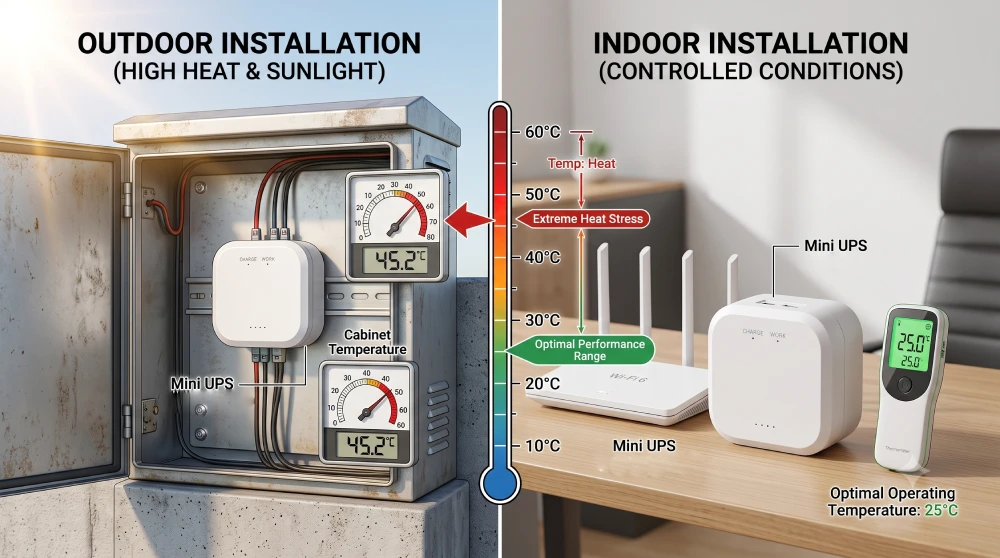
Un mini SAI instalado en un armario de equipos caliente puede experimentar un envejecimiento más rápido en comparación con el mismo producto instalado en un entorno más fresco.
Envejecimiento cíclico
El envejecimiento cíclico se produce mediante la carga y descarga repetidas.
- Los escenarios de uso típicos de un Mini UPS incluyen:
- Apagones frecuentes
- Entornos de red inestables
- Conmutación de respaldo diaria
- Despliegues de equipos de red remotos
Cada ciclo de descarga y recarga contribuye al desgaste de la batería.
Para las aplicaciones de telecomunicaciones y proveedores de servicios de Internet (ISP), es importante comprender la frecuencia de las interrupciones, ya que dos productos Mini UPS idénticos pueden tener un rendimiento a lo largo de su vida útil diferente dependiendo del entorno eléctrico real.
Impacto de la temperatura en el rendimiento de la batería del Mini UPS
La temperatura es uno de los factores más importantes que afectan al envejecimiento de la batería y a su autonomía.
Funcionamiento a alta temperatura
Las altas temperaturas pueden acelerar la degradación de la batería porque las reacciones químicas en su interior se vuelven más rápidas.
Los entornos comunes de alta temperatura incluyen:
- Armarios de red para exteriores
- Salas de equipos con poca ventilación
- Cajas de telecomunicaciones cerradas
- Lugares con exposición directa a la luz solar
Un Mini UPS instalado en estos entornos puede experimentar:
- Pérdida de capacidad más rápida
- Aumento de la resistencia interna
- Menor duración de la copia de seguridad
- Reducción de la duración total de la batería
Funcionamiento a baja temperatura
Las bajas temperaturas también pueden reducir la capacidad disponible.
En ambientes fríos:
- La capacidad de descarga de la batería puede disminuir
- La caída de tensión puede producirse antes.
- El tiempo de respaldo efectivo puede acortarse.
Por lo tanto, al seleccionar un Mini UPS, se debe tener en cuenta no solo los requisitos de energía del dispositivo, sino también el entorno de instalación.
MYLION recomienda confirmar las condiciones de la aplicación, incluyendo la temperatura, el método de instalación, el tiempo de respaldo deseado y la carga real del equipo, antes de seleccionar un modelo de Mini UPS.
¿Por qué puede disminuir el tiempo de respaldo de un mini SAI incluso sin fallo de la batería?
El envejecimiento de la batería no siempre es la única razón de una menor duración. En implementaciones reales, la reducción del tiempo de respaldo también puede deberse a cambios a nivel del sistema.
1. Aumenta el consumo de energía de los equipos de red.
Una razón común es que el dispositivo conectado cambia después de la implementación.
Por ejemplo:
- Una actualización del firmware del router aumenta el consumo de energía.
- Un router Wi-Fi 6/7 requiere más energía.
- Se han conectado dispositivos USB adicionales.
- Un dispositivo CPE funciona bajo una carga de tráfico más alta.
Es posible que el Mini UPS siga funcionando con normalidad, pero la carga ha aumentado. Dado que el tiempo de respaldo depende del consumo real de energía, una mayor carga reduce naturalmente el tiempo de funcionamiento.
2. Selección incorrecta del modelo de mini UPS.
Elegir un mini SAI basándose únicamente en la compatibilidad de voltaje puede generar problemas.
Una evaluación completa debe considerar:
- Voltaje del dispositivo
- Corriente continua
- Corriente máxima/de arranque
- Tipo de conector y polaridad
- Tiempo de respaldo objetivo
- Dispositivo único o varios dispositivos
- Entorno de instalación
Por ejemplo, MILION Modelos de mini UPS de 12 V Incluyen diferentes gamas de productos diseñadas para distintos requisitos de carga. Algunos modelos se centran en equipos de red estándar de 12 V, mientras que los modelos de mayor potencia admiten aplicaciones que requieren una mayor capacidad de salida continua.
3. Envejecimiento de los componentes de conversión de energía
Un mini SAI no es solo una batería.
El sistema completo incluye:
- celdas de batería
- Sistema de gestión de la batería
- circuito de carga
- componentes de conversión de CC
- Circuitos de protección
- Conectores y cables
A largo plazo, la eficiencia del sistema puede variar debido al envejecimiento de los componentes, las variaciones de temperatura o las condiciones de instalación.
Dado que el tiempo de copia de seguridad depende de la eficiencia de la conversión, incluso pequeños cambios en la eficiencia pueden influir en el tiempo de ejecución.
Cómo las soluciones MYLION Mini UPS ayudan a mantener un rendimiento de respaldo confiable
Sistemas inteligentes de gestión de baterías (BMS)
Los productos MYLION Mini UPS integran funciones de protección y monitorización de la batería. El BMS actúa como medida de seguridad contra la sobrecarga, la sobredescarga y el sobrecalentamiento, condiciones que reducen significativamente la vida útil de la batería.
Las principales características de protección de la línea de productos de MYLION incluyen:
- Protección contra sobrecarga – evita daños por sobrecarga
- Protección contra sobredescarga– garantiza que las baterías no se descarguen hasta niveles peligrosamente bajos.
- Protección contra sobretemperatura– Monitorea y regula la temperatura interna
- Protección contra cortocircuitos – Protege tanto el SAI como los dispositivos conectados.
- Protección contra sobrecorriente– evita un consumo excesivo de energía
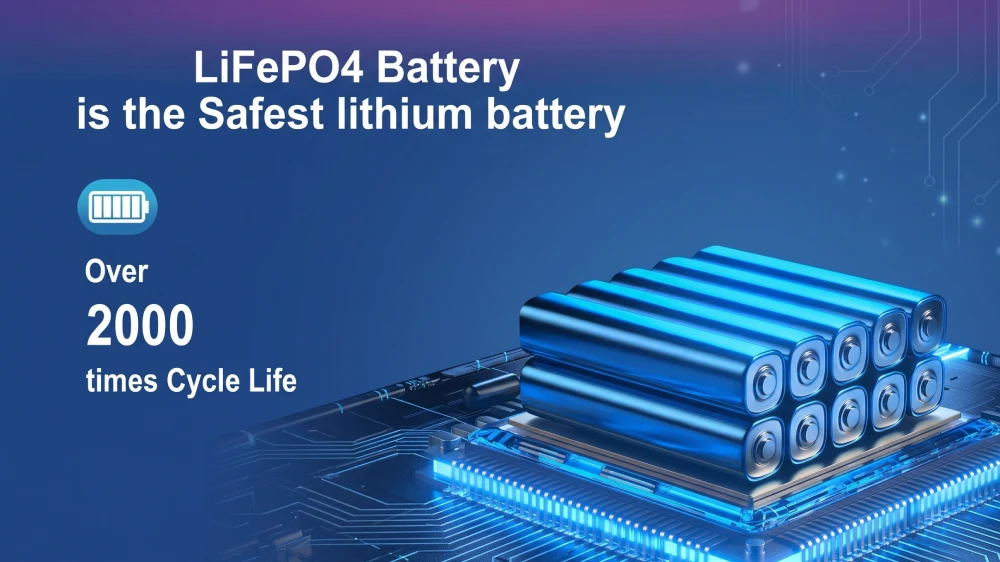
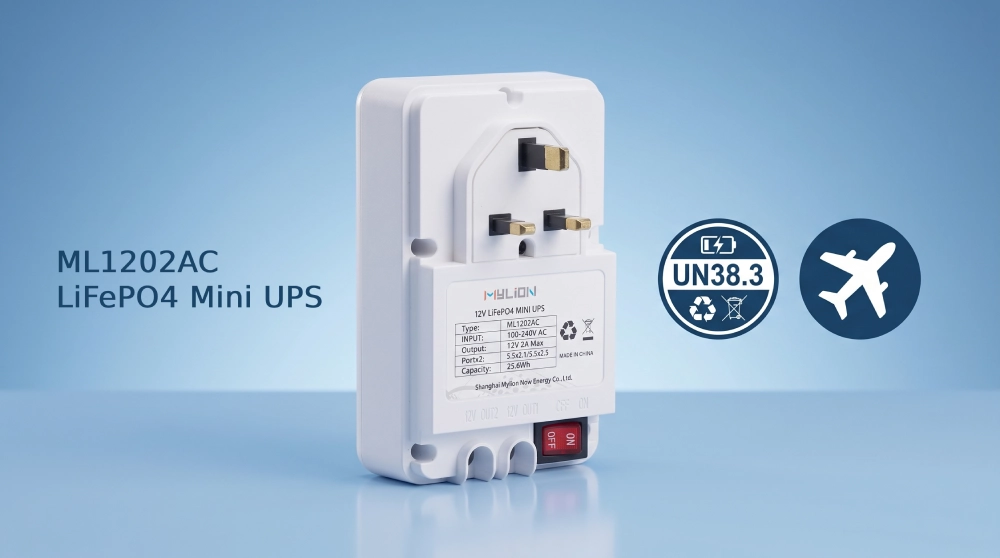
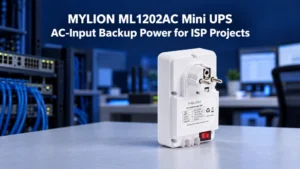
MYLION utiliza tecnologías de iones de litio y fosfato de hierro y litio (LiFePO4) de primera calidad. MILION Mini SAI ML1202AC Está equipado con baterías LiFePO4 que ofrecen entre 2000 y 5000 ciclos y una vida útil estimada de 8 a 10 años. Esta mayor vida útil garantiza años de suministro eléctrico fiable, lo que reduce la necesidad de reemplazos frecuentes.
MYLION diseña sus productos con robustos mecanismos de protección contra la temperatura. Modelos de alta corriente como el MU35 12V 5A Mini UPS Incorporan un ventilador de extracción integrado que se activa automáticamente al aumentar la temperatura interna, protegiendo así el chipset y la batería. Además, los dispositivos están alojados en carcasas de ABS ignífugo que gestionan de forma segura la disipación del calor, priorizando la seguridad de las instalaciones.
Hacer funcionar un Mini UPS cerca de su capacidad máxima genera calor excesivo y acelera su envejecimiento. MYLION ofrece una línea de productos estructurada y adaptada a las necesidades reales de implementación, garantizando que los dispositivos no se sobrecarguen constantemente.
- MU68W (12V 3A):Ideal para el respaldo de ONT, ya que proporciona una capacidad equilibrada (aprox. 44 Wh) y mantiene un voltaje de salida constante incluso cuando la energía de la batería es baja.
- MU65(12V 5A): Diseñado específicamente para routers de alta potencia, CPE y configuraciones de doble dispositivo, proporcionando capacidades de carga y descarga de alta corriente.
- MU248 (24V 3A / 48V 1A):Un SAI LFP diseñado para implementaciones de redes perimetrales y telecomunicaciones que requieren configuraciones de voltaje versátiles.
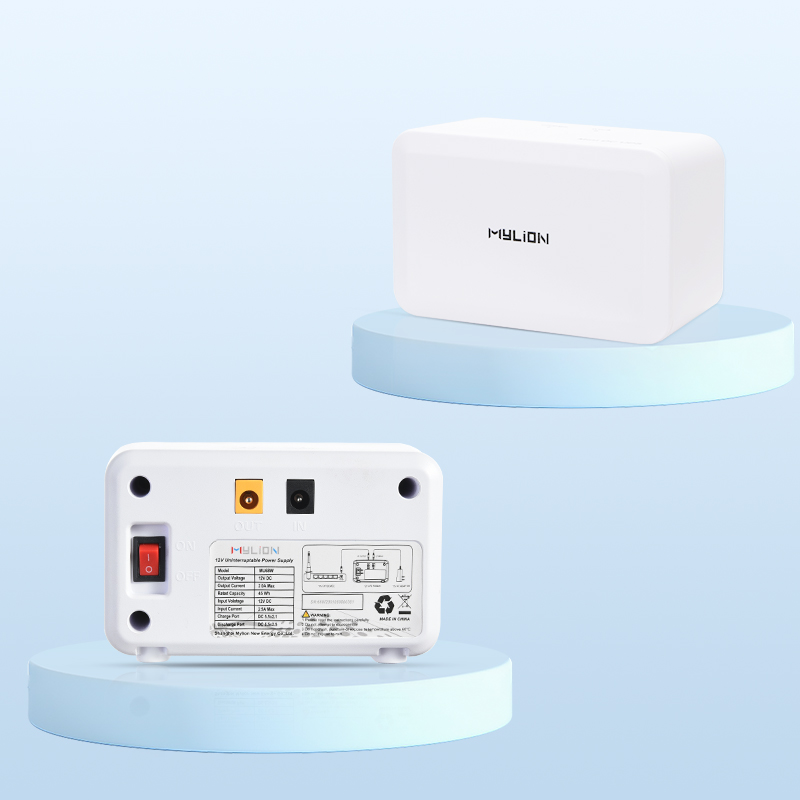
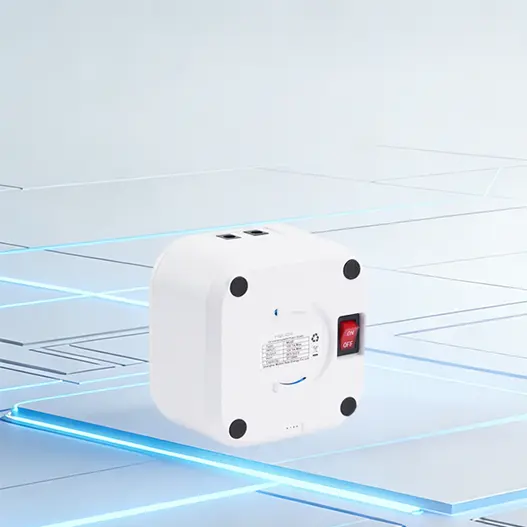
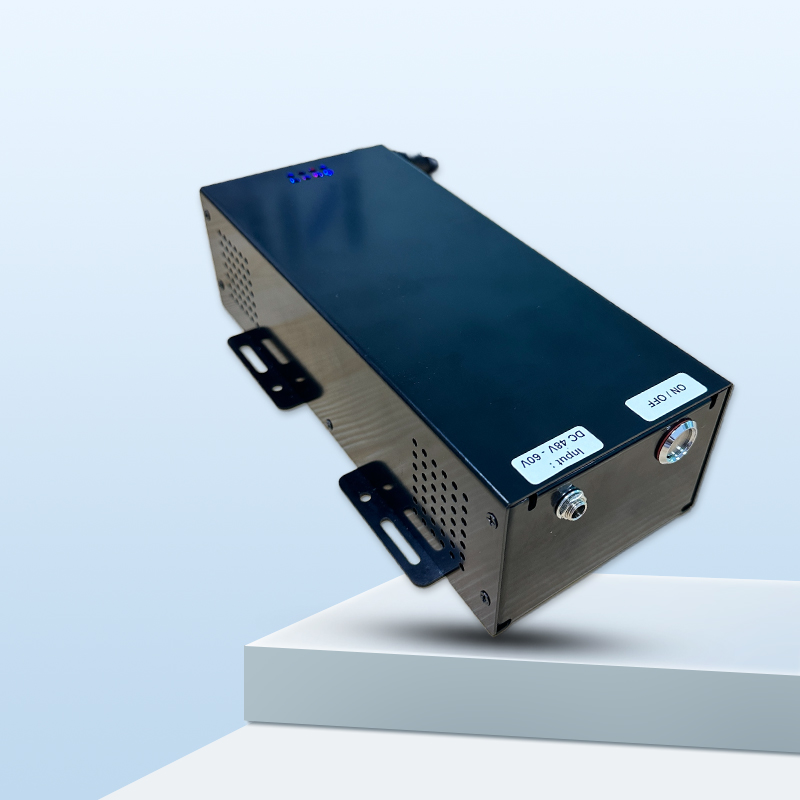
Mini UPS MU68
Mini UPS MU65
Mini SAI MU248
Buenas prácticas para prolongar la vida útil de la batería de los mini SAI
Para reducir la degradación del tiempo de respaldo, las empresas que implementan productos Mini UPS deben considerar las siguientes prácticas:
Instale los productos Mini UPS en entornos adecuados con ventilación suficiente.
Evite seleccionar un producto basándose únicamente en el voltaje. Confirme:
- Corriente continua
- Corriente máxima
- Requisito de tiempo de ejecución
- Configuración del equipo
Antes de la implementación masiva, realice pruebas con:
- Equipos de red reales
- Condiciones de carga reales
- Escenarios de interrupción previstos
- Duración de la copia de seguridad prevista
Para despliegues a gran escala, los operadores deben realizar el seguimiento de:
- Fecha de instalación
- Ambiente
- Cambios en el rendimiento de las copias de seguridad
- Tendencias de fallos
No se deben mezclar diferentes versiones de baterías, revisiones de hardware ni configuraciones sin una validación previa.
Preguntas frecuentes
P1: ¿Con qué frecuencia debo reemplazar la batería de mi Mini UPS?
P2: ¿Cuáles son las señales de advertencia del envejecimiento de la batería?
P3: ¿Cómo protege el sistema BMS de MYLION contra el envejecimiento?
P4: ¿Es el LiFePO4 más seguro que el ion de litio estándar?
P5: ¿Por qué mi mini SAI funciona con normalidad pero proporciona menos tiempo de respaldo?
P6: ¿Cómo puedo elegir el mini SAI adecuado para equipos de telecomunicaciones?
P7: ¿Una mayor capacidad de la batería siempre implica un mayor tiempo de autonomía?
Conclusión
El envejecimiento de la batería es una de las principales razones por las que la autonomía de los mini SAI disminuye con el uso prolongado, pero no es el único factor. Los cambios de carga, la temperatura, las condiciones de carga y la compatibilidad del sistema también influyen en la duración real de la batería.
Una solución profesional de mini UPS No solo debe proporcionar tiempo de respaldo inicial, sino también respaldar una implementación estable, un rendimiento predecible y la confiabilidad del proyecto a largo plazo.
MYLION ayuda a los clientes B2B a evaluar los requisitos de los mini SAI (sistemas de alimentación ininterrumpida) en función de los equipos reales, las condiciones de alimentación, los objetivos de respaldo y los escenarios de implementación.

 Español
  English
  简体中文
简体中文  Deutsch
  Français
  Italiano