
Introduction
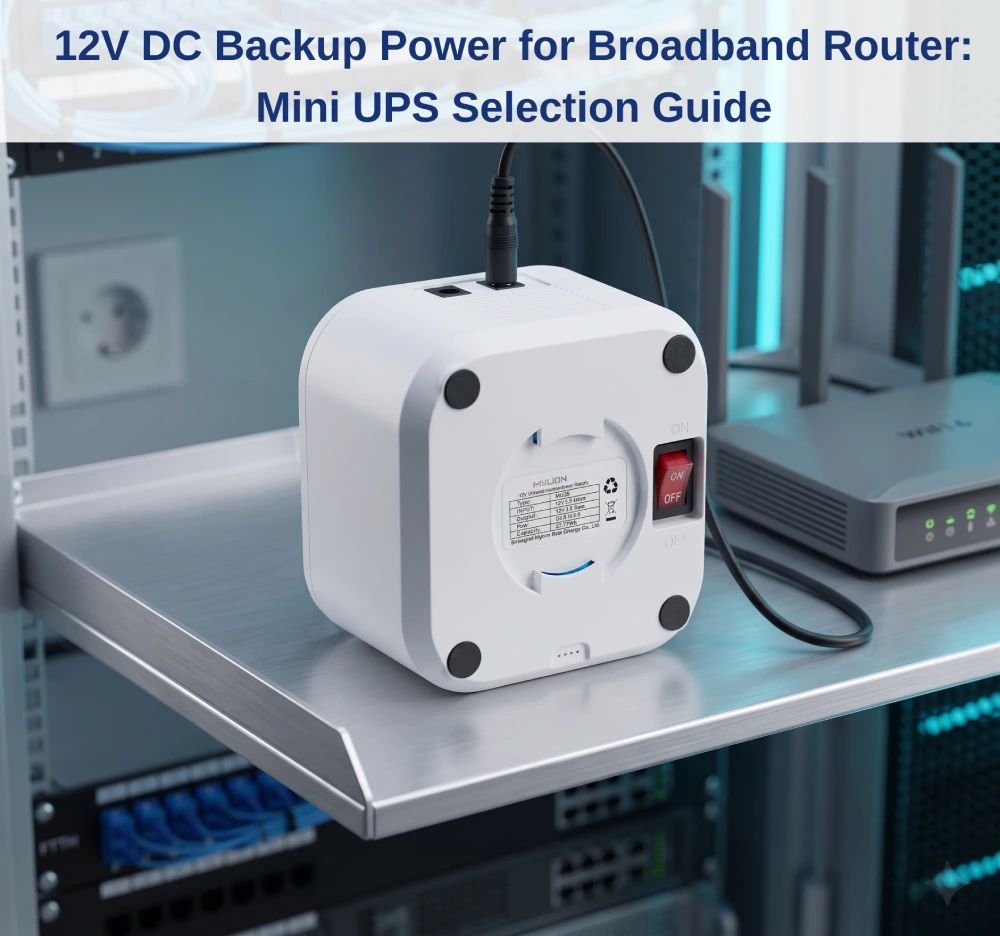
Les instabilités transitoires du réseau et les baisses de tension entraînent des cycles de redémarrage de 2 à 5 minutes des équipements clients, perturbant ainsi les opérations critiques de VoIP, de cloud et de télétravail. Pour les fournisseurs d'accès Internet, il est essentiel de choisir des solutions locales à haut rendement. Alimentation de secours 12 V CC est une stratégie d'infrastructure essentielle pour garantir des déploiements FTTH et haut débit sans interruption.
Ce guide offre aux acheteurs B2B, aux opérateurs télécoms et aux gestionnaires de projets d'infrastructure un cadre complet pour la sélection de l'alimentation 12 V CC. solutions d'alimentation de secours pour les routeurs haut débit, couvrant tout, de la compatibilité de tension à la chimie des batteries et aux scénarios de déploiement.
Comprendre la norme 12 V dans les équipements à large bande
Pourquoi le 12 V CC est la norme industrielle
L'adoption généralisée du courant continu 12 V dans les équipements réseau n'est pas le fruit du hasard. Cette norme de tension offre un compromis optimal entre efficacité et sécurité. Contrairement aux systèmes à courant alternatif haute tension qui nécessitent des transformateurs encombrants, le courant continu 12 V permet l'utilisation d'adaptateurs secteur compacts et une régulation de puissance efficace.
La plupart des routeurs, des ONT fibre optique et des CPE sans fil sont équipés de convertisseurs CC-CC internes capables d'abaisser l'alimentation 12V aux tensions inférieures requises par les puces (telles que 3,3V ou 5V).
Pour les acheteurs B2B et les fournisseurs d'infrastructures, la norme 12 V simplifie les architectures d'alimentation de secours. Un chemin de secours direct CC-CC élimine les conversions inutiles, améliorant l'efficacité jusqu'à 251 TP3T et prolongeant la durée de vie de la batterie par rapport aux alternatives fonctionnant en courant alternatif.
Besoins en énergie typiques
Les routeurs haut débit présentent des besoins en énergie variables en fonction de leurs capacités :
Type d'appareil | Tension typique | Courant typique | Puissance typique |
CPE de base / ONT fibre optique / ONU | 12V | 0,5 A – 1,0 A | 6W – 12W |
Passerelle bi-bande standard | 12V | 1,0 A – 1,5 A | 12W – 18W |
Routeur WiFi 6 / WiFi 7 | 12V | 2,0 A – 3,0 A | 24W – 36W |
Onduleur CC vs. Onduleur CA traditionnel : la différence cruciale
Unités UPS CA traditionnelles Ces systèmes effectuent un processus de double conversion : prélèvement du courant alternatif sur le réseau, conversion en courant continu pour le stockage sur batterie, puis reconversion en courant alternatif pour l’alimentation des appareils. Ce processus génère intrinsèquement d’importantes pertes thermiques et énergétiques. Ils restent néanmoins indispensables pour les centres de données multi-appareils et les baies motorisées.
Inversement, le Mini-onduleur CC Ce système accepte une entrée CA, la stocke sous forme de CC et fournit un courant continu pur directement au matériel de télécommunications. Cette architecture est indispensable pour garantir la conformité aux SLA en matière d'alimentation de secours FTTH, optimiser l'espace disponible dans les armoires et prolonger l'autonomie des nœuds périphériques distribués.
Pour les équipements haut débit et l'infrastructure de télécommunications plus large qui les prend en charge, le mini-onduleur CC est le choix idéal.
Critères de sélection clés pour une alimentation de secours 12 V CC
1. Compatibilité de la tension et des connecteurs
Une incompatibilité de tension entraîne une panne matérielle immédiate ; un onduleur 12 V endommagera irrémédiablement les circuits 5 V ou 9 V. L’interface standard des équipements CPE de télécommunications utilise des connecteurs cylindriques CC de 5,5 × 2,1 mm ou 5,5 × 2,5 mm. Les équipes d’approvisionnement doivent vérifier l’uniformité des connecteurs sur l’ensemble du matériel déployé.
2. Courant de sortie (ampérage)
Un dimensionnement inadéquat de l'ampérage entraîne une limitation thermique et des défaillances matérielles.
Puissance de sortie de l'onduleur | Application typique | Pertinence |
12V 1A | Modems de base / adaptateurs VoIP simples | Risque de surchauffe avec les routeurs bi-bande |
12V 2A | Routeurs WiFi 5 double bande standard | Suffisant pour la plupart des utilisateurs à domicile |
12V 3A | Routeurs WiFi 6 haute puissance / petits commutateurs | Bon équilibre |
12V 5A | Routeurs à forte charge, passerelles, appareils multiples | Idéal pour les déploiements exigeants |
3. Capacité et autonomie de la batterie
L'autonomie est déterminée par la capacité de la batterie (mesurée en wattheures, Wh) divisée par la charge totale (en watts). Un mini-onduleur fournit généralement de 2 à 8 heures d'autonomie, suffisante pour les brèves coupures de courant ou pour tenir jusqu'au démarrage du générateur.
- LeMylion MU68 avec une capacité de 45 Wh, elle fournit environ 9 heures de secours à une charge de 6 W (0,5 A) et 5 heures à une charge de 12 W (1,0 A).
- La capacité supérieureMylion MU35 Avec une capacité de 77,7 Wh, elle offre une autonomie de 13 à 14 heures pour les appareils 12 V 0,5 A.
5. Régulation de la tension
Les onduleurs bon marché voient souvent leur tension chuter lorsque la batterie se décharge (par exemple, jusqu'à 10,5 V), ce qui peut entraîner une instabilité du matériel ou des dommages dus à une baisse de tension. Un onduleur 12 V de qualité professionnelle doit maintenir une tension de sortie régulée à ±51 V près jusqu'à l'activation du circuit de protection de la batterie.
6. Chimie des batteries
Les mini-onduleurs modernes de qualité FAI utilisent de plus en plus les batteries LiFePO₄ (lithium fer phosphate) en raison de leurs caractéristiques supérieures :
- Durée de vie de plus de 2000 cycles contre 300 à 500 cycles pour les batteries lithium-ion standard
- Stabilité thermique accrue et risque de défaillance réduit
- Sécurité renforcée pour les applications de sauvegarde continue
- Durée de vie opérationnelle plus longue, dépassant souvent celle du Mini UPS lui-même.
Bien que le lithium-ion reste une option viable pour de nombreuses applications, le LiFePO₄ est de plus en plus le choix privilégié pour les déploiements de niveau FAI où la fiabilité et la longévité sont primordiales.
7. Caractéristiques de protection
Recherchez des circuits de protection complets, notamment :
- Protection contre les surcharges
- Protection contre les décharges excessives
- Protection contre les courts-circuits
- Protection contre les surintensités
- Protection de la température
Gamme de mini-onduleurs Mylion pour applications haut débit
Mylion propose une gamme de mini-onduleurs ciblée, conçue pour des scénarios de secours haut débit spécifiques :
MU68 – Onduleur mini standard 12 V
- Idéal pour: Routeur standard 12 V/sauvegarde ONT/ONU
- PositionnementLe modèle classique et le plus largement applicable
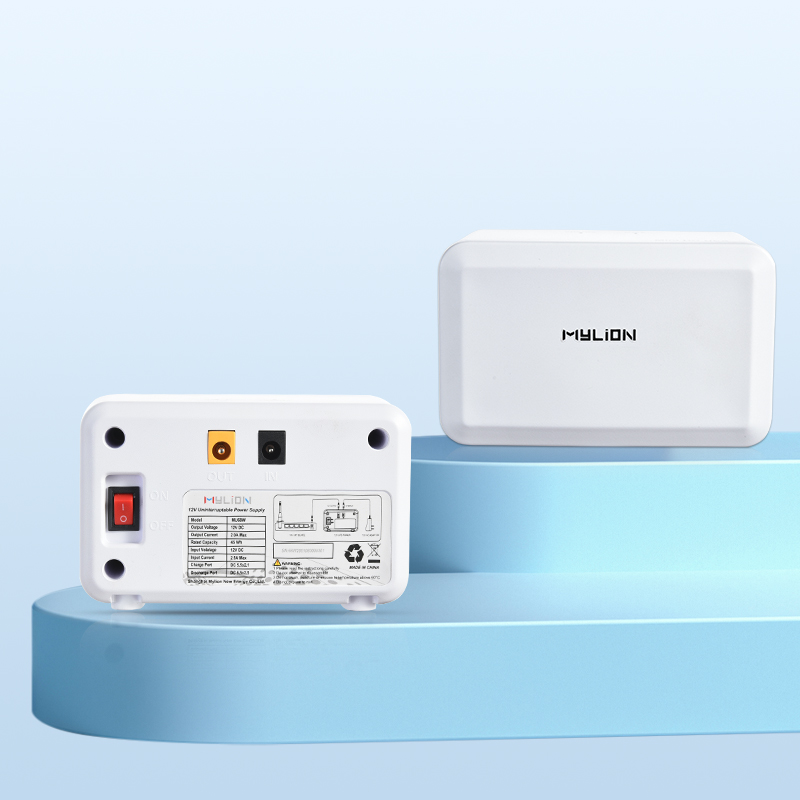
- CaractéristiquesSortie 12 V, courant 2 A, capacité 45 Wh
- Temps de sauvegardeAutonomie : environ 9 heures à 6 W, environ 5 heures à 12 W
- DimensionsDimensions : 112 × 70 × 60 mm, poids : 405 g
- Caractéristiques principalesBoîtier ignifugé en ABS FR, certifié CE/FCC/EMC/UL, durée de vie supérieure à 600 cycles
Le MU68 est le point de départ idéal pour la plupart des applications de routeur haut débit standard 12V.
MU35 – Mini-onduleur 12 V haute capacité
- Idéal pour: Appareils réseau 12 V à forte consommation, routeurs WiFi 6/7, passerelles
- Positionnement: L'option améliorée lorsque 12 V 3 A ne suffisent pas
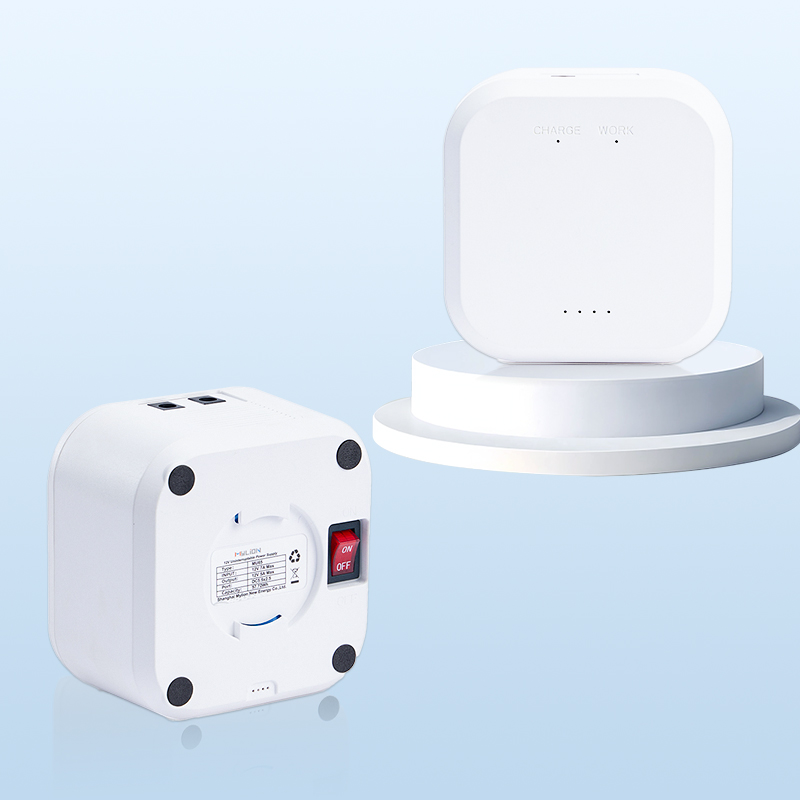
- CaractéristiquesSortie 12 V, courant max. 5 A, capacité 77,7 Wh
- Temps de sauvegarde: 13 à 14 heures pour les appareils 12 V 0,5 A
- Temps de transfert: 0 ms (Temps de transfert nul)
- Dimensions: 100×100×60mm
Le MU35 est conçu pour fournir une alimentation de secours stable de 12 V 5 A CC pour les routeurs, passerelles, modems et autres équipements réseau à charge élevée.
MUJ46 – Déploiement FTTH intégré
- Idéal pour: Scénarios de déploiement FTTH en ligne et plus propres
- Positionnement: Le meilleur choix pour une installation compacte et discrète
- CaractéristiquesSortie 12 V / 2 A, capacité de 38,48 Wh, plus sortie USB 5 V / 3 A
- Scénarios les plus adaptésTerminaux FTTH, modems, routeurs légers, dispositifs de communication de périphérie
Choisissez le MUJ46 lorsque l'installation en ligne, une disposition des câbles plus propre ou un déploiement FTTH compact sont importants.
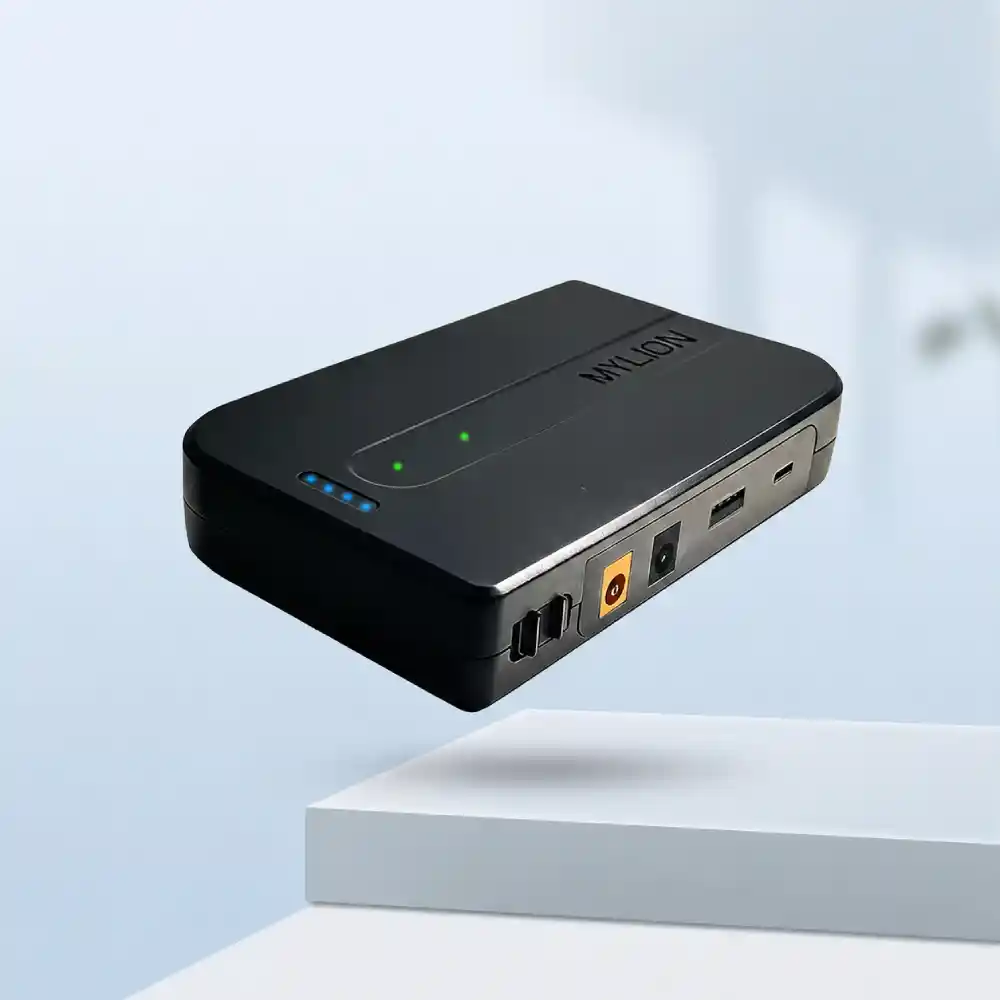
Mini-onduleur MUJ46
Mini-onduleur MU68
Mini-onduleur MU35
MUC85 – Mini-onduleur USB-C / PD
- Idéal pour: appareils modernes alimentés par USB-C / PD
- Positionnement: L'option flexible pour une architecture énergétique moderne
- Appareils les mieux adaptésRouteurs et périphériques réseau USB-C compatibles
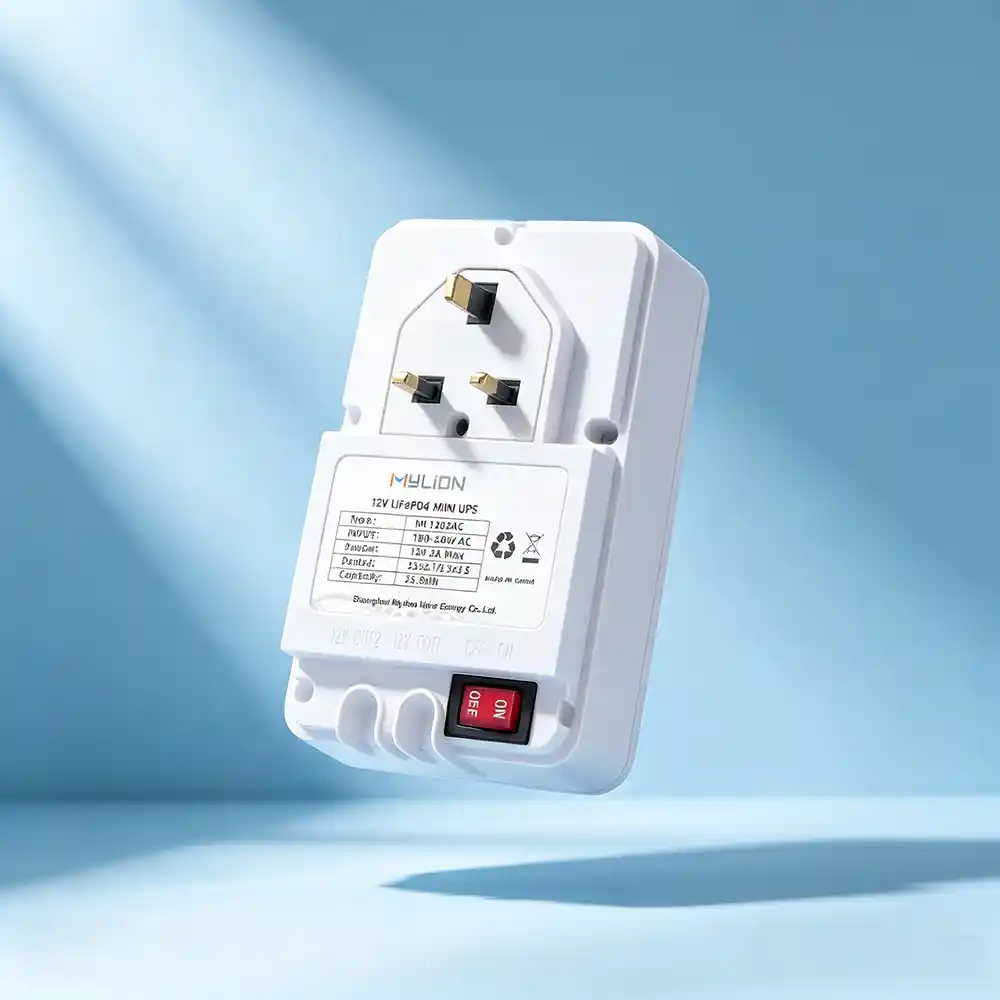
ML1202AC – Mini-onduleur LiFePO4
- Fonctionnalité clé: technologie des batteries LiFePO4
- Sortir: 2 sorties 12 V CC 2 A pour deux appareils basse consommation
- Idéal pourApplications exigeant une durée de vie cyclique et une stabilité thermique maximales
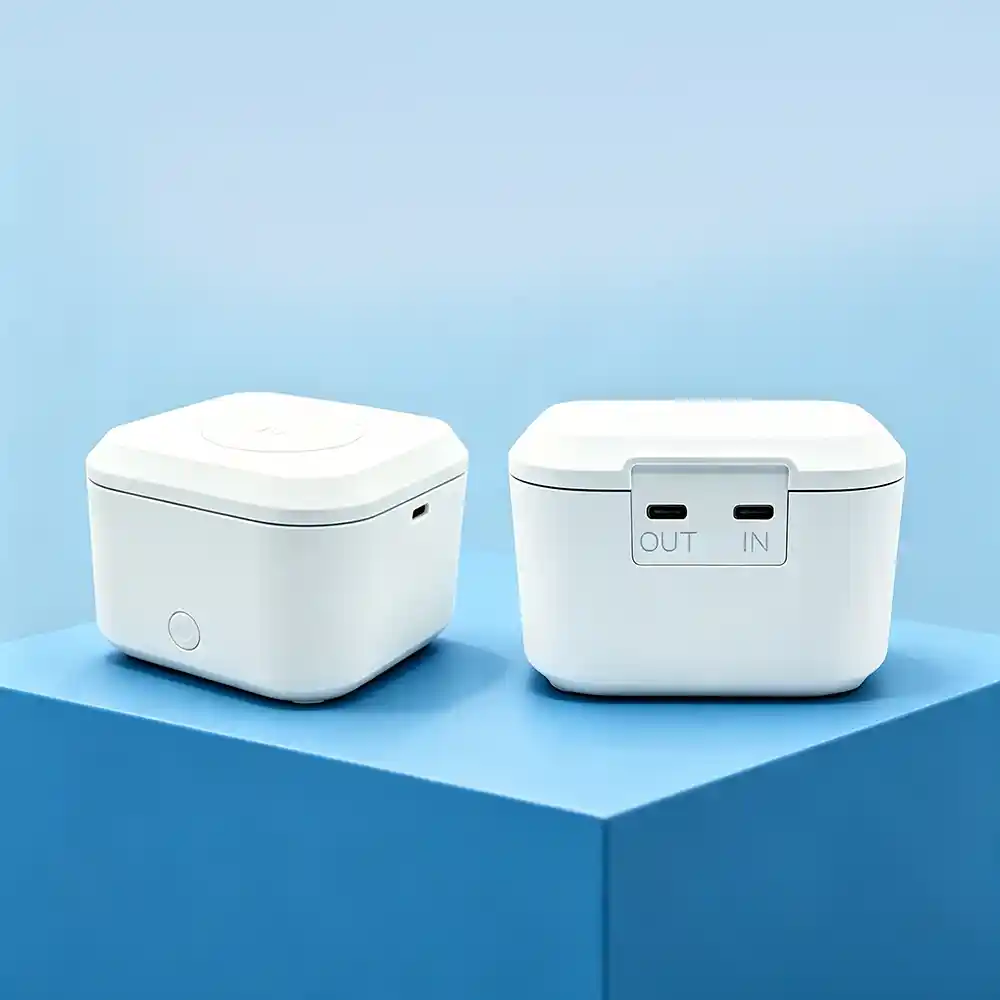
Mini-onduleur MUC85
Mini-onduleur ML1202AC
Considérations relatives au déploiement des FAI et des télécommunications
Les fournisseurs d'accès Internet gérant des milliers de terminaux distribués sont confrontés à des défis uniques. Les principaux points à prendre en compte sont les suivants :
- Déploiement distribué :Les mini-onduleurs CC sont montables au mur, compatibles avec les armoires électriques et légers — parfaits pour les architectures de réseau distribuées du dernier kilomètre.
- Personnalisation OEM :Mylion prend en charge la personnalisation par projet, y compris les étiquettes, les emballages et les options de connecteurs personnalisés.
- Résilience environnementale : Les modèles à base de LiFePO₄ sont particulièrement résistants aux hautes températures, tandis que les modèles Li-ion fonctionnent bien jusqu'à des températures négatives.
- Dépenses opérationnelles :Coût initial par terminal inférieur et pertes d'énergie réduites par rapport aux onduleurs CA traditionnels
FAQ
Q1 : Quelle tension mon routeur nécessite-t-il ?
Q2 : Combien de temps un mini-onduleur peut-il maintenir mon routeur en marche ?
Q3 : Puis-je alimenter à la fois mon modem et mon routeur à partir d’un seul mini-onduleur ?
Q4 : Quelle est la différence entre Ah (ampères-heures) et Wh (watt-heures) ?
Q5 : Quelles caractéristiques de protection dois-je rechercher ?
Conclusion
Choisir la bonne alimentation de secours 12 V CC pour les routeurs haut débit nécessite une évaluation minutieuse de la compatibilité de tension, des besoins en courant, de la capacité de la batterie, du temps de transfert, de la régulation de tension et de la chimie de la batterie.
La gamme de mini-onduleurs Mylion, allant du modèle standard MU68 au modèle haute capacité MU35, en passant par le modèle en ligne MUJ46 et le modèle compatible USB-C MUC85, offre une solution pour chaque scénario de secours haut débitEn choisissant le modèle adapté à vos besoins spécifiques en énergie et à votre environnement de déploiement, vous pouvez garantir une connectivité ininterrompue, respecter vos engagements SLA et fournir le service fiable que vos clients attendent.
 Français
  English
  简体中文
简体中文  Deutsch
  Italiano
  Español