
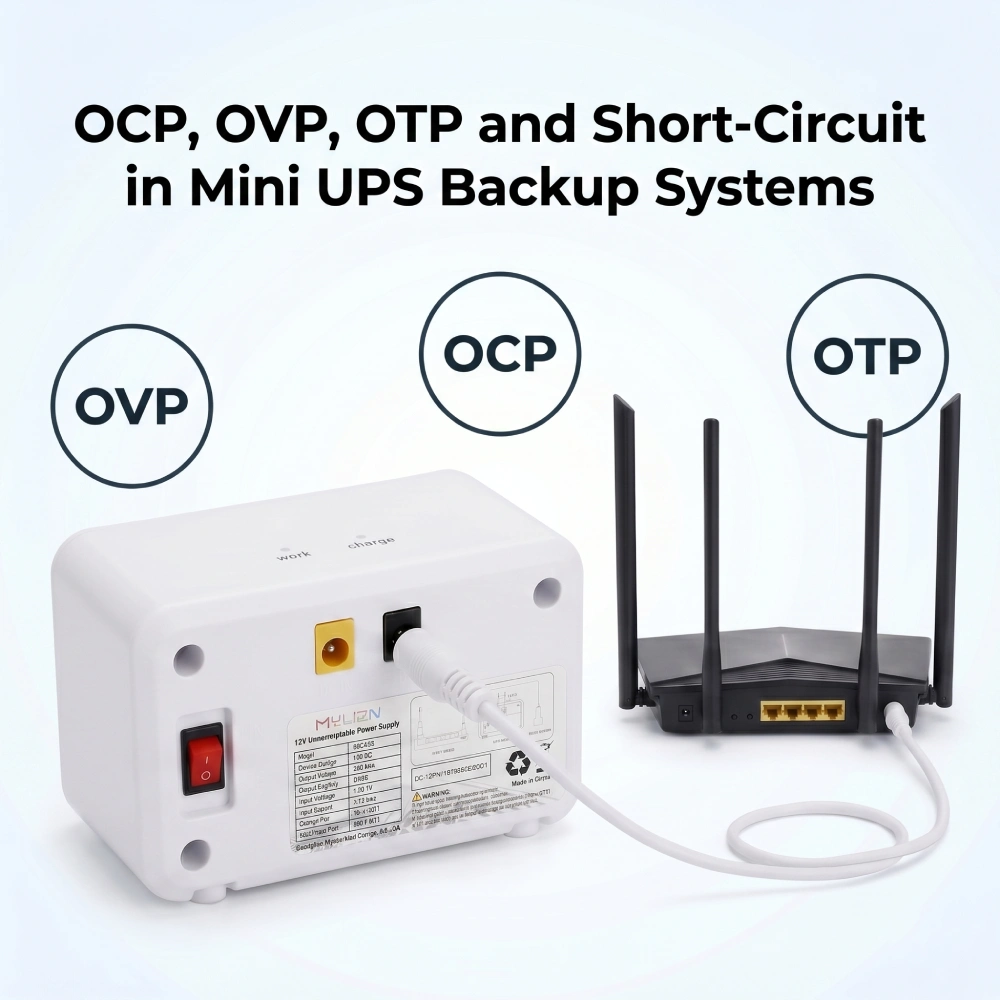
La progettazione della protezione è una delle differenze più critiche tra un prodotto di alimentazione di livello consumer e un prodotto di livello project Soluzione di backup Mini UPSPer i sistemi Mini UPS utilizzati nelle telecomunicazioni, nei provider di servizi Internet e nelle applicazioni industriali, è fondamentale comprendere appieno quattro meccanismi di protezione: OCP, OVP, OTP e protezione da cortocircuito, prima di approvare un campione. Un Mini UPS ben progettato non solo garantisce la sicurezza, ma migliora anche l'affidabilità a lungo termine in ambienti operativi 24 ore su 24, 7 giorni su 7.
Tabella riassuntiva: principali funzioni di protezione di un mini UPS
Tipo di protezione | Cosa fa | Condizione di innesco tipica | Modalità di ripristino (esempio) |
OCP (Over–Attuale) | Limita la corrente di uscita quando il carico supera l'intervallo di sicurezza. | >110-150% di corrente nominale | Ripristino automatico dopo la riduzione del carico |
OVP (oltre–Voltaggio) | Impedisce che la tensione di uscita superi il livello di sicurezza | >105-120% di tensione nominale | Blocco o ripristino automatico |
OTP (oltre–Temperatura) | Riduce o interrompe l'erogazione di potenza quando la temperatura interna è troppo elevata. | >60-85 °C (a seconda del modello) | Ripristino automatico dopo il raffreddamento |
Corto–Circuito | Interrompe immediatamente l'uscita quando i terminali sono in cortocircuito | >200% di corrente nominale o istantanea | Ripristino automatico o riavvio dopo la rimozione del guasto |
Questa tabella fornisce una rapida panoramica. Le sezioni seguenti spiegano in dettaglio ciascuna protezione e perché è importante per te Selezione di mini UPS.
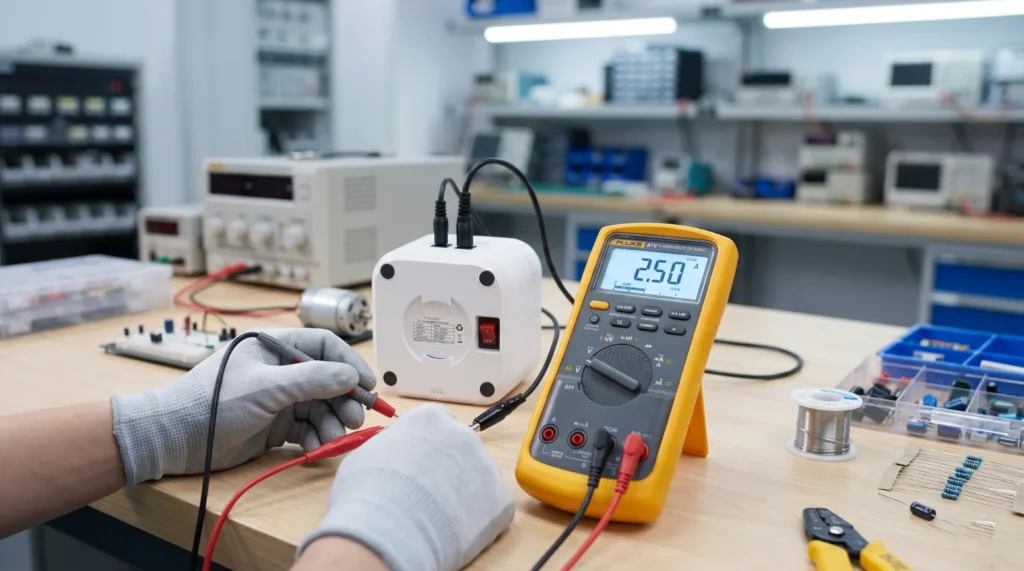
OCP: Protezione da sovracorrente
La protezione da sovracorrente (OCP) limita la corrente di uscita quando il carico collegato supera l'intervallo di sicurezza previsto per il Mini UPS. Ciò contribuisce a ridurre i rischi derivanti da carichi anomali, collegamenti errati dei dispositivi o guasti interni. Senza un'adeguata protezione da sovracorrente, un Mini UPS potrebbe surriscaldarsi o addirittura guastarsi in modo catastrofico.
Cosa dovrebbero verificare gli acquirenti:
- Corrente nominale continua (funzionamento normale)
- Capacità di corrente di picco (ad esempio, per carichi di tipo motore)
- Soglia di protezione (ad esempio, 120% di corrente nominale)
- Comportamento di recupero: automatico o disinseribile
Nelle applicazioni di telecomunicazioni e ISP in cui più dispositivi condividono un Mini UPS, la protezione da sovracorrente (OCP) impedisce che un singolo carico guasto provochi l'arresto dell'intero sistema.
OVP: Protezione da sovratensione
La protezione da sovratensione (OVP) contribuisce a impedire che la tensione di uscita superi un livello di sicurezza. Ciò è particolarmente importante per proteggere le apparecchiature di comunicazione sensibili (ONT, ONU, router, CPE) collegate al mini UPS. Un picco di tensione può danneggiare in modo permanente i componenti elettronici a bassa tensione.
Punti chiave di convalida:
- Precisione della tensione di uscita in condizioni di carico e di carica.
- Tensione di attivazione OVP (superiore al valore massimo normale ma inferiore alla soglia di danneggiamento del dispositivo)
- Tempo di risposta: sufficientemente rapido da proteggere i circuiti integrati sensibili
Molte soluzioni Mini UPS di livello professionale includono anche una protezione da sovratensione in ingresso per proteggere la batteria interna da un alimentatore CA difettoso.
OTP: Protezione contro il surriscaldamento
La protezione OTP protegge il Mini UPS quando la temperatura interna supera l'intervallo di funzionamento sicuro. Il comportamento termico è influenzato dalla progettazione dell'involucro, dalla corrente di uscita, dalla corrente di carica e dalla temperatura ambiente. In ambienti esterni con funzionamento continuo 24 ore su 24, 7 giorni su 7, o in armadi interni non climatizzati, la protezione OTP è essenziale.
Perché è importante per i progetti a lungo termine:
- Previene il rigonfiamento o l'instabilità termica delle batterie al litio.
- Mantiene la sicurezzaconformità alla certificazione (UL, IEC, ecc.)
- Prolunga la durata del prodotto evitando il surriscaldamento cronico
Gli acquirenti dovrebbero richiedere i rapporti sui test di temperatura, soprattutto se il Mini UPS verrà installato in ambienti con temperature elevate o all'interno di contenitori sigillati.
Protezione da cortocircuito
La protezione dai cortocircuiti è un requisito di sicurezza fondamentale per qualsiasi prodotto alimentato a batteria. Il Mini UPS deve reagire in modo rapido e sicuro qualora i terminali di uscita vengano accidentalmente cortocircuitati, ad esempio a causa di un cavo allentato o di un utensile metallico.
Caratteristiche desiderabili:
- Limitazione rapida della corrente (da microsecondi a millisecondi)
- Nessun danno al Mini UPS dopo ripetuti cortocircuiti.
- Modalità di ripristino definita: ripristino automatico una volta eliminato il cortocircuito, oppure riavvio manuale.
In molti modelli moderni di Mini UPS, la protezione da cortocircuito è integrata nello stesso circuito di controllo della protezione da sovracorrente (OCP), ma con una soglia molto più bassa e una reazione più rapida.
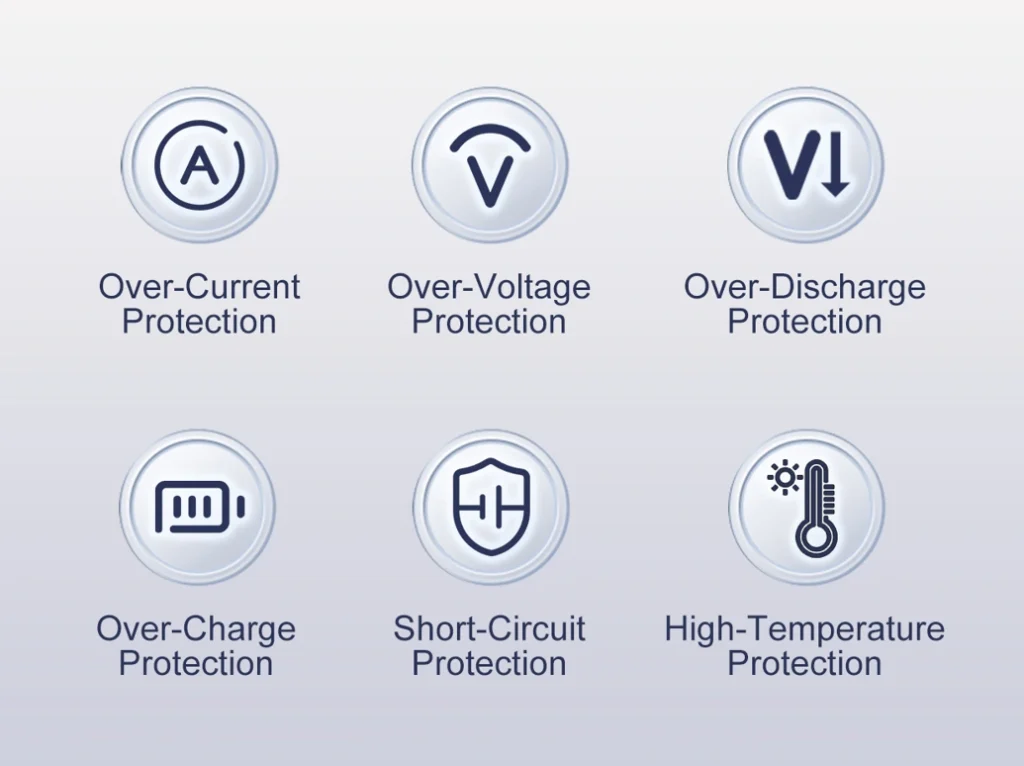
Domande frequenti
D1: Tutti i prodotti Mini UPS hanno lo stesso sistema di protezione?
D2: È possibile personalizzare i parametri di protezione?
D3: Perché gli acquirenti dovrebbero informarsi sulla progettazione della protezione?
D4: Come posso verificare rapidamente se un mini UPS è dotato di un'adeguata protezione contro i cortocircuiti?
Come MYLION supporta gli acquirenti B2B
MYLION è specializzata in Mini UPS DC B2B e soluzioni di backup con batterie al litio per applicazioni di telecomunicazioni, ISP e backup industriale. Supportiamo i clienti con:
- Selezione del prodotto basata sulla corrente di lavoro effettiva e sul tempo di autonomia
- Validazione dei campioni e verifica dei parametri di protezione per ogni Mini UPS
- Requisiti personalizzati per cavi, etichette e custodie
- Preparazione della documentazione di certificazione (CE, FCC, UL, RoHS, ecc.)
- Ispezione della produzione e documentazione di spedizione
Tutti i nostri prodotti Mini UPS sono progettati con protezione multistrato OCP, OVP, OTP e contro i cortocircuiti per soddisfare le esigenze di installatori professionisti e integratori di sistemi.
Hai bisogno di un mini UPS o di una soluzione di backup con batteria al litio per ONT, ONU, router, CPE o apparecchiature di telecomunicazione? Contatta MYLION!
Nota di conformità
I requisiti di certificazione dipendono dalla configurazione del prodotto, dal mercato di destinazione, dall'alimentatore, dalla capacità della batteria e dall'applicazione finale. Gli acquirenti sono tenuti a verificare i requisiti applicabili prima della produzione di massa.
 Italiano
  English
  简体中文
简体中文  Deutsch
  Français
  Español