介绍
Transient grid instability and brownouts trigger 2-to-5-minute reboot cycles in CPE, disrupting critical VoIP, cloud, and remote operations. For ISPs, selecting localized, high-efficiency 12V直流备用电源 is a critical infrastructure strategy to ensure zero-downtime FTTH and broadband deployments.
This guide provides B2B buyers, telecom operators, and infrastructure project managers with a comprehensive framework for selecting 12V DC 备用电源解决方案 for broadband routers, covering everything from voltage compatibility to battery chemistry and deployment scenarios.
Understanding the 12V Standard in Broadband Equipment
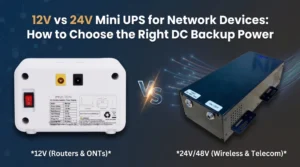
Why 12V DC Is the Industry Standard
The widespread adoption of 12V DC voltage in network equipment is no coincidence. This voltage standard strikes an optimal balance between efficiency and safety. Unlike high-voltage AC systems that require bulky transformers, 12V DC enables compact power adapters and efficient power regulation.
Most routers, fiber ONTs, and wireless CPEs are equipped with internal DC-DC converters capable of stepping down the 12V supply to the lower voltages required by chipsets (such as 3.3V or 5V).
For B2B buyers and infrastructure providers, the 12V standard simplifies backup power architectures. A direct DC-to-DC backup path eliminates unnecessary conversions, improving efficiency by up to 25% and extending battery life compared to AC-based alternatives.
Typical Power Requirements
Broadband routers exhibit varying power demands depending on their capabilities:
设备类型 | 典型电压 | 典型电流 | Typical Power |
Basic CPE / Fiber ONT / ONU | 12V | 0.5A – 1.0A | 6W – 12W |
Standard Dual-Band Gateway | 12V | 1.0A – 1.5A | 12W – 18W |
WiFi 6 / WiFi 7 Router | 12V | 2.0A – 3.0A | 24W – 36W |
DC UPS vs. Traditional AC UPS: The Critical Difference
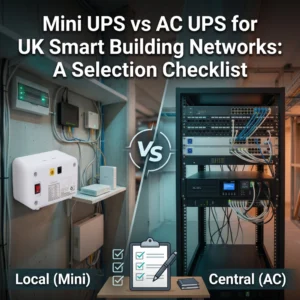
Traditional AC UPS units execute a double-conversion process: pulling AC mains, converting to DC for battery storage, and reverting to AC for device consumption. This process inherently generates extreme thermal waste and energy loss. They remain necessary for multi-device data centers and motor-driven arrays.
Conversely, the 小型直流不间断电源 accepts AC input, stores it as DC, and outputs pure DC directly to the telecom hardware. This architecture is mandatory when prioritizing FTTH backup power SLA compliance, restricted cabinet space, and extended runtimes for distributed edge nodes.
For broadband equipment and the broader telecom infrastructure that supports it, the mini DC UPS is the superior choice.
Key Selection Criteria for 12V DC Backup Power
1. Voltage and Connector Compatibility
Mismatched voltages result in immediate hardware failure; a 12V UPS will permanently damage 5V or 9V circuitry. The standard interface for telecom CPE utilizes 5.5×2.1mm or 5.5×2.5mm DC barrel jacks. Procurement teams must verify connector uniformity across deployment hardware.
2. Output Current (Amperage)
Inadequate amperage scaling leads to thermal throttling and hardware dropouts.
UPS 输出功率 | 典型应用 | Suitability |
12伏 1安 | Basic modems / simple VoIP adapters | May overheat with dual-band routers |
12伏 2安 | Standard dual-band WiFi 5 routers | Sufficient for most home users |
12V 3A | High-power WiFi 6 routers / small switches | Good balance |
12伏 5安 | High-load routers, gateways, multiple devices | Ideal for demanding deployments |
3. Battery Capacity and Runtime
Runtime is determined by battery capacity (measured in watt-hours, Wh) divided by the total load (watts). A Mini UPS typically provides 2 to 8 hours of backup—enough for short power blips or to ride through until generator startup.
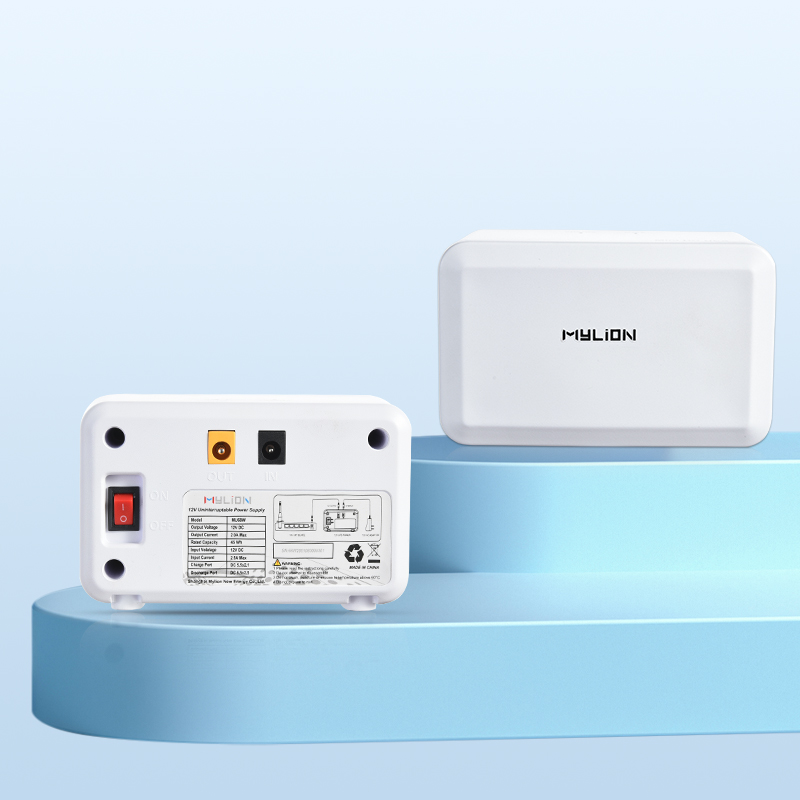
- 这迈利昂 MU68 with 45Wh capacity provides approximately 9 hours of backup at 6W load (0.5A) and 5 hours at 12W load (1.0A).
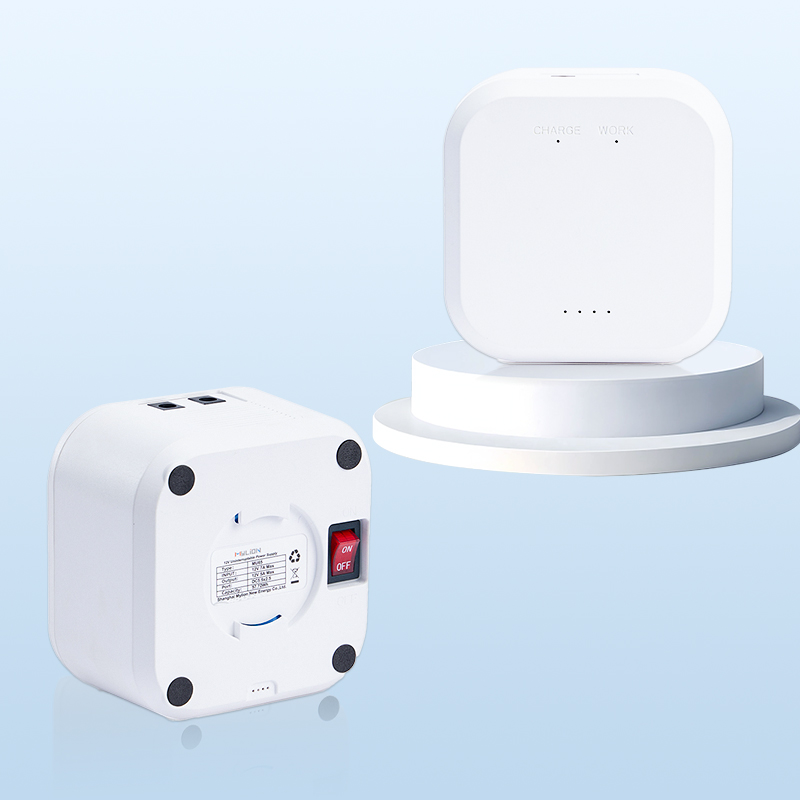
- The higher-capacityMylion MU35 with 77.7Wh capacity delivers 13-14 hours for 12V 0.5A devices.
5. Voltage Regulation
Cheap UPS units often see their voltage drop as the battery drains (e.g., falling to 10.5V), which can cause hardware instability or “brownout” damage. A professional-grade 12V UPS must maintain a regulated output within a ±5% tolerance until the battery protection circuit cuts in.
6. Battery Chemistry
Modern ISP-grade Mini UPS increasingly use LiFePO₄ (Lithium Iron Phosphate) batteries due to their superior characteristics:
- 2000+ cycle life vs. 300-500 cycles for standard lithium-ion
- Higher thermal stability and lower failure risk
- Enhanced safety for continuous backup applications
- Longer operational lifespan, often outliving the Mini UPS itself
While lithium-ion remains a viable option for many applications, LiFePO₄ is increasingly the preferred choice for ISP-grade deployments where reliability and longevity are paramount.
7. Protection Features
Look for comprehensive protection circuits including:
- 过充保护
- 过放电保护
- 短路保护
- 过流保护
- 温度保护
Mylion Mini UPS Product Lineup for Broadband Applications
Mylion offers a targeted Mini UPS product line designed for specific broadband backup scenarios:
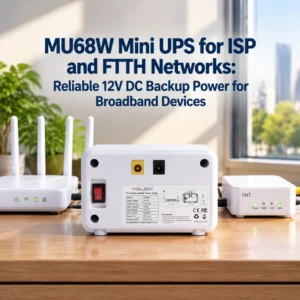
MU68 – The Standard 12V Mini UPS
- Best for: Standard 12V router / ONT / ONU backup
- Positioning: The classic and most widely applicable model
- 规格: 12V output, 2A current, 45Wh capacity
- 备份时间: ~9 hours at 6W, ~5 hours at 12W
- 方面: 112×70×60mm, 405g
- Key features: FR-ABS flame-retardant casing, CE/FCC/EMC/UL certified, 600+ cycle life
The MU68 is the ideal starting point for most standard 12V broadband router applications.
MU35 – High-Load 12V Mini UPS
- Best for: Higher-load 12V network devices, WiFi 6/7 routers, gateways
- Positioning: The upgraded choice when 12V 3A is not enough
- 规格: 12V output, 5A max current, 77.7Wh capacity
- 备份时间: 13-14 hours for 12V 0.5A devices
- 转移时间: 0ms (Zero Transfer Time)
- 方面: 100×100×60mm
The MU35 is designed to provide stable 12V 5A DC backup for higher-load routers, gateways, modems, and other network equipment.
MUJ46 – Inline FTTH Deployment
- Best for: Inline FTTH and cleaner deployment scenarios
- Positioning: The better choice for compact and hidden installation
- 规格: 12V / 2A output, 38.48Wh capacity, plus USB 5V / 3A output
- Best-fit scenarios: FTTH terminals, modems, light routers, edge communication devices
当在线安装、更整洁的电缆布局或紧凑的 FTTH 部署很重要时,请选择 MUJ46。
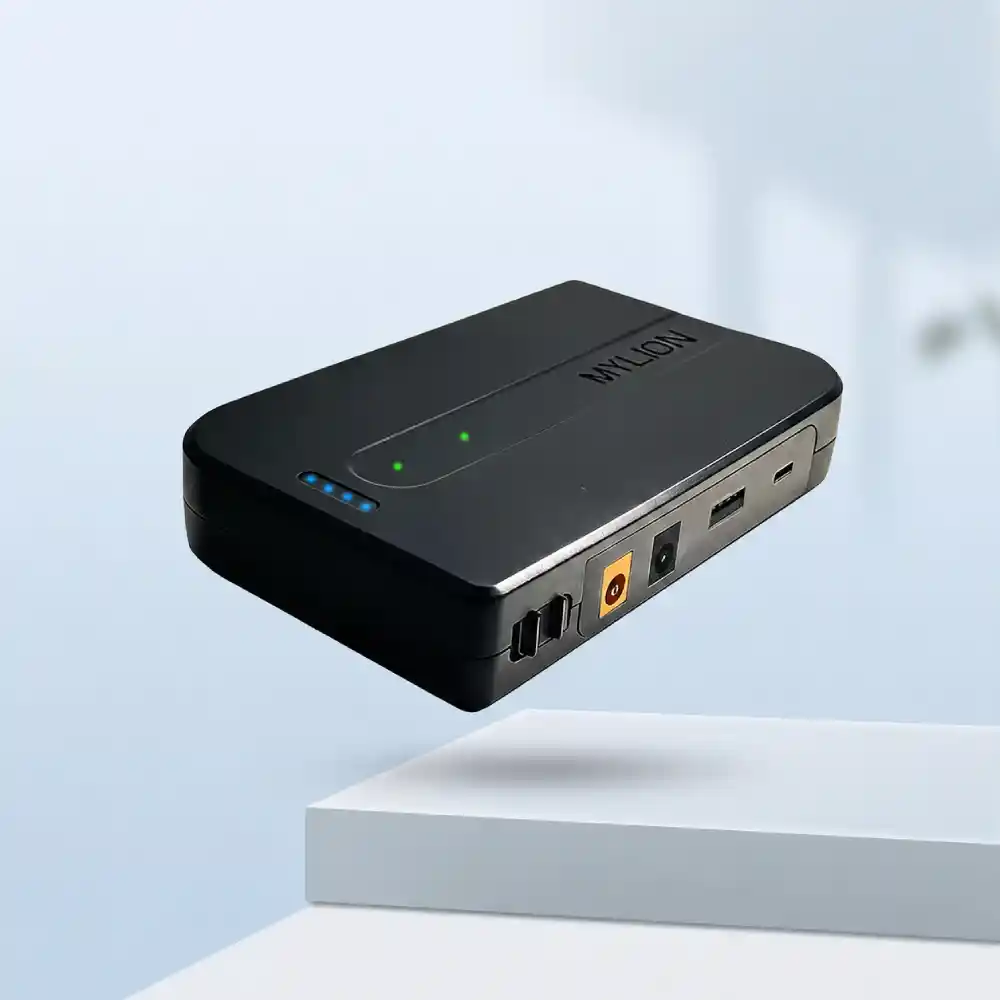
MUJ46迷你UPS
MU68 迷你 UPS
MU35迷你UPS
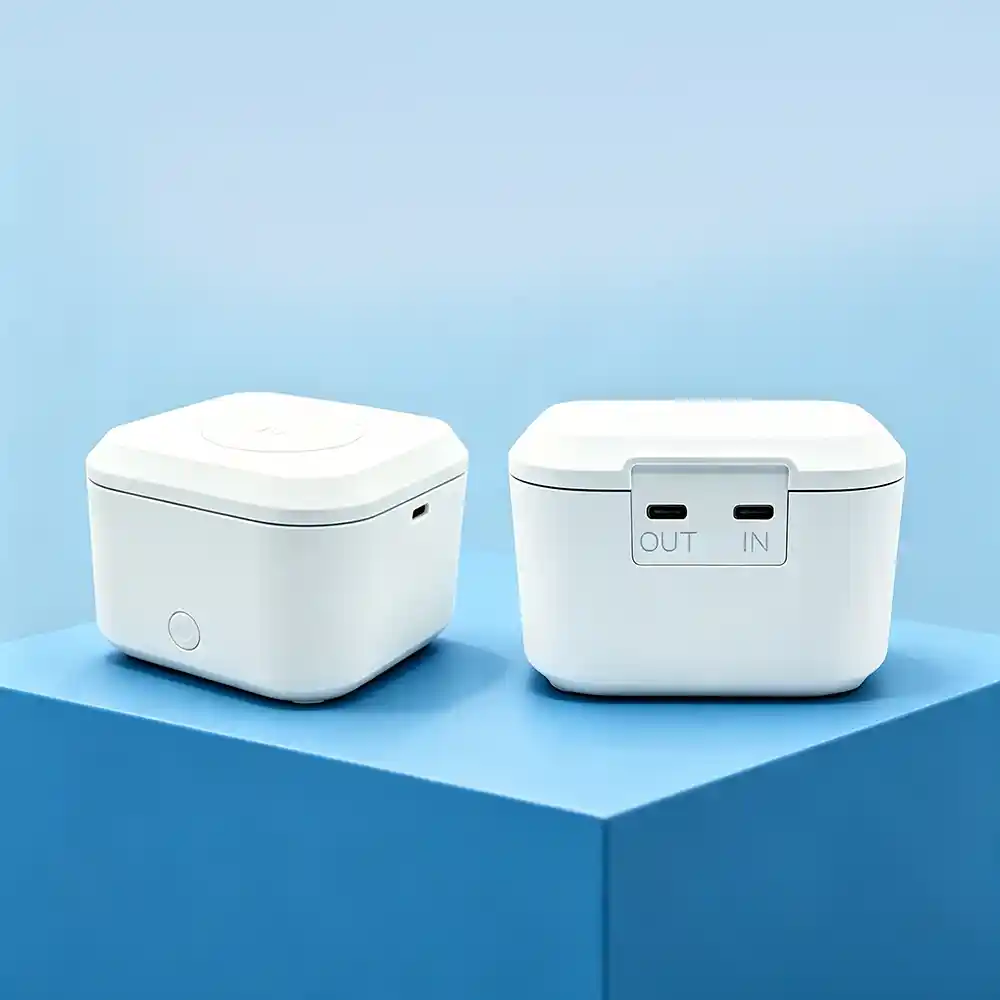
MUC85 – USB-C / PD Mini UPS
- Best for: USB-C / PD powered modern devices
- Positioning: The flexible option for modern power architecture
- Best-fit devices: Compatible USB-C routers and network devices
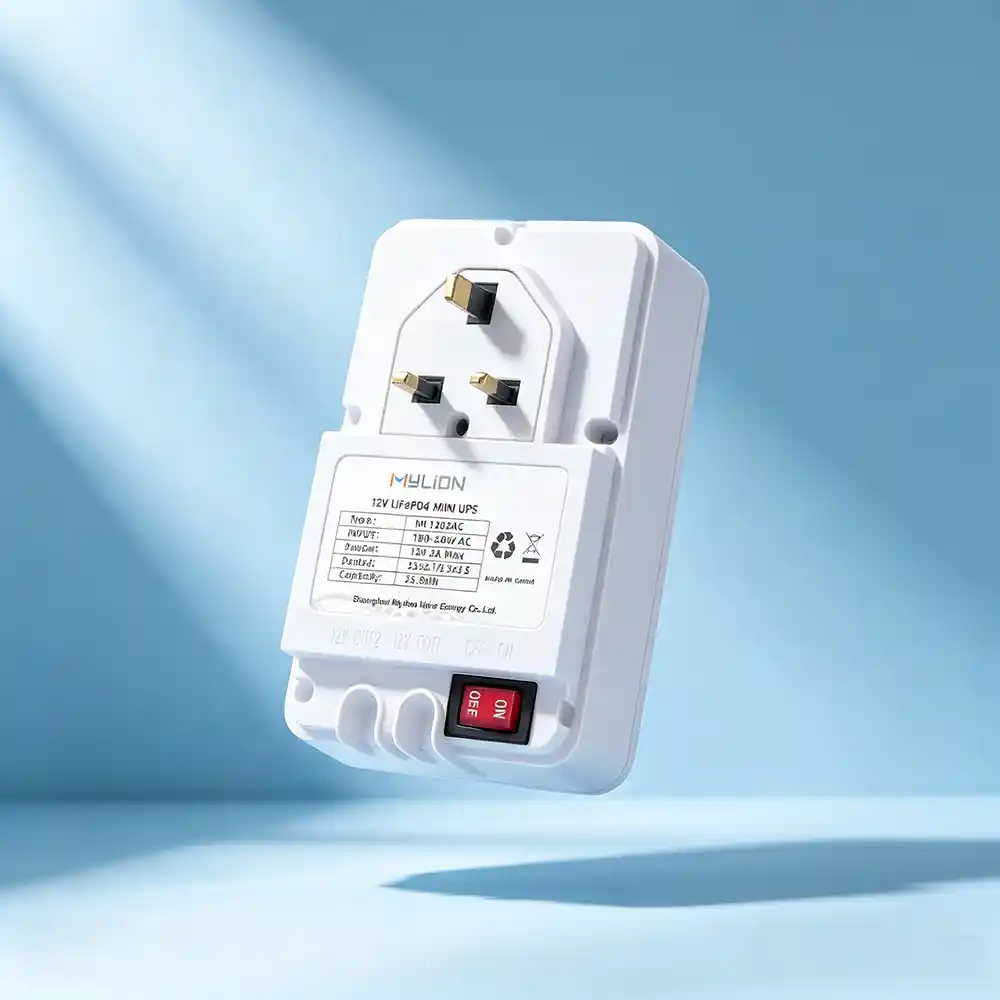
ML1202AC – LiFePO4 Mini UPS
- Key feature: LiFePO4 battery technology
- 输出: 2 x 12V DC 2A outputs for two low-power devices
- Ideal for: Applications requiring maximum cycle life and thermal stability
MUC85迷你UPS
ML1202AC Mini UPS
ISP and Telecom Deployment Considerations
ISPs managing thousands of distributed endpoints face unique challenges. Key considerations include:
- Distributed deployment:Mini DC UPS units are wall-mountable, cabinet-compatible, and lightweight—perfect for distributed last-mile network architecture
- OEM customization:Mylion supports project-based customization including custom labels, packaging, and connector options
- Environmental resilience: LiFePO₄-based models are especially tolerant of high temperatures, while Li-ion models perform well down to freezing
- Operational expenditure:Lower upfront cost per endpoint and reduced energy loss vs. traditional AC UPS
常问问题
Q1: What voltage does my router require?
Q2: How long will a Mini UPS keep my router running?
Q3: Can I power both my modem and router from one Mini UPS?
Q4: What is the difference between Ah (Amp-hours) and Wh (Watt-hours)?
Q5: What protection features should I look for?
结论
Selecting the right 12V DC backup power for broadband routers requires careful evaluation of voltage compatibility, current requirements, battery capacity, transfer time, voltage regulation, and battery chemistry.
Mylion’s Mini UPS lineup—from the standard MU68 to the high-load MU35, the inline MUJ46, and the USB-C-ready MUC85—provides a solution for every broadband backup scenario. By matching the right model to your specific power requirements and deployment environment, you can ensure uninterrupted connectivity, protect SLA commitments, and deliver the reliable service that customers expect.