
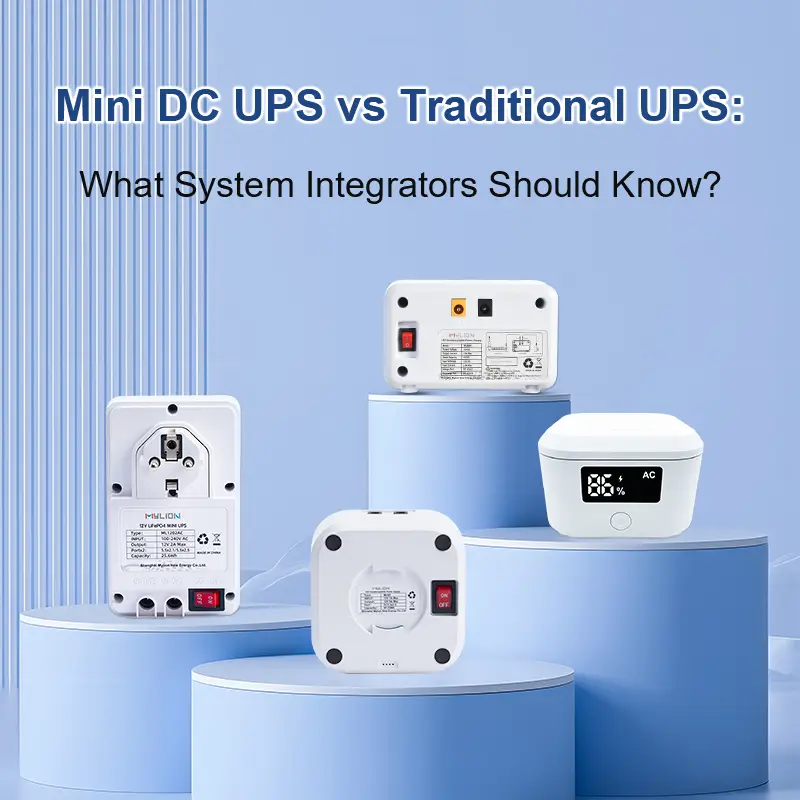
Why Power Continuity Matters More Than Ever for System Integrators?
In today’s always-connected world, even a short power interruption can lead to network downtime, security blind spots, and customer dissatisfaction.
For system integrators deploying routers, ONT/ONU devices, IP cameras, access control systems, and IoT gateways, power continuity is no longer optional—it is part of the infrastructure design.
Traditionally, integrators relied on centralized AC UPS systems. However, with the rapid expansion of edge devices and last-mile connectivity, Mini DC UPS solutions are redefining how backup power is deployed.
Traditional UPS: Strengths and Hidden Limitations
Traditional UPS systems still play an important role in data centers and centralized equipment rooms. They offer:
- High capacity AC backup
- Standardized installation
- Compatibility with large-scale equipment
However, system integrators increasingly face challenges when using traditional UPS for edge devices:
- Overcapacity for small loads, leading to inefficiency
- Complex wiring and AC-DC conversion losses
- Higher maintenance costs
- Single-point failure risk
- Limited flexibility for distributed deployments
For routers, ONTs, cameras, and small network nodes, traditional UPS is often too large, too complex, and too costly.
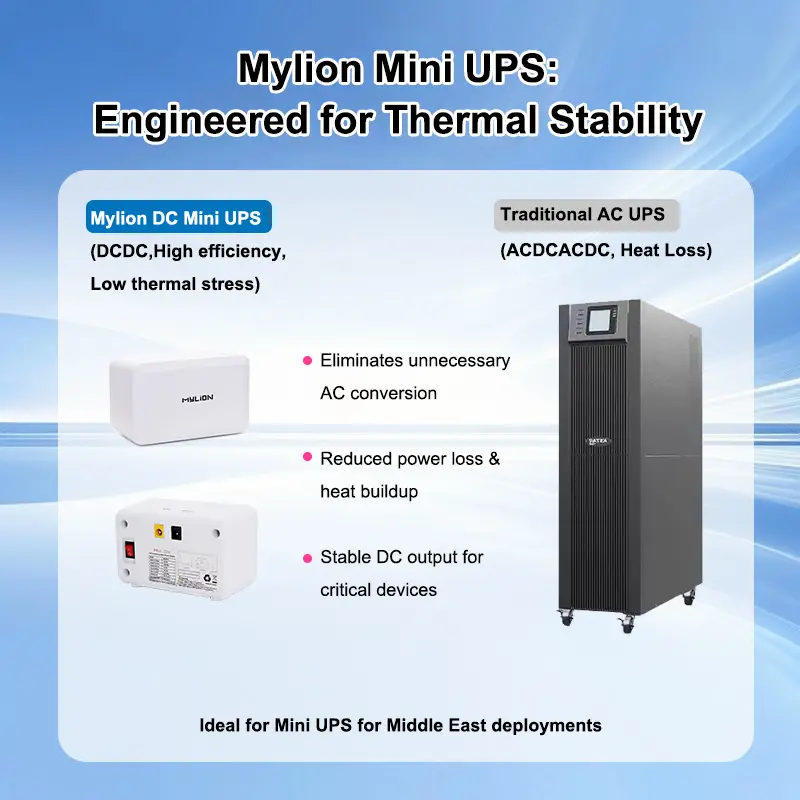
What Is a Mini DC UPS and How It Changes Deployment Logic?
Mini DC UPS is designed to solve a problem that traditional UPS systems were never optimized for:
protecting distributed, low-power devices at the network edge.
By delivering direct DC backup power without AC conversion, a Mini DC UPS connects directly to devices such as routers, ONTs, IP cameras, and IoT gateways. The result is higher efficiency, fewer failure points, and simpler deployment.
Rather than building a centralized UPS system to protect multiple devices, system integrators can deploy Mini DC UPS units exactly where outages occur—at the device level.
Key advantages of Mini DC UPS systems:
- No inverter, no conversion loss, and fewer components to fail
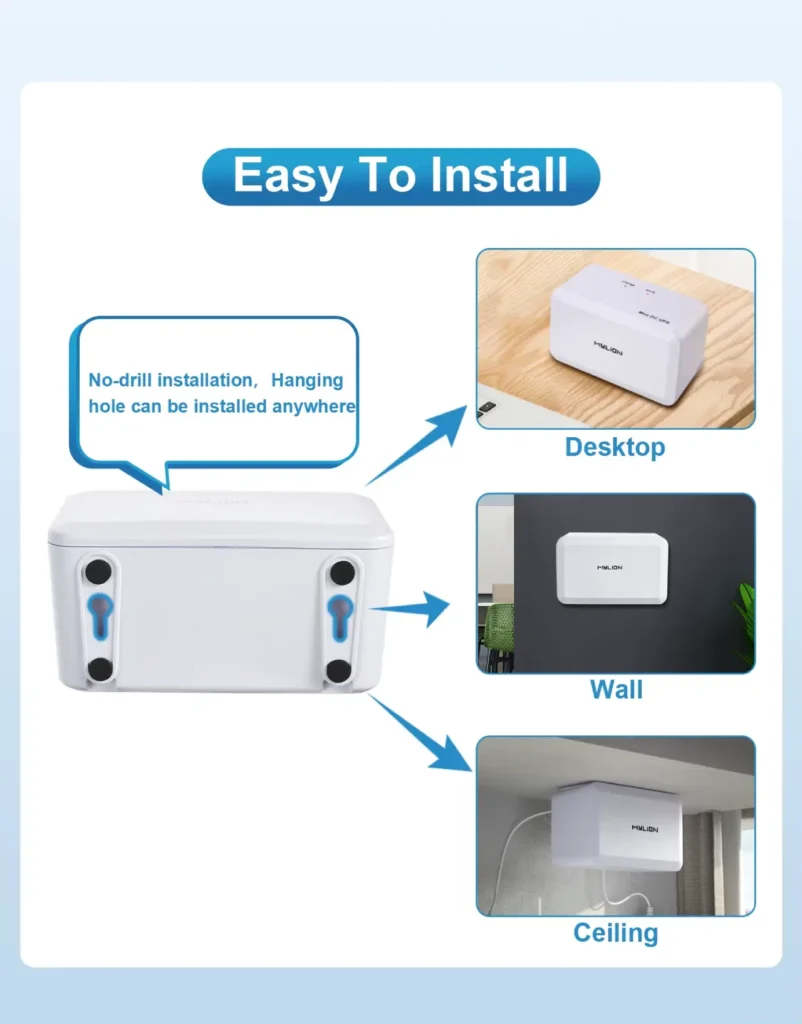
- Small footprint suitable for wall-mount, cabinets, or outdoor enclosures
- Fast plug-and-play installation with minimal integration effort
- Optimized runtime for edge devices instead of oversized battery capacity
- Reduced installation, maintenance, and lifecycle costs
For system integrators, this changes the deployment logic from
“protect the power source” to “protect the device.”
This approach significantly improves network resilience while reducing complexity in large-scale deployments.
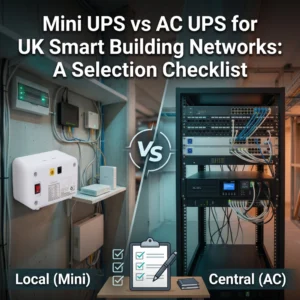
Mini DC UPS vs Traditional UPS: A Practical Comparison
| Aspect | Mini DC UPS | Traditional UPS |
|---|---|---|
| Output Type | Direct DC | AC |
| Efficiency | High (no power conversion loss) | Lower (AC–DC–AC conversion) |
| Installation | Plug-and-play, device-level | Complex wiring and configuration |
| Maintenance | Minimal, low service requirement | Regular battery replacement and testing |
| Scalability | Distributed and flexible deployment | Centralized system design |
| Best Use Case | Routers, ONT/ONU, IP cameras, IoT devices | Servers, racks, and data centers |
Typical Application Scenarios Where Mini DC UPS Wins
Mini DC UPS solutions are ideal for:
- ISP last-mile connectivity
- Fiber ONT/ONU backup
- IP cameras and NVR systems
- Access control and alarm systems
- Smart city edge nodes
- Outdoor and remote installations
These scenarios demand compact, efficient, and device-level backup, where Mini DC UPS clearly outperforms traditional solutions.

Mylion Mini DC UPS Portfolio for Different Integration Needs
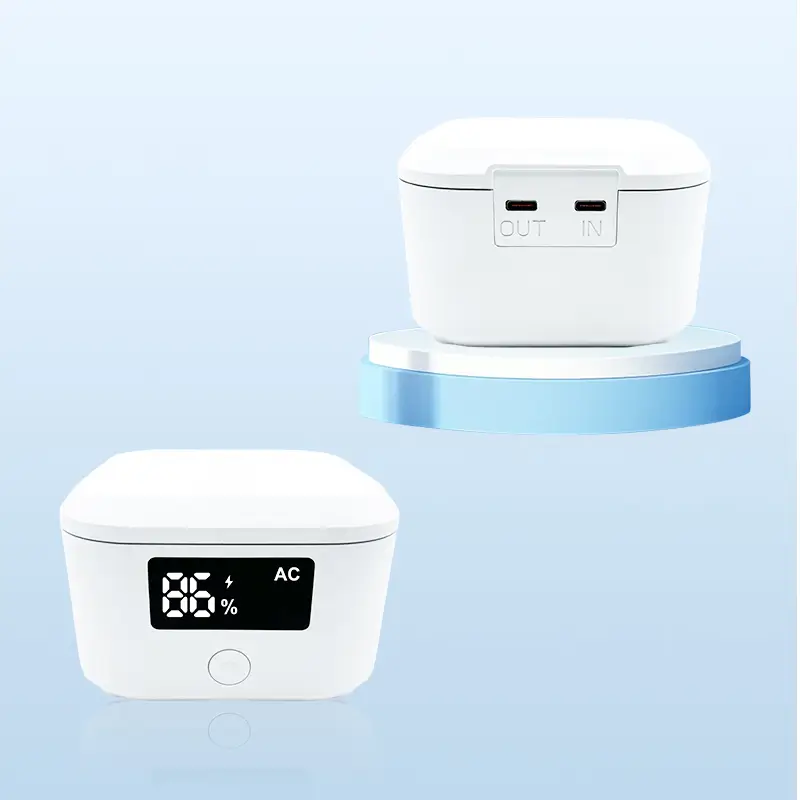
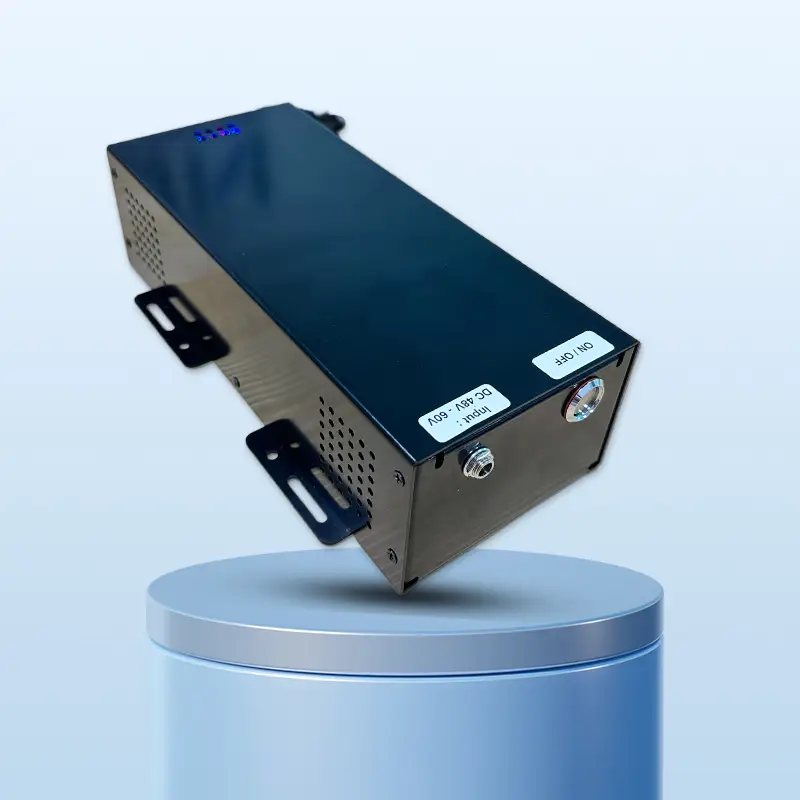
As a professional Mini DC UPS manufacturer, Mylion offers a complete product range to match diverse deployment requirements.
Low to Mid-Power DC Output
- MU26 (2A) Mini UPS – Ideal for ONT and basic routers
- MU48 / MU68 (3A) Mini UPS – Stable backup for networking devices
High Current Mini UPS
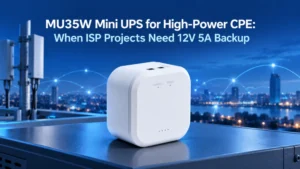
- MU05 / MU65 / MU35 (5A) Mini UPS – For power-hungry routers and cameras
Type-C PD Mini UPS
- MUC66 / MUC85 (3.5A) Mini UPS – Designed for modern USB-C powered devices
Specialized Applications
- MA825 (3A Waterproof) Mini UPS – Outdoor and harsh environments
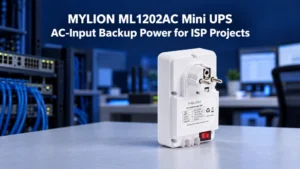
- ML1202AC LiFePO4 Mini UPS – Long lifecycle and high safety
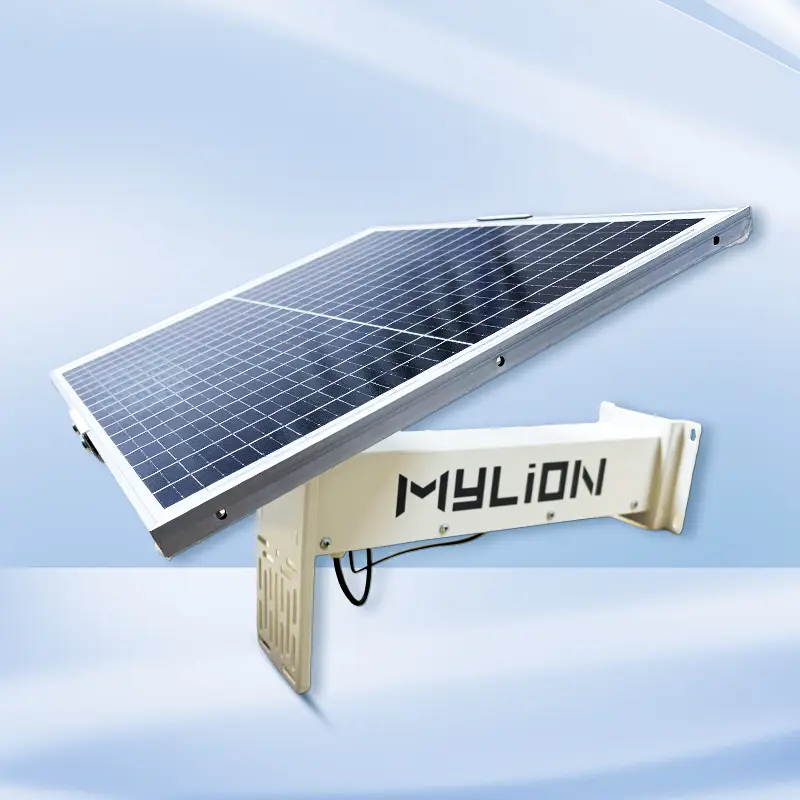
- MUL268 Solar Mini UPS – Off-grid and remote deployments
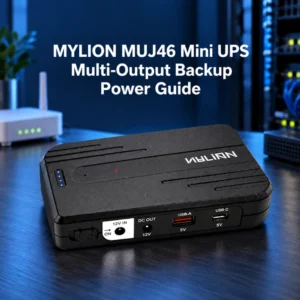
- MU248 Mini DC UPS – Flexible DC output for integrators
This modular portfolio allows system integrators to standardize backup power across projects while maintaining flexibility.
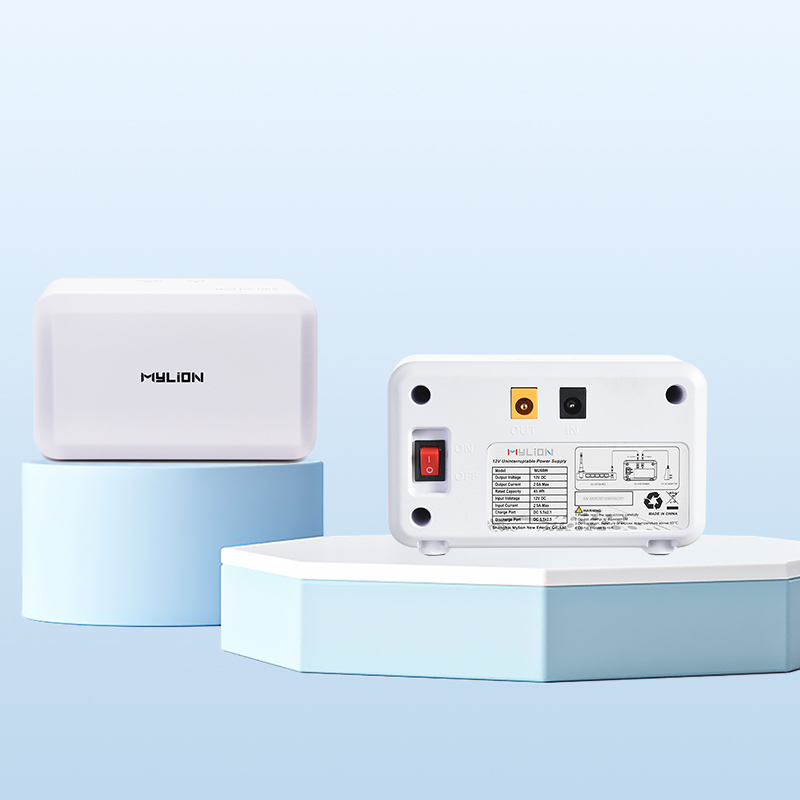


Why System Integrators Trust Mylion?
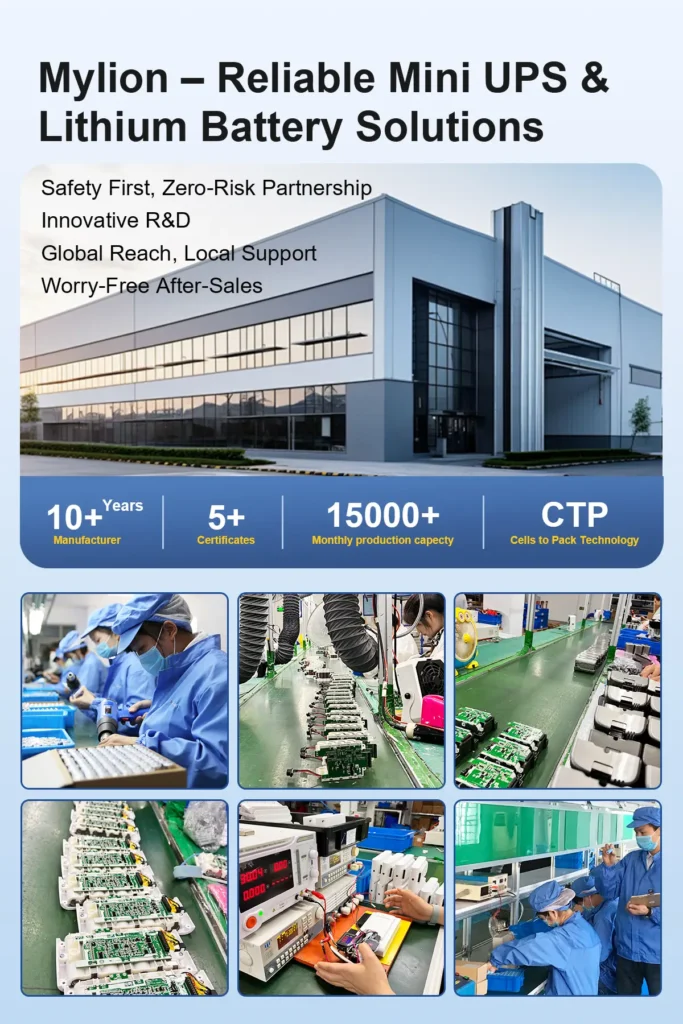
System integrators choose Mylion not just for products, but for long-term partnership:
- 1. In-house manufacturing and strict QC
- 2. Stable supply chain for large-scale projects
- 3. OEM/ODM customization support
- 4. Global certifications and compliance
- 5. Engineering-level technical support
Mylion Mini DC UPS solutions are designed with real-world deployment challenges in mind, making them a trusted choice for integrators worldwide.
Final Thoughts: Choosing the Right UPS Strategy
Traditional UPS systems still have their place, but for edge devices and distributed networks, Mini DC UPS is the smarter, more efficient solution.
By combining compact design, high efficiency, and application-specific models, Mylion Mini DC UPS enables system integrators to build more reliable and scalable networks.
If you are planning your next deployment, choosing the right Mini DC UPS partner can make all the difference.
 English
  简体中文
简体中文  Deutsch
  Français
  Italiano
  Español