
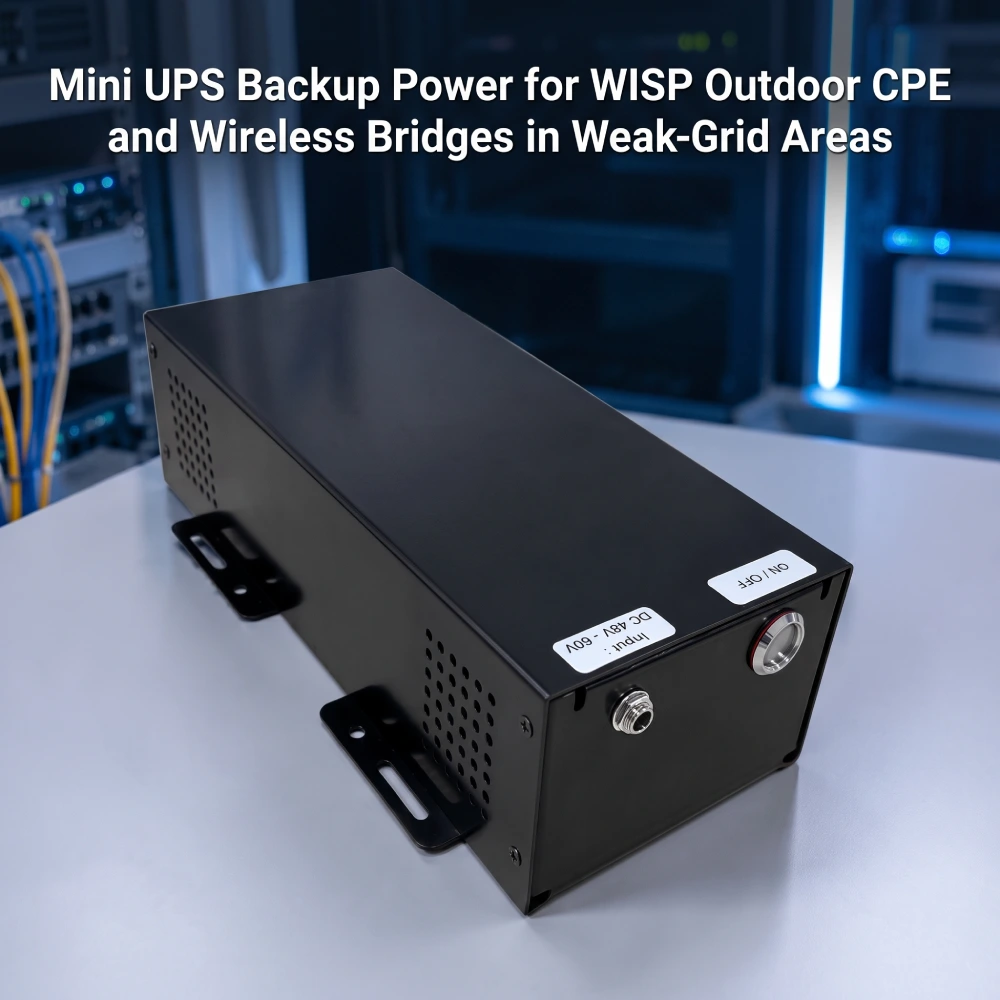
For WISPs and rural broadband operators, unstable grid power can quickly become a service reliability problem. A short power outage at an outdoor CPE, wireless bridge, radio, or edge communication device may disconnect subscribers, trigger service complaints, and increase maintenance pressure on field teams.
In weak-grid areas, backup power should be practical, device-matched, and suitable for distributed network deployment. For many 24V and 48V telecom or wireless communication devices, a DC-side Mini UPS can be a more focused solution than placing a traditional AC UPS at every small network point.
MYLION provides a dedicated 24V / 48V Telecom Backup Solution for professional applications such as wireless CPE, outdoor communication equipment, telecom devices, radios, and wireless bridges.
Why Weak-Grid Areas Create WISP Uptime Problems
WISP networks often operate in areas where utility power is not fully stable. Rural communities, remote installations, developing regions, industrial zones, and edge network sites may experience short outages, voltage fluctuation, or repeated power interruptions.
For subscribers, even a short disconnection can feel like poor network quality. For operators, the impact may include:
- Rebooting outdoor CPE or bridge devices;
- Lost wireless links between network points;
- More support tickets after power events;
- Extra field visits to check equipment;
- Lower confidence from business or residential users.
This is why backup power should be considered part of WISP network planning, not only an accessory added after problems appear.
Why Outdoor CPE and Wireless Bridges Need the Right DC Backup
Not every Mini UPS is suitable for WISP equipment. Many standard Mini UPS models are designed for 12V routers, ONTs, or indoor customer-premises devices. Outdoor wireless equipment may require 24V or 48V input, and the backup system must match the actual electrical requirement.
Before selecting a Mini UPS, WISPs and ISPs should confirm:
- Device voltage;
- Working current or power consumption;
- Connector or power input method;
- Startup or peak load;
- Target backup time;
- Number of devices connected;
- Indoor, cabinet, pole, rooftop, or outdoor installation environment.
The goal is not simply to choose the largest battery. The goal is to keep the correct device operating safely and reliably under real field conditions.
Selection Criteria for 24V / 48V WISP Backup Power
Match the Voltage First
Voltage mismatch is one of the most common mistakes in backup power selection. A 12V Mini UPS should not be assumed suitable for a 24V or 48V outdoor wireless bridge.
For WISP projects, separate equipment by input voltage:
- 12V routers, ONTs, or indoor CPE devices;
- 24V outdoor CPE, wireless radios, or bridge equipment;
- 48V telecom or network communication devices;
- Mixed-voltage sites that require project-specific evaluation.
For 24V and 48V applications, start with MYLION’s 24V / 48V Telecom Backup Solution instead of adapting a lower-voltage router backup product.
Check Real Working Load
A backup system should be selected according to the real working load of the device. The product category alone is not enough.
Two outdoor CPE models may have different power requirements. A wireless bridge may draw different power depending on transmission status, configuration, and connected accessories. For this reason, MYLION recommends confirming the device voltage, current, connector type, and installation environment before final model selection.
Estimate Runtime Correctly
Backup time should be estimated from battery energy and device load.
The basic reference formula is:
Battery Wh ÷ Working Load W
This should be treated as a formula estimate, not a guaranteed runtime, unless tested under the same device and load conditions. For WISP projects, the most useful runtime target is often based on real outage patterns in the deployment area.
Consider the Installation Environment
Outdoor CPE and bridge equipment may be installed on poles, rooftops, walls, towers, or inside outdoor cabinets. Backup power planning should consider:
- Heat exposure;
- Moisture protection;
- Cable routing;
- Mounting space;
- Maintenance access;
- Enclosure or cabinet design;
- Safety and serviceability.
If the Mini UPS will be installed in an outdoor or semi-outdoor location, the protection method should be confirmed during project evaluation.
MYLION 24V / 48V Mini UPS Solution
MYLION’s 24V / 48V Mini UPS solution is designed for professional telecom and wireless network backup applications where standard 12V router backup is not suitable.
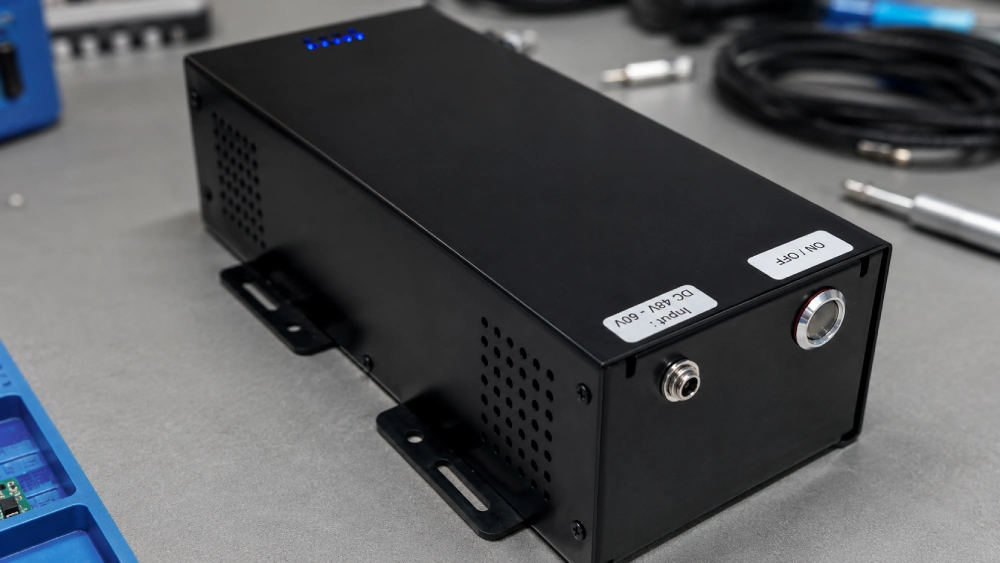
The MU248 LiFePO4 Mini UPS is positioned for 24V and 48V telecom device backup, including wireless CPE, radios, bridges, and outdoor communication devices.
Key advantages of MU248 include:
- 24V / 48V application fit:Suitable for projects where outdoor CPE, wireless bridges, radios, or telecom devices require 24V or 48V DC backup.
- LiFePO4 battery chemistry:A practical choice for professional backup projects that need stable performance and long-term reliability.
- Telecom-oriented use case:More relevant for WISP, ISP, and communication equipment projects than standard consumer-style backup products.
- Project evaluation support:MYLION can help review voltage, load, connector, backup time target, and installation conditions before model confirmation.
- Useful for distributed deployment:Suitable for evaluating compact DC backup power across multiple field locations in weak-grid areas.
This makes MU248 a strong candidate for WISP, ISP, telecom, and system integration projects that need compact DC backup power for 24V or 48V field communication equipment.
Typical Application Scenarios
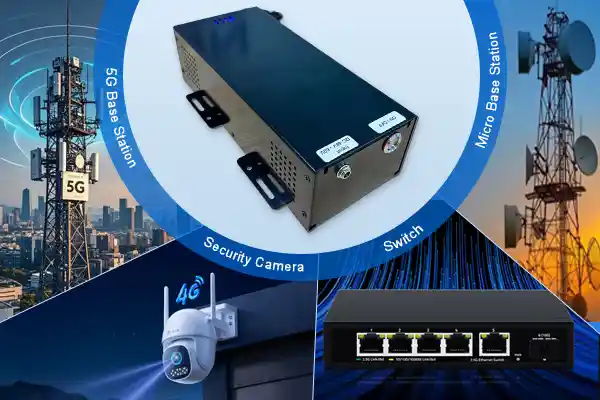
Outdoor CPE at Subscriber Premises
In weak-grid regions, an outdoor CPE may lose power during short outages even when the broader network remains available. A properly selected Mini UPS can help keep the wireless access link online during brief interruptions, depending on device load and backup capacity.
Wireless Bridge Between Buildings or Remote Points
Wireless bridges are often used for point-to-point or point-to-multipoint links. If one side loses power, the link can drop. A 24V / 48V Mini UPS can be evaluated for bridge devices that require DC backup power.
Rural ISP and Altnet Networks
Rural ISPs and altnets often operate across distributed sites where power quality varies by location. Compact DC backup may be easier to deploy than traditional AC UPS systems when space, cost, maintenance, and installation complexity are important.
Telecom Edge and Field Communication Equipment
For telecom-related edge equipment requiring 24V or 48V backup, MYLION’s 24V / 48V solution can support project evaluation as part of a wider network uptime strategy.
How WISPs Should Prepare for Model Selection
To receive a practical recommendation, WISP and ISP teams should prepare the following information before contacting MYLION:
- Device type: outdoor CPE, wireless bridge, radio, router, ONT, or other equipment;
- Input voltage;
- Working current or power consumption;
- Connector or power input method;
- Target backup time;
- Number of devices to be backed up;
- Installation environment;
- Estimated project quantity;
- OEM, ODM, private label, or packaging requirements if needed.
This information helps avoid underpowered backup design and improves the accuracy of project evaluation.
For lower-voltage indoor devices, MYLION also provides broader Mini UPS options through its Mini UPS product range and Router / Modem / CPE Backup Solution. For higher-voltage telecom and outdoor communication equipment, the 24V / 48V solution should be reviewed first.
FAQ
Q1: Can one Mini UPS work for all WISP outdoor CPE devices?
Q2: Is a 12V Mini UPS suitable for 24V or 48V wireless bridge equipment?
Q3: Why is MU248 relevant for WISP and wireless bridge projects?
Q4: How should WISPs estimate backup time?
Q5: Can MYLION recommend a model based on device specifications?
Q6: Is this solution suitable for outdoor installation?
Conclusion
For WISP and ISP networks in weak-grid areas, backup power should be planned around real device requirements. Outdoor CPE, wireless bridges, radios, and telecom field equipment may require 24V or 48V backup, so they should not be treated like standard 12V home router applications.
MYLION’s 24V / 48V Mini UPS solution, including the MU248 LiFePO4 Mini UPS, gives WISP operators and system integrators a more relevant starting point for higher-voltage communication equipment backup.
By matching voltage, load, connector, runtime target, and installation conditions, operators can build a more practical backup strategy for distributed wireless networks.
 English
  简体中文
简体中文  Deutsch
  Français
  Italiano
  Español