
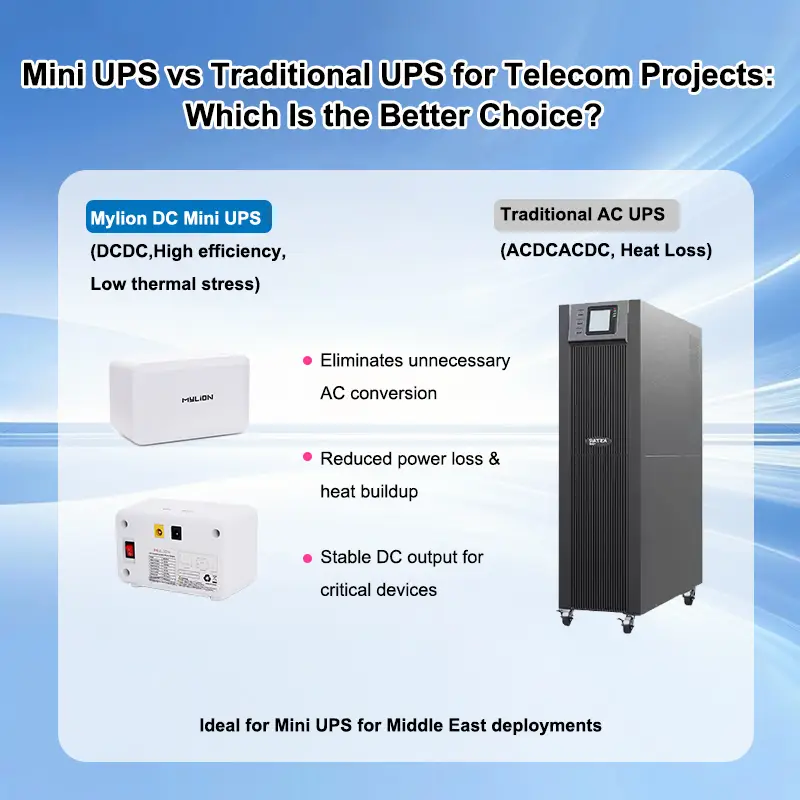
Introduction: Power Backup Challenges in Modern Telecom Projects
Telecom and ISP networks are becoming increasingly distributed. From fiber access nodes and roadside cabinets to rooftop base stations and remote monitoring points, modern network infrastructure no longer relies on centralized equipment rooms alone. As a result, power backup solutions must evolve accordingly.
Traditional UPS systems, originally designed for centralized IT environments, are often oversized, inefficient, and costly when deployed across thousands of distributed network nodes. This has led many telecom operators, system integrators, and infrastructure project managers to re-evaluate their backup power strategy.
In this context, Mini DC UPS solutions have emerged as a more efficient and scalable alternative—specifically designed for Telecom, ISP, and B2B network projects.
What Is a Mini UPS for Telecom Applications?
Definition and Core Characteristics
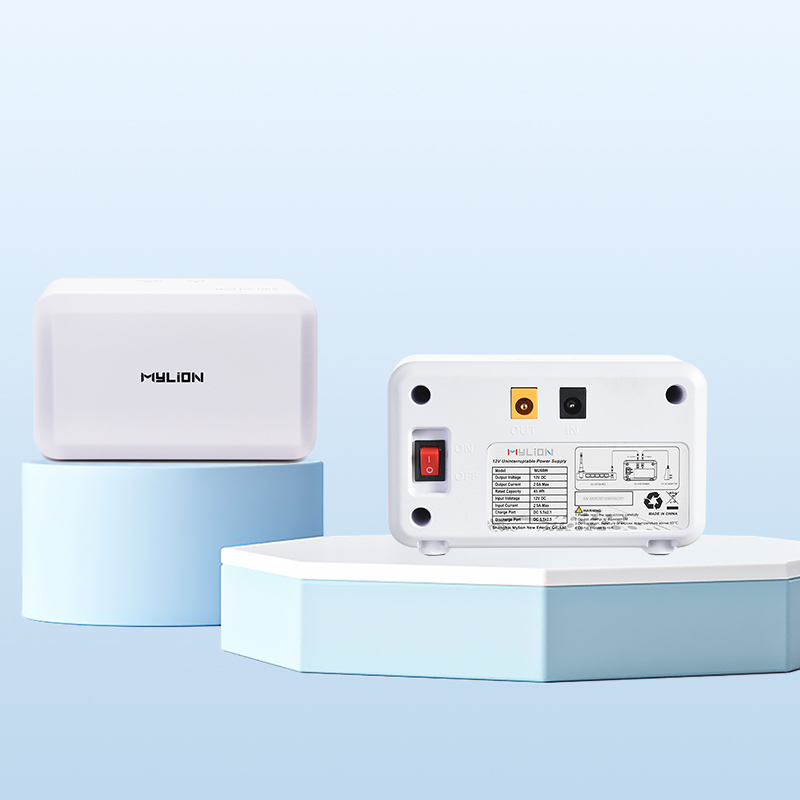
Mini UPS for telecom applications is a compact DC backup power system designed to supply uninterrupted low-voltage DC power directly to network devices during grid outages or voltage instability.
Unlike traditional AC UPS systems, a Mini DC UPS:
Delivers direct DC output (5V / 9V / 12V / 24V)
Eliminates unnecessary AC–DC–AC power conversion
Integrates lithium or LiFePO4 batteries
Is optimized for continuous operation of network equipment
These systems are engineered for project-level deployment, not consumer electronics.
Typical Telecom Devices Supported by Mini DC UPS
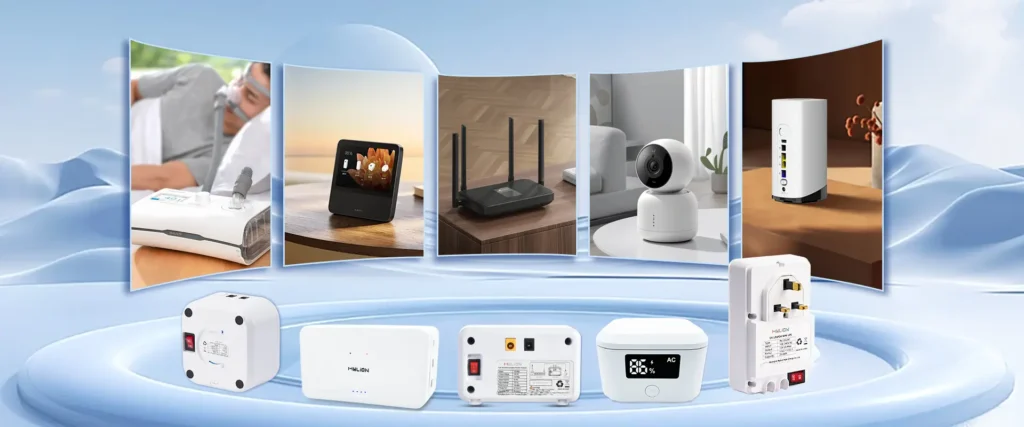
Mini UPS systems are widely used to protect:
ONU / ONT devices
Routers and CPEs
Wireless access points
Small network switches
IP cameras and monitoring units
IoT gateways in smart city infrastructure
All these devices operate on DC power natively, making Mini DC UPS solutions a technically logical choice.


What Is a Traditional UPS?
How Traditional AC UPS Systems Work?
Traditional UPS systems convert incoming AC power into DC to charge internal batteries, then convert it back to AC to supply connected equipment. These systems are effective in data centers and centralized server rooms where AC-powered equipment dominates.
However, this architecture introduces multiple inefficiencies when applied to telecom edge devices.
Limitations of Traditional UPS in Distributed Telecom Networks?
For telecom and ISP projects, traditional UPS systems present several challenges:
- Oversized capacity relative to actual load
- Low efficiency due to multiple power conversions
- High installation and maintenance costs
- Space constraints in cabinets and outdoor enclosures
- Poor scalability for large-scale node deployment
These limitations become increasingly significant as networks expand.
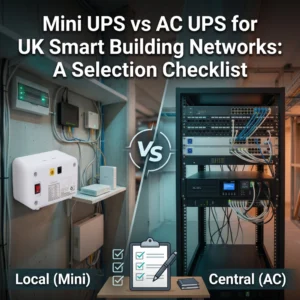
Mini UPS vs Traditional UPS for Telecom Projects
1. Power Efficiency
Mini DC UPS systems supply power directly in DC form, matching the native input requirements of telecom equipment. This eliminates conversion losses and improves overall system efficiency.
Traditional UPS systems, by contrast, suffer from energy loss at each conversion stage, leading to higher operational costs over time.
2. Installation & Deployment
Mini UPS units are compact, lightweight, and easy to integrate into existing telecom cabinets or wall-mounted enclosures. Deployment is fast and requires minimal site modification.
Traditional UPS systems often require dedicated space, reinforced mounting, and complex wiring—making them impractical for distributed installations.
3. Total Cost of Ownership (TCO)
While the upfront cost of a traditional UPS may appear competitive, the long-term costs tell a different story. Mini UPS solutions reduce:
- Energy consumption
- Installation labor
- Maintenance frequency
- Replacement cycles
This results in a significantly lower TCO for telecom operators and project owners.
4. Space Utilization & Scalability
Space is a critical constraint in telecom infrastructure. Mini UPS systems are designed with compact footprints, enabling easy scaling across thousands of nodes.
Traditional UPS systems struggle to scale efficiently in decentralized environments.
5. Maintenance & Long-Term Reliability
Modern Mini UPS systems use lithium or LiFePO4 batteries with longer cycle life and stable performance. Intelligent protection circuits ensure safe operation under varying environmental conditions.
For large-scale projects, reduced maintenance directly translates into lower operational risk.
| Comparison Item | Mini DC UPS (Telecom Projects) | Traditional UPS (AC UPS) |
|---|---|---|
| Designed Use Case | Telecom networks, ISP infrastructure, distributed edge nodes | Data centers, server rooms, centralized IT environments |
| Target Users | Network operators, ISPs, system integrators, OEM projects | Enterprise IT departments |
| Output Type | Direct DC output (5V / 9V / 12V / 24V) | AC output (110V / 220V) |
| Power Conversion | Single DC conversion, minimal energy loss | Multiple conversions (AC → DC → AC) |
| Energy Efficiency | High efficiency, optimized for low-power telecom devices | Lower efficiency due to repeated power conversion |
| Device Compatibility | Native match for ONU, ONT, routers, CPEs, IP cameras | Requires external adapters for DC-powered equipment |
| Installation & Deployment | Plug-and-play, wall-mounted or cabinet installation | Floor or rack-mounted, complex wiring required |
| Deployment Speed | Fast rollout, ideal for large-scale ISP projects | Slow deployment, not suitable for distributed nodes |
| Footprint & Weight | Compact and lightweight | Bulky and heavy |
| Scalability | Easy to scale across thousands of telecom nodes | Poor scalability in decentralized networks |
| Maintenance Frequency | Low maintenance, lithium / LiFePO4 battery | Higher maintenance, typically lead-acid battery |
| Battery Lifecycle | Long cycle life, stable performance | Shorter lifespan, frequent replacement |
| Operating Environment | Indoor, outdoor, cabinets, harsh environments supported | Mainly indoor, temperature-controlled environments |
| Total Cost of Ownership (TCO) | Low TCO for telecom and ISP projects | High TCO when deployed at scale |
| Typical Backup Duration | Optimized device-level backup (hours, load-dependent) | Often oversized or inefficient for small loads |
| Project Suitability | FTTH, FTTx, ISP last-mile, smart city infrastructure | Centralized enterprise IT systems |
| Retail / Home Use | Not designed for consumer or personal use | Sometimes used, but not optimized |
Why Mini DC UPS Is Preferred in Modern Telecom & ISP Projects?
As telecom networks evolve toward fiber-to-the-home, 5G, and smart city infrastructure, the need for localized, efficient, and scalable backup power becomes critical.
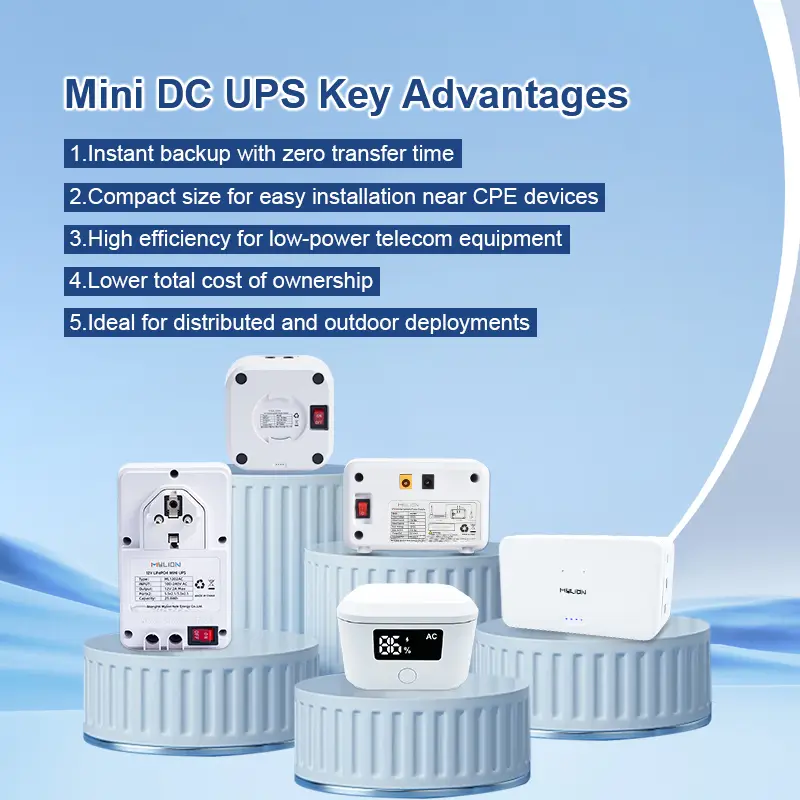
Mini DC UPS solutions align perfectly with these requirements by offering:
Higher efficiency
Faster deployment
Better scalability
Lower operational complexity
For project-based decision-makers, Mini UPS is no longer an alternative—it is becoming the standard.
Typical Telecom Scenarios Where Mini UPS Is the Better Choice?
Mini UPS systems are particularly suitable for:
- FTTH / FTTx access networks
- ISP last-mile infrastructure
- Outdoor telecom cabinets
- Smart city surveillance and IoT nodes
- Remote or off-grid telecom installations
These applications demand reliable DC power backup without the overhead of traditional UPS systems.
Recommended Mylion Mini UPS Solutions for Telecom Projects
Mylion offers a comprehensive Mini UPS portfolio designed specifically for Telecom, ISP, and B2B infrastructure projects.
2A MU26 Mini UPS – Ideal for ONU and basic router backup in fiber access networks with stable 12V output.
3A MU48 Mini UPS – Suitable for higher-load routers and CPE devices requiring extended runtime.
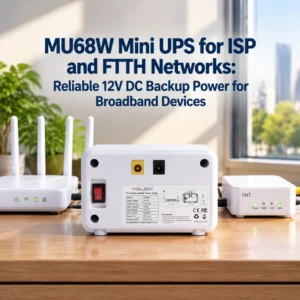
3A MU68 Mini UPS – Designed for multi-device support in compact telecom cabinets.
5A MU05 Mini UPS – Provides high-current output for demanding network equipment.
5A MU65 Mini UPS – Optimized for continuous operation in ISP edge nodes.
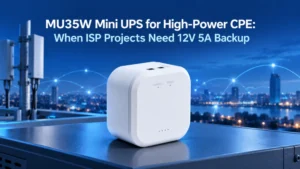
5A MU35 Mini UPS – Supports larger loads with enhanced thermal stability.
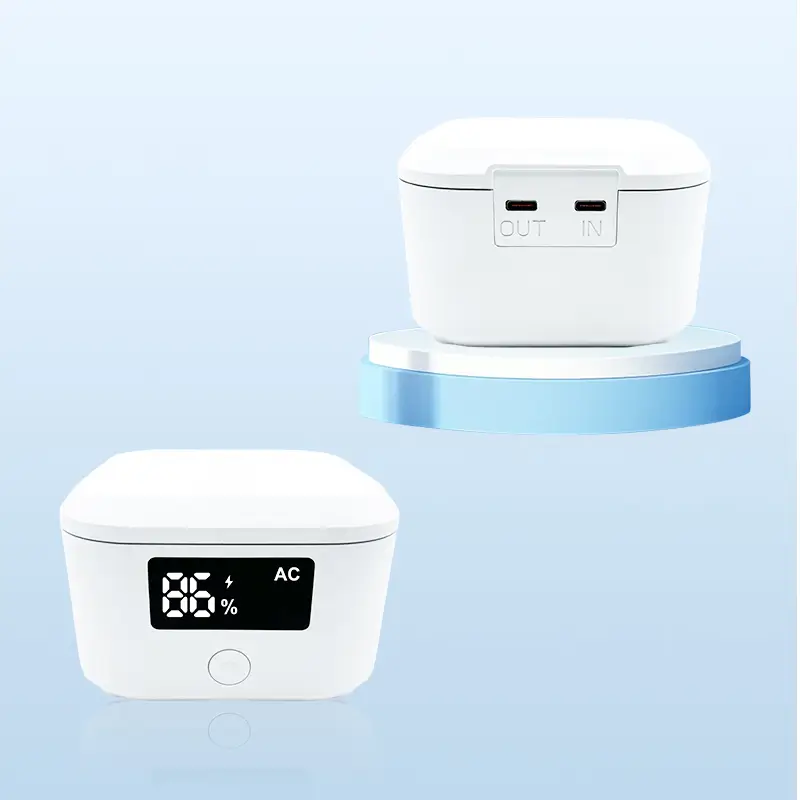
3.5A Type-C MUC66 Mini UPS – Designed for modern Type-C powered network and IoT devices.
3.5A Type-C MUC85 Mini UPS – Offers higher capacity for advanced network terminals.
3A Waterproof MA825 Mini UPS – Engineered for outdoor and harsh-environment telecom installations.
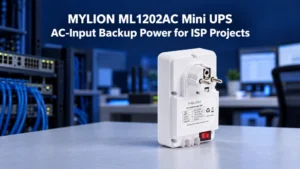
2A ML1202AC LiFePO4 Battery Mini UPS – Uses LiFePO4 chemistry for extended lifecycle and higher safety.
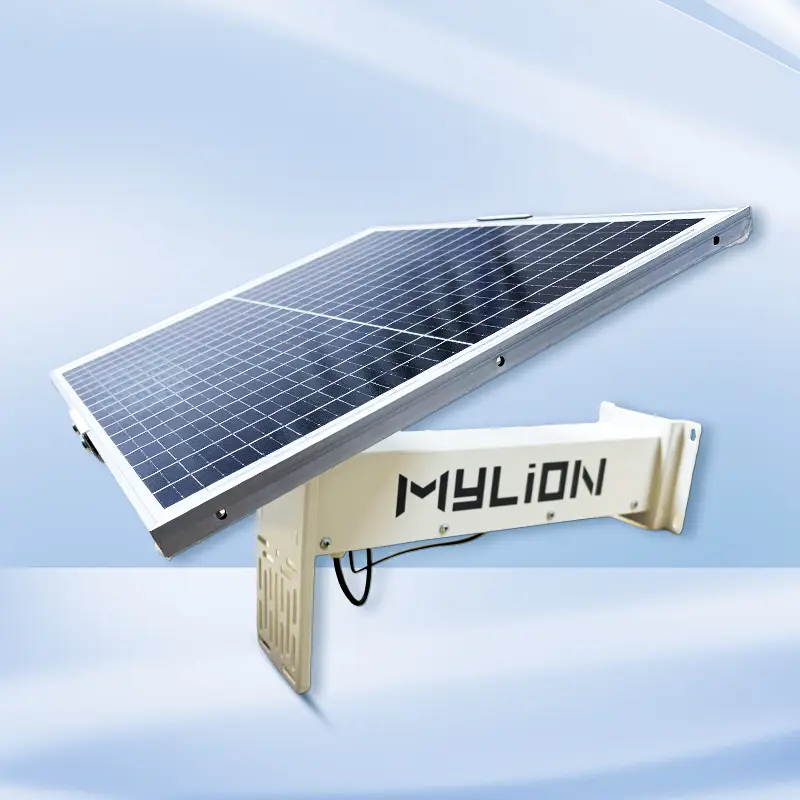
MUL268 Solar Mini UPS – Ideal for off-grid or hybrid solar telecom projects.
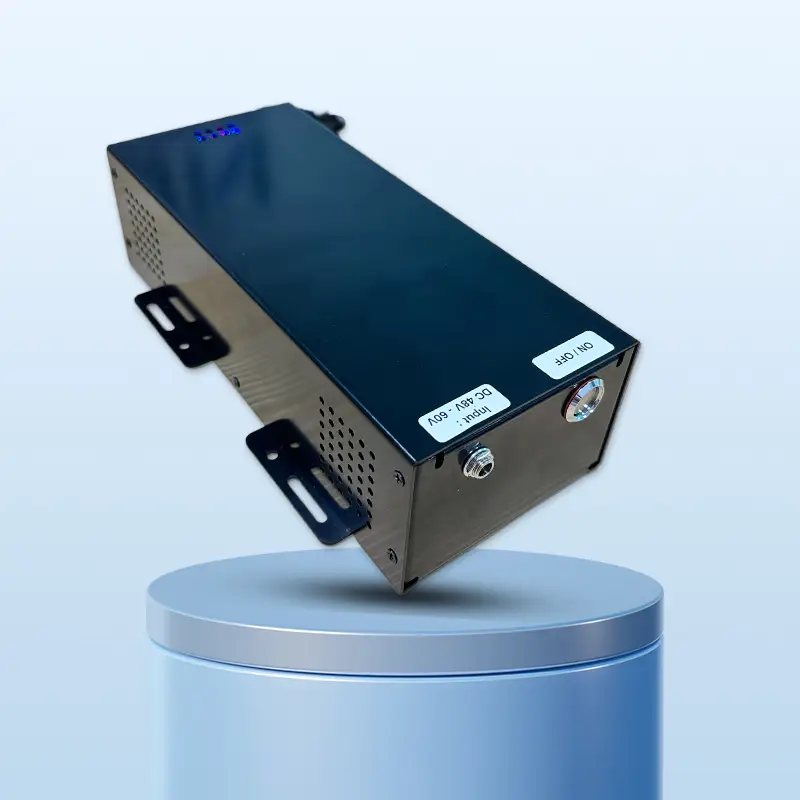
Outdoor MU248 Mini DC UPS – Designed specifically for outdoor cabinets and remote telecom infrastructure.
Each model is engineered for project-level stability, not consumer retail use.

Why Choose Mylion as Your Mini UPS Manufacturer?
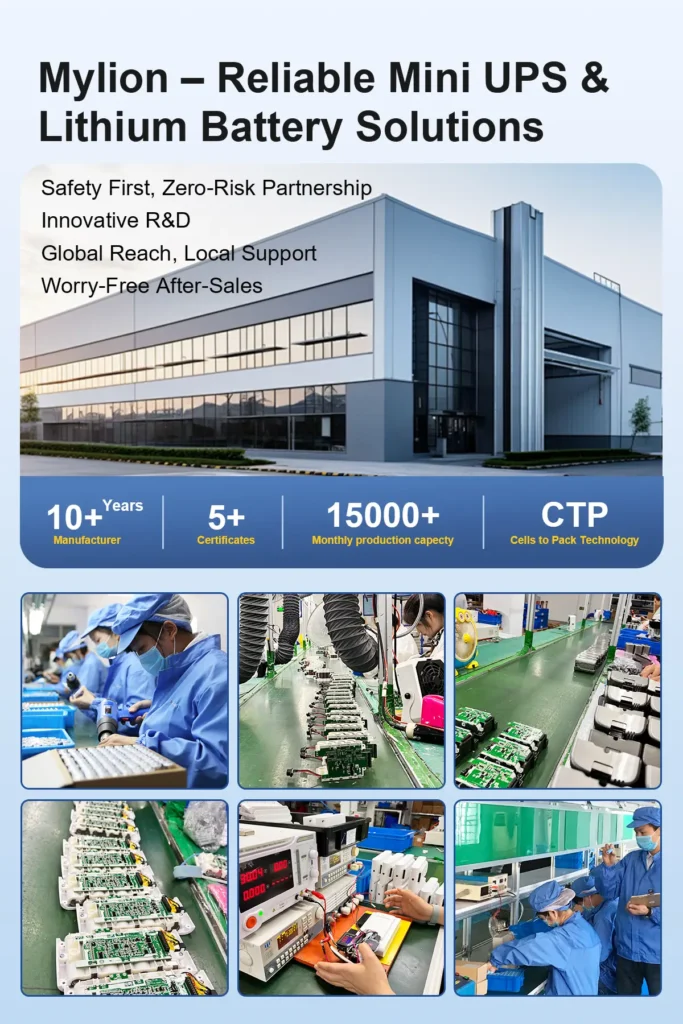
Mylion is a professional Mini UPS manufacturer, not a trading company. We focus exclusively on the design, development, and production of Mini DC UPS solutions for B2B markets.
Key advantages include:
OEM / ODM customization for telecom projects
Stable long-term supply for large-scale deployment
Engineering support for system integrators
Proven reliability in telecom, ISP, smart city, and outdoor applications
Mylion Our products are built for infrastructure, projects, and professional buyers who require consistency, reliability, and scalable solutions.
Contact US
For telecom operators, ISPs, and system integrators seeking an efficient alternative to traditional UPS systems, Mini DC UPS solutions from Mylion represent a future-ready choice.Contact us for more information.
 English
  简体中文
简体中文  Deutsch
  Français
  Italiano
  Español