
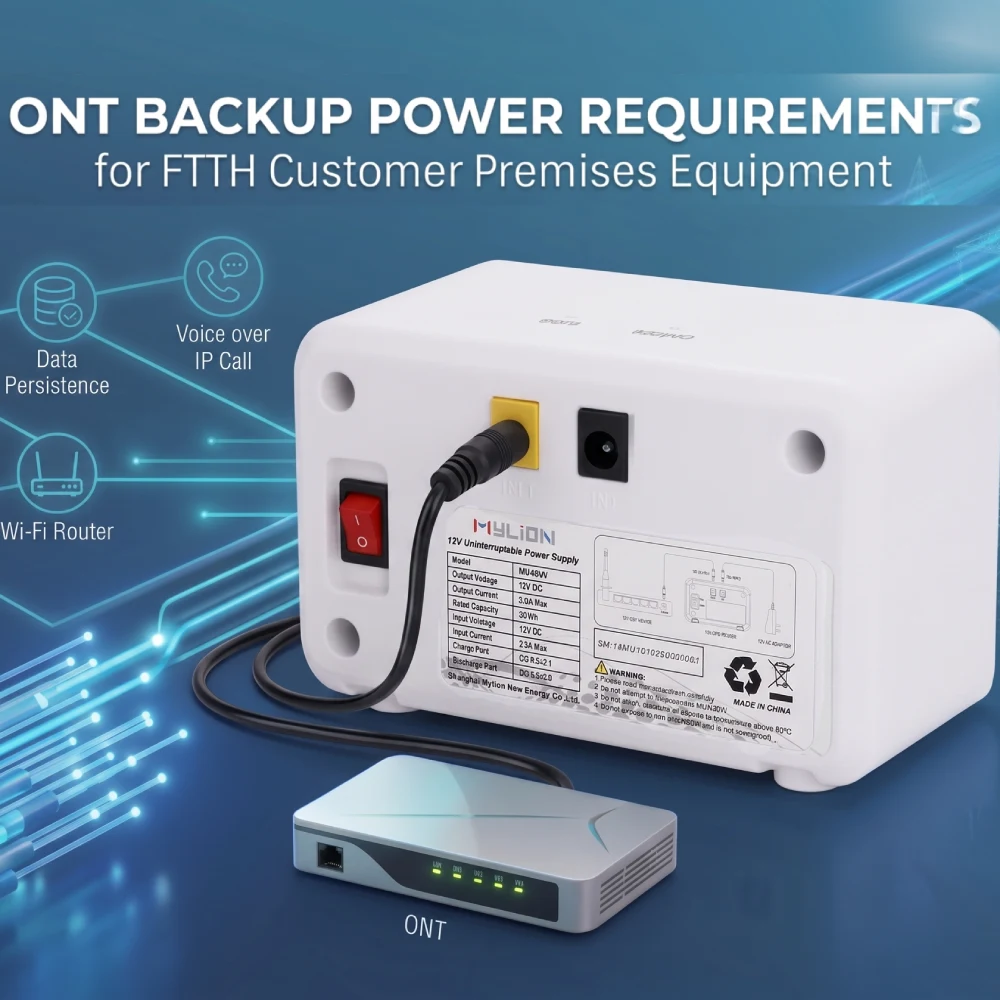
Introducción: El riesgo oculto en la alimentación de respaldo de la puerta de enlace
La rápida expansión de las redes FTTH ha revolucionado el acceso a la banda ancha, ofreciendo un ancho de banda sin precedentes y una baja latencia. Sin embargo, a diferencia de los circuitos PSTN tradicionales, que transportaban energía de bajo voltaje desde la central telefónica, la arquitectura FTTH se basa en equipos electrónicos activos (ONT) ubicados directamente en las instalaciones del cliente.
Cuando falla el suministro eléctrico local, la conexión de fibra óptica se interrumpe, lo que provoca la indisponibilidad de los servicios de voz y datos. Este artículo explora los requisitos técnicos para una conexión robusta. Alimentación de respaldo ONT y por qué implementar equipos de nivel profesional Soluciones mini UPS Ahora es un componente indispensable de la infraestructura de red moderna.
Comprender la arquitectura FTTH y el papel vital del ONT
El cambio de paradigma
En la era del cobre, la compañía telefónica proporcionaba tanto la señal como la energía. Incluso durante un apagón local, un teléfono estándar de cable de cobre seguía funcionando porque recibía energía de la central telefónica. La tecnología FTTH cambia radicalmente esta topología. Los cables de fibra óptica no conducen electricidad. Por lo tanto, la unidad de procesamiento en el extremo de la red (la ONT) requiere una fuente de alimentación local.
El alcance de la CPE
El equipo del cliente (CPE) se ha convertido en un ecosistema complejo. Generalmente incluye el ONT (que convierte las señales ópticas a Ethernet/VoIP), una puerta de enlace Wi-Fi doméstica y, a menudo, adaptadores VoIP independientes. Cuando se produce una anomalía en el suministro eléctrico, todos estos dispositivos se ven afectados. Sin una batería de respaldo local, el usuario pierde no solo los servicios de entretenimiento, sino también capacidades de comunicación esenciales.
Por qué es importante la alimentación de respaldo para ONT
Líneas de emergencia y E911
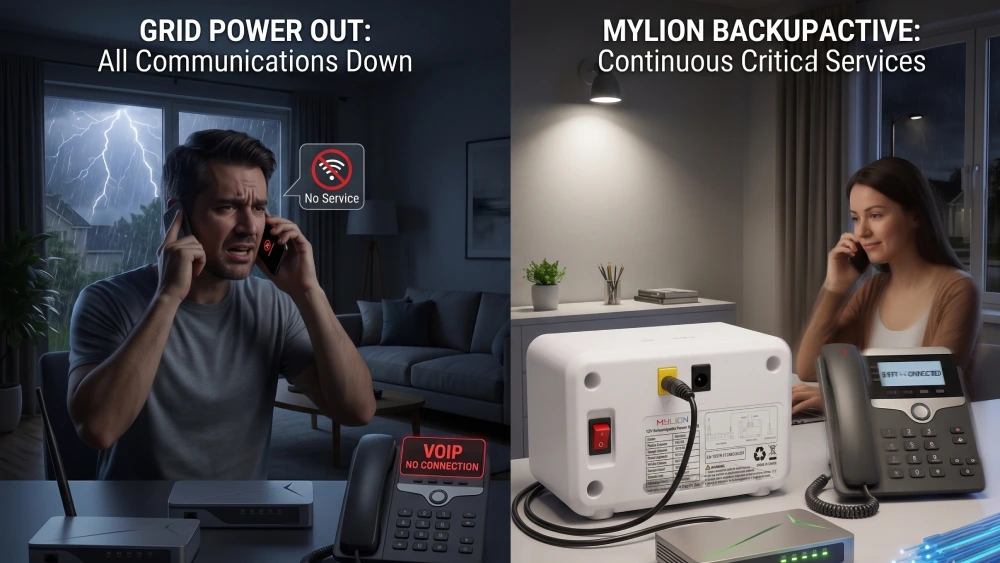
Los proveedores de servicios están cada vez más sujetos a normativas, como los requisitos de la FCC en cuanto a la disponibilidad del servicio E911. Si un cliente no puede acceder a los servicios de emergencia durante un apagón debido a una interrupción de la red, las consecuencias legales y para la seguridad son graves. Proporcionar energía de respaldo es, en esencia, garantizar la seguridad.
Continuidad del negocio y trabajo remoto
Para los clientes B2B, las consecuencias son aún mayores. Un breve corte de energía localizado puede provocar un reinicio en una ONT, lo que requiere varios minutos para establecer la conexión con la OLT (Terminal de Línea Óptica) en la central telefónica. En un entorno de trabajo remoto o empresarial, este tiempo de inactividad se traduce en pérdida de productividad, caída de túneles VPN e interrupciones en las llamadas VoIP.
Protección de hardware
La red eléctrica rara vez es "limpia". Las bajadas de tensión, las caídas de voltaje y las sobretensiones son comunes en las redes eléctricas antiguas. Un ONT, al ser un equipo de red sensible, es muy susceptible a estas fluctuaciones. Un suministro de voltaje constante no solo evita reinicios, sino que también prolonga la vida útil del hardware al reducir la tensión en los componentes internos de la fuente de alimentación.
Requisitos técnicos clave para soluciones de alimentación de respaldo ONT
Al evaluar Soluciones de respaldo para FTTHLas especificaciones técnicas deben ir más allá de la simple capacidad.
Precisión y compatibilidad de voltaje
La mayoría de las ONT funcionan en 12 V CC, aunque algunos modelos más antiguos o específicos de grado portador pueden requerir 9 V o polaridades diferentes del conector cilíndrico. Una solución de respaldo robusta debe ofrecer un voltaje de salida preciso y estabilizado. Las fluctuaciones en el voltaje de salida durante la descarga de la batería pueden provocar inestabilidad o daños en el hardware.
Métricas de capacidad y tiempo de ejecución
El estándar óptimo para el respaldo de energía residencial se define generalmente por la necesidad de mantener el servicio durante 4 a 8 horas. Para calcular esto, se debe considerar el consumo de energía (en vatios) del equipo del cliente (CPE). Consumo de energía de la ONTNormalmente, entre 5W y 15W. Para una planificación precisa del tiempo de funcionamiento, los proveedores de servicios de Internet (ISP) deberían medir el consumo real del dispositivo en lugar de basarse únicamente en las especificaciones del adaptador, ya que el consumo real suele diferir de las especificaciones de la etiqueta.
Evolución de la química de las baterías
Iones de litio y LiFePO4: Estos materiales ofrecen una densidad energética superior, una vida útil mucho mayor (a menudo más de 1000 ciclos) y una mejor estabilidad a temperatura ambiente. El LiFePO4, en particular, es el preferido por su perfil de seguridad mejorado y su estabilidad térmica.
Gestión inteligente de la energía
Un sistema ideal incluye un “Cero milisegundos” tiempo de transferencia. Cuando la energía de la red cae, el interruptor de la batería debe ser instantáneo. Cualquier retraso provoca que el ONT se reinicie, lo que anula el propósito del respaldo. Además, los sistemas integrados de administración de baterías (Sistema de gestión de residuos sólidos) son esenciales para prevenir la sobrecarga, la sobredescarga y los cortocircuitos.
Mini UPS de CC: La solución moderna para la alimentación de respaldo de ONT
¿Por qué los mini SAI de CC superan a los SAI de CA tradicionales?
Las unidades UPS de CA tradicionales realizan un proceso de doble conversión: toman la corriente alterna de la red eléctrica, la convierten a corriente continua para el almacenamiento en baterías y vuelven a la corriente alterna para el consumo de los dispositivos. Este proceso genera inherentemente desperdicio térmico y pérdida de energía.
En cambio, un mini SAI de CC acepta entrada de CA, la almacena como CC y emite CC pura directamente al hardware de telecomunicaciones. Esta arquitectura ofrece varias ventajas:
Característica | UPS de CA tradicional | Mini UPS de CC |
Eficiencia | Bajo (múltiples conversiones CA/CC) | Alta potencia (CC directa a CC, 90-95%) |
Factor de forma | Voluminoso, requiere espacio en el suelo | Compacto, se puede montar en la pared. |
Duración de la batería | 2–3 años (plomo-ácido) | 5 a 10 años (Li-ion/LiFePO₄) |
Mantenimiento | Alto (pruebas periódicas) | Mantenimiento cero (conectar y usar) |
Coste por suscriptor | Alto ($100+) | Bajo/optimizado para volumen |
Una ruta de respaldo directa de CC a CC elimina las conversiones innecesarias, mejorando la eficiencia hasta en un 251% y prolongando la duración de la batería en comparación con las alternativas basadas en CA.
Soluciones Mylion Mini UPS para alimentación de respaldo ONT
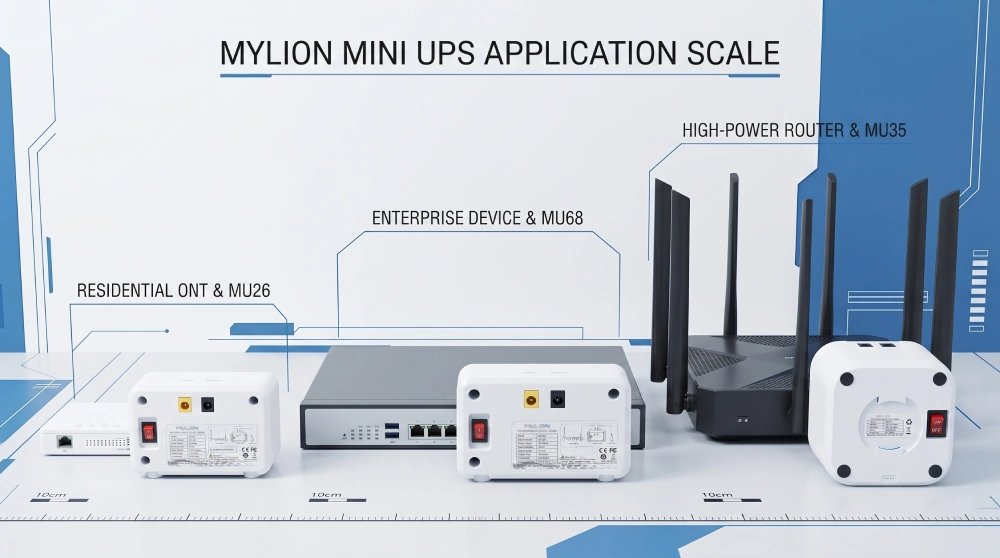
Mylion ofrece una amplia gama de Soluciones mini UPS de CC Diseñadas específicamente para aplicaciones de respaldo de ONT, ONU, enrutadores y CPE. Estas soluciones admiten salidas de CC de 5 V, 9 V, 12 V y 24 V, cubriendo las necesidades de alimentación de la gran mayoría de enrutadores, CPE, ONT y dispositivos ONU.
MU68 Mini UPS: El estándar para la copia de seguridad de ONT/ONU
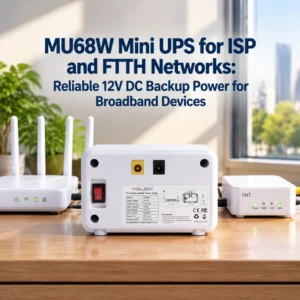
El MU68 está diseñado específicamente para routers, ONT, ONU, módems y otros dispositivos de red pequeños.
- Salida: 12 V CC, 3 A máx.
- Capacidad de la batería: 68 Wh
- Tiempo de transferencia: 0 ms (Tiempo de transferencia cero)
- Material de la carcasa: ABS resistente al fuego
El mini SAI MU68 es “generalmente el mejor punto de partida para aplicaciones estándar de respaldo de ONT, ONU y puerta de enlace de fibra de 12 V”.
Mini UPS MU35 – Aplicaciones de alta potencia
Para routers, gateways y dispositivos WiFi 6/7 de alta carga, el MU35 proporciona:
- Salida: 12V/5A
- Capacidad de la batería: 77,7 Wh
- Tiempo de transferencia: 0 ms (Tiempo de transferencia cero)
- Material de la carcasa: Carcasa de FR-ABS resistente al fuego
El MU35 Mini UPS Es “la solución ideal para gateways de alta potencia, routers WiFi 6/7 y ONT multipuerto que requieren una salida sostenida de 12 V/5 A”.
Mini UPS MU26: una solución compacta de nivel básico.
Para dispositivos de banda ancha estándar con menores requisitos de energía, el MU26 proporciona:
- Salida: 12 V CC, 3 A máx.
- Capacidad de la batería: 68 Wh
- Tiempo de transferencia: 0 ms (Tiempo de transferencia cero)
- Material de la carcasa: ABS resistente al fuego
El MU26 Mini UPS Es “la opción compacta de nivel básico para el respaldo de ONT, ONU, enrutador y módem de bajo consumo”.
MUC85: Opción USB-C/PD para dispositivos de próxima generación
Para productos de banda ancha emergentes con soporte para suministro de energía USB-C:
- Entrada y salida USB-C PD de 65 W
- Admite 5V/9V/12V/15V/20V
- Capacidad de la batería: 92 Wh
- Tiempo de transferencia: 0 ms (Tiempo de transferencia cero)
- protecciones BMS inteligentes
El MUC85 Mini UPS es “la opción preparada para el futuro para ONT de próxima generación y CPE de banda ancha con puertos USB-C PD”.

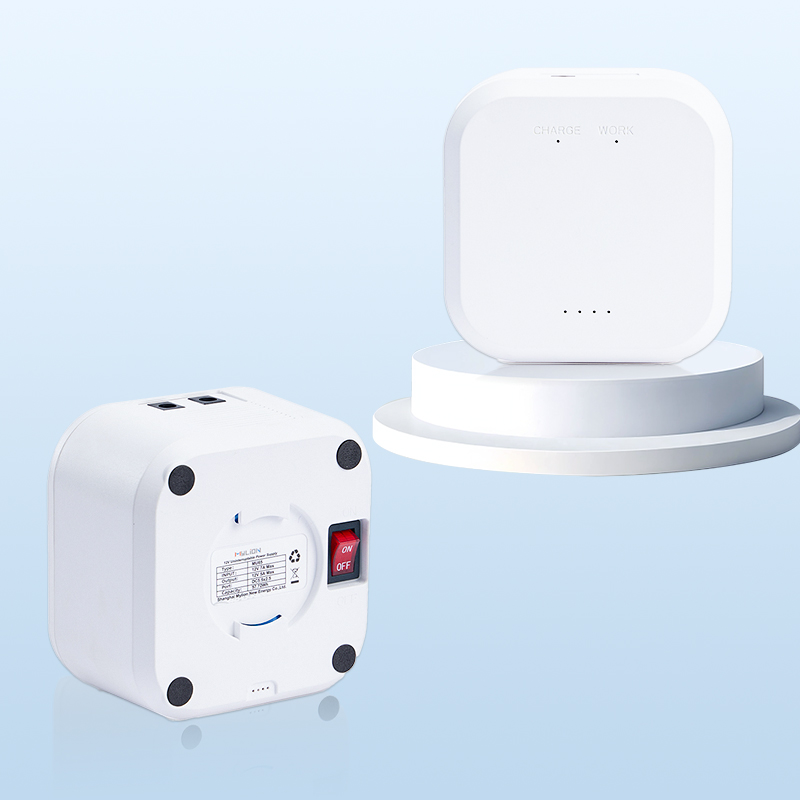
Mini SAI MU68
Mini SAI MU35
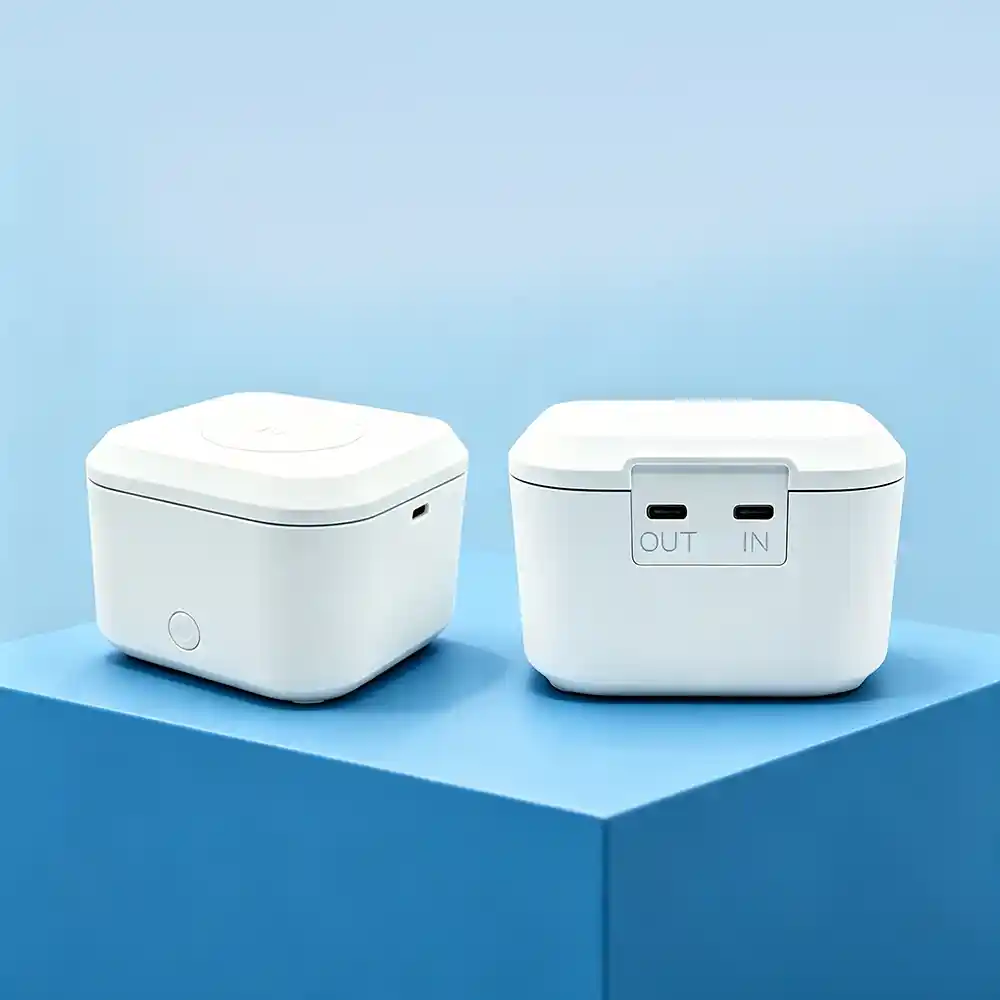
Mini SAI MUC85
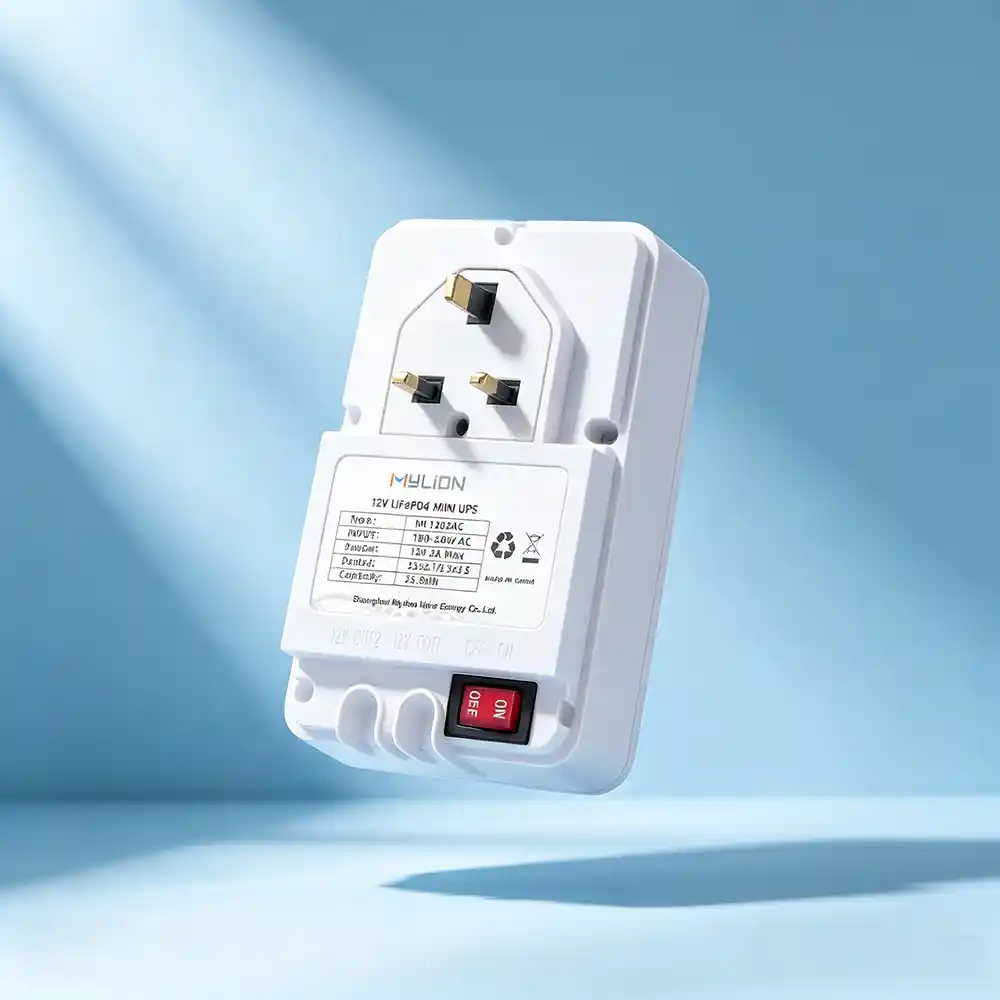
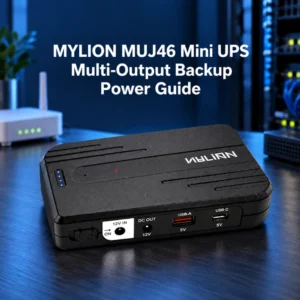
Mini UPS ML1202AC
Cómo MYLION ofrece soporte para alimentación de respaldo FTTH
Mylion se ha consolidado como líder en soluciones de alimentación especializadas para el sector de las telecomunicaciones. La gama de mini SAI de Mylion está diseñada específicamente para cubrir la brecha entre un fallo en la red eléctrica y la continuidad operativa de la red.
Características avanzadas
- Sistema de gestión de baterías inteligente:Las unidades Mylion incorporan circuitos avanzados que gestionan el equilibrio de las celdas y previenen los fallos comunes de la batería, lo que garantiza que la unidad esté lista en el momento en que se produzca un apagón.
- Compatibilidad con múltiples voltajes:Consciente de que las configuraciones de CPE suelen incluir un ONT y un enrutador, Mylion ofrece configuraciones de salida flexibles. Algunos modelos ofrecen salidas USB simultáneas de 12 V, 9 V y 5 V, lo que permite que una sola unidad alimente toda la pila de red.
- Factor de forma compacto:Estas unidades son discretas, se pueden montar en la pared y son estéticamente compatibles con la decoración residencial, lo que aumenta la probabilidad de que los clientes las adopten.
Propuesta de valor para los proveedores de servicios de Internet
Para los operadores de red y los proveedores de servicios de Internet, la implementación de las soluciones de Mylion transforma la experiencia del suscriptor:
- Reducción de la rotación de clientes: Los clientes que mantienen la conexión a internet durante las interrupciones del servicio están mucho más satisfechos con su proveedor de servicios.
- Gastos generales de soporte más bajos:Menos incidencias de conexión a internet durante anomalías en la red eléctrica significan menores costes operativos.
- Fuentes de ingresos secundarias:Muchos proveedores de servicios de Internet (ISP) incluyen con éxito las unidades UPS Mylion Mini como un servicio de valor añadido, creando una oportunidad de venta adicional rentable que, al mismo tiempo, mejora la fiabilidad de la red.
Preguntas frecuentes
P1: ¿Qué voltaje requieren la mayoría de los dispositivos ONT?
P2: ¿Cuánta energía consume un ONT típico?
P3: ¿Cuánto tiempo puede un Mini UPS alimentar un ONT durante un apagón?
P4: ¿Qué es el tiempo de transferencia cero y por qué es importante?
P5: ¿Puede un mini SAI alimentar simultáneamente un ONT y un router?
P6: ¿Cómo se compara la tecnología de iones de litio/LiFePO₄ con la de plomo-ácido para el suministro de energía de respaldo?
Conclusión
A medida que la banda ancha se vuelve tan esencial como la electricidad, la dependencia de un suministro eléctrico estable para las redes de fibra óptica es fundamental. La vulnerabilidad de la fibra hasta el hogar (FTTH) a los cortes de energía localizados es un desafío técnico que puede mitigarse eficazmente mediante un diseño inteligente.
Implementación soluciones de respaldo de nivel profesional, como el Mylion Mini UPS. Es un requisito fundamental para mantener un diseño de red de alta disponibilidad, cumplir con los SLA y garantizar que, cuando falle la red eléctrica, la conexión permanezca activa.
 Español
  English
  简体中文
简体中文  Deutsch
  Français
  Italiano