
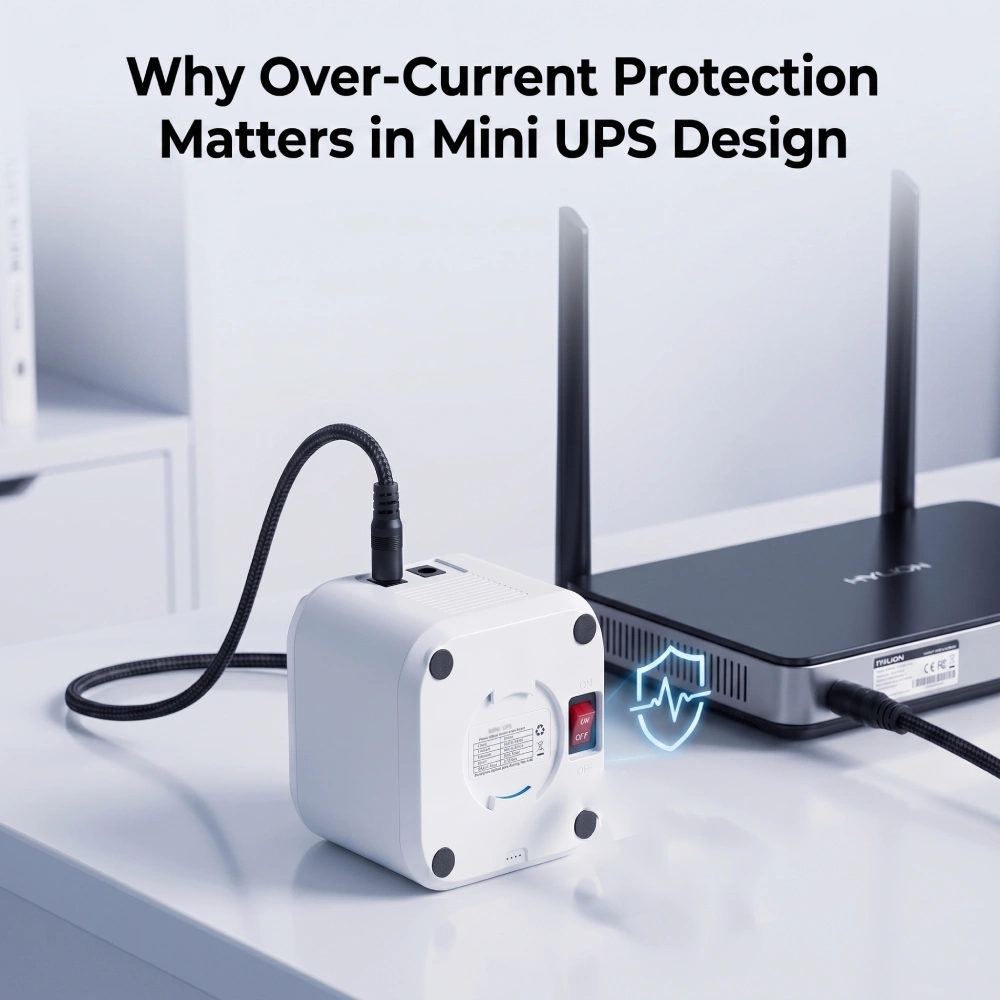
Un courant de sortie élevé est souvent considéré comme un atout pour un mini-onduleur, mais ce n'est pas le seul critère de qualité. Pour les applications de télécommunications, de fournisseurs d'accès Internet et de réseaux industriels, la protection contre les surintensités (OCP) est essentielle. Ces appareils peuvent fonctionner en continu pendant des mois et être exposés à des charges anormales, à un câblage incorrect ou à des conditions de test dépassant les limites d'une utilisation normale. Sans une protection OCP adéquate, l'onduleur risque de surchauffer. Mini-onduleur et les équipements connectés sont exposés à des risques.
À quoi sert la protection contre les surintensités ?
- Limite les courants excessifst–OCP limite le flux de courant lorsque la charge dépasse la plage de conception sûre.
- Protège plusieurs composants– Il protège le Mini UPS, les équipements connectés (par exemple, les routeurs, les ONT), la batterie interne et les systèmes environnants contre les contraintes thermiques et électriques.
- Concilie facilité d'utilisation et sécurité– Un système de protection bien conçu ne doit pas se déclencher lors des pics de demande normaux (par exemple, le démarrage du routeur ou les pics de transmission Wi-Fi), mais doit réagir rapidement et de manière prévisible en cas de véritable panne.
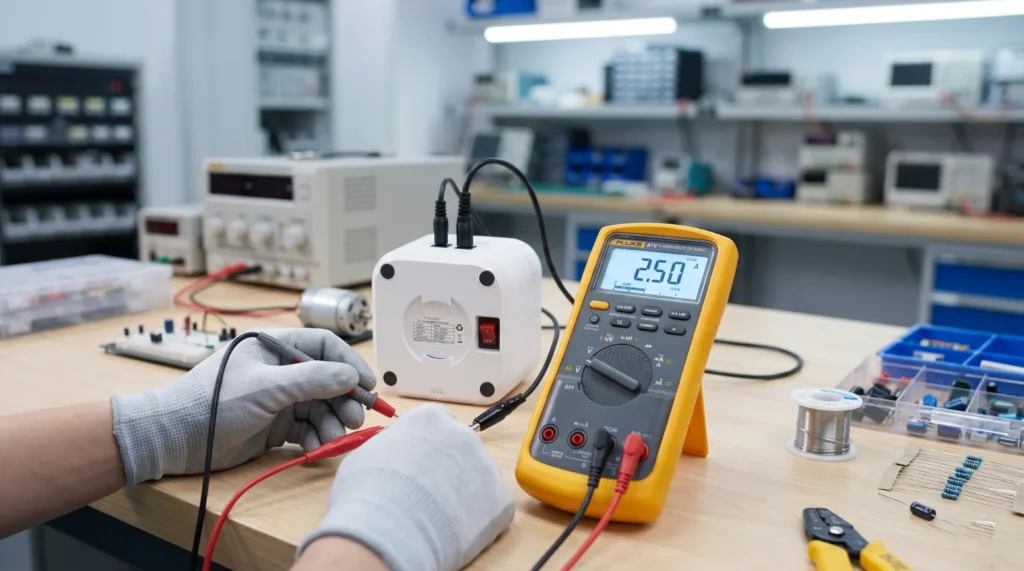
Pourquoi un courant élevé ne suffit pas à lui seul
Un mini-onduleur capable de fournir un courant élevé peut s'avérer dangereux si ses seuils de protection sont mal contrôlés. Pour les projets B2B, les acheteurs privilégient un comportement prévisible et constant à une simple valeur de puissance impressionnante.
Le produit doit être conçu pour son application cible (la sauvegarde d'un ONT ou d'un CPE) et non pour un pic incontrôlé susceptible d'endommager les composants électroniques en aval ou de créer des risques d'incendie.
Paramètres clés que les acheteurs doivent vérifier
Le tableau ci-dessous récapitule les spécifications essentielles relatives à la protection à vérifier avant d'approuver un mini-onduleur pour un déploiement dans le secteur des télécommunications ou chez un fournisseur d'accès Internet.
Paramètre | Que vérifier |
Courant de sortie continu nominal | Courant maximal que l'onduleur peut fournir indéfiniment à la température nominale. |
Courant de sortie maximal et durée | Limite de courant à court terme (par exemple, 2× pendant <1 seconde). |
Seuil de protection contre les surintensités | Niveau actuel auquel l'OCP s'active (par exemple, 120% de la valeur nominale). |
Protection contre les courts-circuits | Arrêt immédiat ou repli du courant en cas de court-circuit de la sortie. |
Mode de récupération | Réactivation automatique, verrouillage ou réinitialisation manuelle après une panne. |
Comportement thermique sous forte charge | Comment la température affecte la limite de courant (courbe de déclassement). |
Cohérence de la production | Les unités de production en série sont-elles testées selon les mêmes seuils d'OCP que les échantillons de pré-production ? |
Conception équilibrée pour les projets FAI
Pour un Mini UPS utilisé avec des routeurs, des ONT ou des équipements CPE, la conception doit permettre un fonctionnement stable en charge normale (par exemple, 12 V/1 A en continu) tout en définissant une limite de sécurité claire pour les conditions anormales (par exemple, un câble en court-circuit ou un appareil connecté consommant 5 A).
Dans les projets de déploiement à grande échelle, le seuil de protection final doit être défini, validé avec des profils de charge réels et figé avant la production en série.
Solutions MYLION Mini UPS sont conçus avec des seuils OCP calibrés avec précision qui correspondent aux charges réelles des télécommunications.
- Chaque unité MYLION est soumise à une vérification thermique et à un test de court-circuit avant expédition.
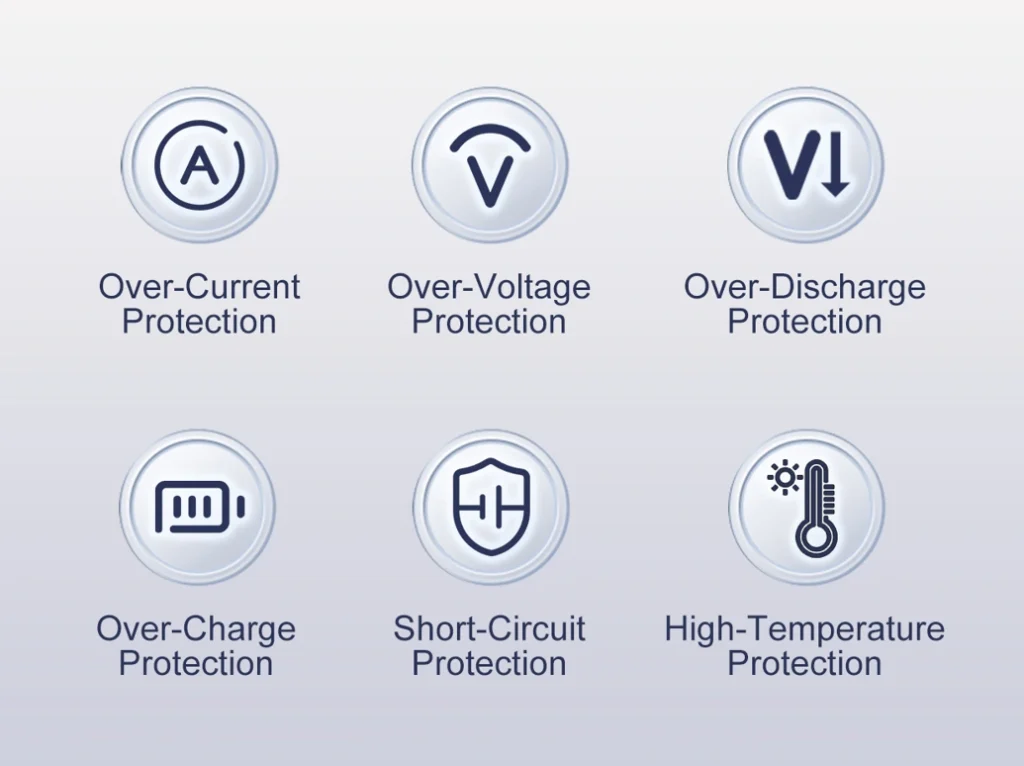
- Nos produits MiniUPS sont dotés d'une protection contre la décharge excessive de la batterie, d'une protection contre la surchauffe et d'autres fonctions. Ceci garantit un fonctionnement sûr et stable même en cas de charges anormales ou de défauts de ligne.
- Nous fournissons des rapports d'inspection de production afin de garantir que les unités de production en série se comportent de manière identique aux échantillons approuvés, éliminant ainsi les mauvaises surprises de dernière minute en matière de sécurité et aidant les acheteurs à éviter les retards de déploiement.
FAQ
Q1 : Un courant de sortie plus élevé est-il toujours préférable ?
Q2 : Pourquoi deux routeurs ayant la même capacité d’adaptateur ont-ils une durée de sauvegarde différente ?
Q3 : Les acheteurs doivent-ils inclure une marge de sécurité ?
Q4 : Comment la température affecte-t-elle le temps de sauvegarde ?
Comment MYLION accompagne les acheteurs B2B
MYLION est spécialisée dans les solutions d'alimentation sans coupure (UPS) B2B mini CC et les batteries lithium-ion pour les télécommunications, les fournisseurs d'accès Internet et les applications industrielles. Nous accompagnons nos clients dans les domaines suivants :
- Sélection du produit en fonction de la tension, du courant de fonctionnement et de l'autonomie.
- Validation des échantillons incluant des tests de protection et de charge anormale.
- Exigences en matière d'assemblages de câbles personnalisés, d'étiquettes et d'emballage
- Préparation des documents de certification (CE, FCC, RoHS, UN38.3, etc.).
- Documentation relative à l'inspection de la production et à l'expédition.
Besoin d'un mini-onduleur ou d'une solution de secours par batterie au lithium pour votre ONT, ONU, routeur, CPE ou équipement de télécommunications ? Contactez MYLION !
Note de conformité
Les exigences de certification dépendent de la configuration du produit, du marché cible, de l'adaptateur secteur, de la capacité de la batterie et de l'application finale. Les acheteurs doivent vérifier les exigences applicables avant la production en série.
 Français
  English
  简体中文
简体中文  Deutsch
  Italiano
  Español