介绍
In telecom networks, local grid instability translates directly into breached Service Level Agreements (SLAs), customer churn, and severe financial penalties. To ensure continuous network uptime, ISPs deploy 不间断电源 units as the ultimate line of defense at the customer premises. However, when procurement directors and CTOs provision Mini UPS backup solutions for routers and ONTs, they frequently fall victim to a costly engineering misunderstanding.
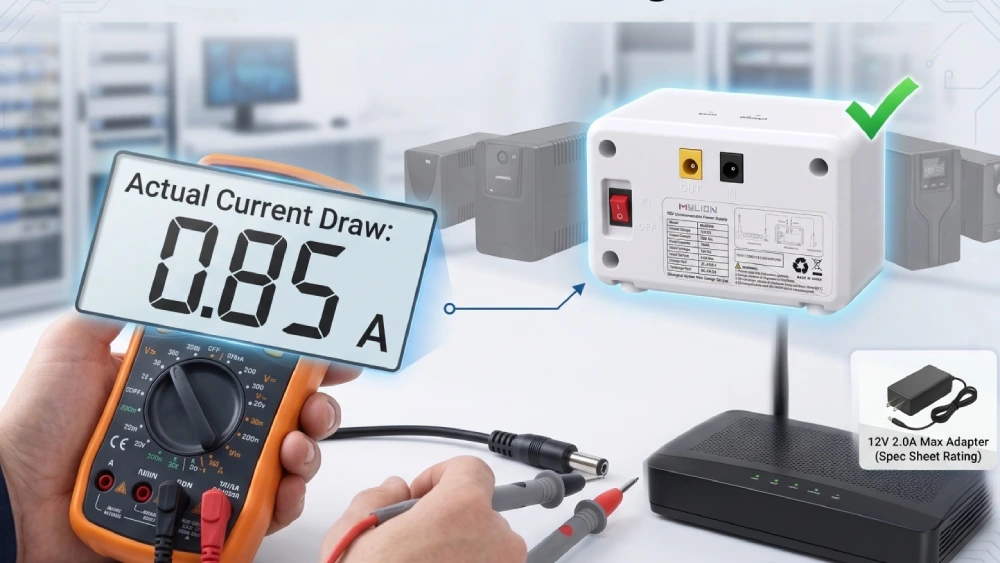
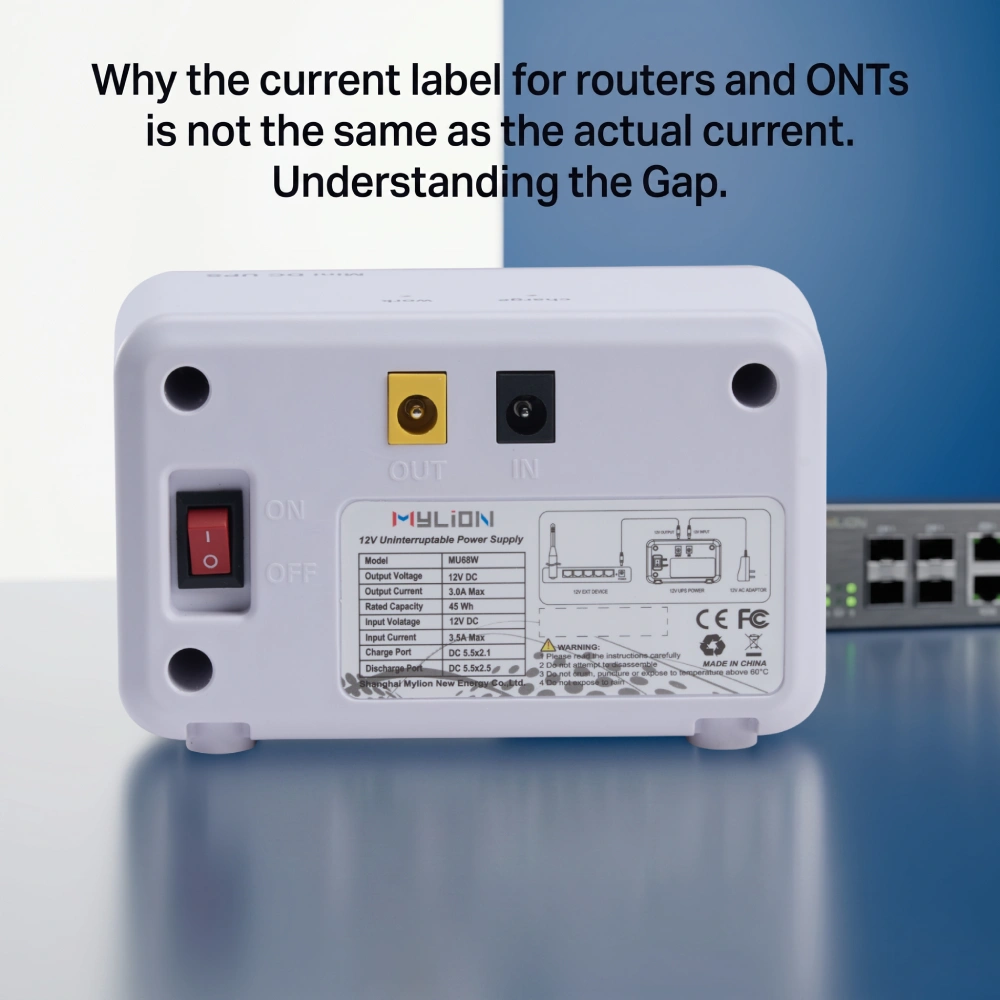
The most common false assumption is: “My router adapter says 12V 2A, so I need a 不间断电源 that supports a continuous 24W.” The reality is starkly different: That 2A rating is the adapter’s maximum output capability, not the network device’s actual power draw. And confusing the two is the single most common mistake in backup power sizing for network equipment.
This article explains why label current and real current are fundamentally different, how to measure what your routers and ONTs actually draw, and how to use that knowledge to select the right 不间断电源.
What “Label Current” Actually Means: The Adapter’s Maximum Capacity
When you inspect the power brick included with a GPON ONT or Wi-Fi router, the printed electrical specifications represent the maximum rated capacity, not the typical consumption footprint. Power adapters are always rated higher than the device’s actual needs. This is not a flaw, it is intentional engineering practice.
Manufacturers oversize adapters for several reasons:
- Safety margin:A buffer protects the adapter from overheating during peak loads
- Component availability:Standardized adapter ratings simplify supply chain management
- Thermal design: Higher-rated adapters run cooler under normal loads
- Peak support:Some devices have momentary startup surges or USB ports that draw additional current
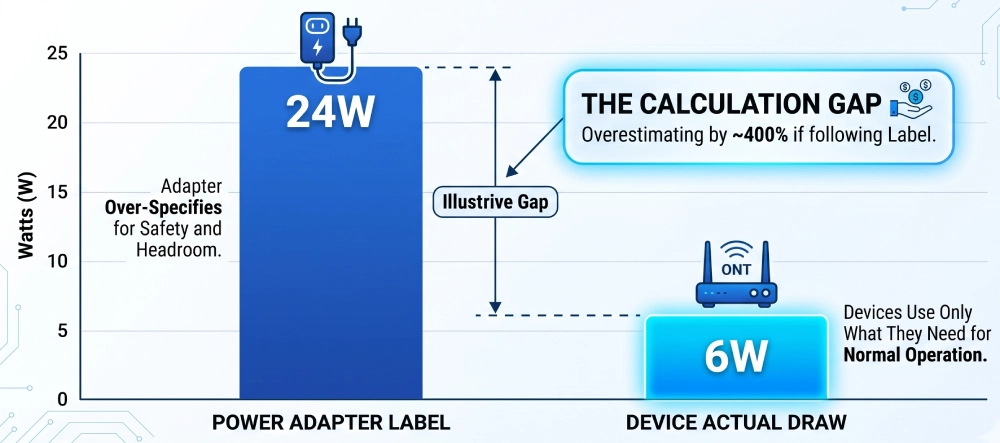
For example: A Wi-Fi router packaged with a 12V 2A (24W) adapter will typically only draw 0.5A to 0.8A (6W – 9.6W) during sustained, normal operation.
This is why looking at the adapter label alone will almost always lead you to overestimate power consumption — often by a factor of 2x to 4x.

What “Real Current” Actually Means: The Device’s True Power Draw
Real current is the exact electrical load the network hardware actually draws from the 不间断电源 during daily operation. This metric is dynamic and fluctuates based on real-time hardware status:
- Idle vs. Active Traffic:Heavier data throughput increases processor power consumption.
- Wi-Fi Band Activation:Broadcasting dual-band (2.4GHz and 5GHz) or tri-band (6GHz) demands significantly more power than single-band operation.
- Ethernet Port Utilization:The number of connected LAN cables and the physical transmission distance impact the PHY chips’ power draw.
- USB Power Delivery:Active USB ports consume dedicated current (5A for USB 2.0; 0.9A for USB 3.0).
- CPU Load:Modern ARM-based routers experience transient current spikes when processing VPN encryption or Deep Packet Inspection (DPI).
Real-World Network Device Power Consumption Data
设备类型 | Adapter Label Rating | Typical Real Current Draw | Actual Wattage (W) |
Standard ISP Router | 12V 1.5A (18W) | 0.5A – 0.58A | 6W – 7W |
Typical GPON ONT | 12V 1.0A (12W) | 0.41A (Typ) / 0.58A (Peak) | 5W (Typ) / 7W (Peak) |
Optimized FTTH ONT | 12V 0.5A (6W) | 0.2A | 2.5W |
Why the Gap Between Label and Real Current Matters for Mini UPS Selection
Relying on the blind “Label Current × Voltage” calculation frequently exaggerates actual power requirements by 2x to 4x. Across an ISP deployment of tens of thousands of nodes, this represents millions of dollars in misallocated budget.
The consequences of miscalculating 不间断电源 deployment parameters include:
- Oversizing (Wasted CapEx):You pay a heavy premium to backup a “phantom load” that doesn’t exist, procuring 不间断电源 models with unnecessarily massive battery banks.
- Undersizing (The Outage Threat):If you size a 不间断电源 based solely on scaled-down average consumption while ignoring the device’s boot-up surge, a power outage will instantly trigger the 不间断电源 Over-Current Protection (OCP), causing the equipment to shut down completely.
For precise 不间断电源 runtime calculations, the only metric that matters is actual wattage (W), not label amperage (A). The core formula is: W = V (Volts) × Actual A (Amps).

How to Measure Real Current Consumption: Three Practical Methods
To engineer a mathematically sound 不间断电源 configuration, telecom technical teams can use three methods to measure real CPE power consumption:
Method 1: Plug-in Power Meter (Most Convenient)
Deploy a power meter (like a Kill-A-Watt) between the wall outlet and the AC adapter. Force the router to run a continuous bandwidth speed test and read the active AC wattage. While this includes the adapter’s slight conversion loss, it establishes a highly reliable baseline for 不间断电源 sizing.
Method 2: Device Input Label (Quickest Estimate)
Ignore the power adapter brick entirely. Instead, check the manufacturer sticker on the bottom chassis of the router or ONT. The input rating listed here (e.g., “Input: 12V ⎓ 0.5A”) represents the hardware’s maximum designed operational threshold (6W) without external USB peripherals, placing it much closer to reality than the adapter brick.
Method 3: DC Multimeter (Highest Precision)
Wire a digital multimeter in series with the DC power cable. This allows engineers to monitor exact, real-time DC current draw during the initial boot handshake and steady-state full-load data transmission.
Real-World Deployment Calculation Example:
An active ONT consumes 12V × 0.4A (4.8W) while paired with a Wi-Fi Router consuming 9V × 0.6A (5.4W). The true combined network load is just 10.2W, drastically lower than the 30W+ suggested by combining their adapter labels.
Applying This Knowledge: Selecting the Right Mini UPS for Routers and ONTs
Once actual wattage (W) is confirmed, you can precisely map your battery strategy. The formula is: Battery Capacity (Wh) ÷ Real Load (W) = Runtime (hours).
MYLION offers a range of Mini UPS models designed for different network device profiles. Here is how they map to real-world applications:
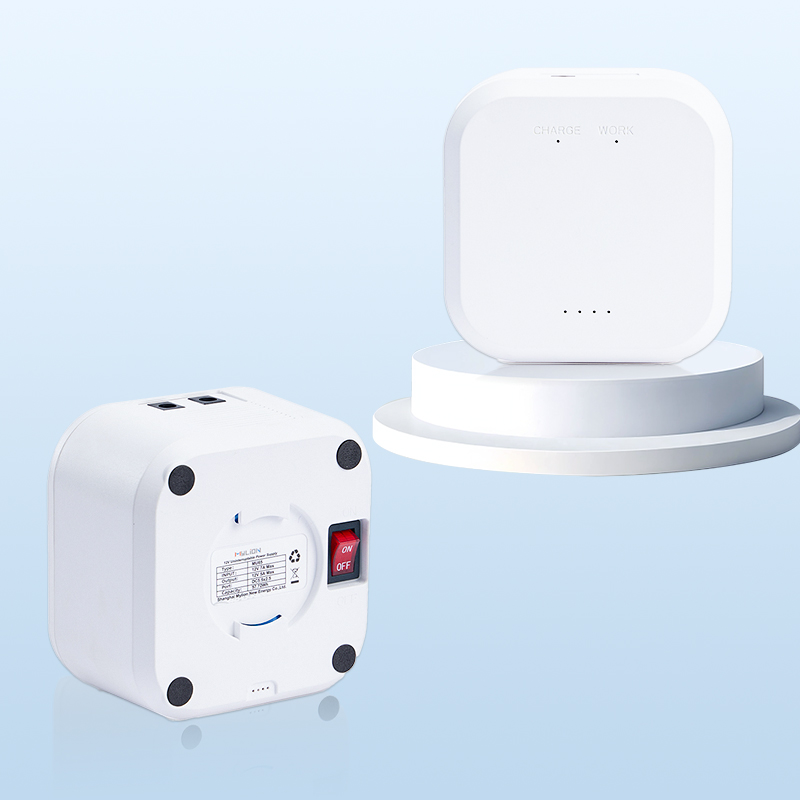
MU68 不间断电源: Featuring a massive 68瓦时 capacity with a 12V 3A output. Engineered for premium dual-device (ONT + Router) installations, it delivers a robust 4.5 to 5 hours of runtime under a continuous 12W real-world load.
MU35 不间断电源: A high-power 12V 不间断电源 designed specifically to handle the heavier power requirements of next-generation Wi-Fi 6/7 routers and enterprise edge gateways.
MU26 不间断电源: 配备有 19.24什么 capacity and 12V 3A output. This is the optimal, high-ROI standard 不间断电源 for massive residential broadband deployments.
亩C85 Mini UPS: Equipped with Type-C PD 65W (20V / 3.25A), supporting 5V / 9V / 12V / 15V / 20V output. Best for USB-C / PD-powered modern network devices and 5G CPE.
MUC85迷你UPS
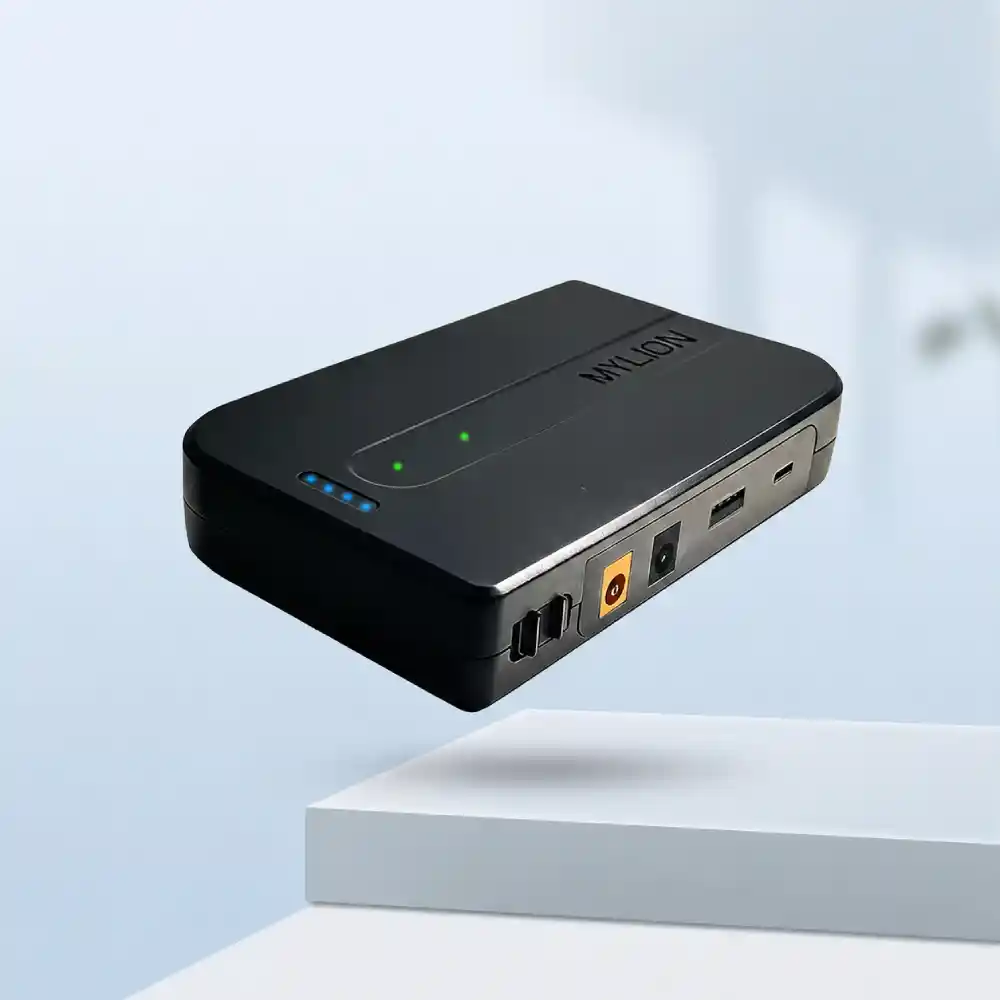
MU68 迷你 UPS
MUJ46迷你UPS
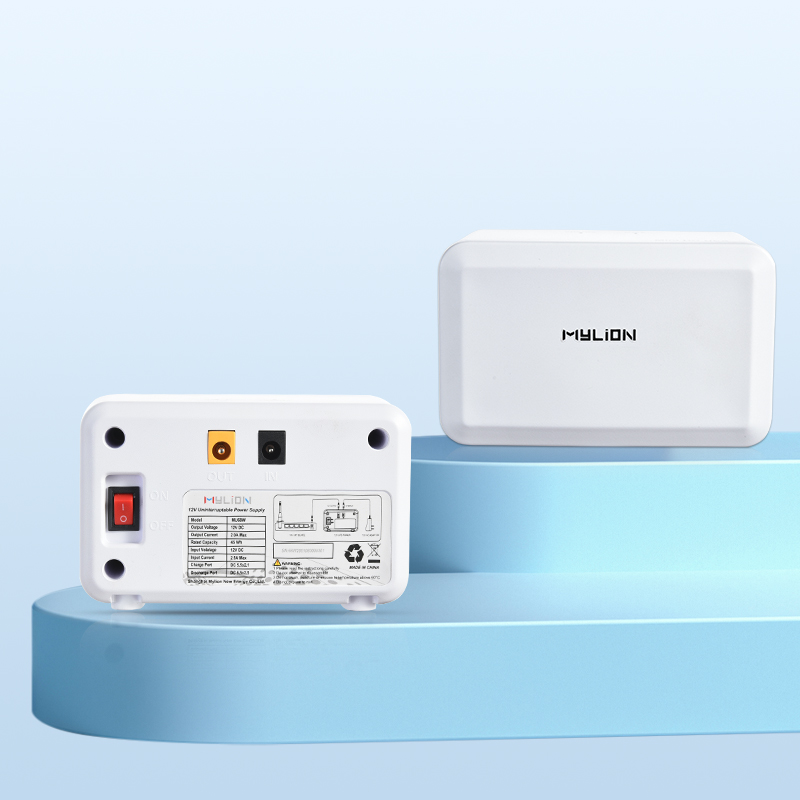
MU35迷你UPS
Why the MYLION engineering approach matters
我们的 不间断电源 systems deliver rock-solid DC output with a strict 传输时间 0 毫秒. When the grid fails, there is zero packet loss, zero router rebooting, and seamless SLA compliance for broadband subscribers.
常问问题
Q1: Can I use a Mini UPS with a higher current rating than my router requires?
Q2: Can I use a Mini UPS with a lower output current than my adapter label?
Q3: What is the fastest way to find my deployed router's real current draw?
Q4: What is the difference between Ah (Amp-hours) and Wh (Watt-hours)?
Q5: Does MYLION provide custom DC connectors for specific router brands?
Q6: What is zero-transfer time and why does it matter?
结论
Label current is a maximum capability; real current is actual consumption. The gap between them is not a defect — it is an intentional design feature that provides a safety margin and headroom. But for UPS sizing, that gap is a trap if you do not understand it.
MYLION’s 迷你UPS解决方案 are engineered for real-world telecom and broadband deployments — with models matched to actual device power requirements, not theoretical maximums. Align your power requirements accurately to secure your infrastructure and optimize deployment costs.