
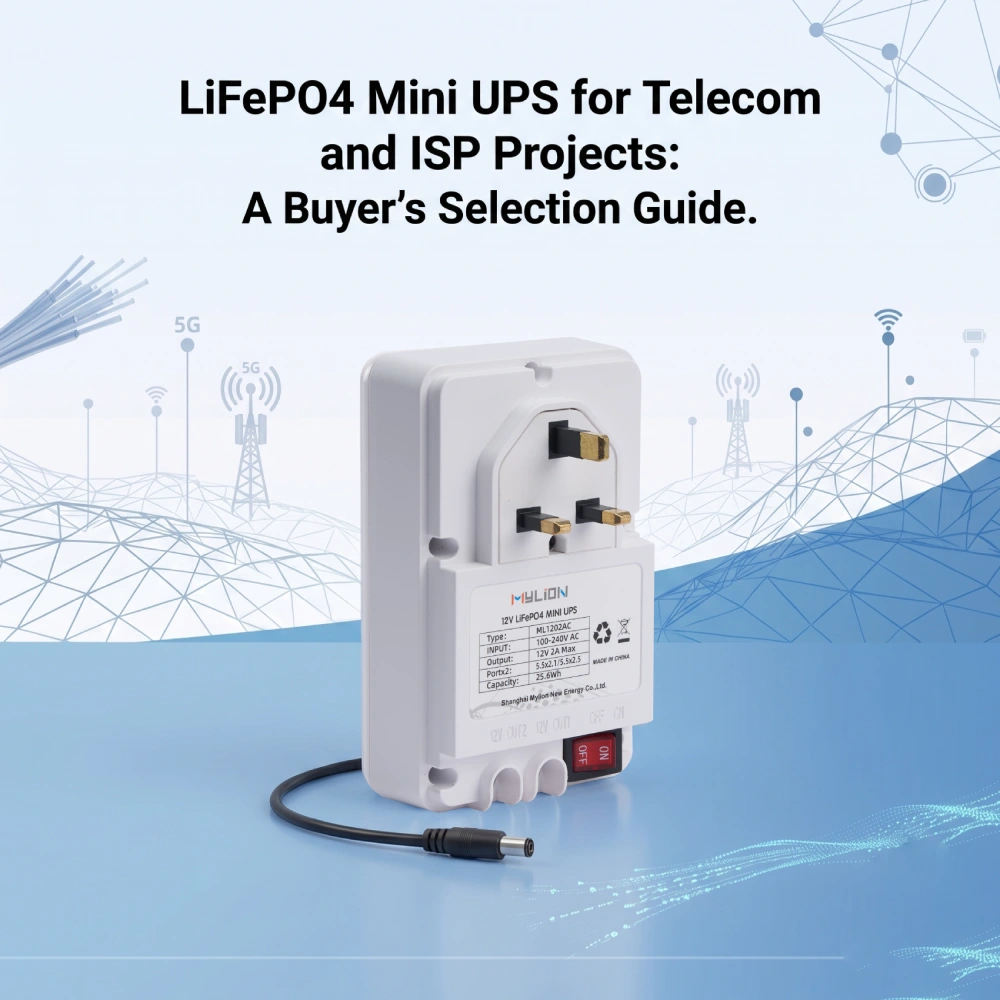
For telecom operators and ISPs, a short interruption can force ONTs, ONUs, routers, gateways, and CPE devices to restart. The LiFePO4 Mini UPS backup solution becomes extremely important.
A LiFePO4 Mini UPS can provide reliable DC backup power for network equipment. However, battery chemistry alone does not determine whether a Mini UPS is suitable for a telecom project.
This guide explains what telecom and ISP buyers should check before selecting a LiFePO4 Mini UPS.
What Is a LiFePO4 Mini UPS?
A LiFePO4 Mini UPS is a compact DC backup power system that uses lithium iron phosphate battery cells.
It is installed between the external power source and the network device.
During normal operation, the external power source supplies the connected equipment and charges the battery according to the Mini UPS design. When external power is interrupted, the Mini UPS switches to battery power and continues supplying the device.
Is a LiFePO4 Mini UPS Suitable for Telecom Projects?
A LiFePO4 Mini UPS is often a good option for projects that require frequent battery cycling, long-term deployment, stable DC backup, and reduced replacement activity.
Typical applications include:
- FTTH subscriber-side backup
- ONT and ONU backup power
- Router and modem backup
- Wireless CPE equipment
- Telecom gateways
- Remote network devices
- CCTV and access-control equipment
- Communication equipment using 12V, 24V, or 48V DC power
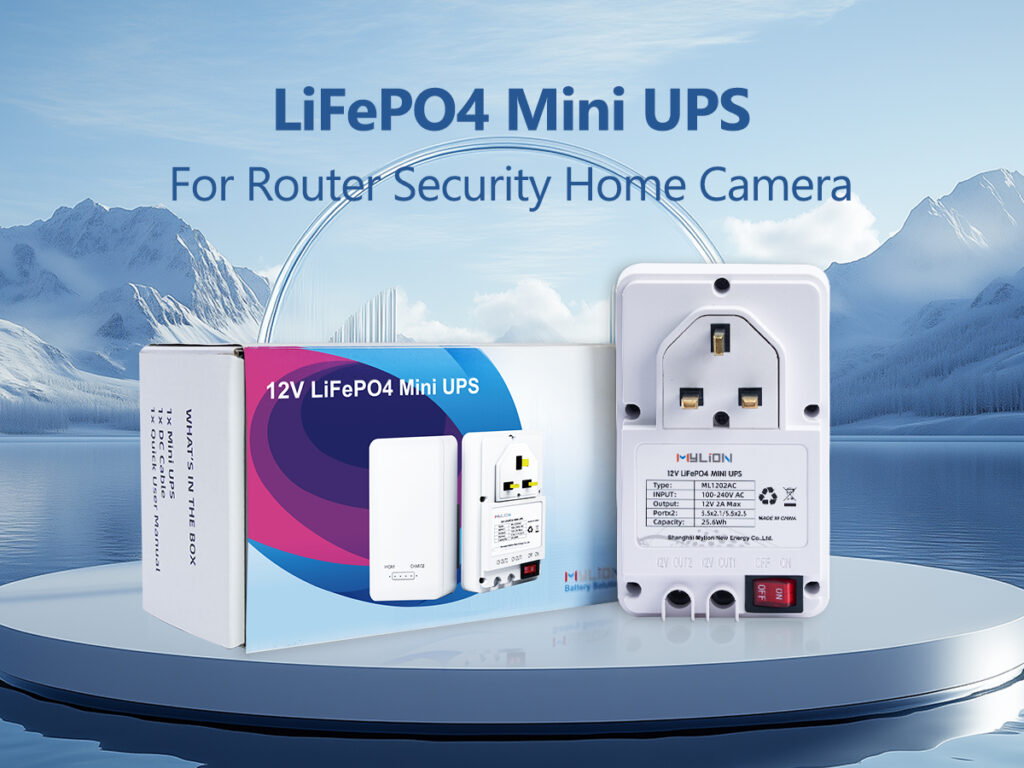
MYLION offers different Mini UPS product directions for these applications.
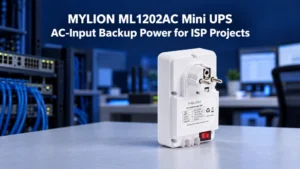
For example, the ML1202AC is designed around an AC-input, dual-12V output architecture and can be considered for applications such as an ONU and router, or two low-power 12V devices.
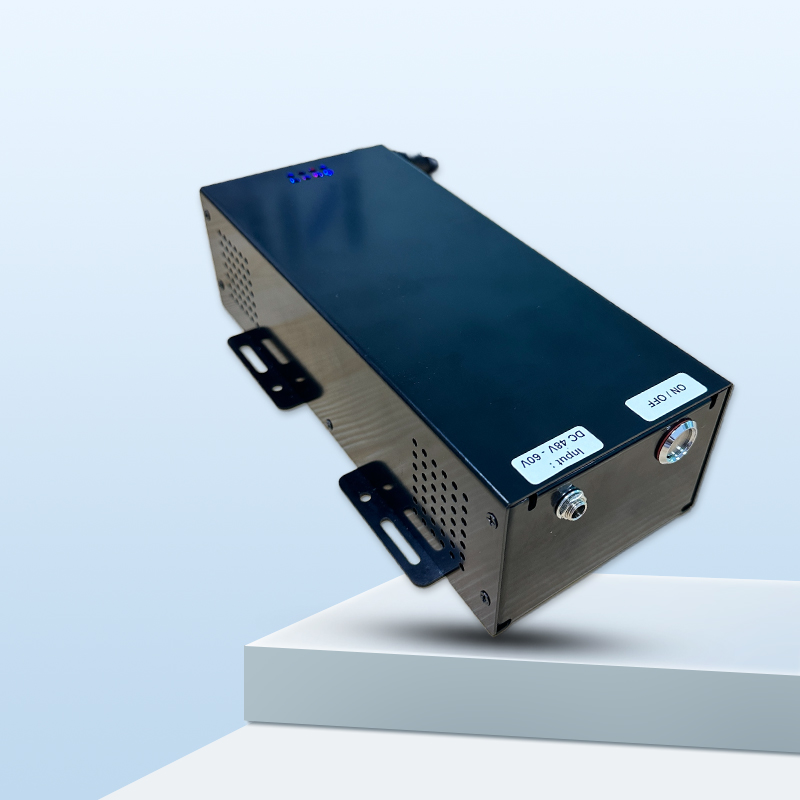
For professional communication equipment requiring higher output voltages, the MU248 is positioned for 24V and 48V applications such as wireless CPE, radio equipment, network bridges, and other communication devices.
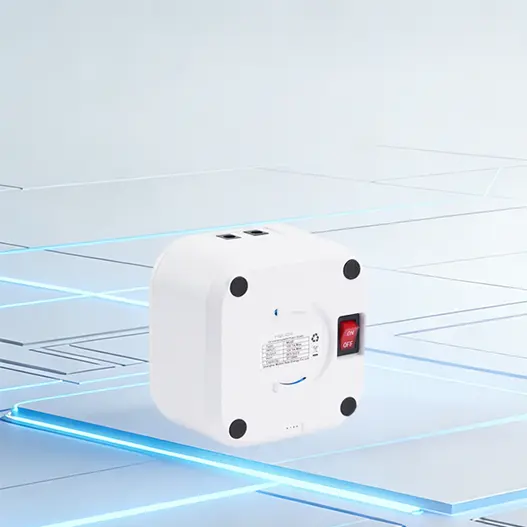
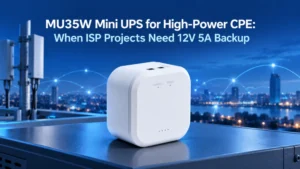
For more conventional 12V router, ONT, ONU, modem, or CPE applications, models such as the MU48W and products in the MU35 series may provide suitable starting points, depending on the actual load and required backup time.
The final model should always be selected from the real device requirements rather than from the product name alone.
Why Telecom and ISP Buyers Consider LiFePO4
1. Frequent power outage conditions
In regions with unstable grids, a Mini UPS may charge and discharge regularly.
Repeated outages can place more stress on the battery than occasional emergency use. LiFePO4 is often considered for applications where cycle performance and long-term use are important.
2. Distributed network deployment
ISP equipment is usually installed in multiple customer locations or remote areas. Replacing faulty batteries may require a significant amount of manpower and time.
The LiFePO4 Mini UPS solution adopts a plug-and-play design, making it easy to install. Its long lifespan also reduces the frequency of replacements.
3. Thermal and operating conditions
LiFePO4 is often selected when thermal stability is an important project consideration.
However, a LiFePO4 battery does not make every Mini UPS suitable for hot cabinets, outdoor installations, or unventilated spaces.
LiFePO4 Mini UPS vs Standard Lithium-Ion Mini UPS
Both battery types can be suitable for Mini UPS applications. The better option depends on the project.
Selection Factor | LiFePO4 Mini UPS | Standard Lithium-Ion Mini UPS |
Main project priority | Cycle-oriented and long-term use | Compact size and higher energy density |
Product size | May require more space for similar energy | Can support a smaller enclosure |
Product weight | May be higher for similar energy | Often lighter |
Initial cost | May be higher | May be lower |
Repeated outage use | Often considered for frequent cycling | Can be suitable for occasional backup |
Installation decision | Best evaluated by total project cost | Best evaluated by size, runtime, and cost balance |
Charging requirement | Requires a LiFePO4-compatible charging design | Requires a charging system matched to its chemistry |
The decision should not be based on a simple statement that one chemistry is always better.
How to Choose a LiFePO4 Mini UPS
1. Confirm the device voltage
The Mini UPS output voltage must match the accepted input range of the network device. Common telecom and broadband equipment may use: 5V, 9V, 12V, 24V, or 48V DC.
2. Check continuous and peak current
The Mini UPS must support the actual working load of the equipment. A router or gateway may draw more power during startup, wireless transmission, reconnection, high network traffic, or when additional functions are active.
The Mini UPS should have enough continuous output capability for normal operation and sufficient margin for changing load conditions.
3. Do not rely only on the adapter label
The original adapter provides useful information, but its rating usually shows the maximum power the adapter can supply. It does not necessarily show the device’s actual continuous consumption.
Many Mini UPS products use an external DC adapter, while the ML1202AC uses direct AC input and provides dual 12V outputs. This can simplify certain dual-device installations, but the total simultaneous load must still remain within the approved system limit.
4. Calculate the required backup time
Backup time depends on the usable battery energy and the actual device load.
A basic estimation is:
Estimated Backup Time = Usable Battery Energy × System Efficiency ÷ Device Power
Models with different battery configurations may offer different runtime directions. For example, a buyer comparing the ML1202AC, a MU35-series model, and another higher-capacity Mini UPS should compare them under the same device load rather than using nominal battery information alone.
Typical LiFePO4 Mini UPS Applications
FTTH subscriber-side backup
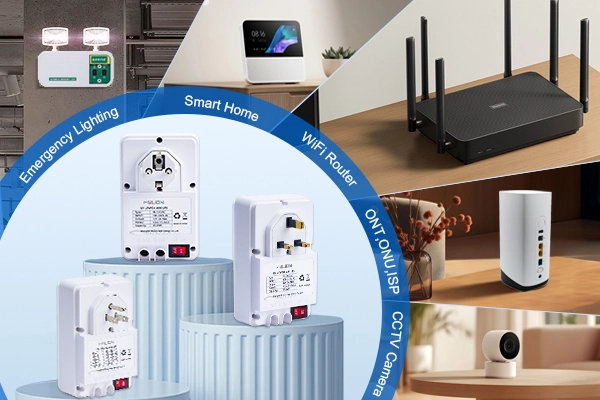
A LiFePO4 Mini UPS can help keep an ONT, ONU, router, or gateway operating during local power interruptions.
This application is especially relevant where the telecom network remains active but customer-premises equipment loses power.
Dual-device ONU and router backup
Many FTTH installations use a separate ONU or ONT and Wi-Fi router.
The ML1202AC is designed for dual 12V output applications and can be evaluated for this type of configuration.
Its direct AC input may reduce the need for a separate external DC adapter in some installations.
ISP router and modem backup
For broadband service providers, router reboots can create support calls even when the upstream network is still available.
A correctly matched LiFePO4 Mini UPS can help reduce interruptions caused by short outages or unstable local power.
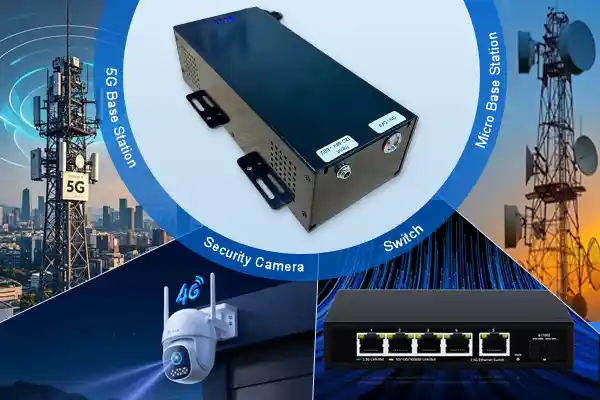
Wireless CPE and remote communication equipment
Wireless CPE devices, bridges, gateways, radios, and professional communication equipment may use higher voltage or power than standard home routers.
The MU248 LiFePO4 UPS is positioned for 24V and 48V communication applications and may be relevant for:
- Wireless CPE
- Radio equipment
- Network bridges
- Professional communication devices
- Other project-based 24V or 48V equipment
Multi-device network backup
Some installations need simultaneous backup for an ONT and a router. The combined load and total output limit are more important than the number of available ports.
Depending on the device voltage and power, a dual-output Mini UPS product such as the ML1202AC or another approved multi-output Mini UPS may be considered.
How MYLION Supports Telecom and ISP Projects
MYLION provides Mini UPS and DC backup solutions for telecom operators, ISPs, network equipment companies, system integrators, and distributors.
The MYLION Mini UPS portfolio includes product directions for:
- Standard 12V routers, ONTs, ONUs, modems, and CPE devices
- Higher-load 12V routers and gateways
- Dual-device ONU and router backup
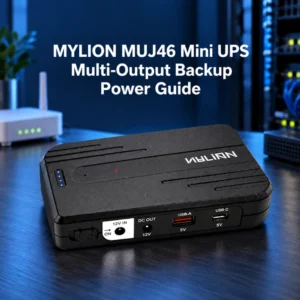
- Mixed DC and USB applications
- USB-C PD-powered network devices
- 24V and 48V communication equipment
- Project-specific telecom backup requirements
Depending on the application, potential product directions may include the MU48W, products in the MU35 series, the dual-12V ML1202AC, and the 24V/48V MU248.
MYLION recommends selecting a Mini UPS according to the actual device and deployment requirement rather than choosing only by battery capacity or model name.
For high-power, 24V, 48V, USB-C PD, PoE, multi-output, outdoor, or special-interface applications, additional technical evaluation may be required.
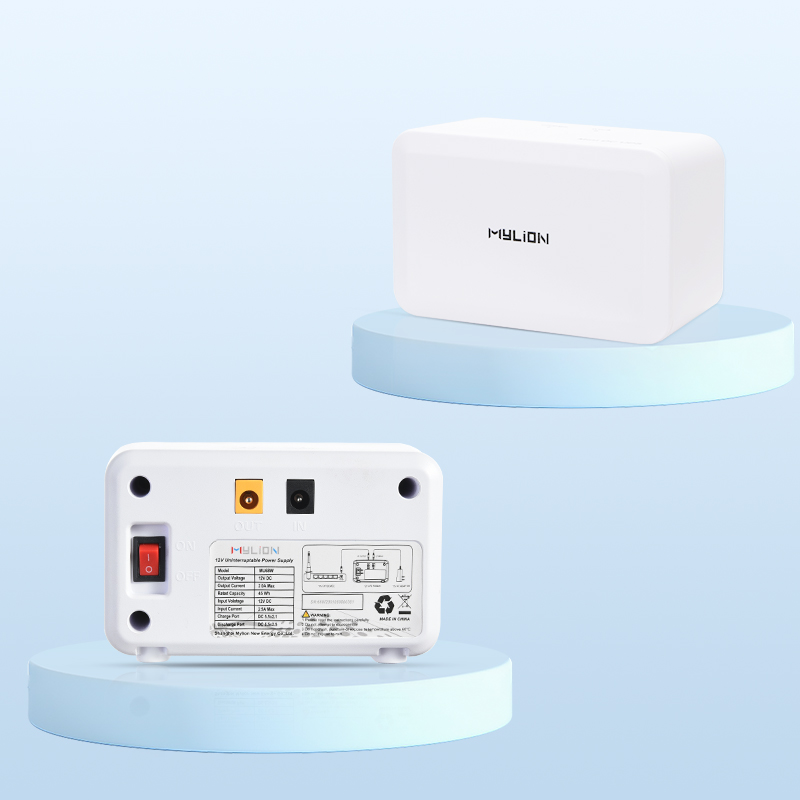
MU68 Mini UPS
MU35 Mini UPS
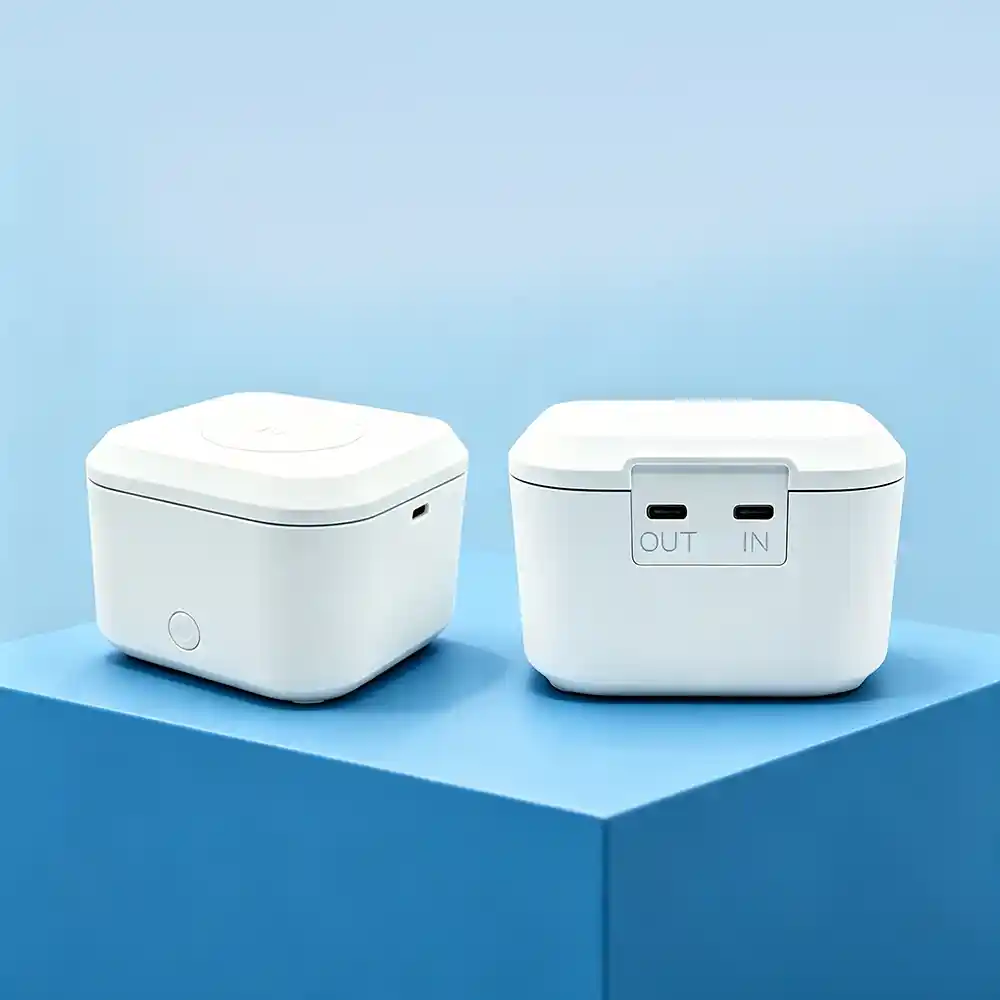
MUC85 Mini UPS
MU248 Mini UPS
FAQ
Q1: Is LiFePO4 better for every Mini UPS?
Q2: Can a LiFePO4 Mini UPS power both an ONT and a router?
Q3: Which MYLION Mini UPS is suitable for a standard 12V router?
Q4: What applications is the MU248 designed for?
Q5: How long can a LiFePO4 Mini UPS run a router?
Conclusion
A LiFePO4 Mini UPS can be a practical backup power solution for telecom and ISP projects, especially where frequent outages, long-term deployment, and replacement management are important.
MYLION provides multiple Mini UPS solutions for different network applications. By selecting MYLION ML1202AC Mini UPS for standard 12V routers, or the MU248 for specialized 24V/48V telecom nodes, network operators can deploy backup solutions that are as resilient as the networks they protect.
 English
  简体中文
简体中文  Deutsch
  Français
  Italiano
  Español