
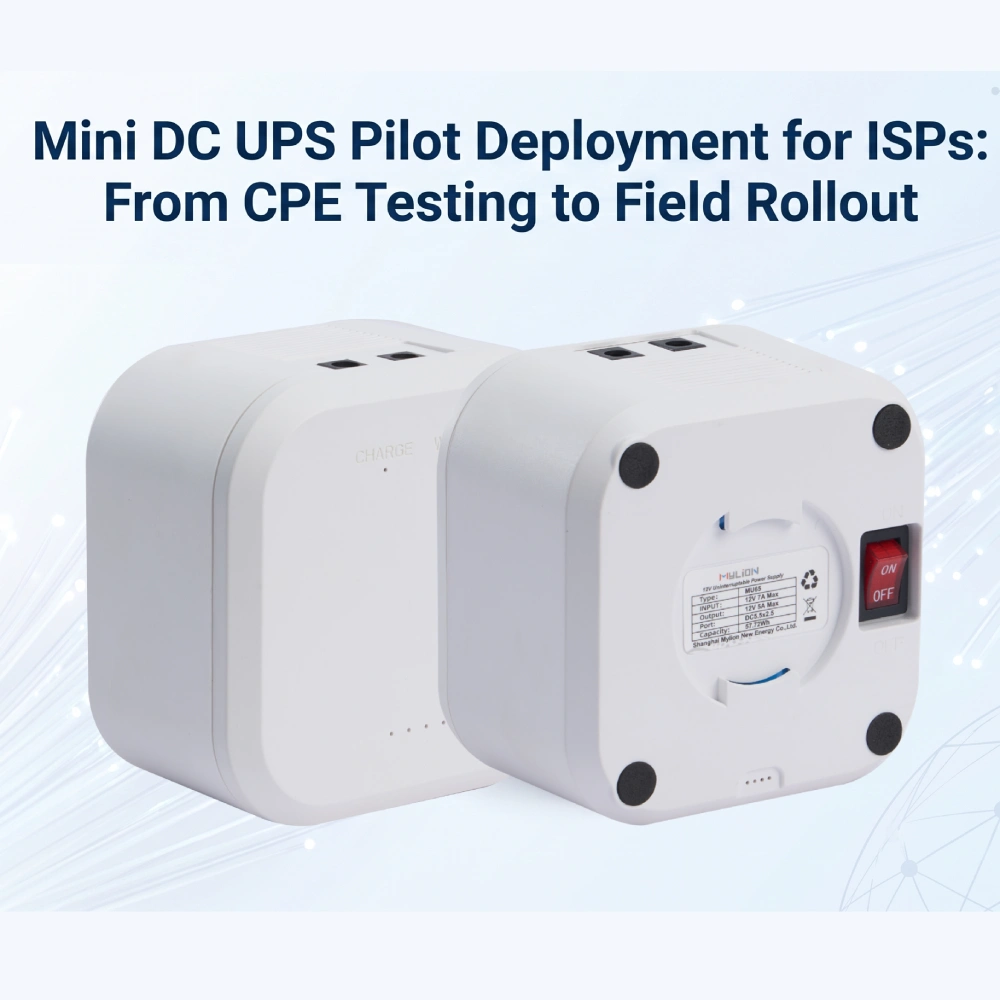
A Mini DC UPS can help maintain power to compatible customer-premises equipment during short outages, voltage fluctuations and unstable grid conditions. However, choosing a product from a specification sheet is not enough for a large ISP deployment.
Before approving a Mini DC UPS for hundreds or thousands of subscribers, the ISP should validate it with the actual CPE fleet, cables, adapters, installation methods and operating conditions that will be used in the field.
This guide explains how to plan a Mini DC UPS pilot for ISP deployment, conduct CPE compatibility testing.
Why an ISP Should Run a Mini DC UPS Pilot
A product specification can identify a candidate, but it cannot reproduce every condition in an ISP network.
A pilot helps answer practical questions:
- Does the ONT or router remain operating when external power is interrupted?
- Does either device restart during the transition?
- Is the backup time sufficient under the actual combined load?
- Are the adapter, cable, connector and polarity correct?
- Can installers reproduce the approved configuration?
- Can subscribers understand the operating instructions?
- Does the system recover correctly when utility power returns?
- Can the same configuration be supported consistently at scale?
Without a pilot, technical assumptions can become deployment problems across a much larger number of installations.
Define the Pilot Objective Before Selecting Mini UPS Samples
A useful pilot begins with a specific business and technical objective. Examples include:
- Keeping an ONT active during short power interruptions;
- Supporting a separate ONT and Wi-Fi router;
- Maintaining an integrated gateway for a defined period;
- Evaluating higher-load CPE;
- Standardizing backup power across a defined subscriber segment;
- Testing an OEM or localized installation configuration.
The ISP should state which functions must remain available and under what conditions. A customer-premises Mini DC UPS can only address the compatible equipment connected to it.
Selecting a MYLION Mini DC UPS for the CPE Ecosystem
MYLION offers different Mini UPS architectures for standard 12V devices, higher-load network equipment, mixed-output installations, USB-C applications and compact FTTH deployment.
MYLION MU68W: Standard 12V ISP and Broadband Applications
The MU68W is a practical starting point for mainstream 12V ONTs, ONUs, routers, modems and subscriber-side CPE.
It is suitable for pilots where the ISP needs:
- A standard 12V backup architecture
- Compatibility with common broadband equipment
- A compact installation format
- A straightforward candidate for a mixed CPE fleet
- A balance between runtime, size and deployment simplicity
The complete device and cable configuration should still be tested before approval.
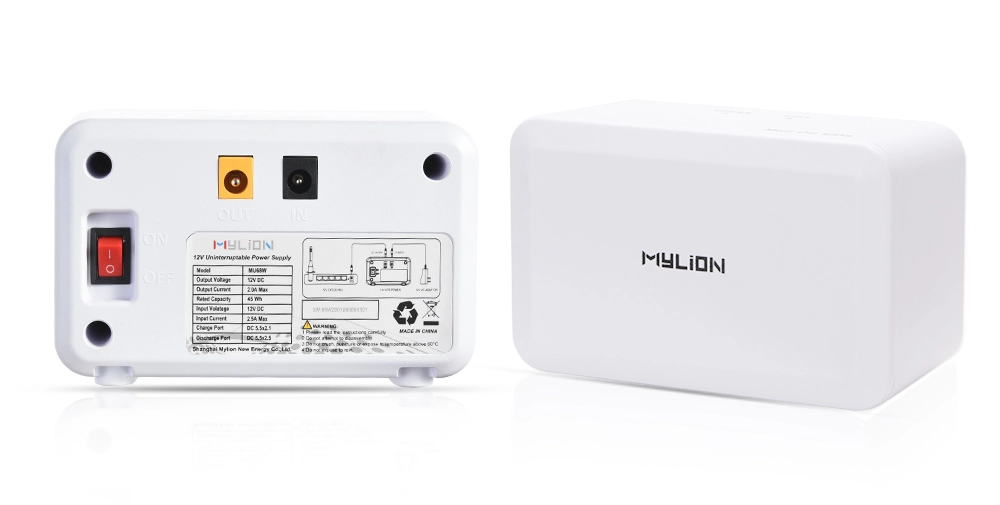
MYLION MU35W: Higher-Load 12V Routers and Gateways
The MU35W is intended for higher-power 12V applications where a standard Mini UPS may not provide enough output margin.
Potential applications include:
- Higher-performance routers
- Broadband gateways
- LTE or 5G routers
- Advanced CPE
- Integrated access devices
- Selected ONT-and-router combinations
MYLION positions the MU35 range as a higher-power 12V option for routers, gateways and ISP CPE projects.
Choosing a higher-output model does not remove the need for testing. The ISP should confirm continuous load, startup behavior, thermal conditions and runtime with the intended equipment.
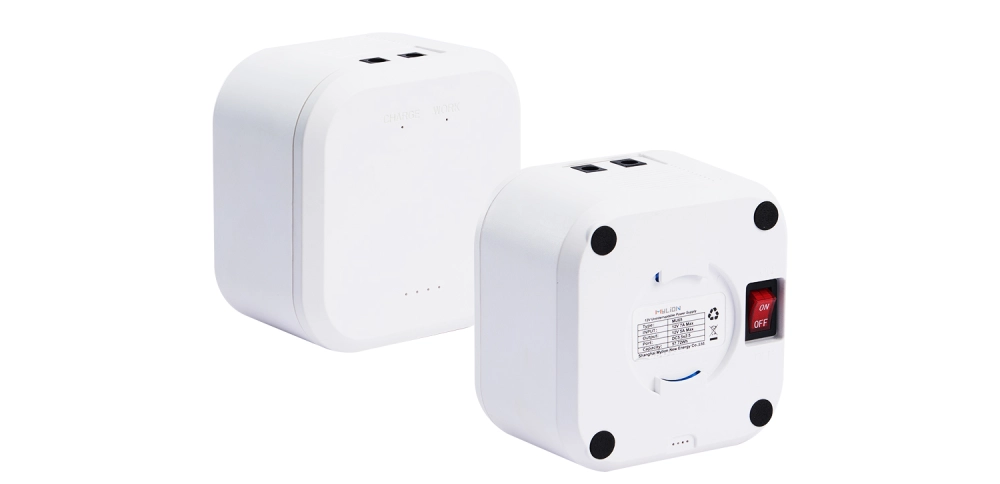
MYLION MUJ46: Compact FTTH and Mixed-Output Deployment
The MUJ46 is suitable when compact wiring, inline installation or mixed 12V and 5V output requirements are important.
Possible pilot scenarios include:
- A 12V network device with a USB-powered accessory
- Compact FTTH subscriber installations
- Router and low-power USB device combinations
- Installations requiring simplified cable management
- Space-constrained subscriber premises
The MUJ46 is identified by MYLION as an option for inline FTTH deployment and combined DC plus USB backup applications.
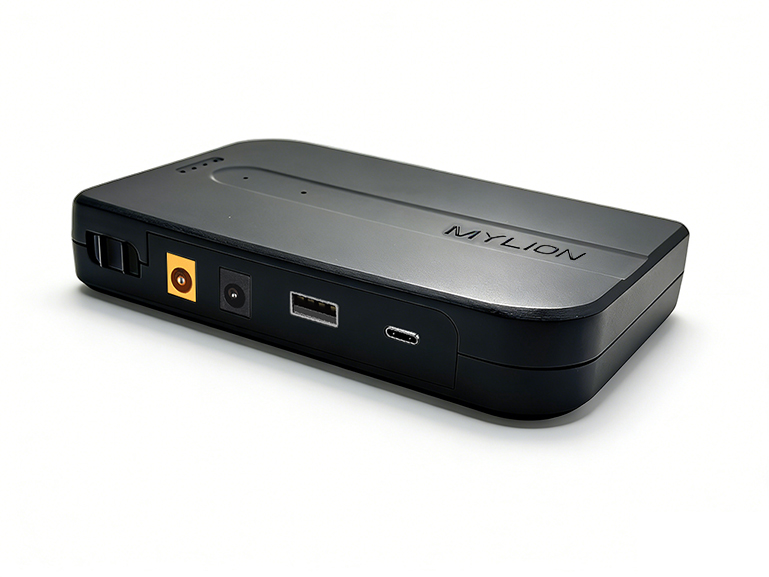
MYLION MUC85: USB-C PD Backup for Modern Network Devices
The MUC85 is designed for compatible USB-C PD applications rather than conventional fixed-voltage DC equipment.
It supports USB-C PD power profiles for selected:
- USB-C routers
- Advanced gateways
- Wi-Fi 6 or Wi-Fi 7 devices
- Mesh Wi-Fi systems
- Mobile hotspots
- USB-C-powered CPE
- Selected edge-network equipment
The MUC85 uses a 92Wh lithium battery and supports USB-C PD output up to 65W, with an additional USB-C output for compatible devices. USB-C compatibility must be confirmed according to the required voltage, current, total power and PD profile.
It should not be assumed that every device with a USB-C connector will be compatible.
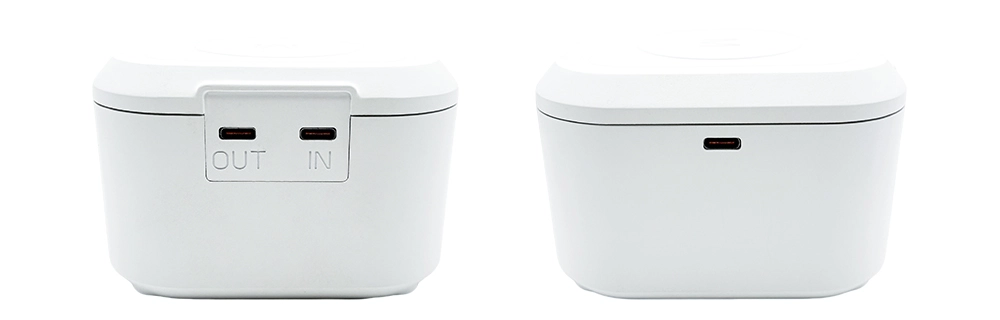
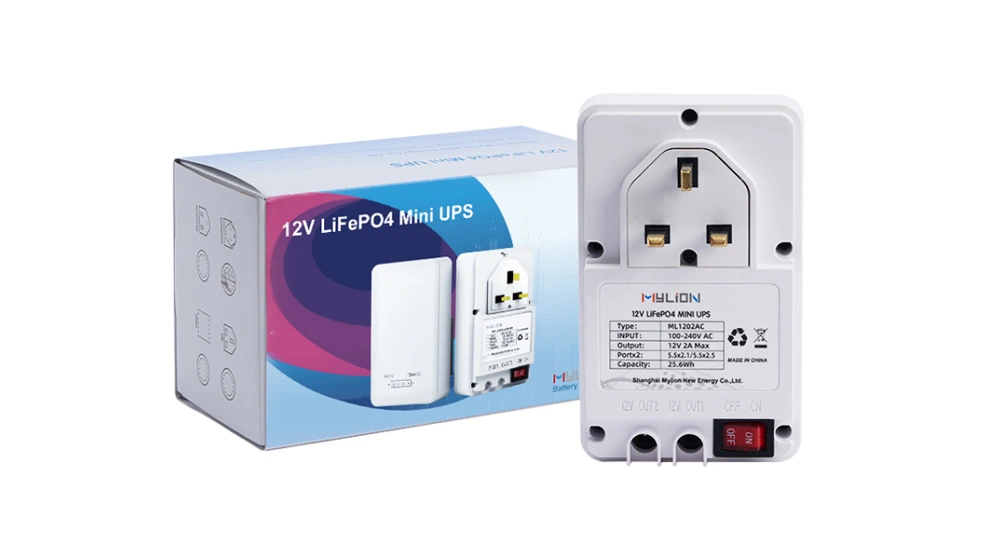
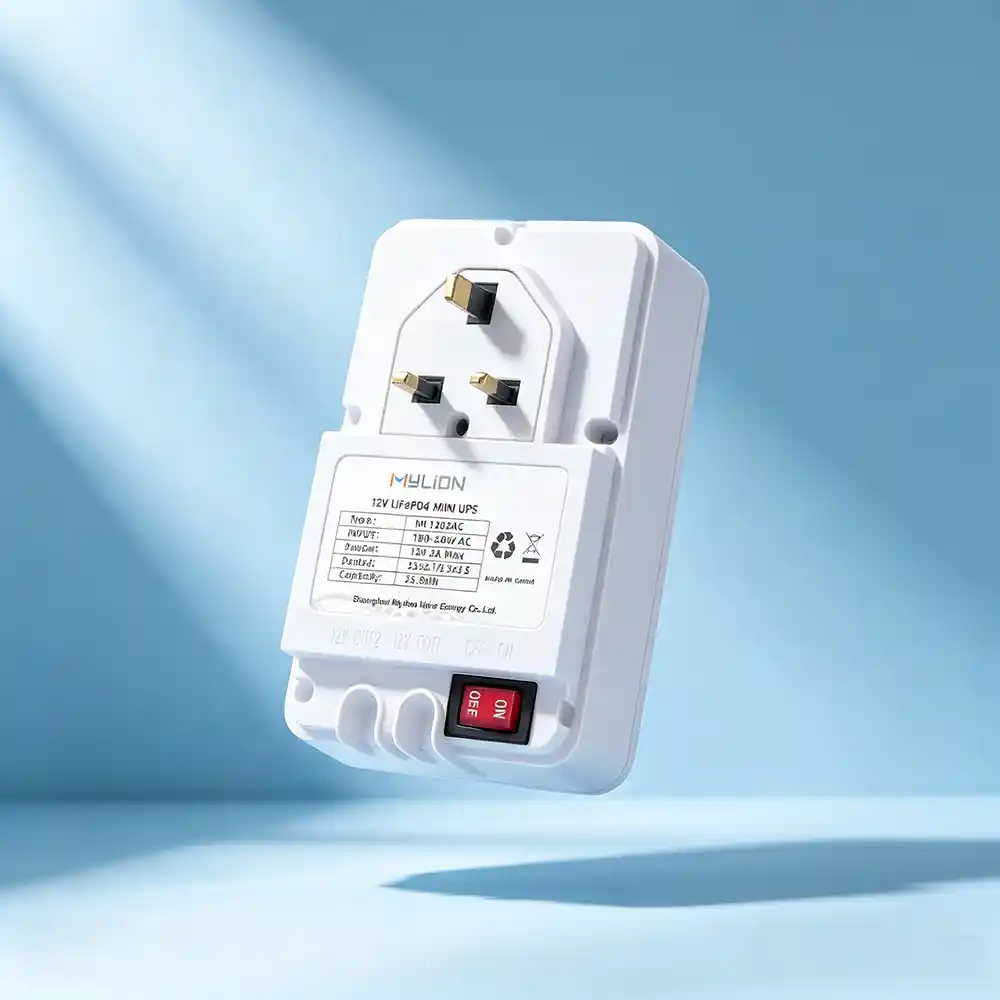
MYLION ML1202AC: Compact LiFePO4 Backup for Low-Power Devices
The ML1202AC is a compact 12V Mini DC UPS option for low-power routers, ONUs and broadband equipment.
It may be considered when the project requires:
- A 12V, low-power CPE configuration
- Compact subscriber-side installation
- LiFePO4 battery chemistry
- AC-input and DC-output integration
- A simple backup solution for one compatible device
MYLION lists the ML1202AC with a 12V/2A output and a 25.6Wh LiFePO4 battery. Published runtime ranges are load-dependent and should be treated as planning references rather than guaranteed field results.
MYLION Model Selection Summary
Model | Recommended Evaluation Direction |
MU68W | Mainstream 12V ONT, ONU, router and CPE backup |
MU35W | Higher-load 12V router, gateway and advanced CPE |
MUJ46 | Compact FTTH installation and mixed 12V/5V output |
MUC85 | Compatible USB-C PD router, gateway and modern CPE |
ML1202AC | Compact low-power 12V ONU, router and broadband device |
For a broader comparison, project engineers can review the MYLION Mini UPS model comparison before requesting samples.
Test Mini DC UPS Before Field Deployment
1. Visual and Configuration Check
Before connecting the equipment, verify:
- Correct Mini DC UPS model;
- Correct adapter;
- Correct cable;
- Connector dimensions;
- Polarity;
- Device voltage;
- Output selection, where applicable;
- Product and sample identification.
This prevents a configuration error from being mistaken for a product failure.
2. Normal-Power Operation
Connect the complete system and confirm that the ONT, router or gateway operates normally while external power is available.
- The device starts correctly;
- The connection remains stable;
- The Mini DC UPS shows its intended operating state;
- The adapter and cables operate without abnormal behavior.
Observe and record the complete operating state.
3. Power-Interruption Test
Interrupt the external power in a controlled way and record:
- Whether the device remains operating;
- Whether it restarts;
- Whether the network session is interrupted;
- How long recovery takes if a restart occurs;
- The Mini DC UPS state during the transition.
A Mini DC UPS should not be assumed to provide zero-millisecond switching or prevent every CPE model from restarting.
4. Power-Recovery Test
Restore external power and confirm:
- The CPE continues or resumes normal operation;
- The Mini DC UPS returns to its intended state;
- Charging behavior begins as designed;
- No manual intervention is unexpectedly required.
Repeated interruption and recovery cycles may be included when relevant to the ISP’s target scenario.
5. Runtime Test
Use the complete intended CPE configuration rather than an unrelated reference load. Record:
- Starting battery condition;
- Connected equipment;
- Measured working load;
- Test start and end time;
- Device operating state;
- Cutoff or shutdown behavior;
- Ambient and installation conditions;
- Measured runtime.
The result should be described as an actual-device test under the recorded conditions. It should not automatically become a guarantee for other devices or environments.
6. Combined-Load Test
If the pilot includes an ONT and router, test them together and confirm:
- Combined continuous power;
- Peak or startup behavior;
- Whether both devices start simultaneously;
- Output-interface limits;
- Cable configuration;
- Measured runtime.
The fact that each device works separately does not prove that the combined configuration is approved.
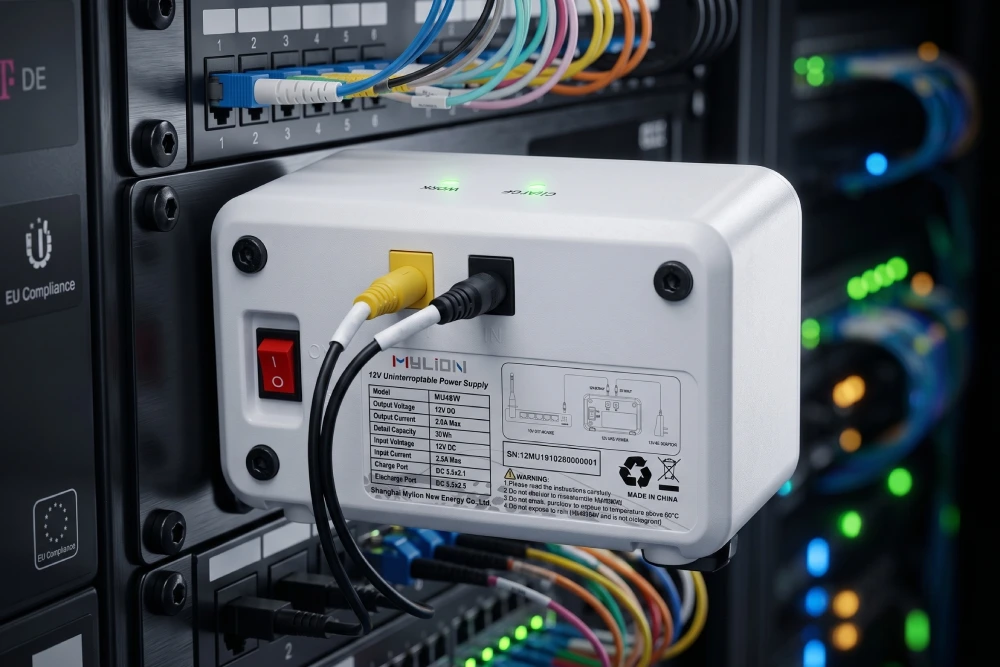
Designing the ISP Field Pilot
After bench testing, the next step is a limited field deployment.
The field pilot should be large enough to represent the intended subscriber environment but controlled enough for reliable issue investigation.
Select a Representative Pilot Cohort
Possible pilot groups include:
- High-outage areas: These locations provide frequent opportunities to observe real power interruptions and recovery behavior.
- Premium or business-service customers: The pilot can evaluate whether subscriber-side backup supports the ISP’s service-continuity strategy.
- New FTTH activations:Installing the Mini UPS during new service activation allows the ISP to evaluate technician workflow and installation time.
- Selected CPE groups: The ISP can organize the pilot around specific ONT and router combinations instead of geographic location.
Field Rollout and Installation Best Practices
A successful pilot relies heavily on your field technicians. If the installation process is clumsy or confusing, it will increase deployment costs and generate support calls. Fortunately, MYLION devices are built for rapid deployment.
Technician Training and SOPs
Create a clear Standard Operating Procedure (SOP) for your field teams. Because MYLION Mini UPS units feature plug-and-play simplicity, training can be incredibly lean. Technicians must be trained to:
- Identify the correct voltage output (5V, 9V, or 12V) for the respective ONT and router.
- Use the provided splitter cables if powering two devices simultaneously from a single UPS.
- Position the UPS in a safe, well-ventilated spot, ensuring no cables are tightly bent or stressed.
Common Pilot Mistakes
Testing only one router: One successful device does not represent a mixed CPE fleet.
Ignoring the ONT: Backing up the router alone may not maintain FTTH connectivity if the ONT loses power.
Using maximum output as continuous output: Maximum current should not be treated as the normal continuous operating limit.
Treating formula runtime as field performance: A formula estimate is useful for planning. The pilot should measure runtime using the intended equipment.
Changing cables during the pilot: A different cable, connector or polarity can change the result. Configuration changes should be recorded and reviewed.
Starting with too many variables: Testing many products, adapters and device combinations simultaneously can make failure analysis difficult.
Moving to volume deployment too early: A successful bench test is not the same as an approved field pilot.
Preparing for Volume Rollout
Before volume approval, the ISP and supplier should agree on:
- Approved CPE combinations;
- Mini DC UPS model and configuration;
- Adapter and cable;
- Product labeling;
- Packaging;
- Installer documentation;
- Acceptance criteria;
- Quality and inspection requirements;
- Configuration-change process;
- Warranty and issue handling;
- Target-country requirements;
- OEM or ODM scope, where applicable.
The production quotation and purchase documentation should correspond to the configuration that passed the pilot.
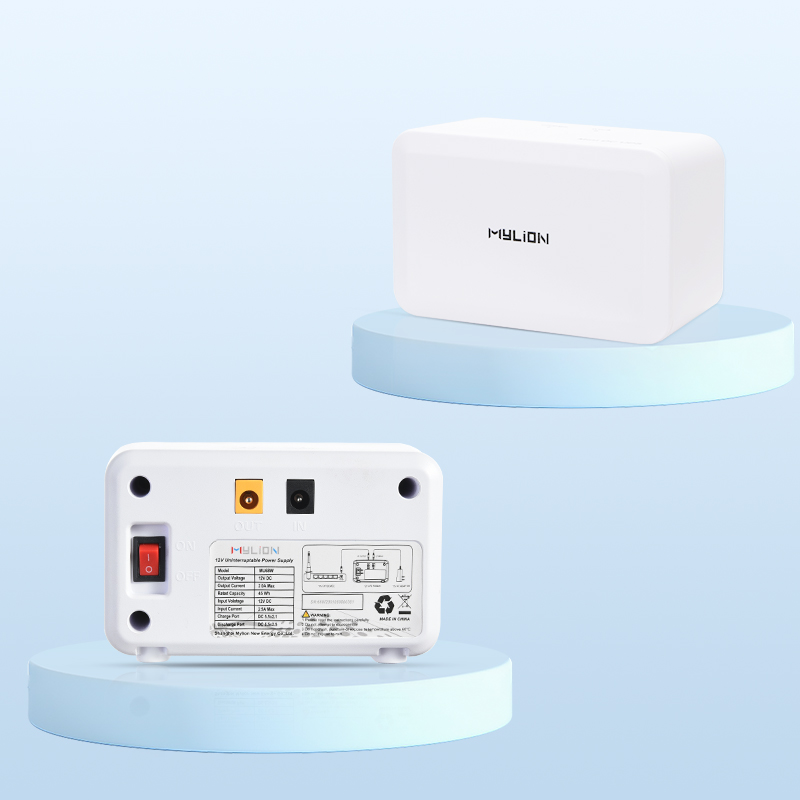
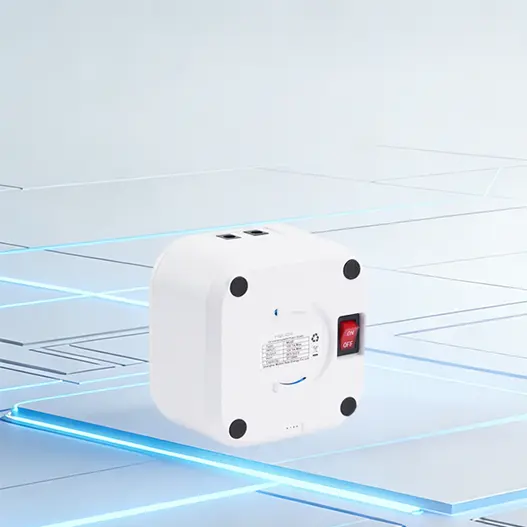
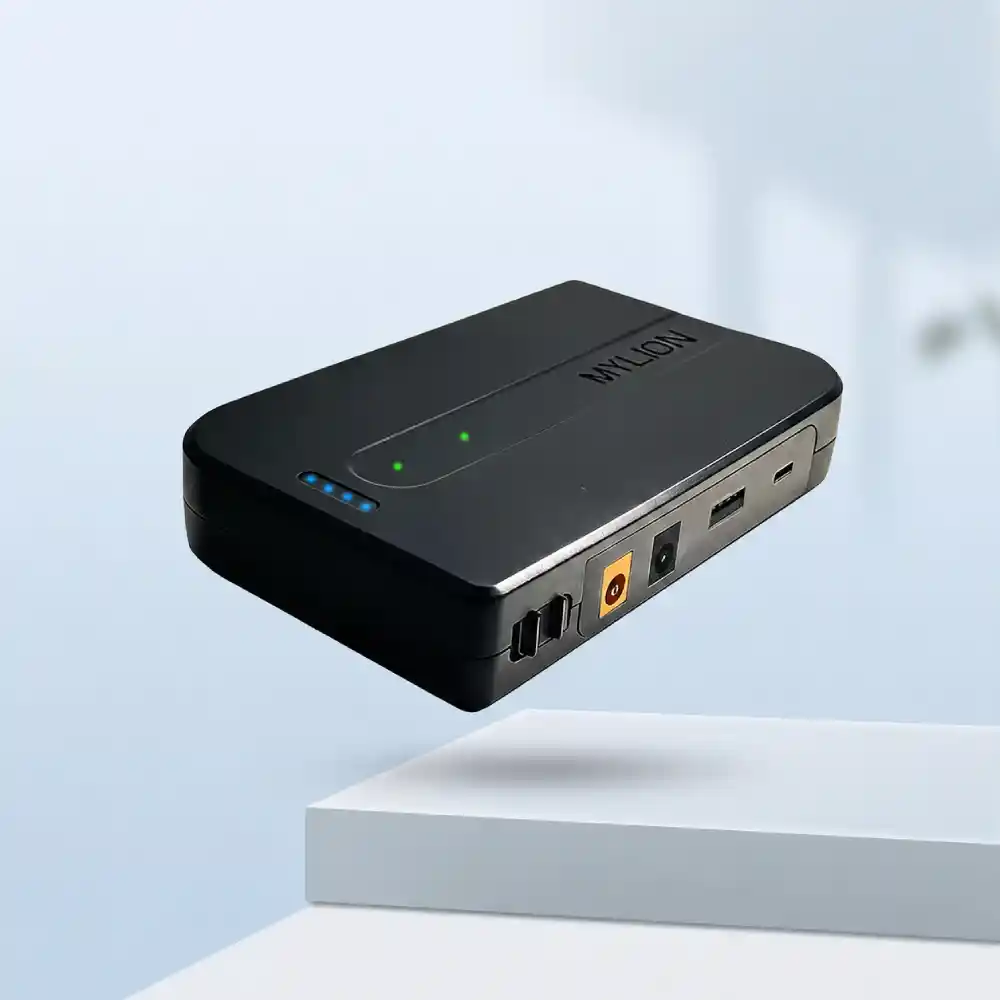
MU68 Mini UPS
MU35 Mini UPS
MUJ46 Mini UPS
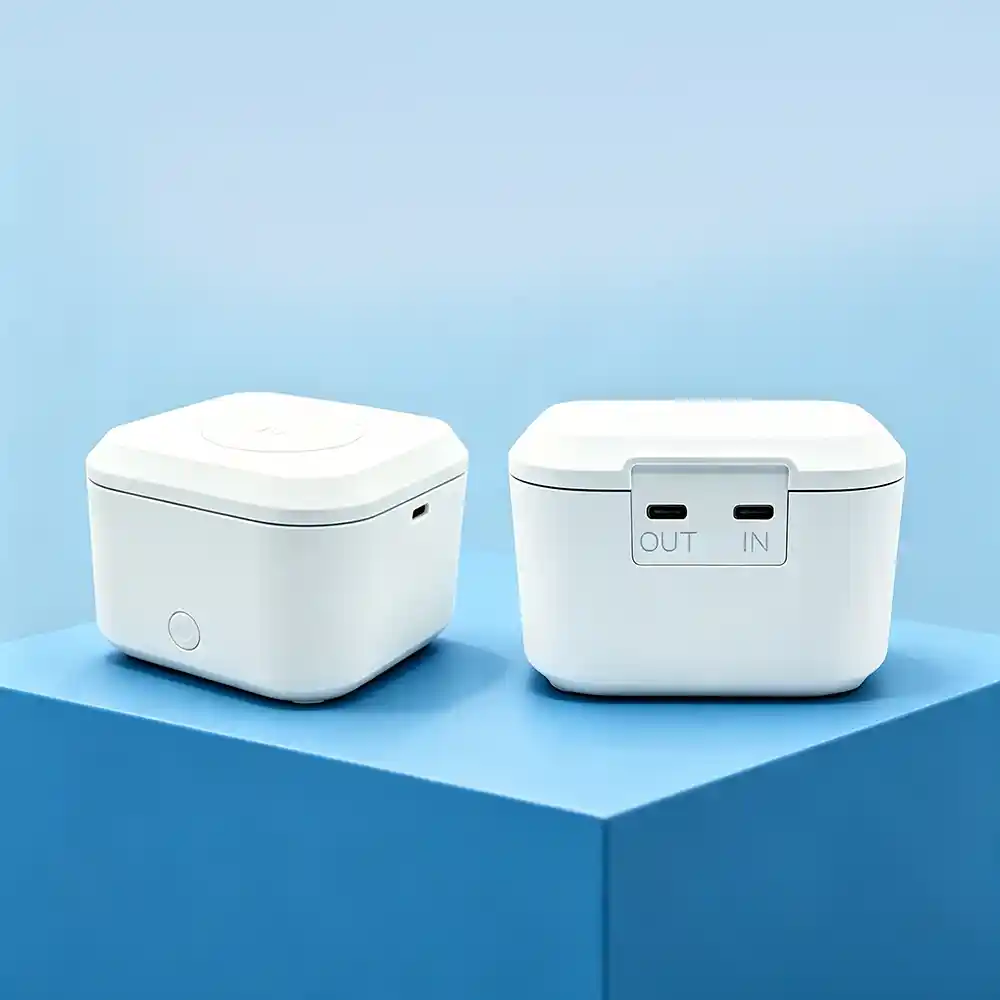
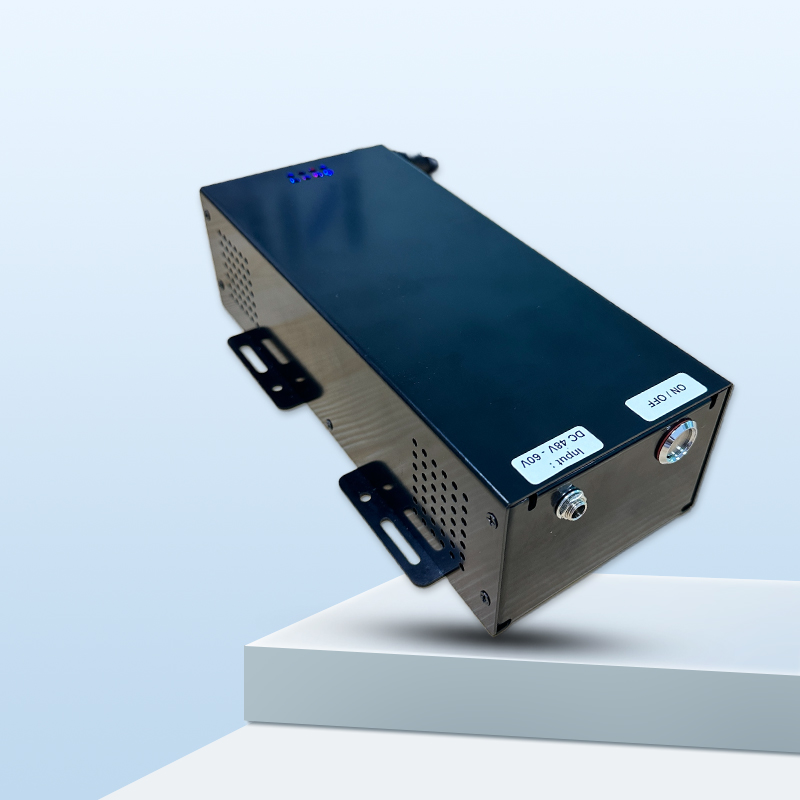
MUC85 Mini UPS
MU248 Mini UPS
ML1202AC Mini UPS
FAQ
Q1: How many units should an ISP include in a Mini DC UPS pilot?
Q2: Should the ISP test every ONT and router model?
Q3: Can formula-estimated runtime be used as the pilot result?
Q4: Can one Mini DC UPS support both an ONT and router?
Q5: What should happen if a device restarts during switching?
Q6: When is a pilot ready for volume deployment?
Conclusion
A successful Mini DC UPS pilot converts a possible product match into a documented ISP deployment configuration.
The process should begin with the actual CPE fleet, continue through controlled bench testing and then move to a limited field rollout. Voltage, continuous output, peak demand, connectors, switching behavior and measured runtime all need to be evaluated under defined conditions.
After laboratory validation, a controlled FTTH field pilot can confirm installer workflow, subscriber usability and real-world reliability. MYLION offers several Mini UPS options for different project requirements.

 English
  简体中文
简体中文  Deutsch
  Français
  Italiano
  Español