
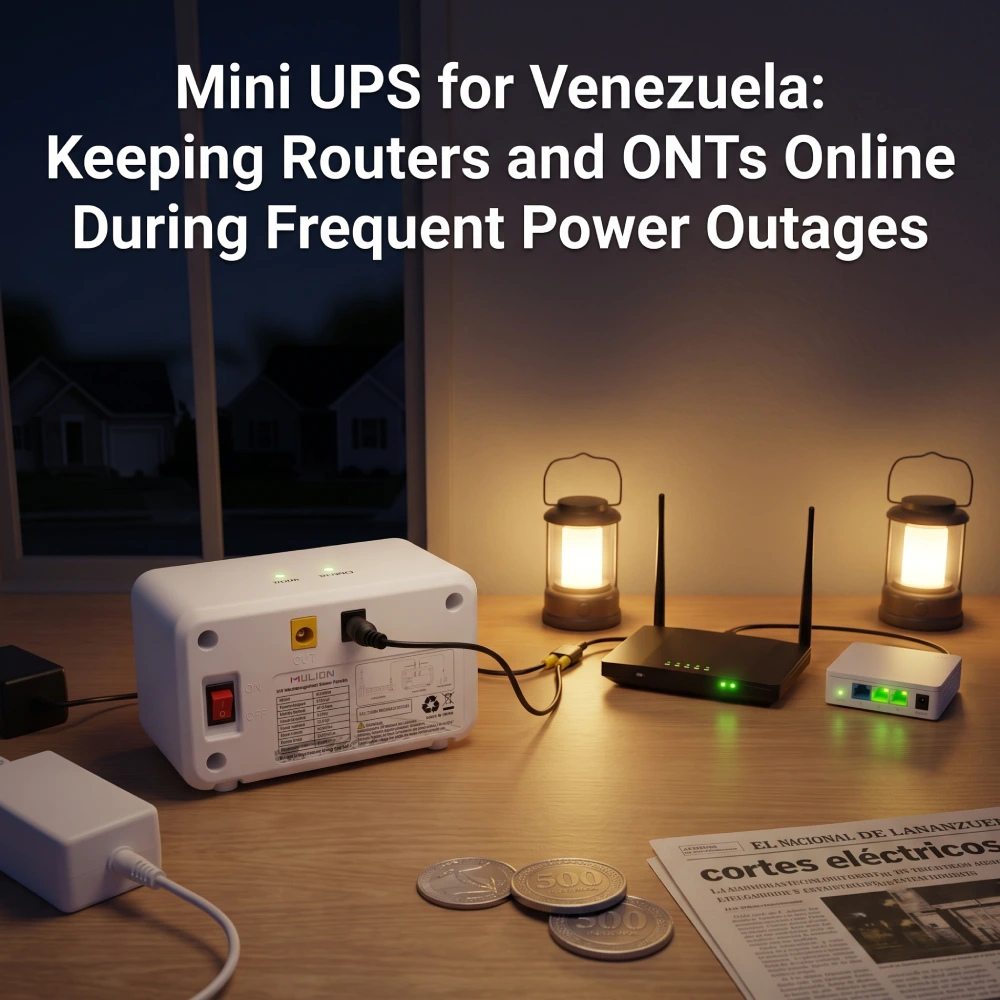
Frequent power outages in Venezuela continue to affect homes and businesses, often causing internet disconnections even when the fiber network itself remains fully operational. The main reason is that essential customer-side devices, such as routers and ONTs, rely on local power to operate, making them vulnerable to any blackout.
A properly selected Mini UPS can provide automatic DC backup power and help keep these devices online during outages, reducing device restarts, reconnection delays, remote-work interruptions, and avoidable service complaints.
This guide explains how to select and deploy a Mini UPS for Venezuela, including router-and-ONT configurations, runtime considerations, and practical guidance for ISPs and telecom companies.
The Infrastructure Challenge: Venezuela’s Grid Instability and Telecom Impact
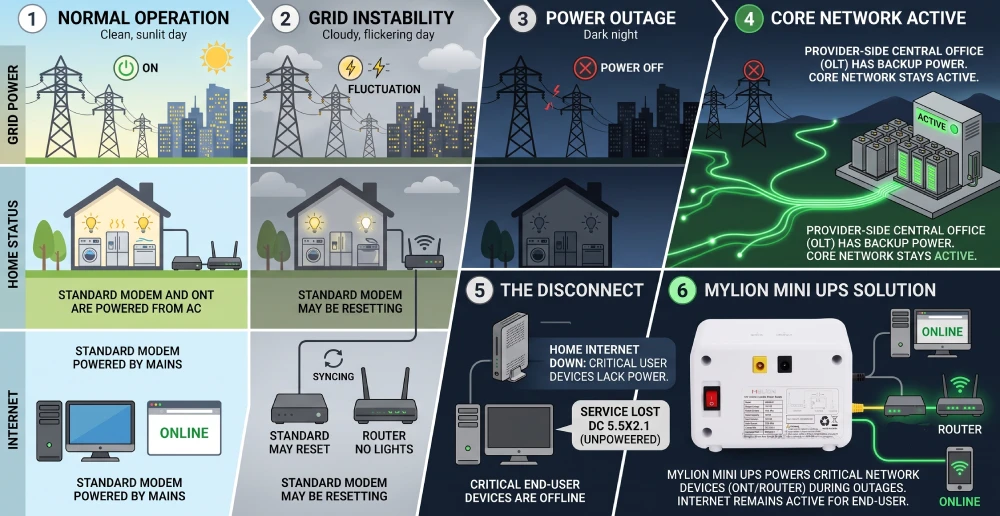
Venezuela’s power infrastructure has experienced severe and ongoing degradation. Driven by an over-reliance on aging hydroelectric facilities, the country frequently endures strict energy rationing. For citizens and businesses, this translates to scheduled and unscheduled daily blackouts lasting anywhere from four to eight hours.
For an ISP, these regional outages create a frustrating paradox. The provider’s fiber-optic network is fully operational, transmitting data directly to the customer’s home. However, because the customer lacks local power for their ONT and router, the service goes offline. The resulting fallout for the telecom operator includes:
- Surging Support Costs: Customers frequently open trouble tickets or flood call centers, confusing localized power failures with network outages.
- SLA Violations:For enterprise clients, downtime results in Service Level Agreement (SLA) penalties, regardless of the underlying cause.
- Customer Churn:Frustrated end-users are more likely to switch providers in search of “better” stability, even if the new provider faces the same grid challenges.
What Is a Mini UPS?
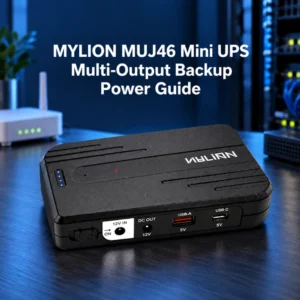
A Mini UPS is an intelligent DC power system designed to provide normal power delivery, battery charging, automatic power-source switching, and backup output for compatible electronic equipment.
A typical connection is:
Utility Power → Device Adapter → Mini UPS → Router, ONT, ONU, CPE, or Gateway
- When utility power is available, the external adapter supplies the connected equipment through the Mini UPS. When sufficient input capacity is available, the system also charges its internal battery according to its design.
- When utility power fails, the Mini UPS detects the interruption and switches to battery power. When utility power returns, the system resumes external power operation and battery charging.
Unlike a basic battery pack, a Mini UPS includes power-path and output-management functions. Depending on the model, a solution may also support multiple outputs, different connector arrangements, USB power, USB-C PD, or project-specific communication equipment.
Empowering the Last Mile: Keeping ONTs and Routers Online
To properly provision a backup solution, telecom operators must account for the specific architecture of their deployed CPE. In a standard Fiber-to-the-Home (FTTH) environment, the edge network relies on two primary devices:
- The ONT / ONU: This unit terminates the fiber-optic line and converts optical light signals into electrical Ethernet signals.
- The Wi-Fi Router:This device routes the traffic and broadcasts the wireless signal to the end-user’s devices.
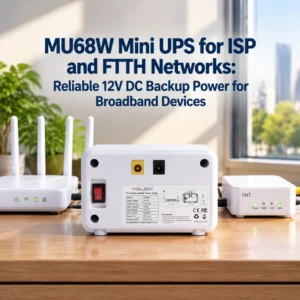
While some ISPs deploy integrated gateway units, a vast majority utilize separate ONT and router hardware. Therefore, an effective Mini UPS for Venezuela must be capable of powering dual devices simultaneously, requiring a unit with sufficient amperage (typically a minimum of 3A to 5A continuous output at 12V) and proper dual-output splitter cables included in the box.
Why Use a DC Mini UPS for Routers and ONTs?
Routers and ONTs are usually relatively small DC-powered devices. A purpose-designed DC Mini UPS can therefore provide a more application-focused backup solution than using an oversized general-purpose AC backup system.
Potential operational advantages include:
- Direct DC output for compatible network devices.
- Automatic switching between external power and battery power.
- Compact installation near the router or ONT.
- Single-device or multi-device configurations.
- Reduced need for repeated manual reconnection after short outages.
- Easier inclusion in ISP or distributor installation kits.
- Potential OEM packaging, cables, labels, and deployment documentation.
Choosing the Right Mini UPS for the Venezuelan Market
The Venezuelan operating environment is harsh on electronics. To select a proper Mini UPS for Venezuela, operators must evaluate the following technical factors:
- Intelligent BMS:The device must feature an integrated BMS that provides overcharge, over-discharge, short-circuit, and thermal protection.
- Prioritize Battery Capacity: To survive a 4-to-8-hour blackout, you need a high-capacity Mini
- Appropriate Output Tolerances: Ensure the Mini UPS has a sufficient current margin to handle startup spikes.
- International Certifications:CE, FCC, and RoHS certifications are mandatory to ensure corporate liability protection and hardware reliability.
MYLION Mini UPS Solutions for the Venezuela Market
MYLION is a professional B2B supplier specializing in Mini UPS and custom lithium battery solutions for global customers. Its Mini UPS solutions are uniquely suited to tackle Venezuela’s specific power challenges.
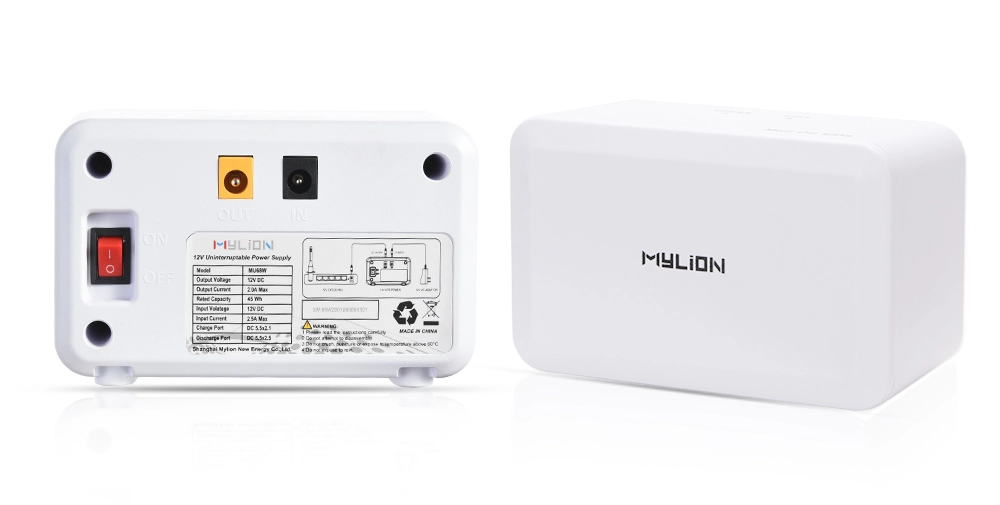
MYLION MU68 (12V 3A):
The MU68 is a highly popular Mini DC UPS perfect for standard device setups. It safely provides 4 to 6 hours of connectivity. It comes equipped with overcharge and short-circuit protection, safeguarding your hardware against voltage spikes when the Venezuelan grid suddenly comes back online.
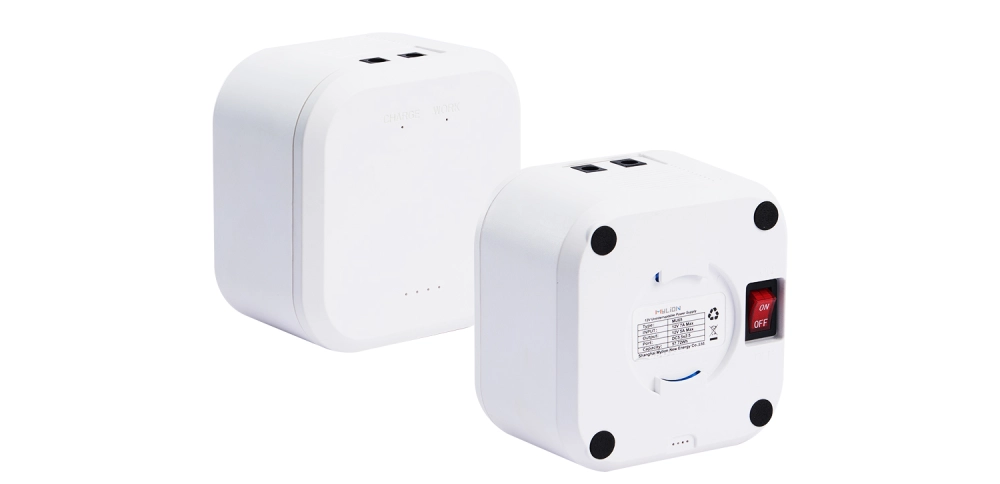
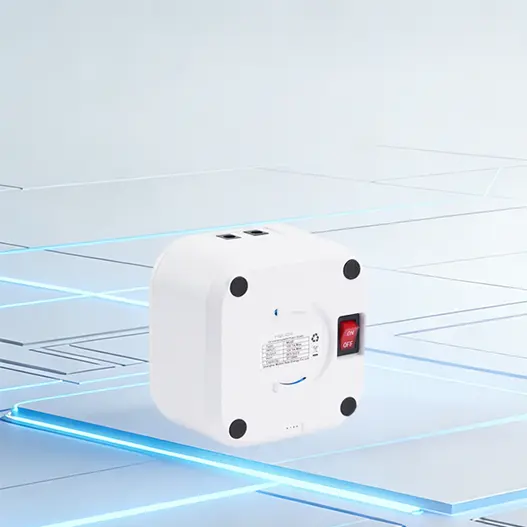
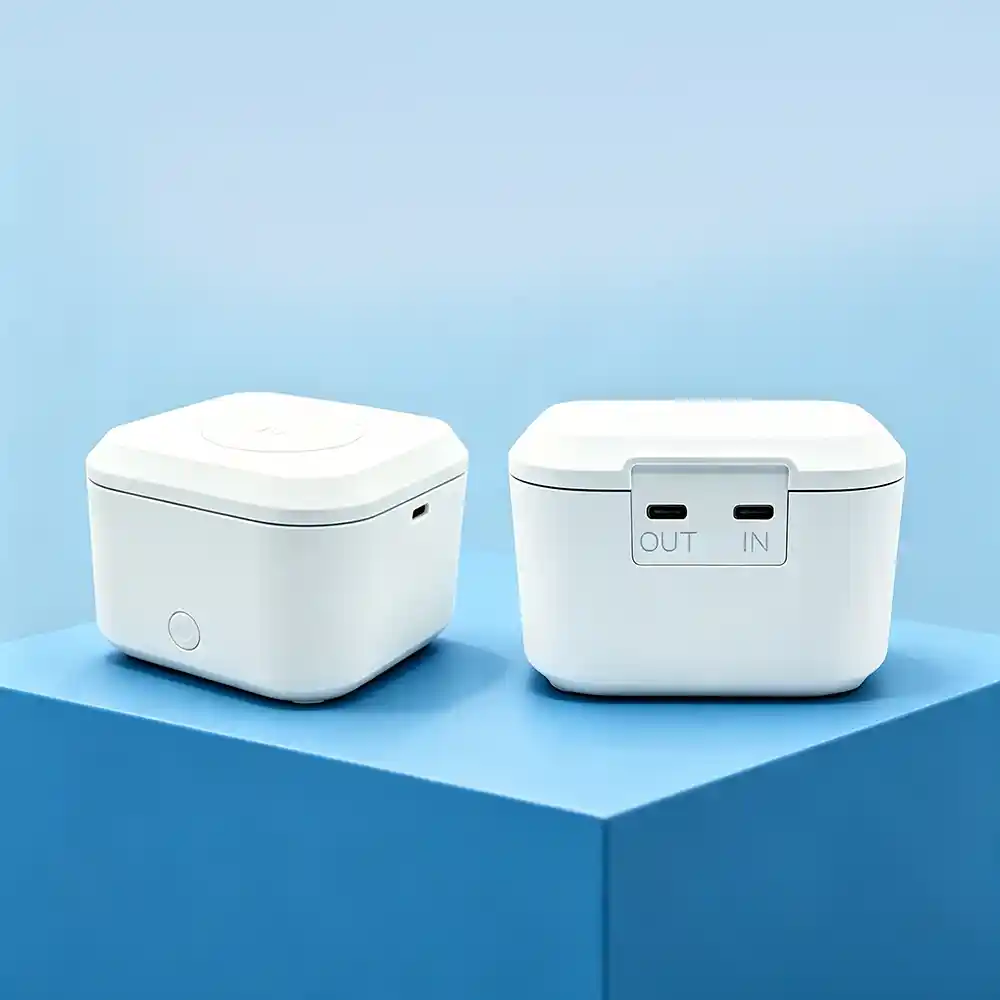
MYLION MU35 (12V 5A):
The MU35 is a high-power Mini DC UPS perfect for standard dual-device setups. It delivers up to 5 Amps of current. This provides the extra current margin necessary for high-startup loads and safely extends backup runtimes closer to 8 hours, perfectly mitigating the longest local rationing periods.
MYLION MUC85 (Type-C PD 65W):
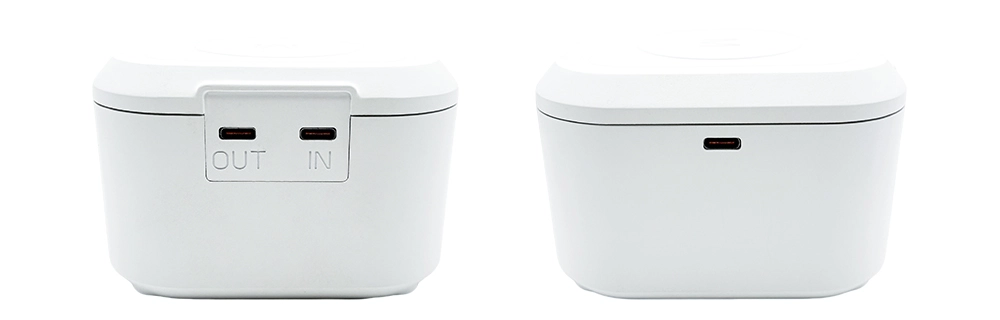
The MUC85 Mini UPS utilizes a Type-C PD interface. It boasts an impressive 92Wh lithium battery and can output multiple voltage levels (5V, 9V, 12V, 15V, 20V). Crucially for the Venezuelan market, it can be rapidly fully recharged in just 2 to 3 hours using a 65W PD adapter.
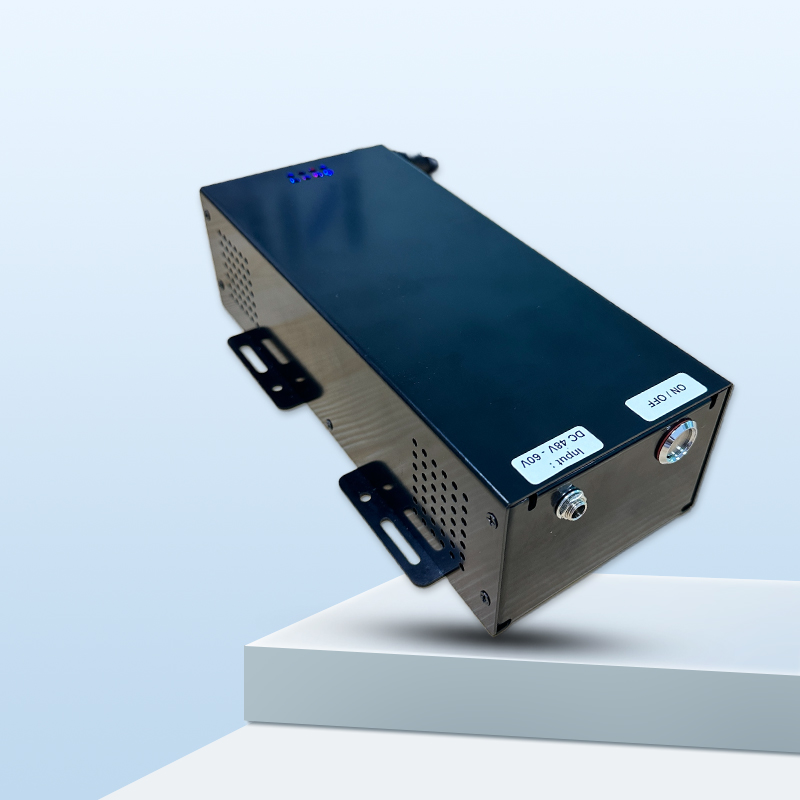
MYLION MU248 (24V 3A & 48V 1A LiFePO4):
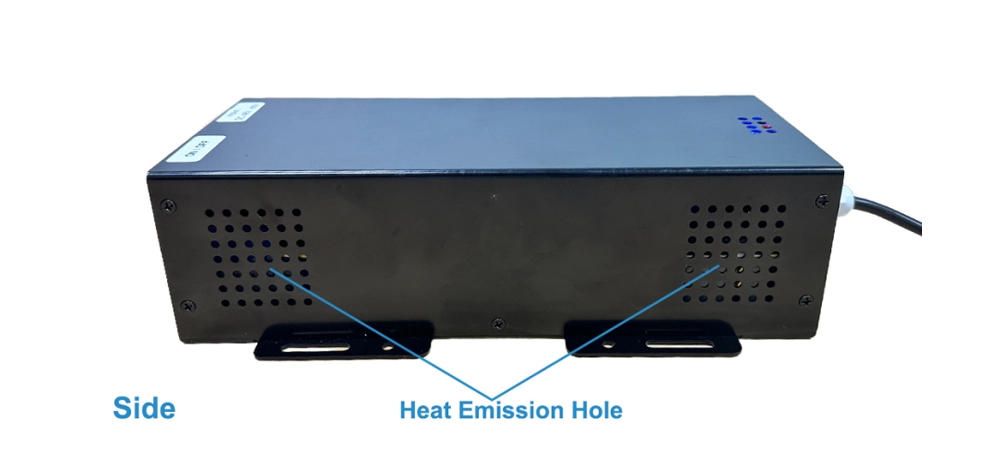
For specialized internet deployments, rural wireless ISPs (WISP), or high-end telecommunications systems requiring Power over Ethernet (PoE), the MU248 is unmatched. It offers dual output (24V and 48V simultaneously) and utilizes ultra-durable LiFePO4 battery cells for a long cycle life and unparalleled safety.
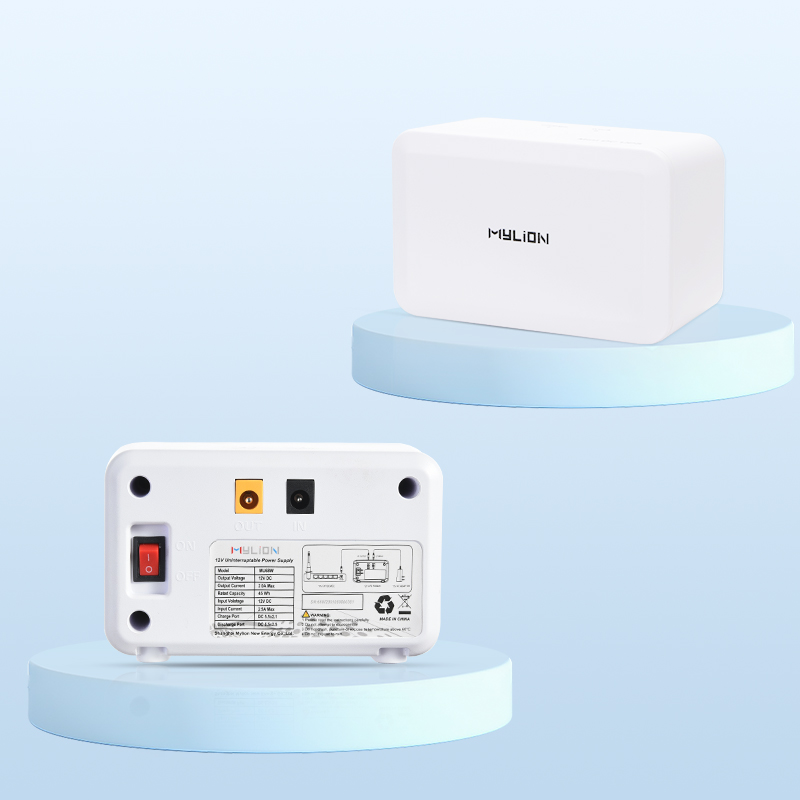
MU68 Mini UPS
MU35 Mini UPS
MUC85 Mini UPS
MU248 Mini UPS
Who Can Benefit from a Mini UPS for Venezuela?
Internet Service Providers and Telecom Companies
ISPs can evaluate terminal backup as part of customer-premises equipment deployment, premium service packages, service-continuity programs, or complaint-reduction initiatives.
Fiber-Optic Network Operators
FTTH operators can create validated ONT-and-router backup kits for selected equipment combinations and subscriber segments.
Router, ONT, and CPE Brands
Network equipment companies can bundle a compatible Mini UPS with their hardware, offer it as an optional accessory, or develop an OEM solution for specific markets.
Distributors and Importers
Professional distributors can develop a localized Mini UPS portfolio based on the router and ONT models commonly installed in Venezuela instead of selling one generic configuration for all devices.
System Integrators
Integrators can include DC backup power in connectivity, CCTV, access-control, remote-monitoring, and small-business infrastructure projects.
MYLION primarily serves customers with real companies, equipment, projects, testing plans, and potential for repeat B2B procurement.
FAQ
Q1: Can a Mini UPS keep fiber internet working during a blackout?
Q2: Do I need backup power for both the router and the ONT?
Q3: Can one Mini UPS power both devices?
Q4: Will every 12V Mini UPS work with every 12V router?
Q5: How can I estimate the required battery capacity?
Q6: Can MYLION supply an OEM Mini UPS for the Venezuela market?
Conclusion
Frequent power outages can disconnect Venezuelan internet users even when the fiber line itself remains available. The practical issue is often that the ONT, router, or both devices lose local power.
For ISPs and telecom operators, a correctly selected Mini UPS for Venezuela can help maintain these critical network terminals during an outage.
The MYLION Mini UPS solutions provide the robust engineering, varied capacities, and telecom-grade reliability required to keep your subscribers online and your network profitable, regardless of the state of the grid.
 English
  简体中文
简体中文  Deutsch
  Français
  Italiano
  Español