
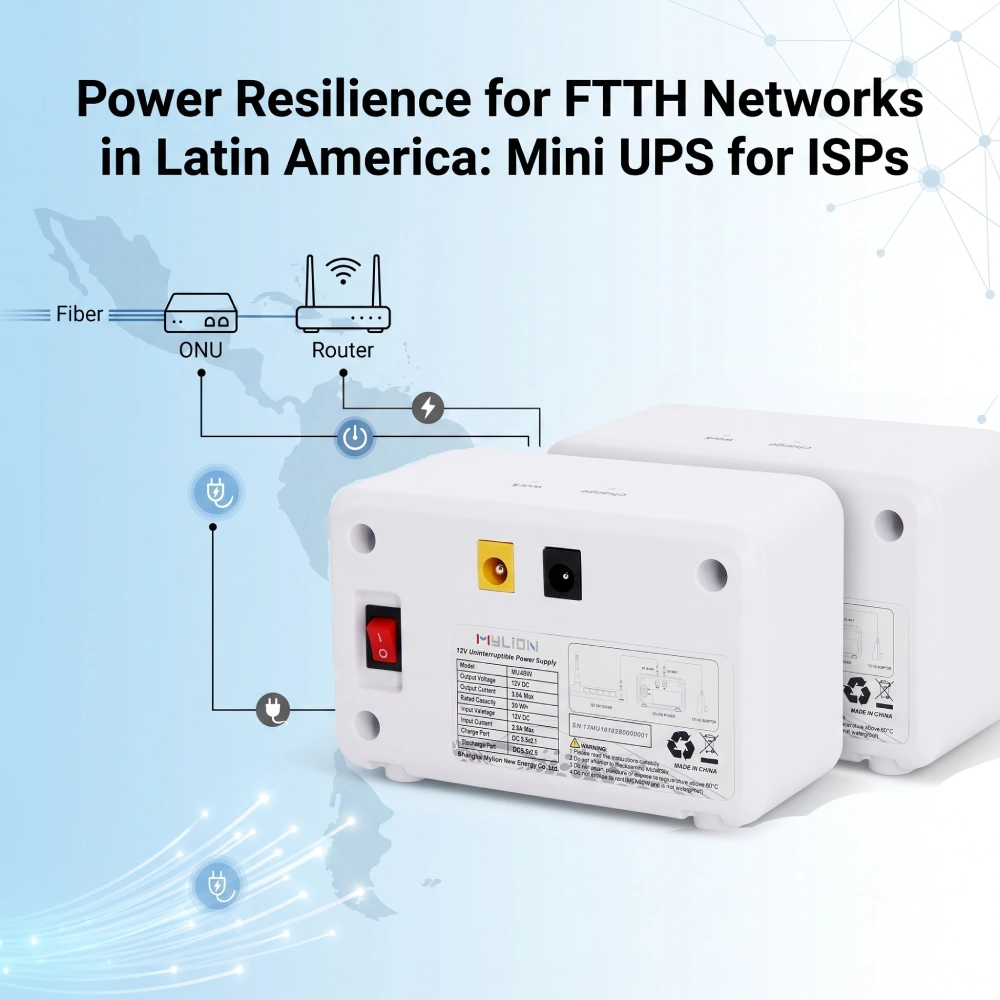
A fiber connection does not depend only on the availability of the fiber network. The equipment installed at the customer premises also requires continuous power.
When local power is interrupted, an optical network terminal, router, gateway or other customer premises equipment may shut down. Even if the upstream ISP network remains operational, the subscriber may lose connectivity because one or more devices inside the premises no longer have power.
For ISPs evaluating power resilience in Latin American markets, the challenge is therefore not simply to add a battery. A practical backup solution must match the electrical requirements of the installed CPE, provide an appropriate backup-time target and work within a repeatable deployment process.
The Customer Pain Point: Grid Instability in Latin America
ISPs in countries like Brazil, Argentina, Colombia, Peru, and Ecuador frequently deal with unique infrastructural challenges:
- Frequent Rolling Blackouts & Brownouts:Aging electrical grids and extreme weather conditions often lead to unpredictable power interruptions.
- The “Dead Wi-Fi” Paradox: Even when the ISP’s central office (OLT) has backup generators and the fiber line is active, subscribers lose connectivity because their home router loses power.
- High Truck-Roll Costs:Power surges often damage unprotected ONUs and routers, forcing ISPs to dispatch technicians for costly equipment replacements.
- Subscriber Churn:In highly competitive markets, customers will quickly migrate to a competing ISP if they perceive their current internet connection as “unreliable”—even if the fault lies with the local power company.
What Power Resilience Means in an FTTH Network
An FTTH connection may include several powered components:
- An ONT or ONU terminating the fiber connection
- A Wi-Fi router
- An integrated gateway
- A modem or other CPE
- Auxiliary USB-powered equipment
The configuration varies by ISP, equipment vendor and deployment model. Some subscribers use a separate ONT and router. Others use an integrated gateway. Different device generations may also use different voltage, power and connector specifications.
For this reason, an ISP should evaluate power resilience at both levels:
- Whether the upstream network remains available during the outage.
- Whether the required customer-premises devices remain powered.
A Mini UPS can support compatible low-voltage DC equipment at the customer premises. It does not guarantee that the entire FTTH service will remain available if upstream network equipment, fiber infrastructure or other required systems are offline.
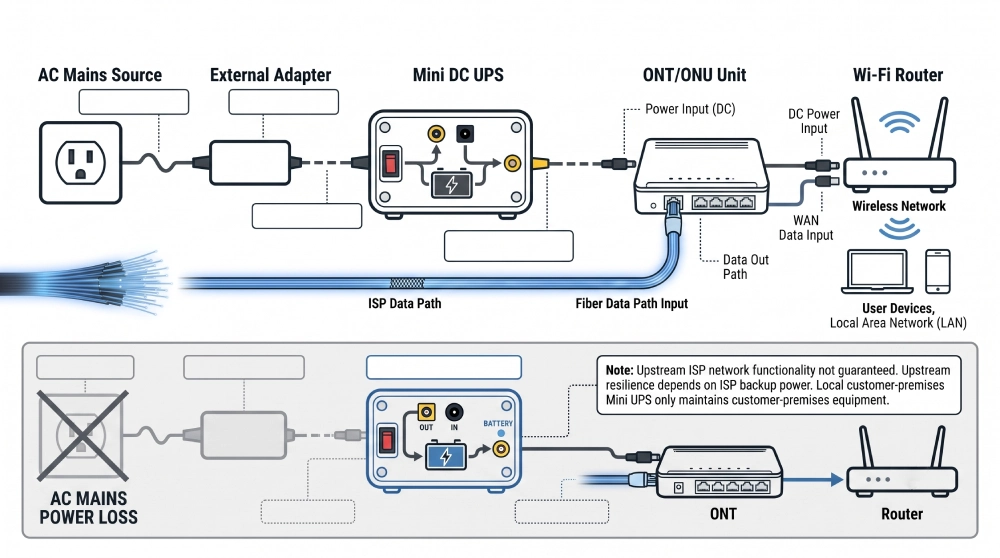
Where a Mini UPS Fits in an ISP Network
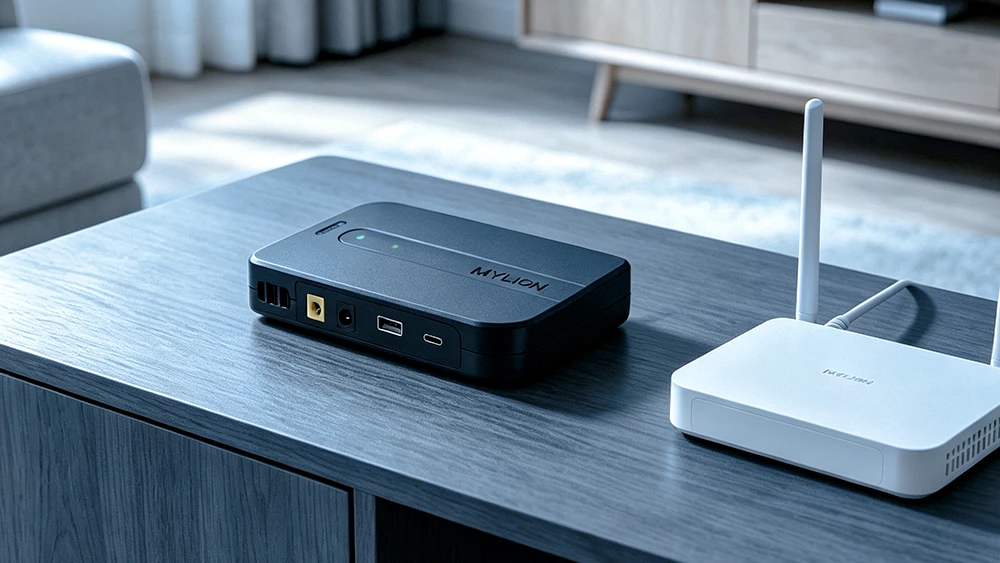
A typical customer-premises power path may include:
AC mains → approved power adapter → Mini UPS → ONT, router or compatible CPE
When external power is available, the Mini UPS manages the connected load and its internal battery system according to the product design. When the external input is interrupted, the Mini UPS can switch to its internal battery supply.
However, switching performance can depend on the Mini UPS model, device load, adapter, cable, connector, battery condition and the power tolerance of the connected CPE.
For a high-value ISP project, compatibility and switching performance should be verified with the actual ONT, router or gateway.
MYLION Mini UPS Options for ISP Evaluation
MYLION provides several Mini UPS solutions that can be evaluated for compatible FTTH customer-premises equipment.
The latest Mini UPS models offer varying capacities and outputs to match the FTTH deployment strategy in Latin America.
MU68W for Standard 12V CPE Applications
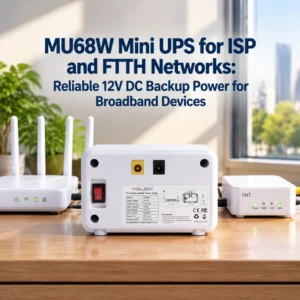
The MU68W Mini DC UPS is a candidate for compatible 12V ONTs, ONUs, routers, modems and standard CPE.
Key Features:
- 12V DC output
- 5A continuous output and 3A maximum output
- 4Wh battery energy
- Formula-estimated backup time of 4 hours at a 12W reference load
MU35W for Higher-Load Applications
For compatible high-power routers, gateways, modems and higher-load CPE, the MU35W Mini UPS may be considered as a candidate after the exact model requirement is confirmed.
Key Features:
- 12V DC output
- 4A continuous output and 5A maximum output
- 6Wh battery energy
- Formula-estimated backup time of 7 hours at a 12W reference load
MUJ46 for Mixed DC and USB Requirements
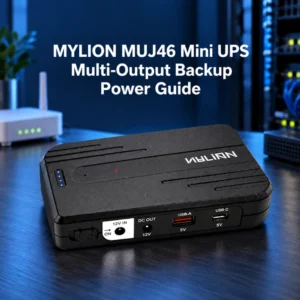
The MUJ46 Mini UPS may be evaluated where a compatible 12V device and auxiliary USB-powered equipment need to be considered.
Key Features:
- 12V DC output at 1.5A continuous and 2A maximum
- USB-A output at 5V, up to 3A
- USB-C output at 5V, up to 3A
- 44Wh battery energy
- Formula-estimated backup time of 4 hours at a 12W reference load
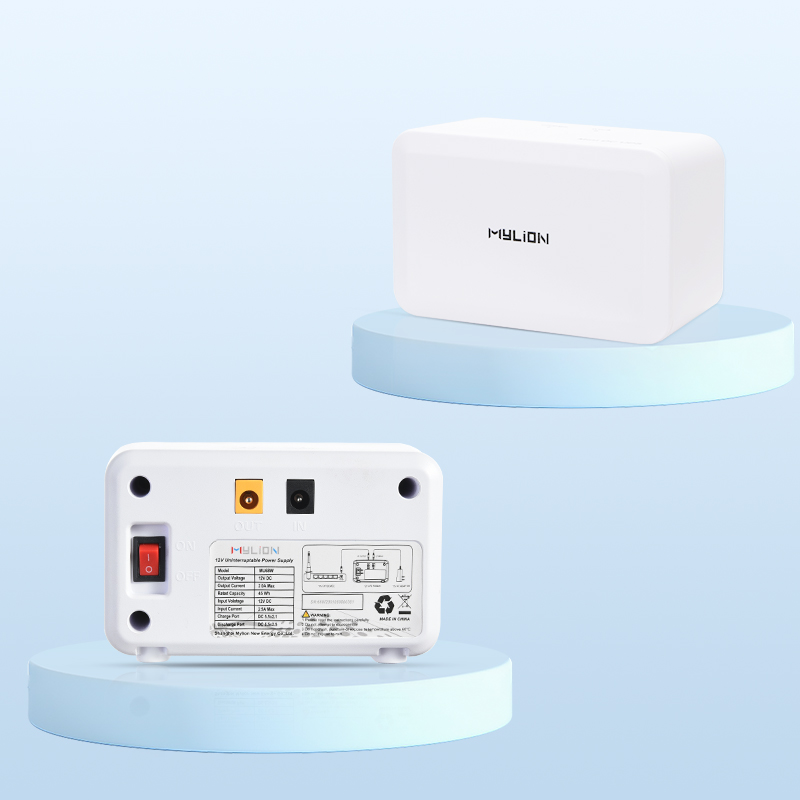
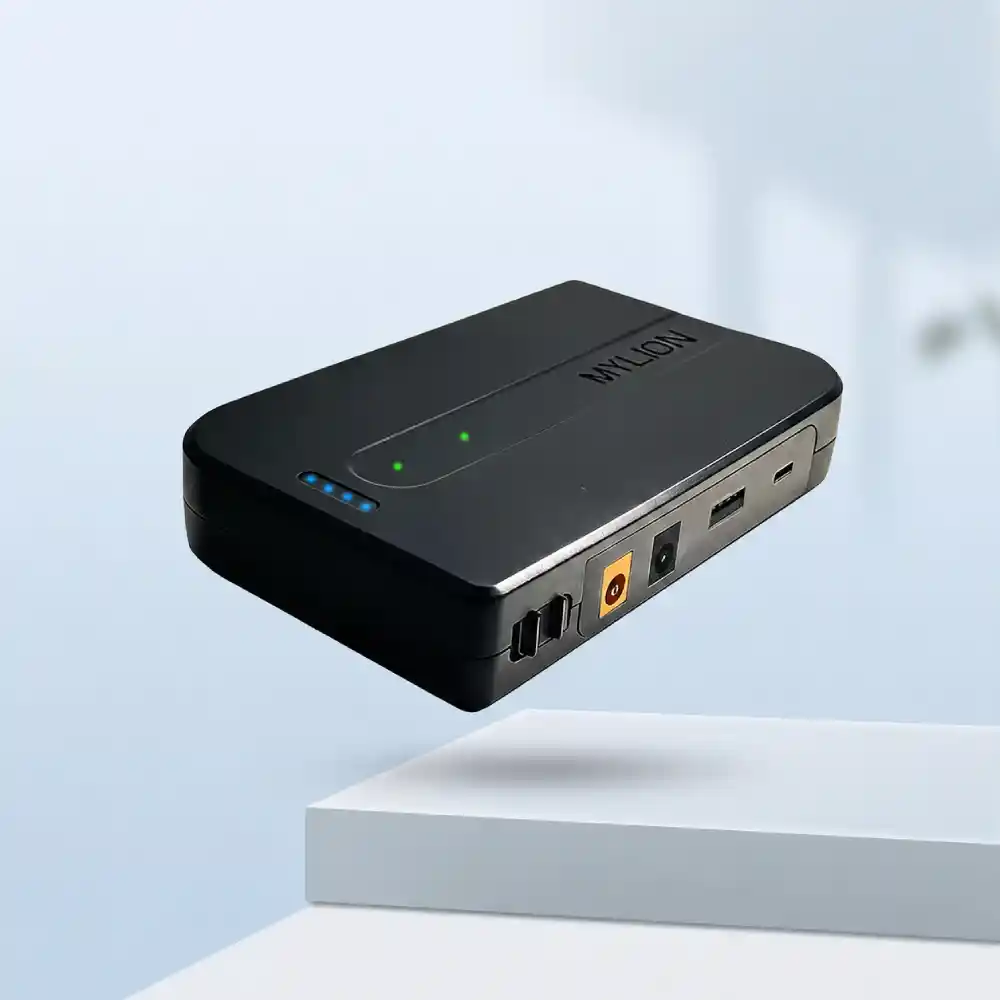
MU68 Mini UPS
MU35 Mini UPS
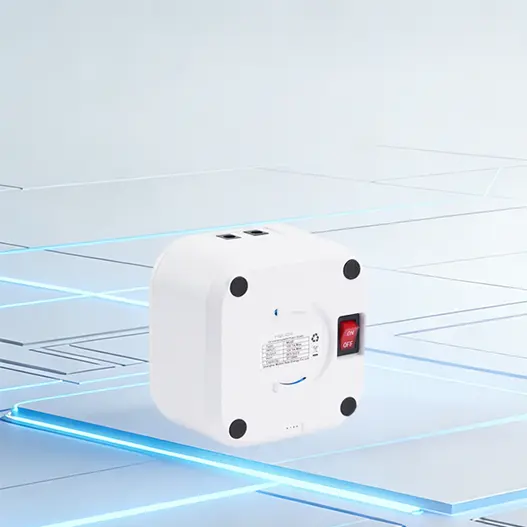
MUJ46 Mini UPS
FTTH Backup Power Scenarios for ISPs
ONT or ONU Backup
An ISP may need to maintain power to the optical terminal while another system provides Wi-Fi or local network connectivity.
The ONT voltage, continuous current, startup behavior, connector and required runtime must be confirmed before selecting a Mini UPS.
Separate ONT and Router Backup
Keeping only the router powered may not maintain connectivity if the ONT loses power. Where both devices are required, the ISP should calculate their combined continuous load and consider peak or startup conditions.
A single Mini UPS should not be assumed to support both devices without checking voltage compatibility, interfaces and total power.
Integrated Gateway Backup
An integrated gateway may simplify the number of devices, but it can also have a higher or more dynamic load than a basic ONT.
High-traffic operation, wireless transmission and startup behavior should be considered during testing.
A Practical ISP Evaluation Process
A controlled Mini UPS project can follow five stages:
1. Define the Network Continuity Objective
Confirm which customer-premises functions must remain available and for how long.
2. Build a CPE Requirement List
Record the ONT, ONU, router or gateway model, voltage, working power, peak current, adapter and connector.
3. Select Candidate Mini UPS Models
Compare the equipment requirements with current approved product data. At this stage, each model remains a candidate until compatibility is verified.
4. Test With Actual Equipment
Evaluate normal operation, external power interruption, recovery, device restart behavior, runtime and any multi-device load conditions.
5. Approve a Controlled Deployment Configuration
Document the approved device combination, Mini UPS model, cable, adapter, test method and acceptance criteria before a broader rollout.
FAQ
Q1: How long can a MYLION Mini UPS power an ONU and Router?
Q2: Can one Mini UPS power both an ONT and a Wi-Fi router?
Q3: Can these units be branded with our ISP's logo?
Q4: Are they compatible with all major ONT/ONU brands?
Q5: Which MYLION model is best for an ISP?
Conclusion
For Latin American ISPs, relying on the local power grid is no longer a viable strategy for maintaining high customer satisfaction.
By integrating MYLION’s MU68, MU35, and MUJ46 Mini UPS solutions into your FTTH deployments, you can transform grid instability from a vulnerability into a competitive advantage. Keep your subscribers connected, protect your hardware, and watch your customer loyalty soar.
 English
  简体中文
简体中文  Deutsch
  Français
  Italiano
  Español