
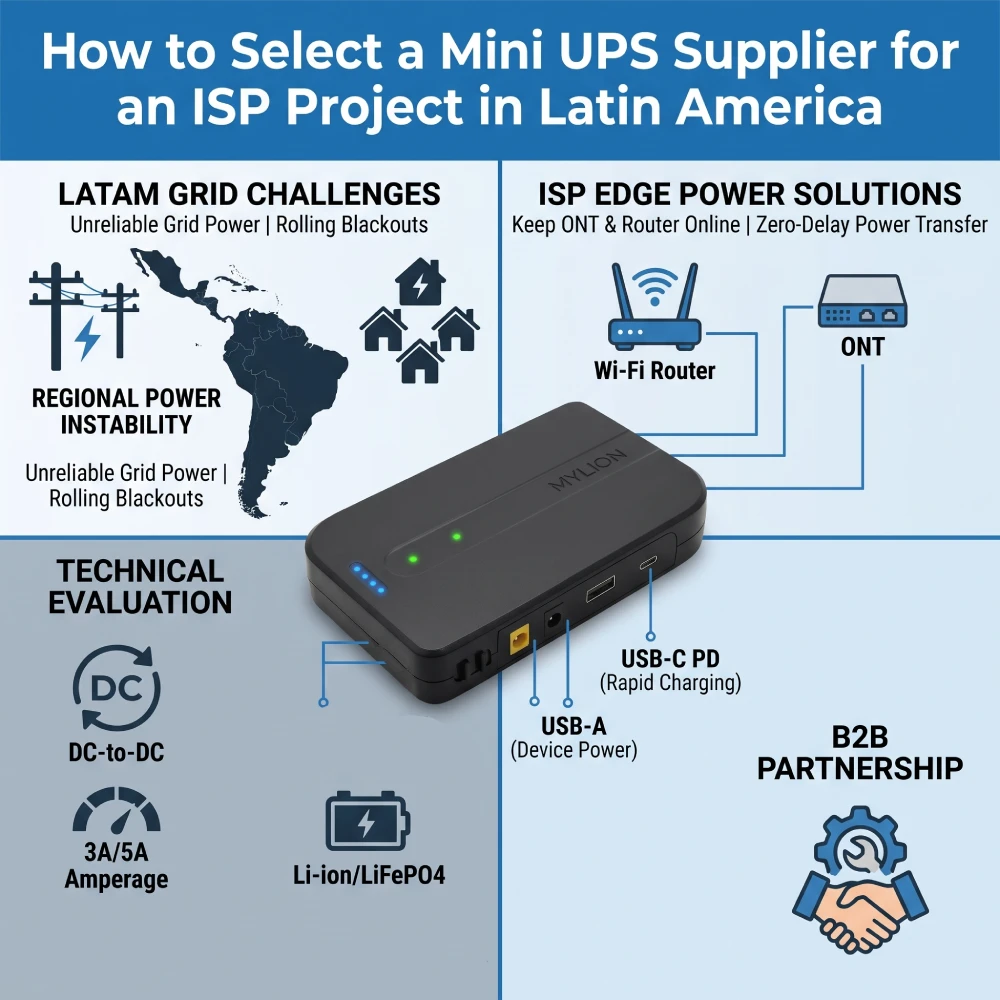
Latin America’s Fiber-to-the-Home (FTTH) and rural broadband markets are growing rapidly. However, this expansion faces a structural bottleneck: regional grid instability. For ISPs, system integrators, and telecom procurement managers, securing local power at the customer premises is critical.
If a subscriber’s ONT or router loses power, the internet connection drops—even if the fiber network remains fully operational. Selecting a reliable Mini UPS supplier in the is essential to guarantee uptime, protect revenue, and reduce operational expenses (OPEX).
Quick Answer: How Should an ISP Choose a Mini UPS Supplier?
A reliable Mini UPS supplier for ISP projects should provide:
- Output voltages compatible with ONTs, routers, modems, and PoE equipment
- Sufficient current and battery capacity for the connected load
- Automatic switching without restarting network equipment
- Battery management and electrical protection
- Li-ion and LiFePO4 battery options
- OEM and ODM customization
- Consistent quality-control procedures
- Samples for compatibility and runtime testing
- Scalable production for bulk deployment
- Technical and after-sales support
ISPs should evaluate the complete backup power solution instead of selecting a supplier based only on unit price.
Why Subscriber-Side Backup Power Matters
Telecom operators often install backup batteries or generators at central offices, base stations, and network nodes. These systems protect the operator’s infrastructure, but they do not power the equipment installed inside the customer’s home or business.
If the ONT and router lose power, the subscriber cannot use the connection even when the fiber network is still available.
Installing a Mini UPS at the subscriber side can help ISPs:
- Maintain internet access during short or moderate outages
- Reduce power-related customer complaints
- Lower the number of unnecessary support tickets
- Avoid some technician visits and truck rolls
- Improve business broadband and VoIP continuity
- Strengthen customer satisfaction and retention
For business users, remote workers, security systems, and VoIP customers, backup power can also support higher service continuity expectations.
Why Use a DC Mini UPS for ONTs and Routers?
Most ONTs, routers, and telecom gateways operate on low-voltage DC power, commonly 9V, 12V, 24V, or 48V.
A traditional AC UPS converts battery power from DC to AC. The equipment’s power adapter then converts the AC power back to DC. These additional conversion stages consume energy.
A DC Mini UPS supplies compatible DC power directly to the equipment. Compared with a conventional AC UPS, it can offer:
- Higher energy efficiency
- Longer usable runtime
- Smaller dimensions
- Lower weight
- Easier installation
- Support for multiple DC outputs
- Fewer power-conversion components
For subscriber-side FTTH backup power, a DC Mini UPS is usually more practical than installing a large desktop AC UPS at every customer location.
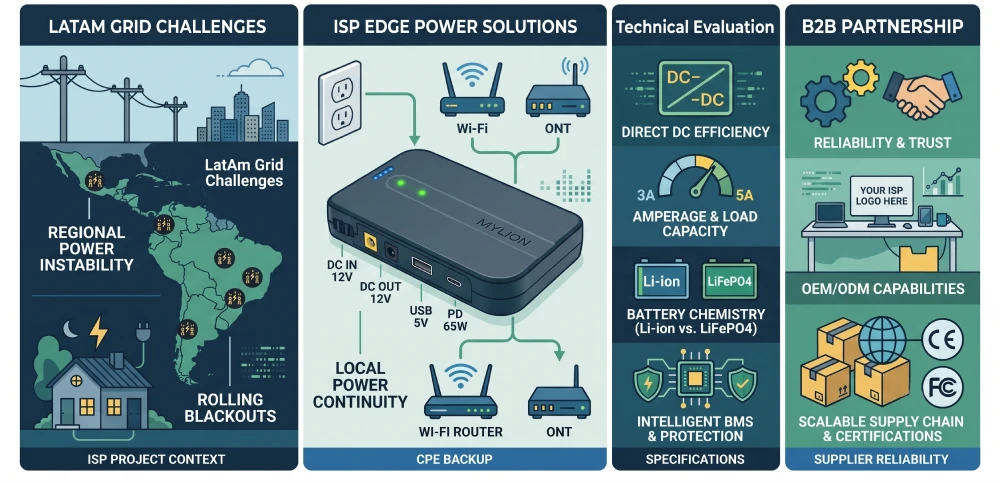
Key Technical Requirements for an ISP Mini UPS
Before choosing a Mini UPS manufacturer, the ISP should define the voltage, current, runtime, and connector requirements of its customer-premises equipment.
Output Voltage
The Mini UPS output must match the input voltage of the connected device.
Common requirements include:
- 5V for USB-powered devices
- 9V for selected routers
- 12V for many ONTs, routers, and modems
- 24V for wireless and PoE equipment
- 48V for standard PoE telecom devices
Using the wrong voltage may prevent the equipment from operating or damage the connected device.
Output Current
The Mini UPS must support the combined current of all connected equipment.
For example, when one Mini UPS powers both an ONT and a router, their total load must remain within the unit’s continuous output rating. A reasonable safety margin should also be included.
Higher-performance routers and business gateways may require a higher-current Mini UPS than standard residential devices.
Battery Capacity and Runtime
Battery capacity is commonly measured in watt-hours. Actual runtime depends on:
- Total equipment load
- Output voltage
- Conversion efficiency
- Battery condition
- Ambient temperature
- Cable losses
- Battery protection settings
A 45Wh Mini UPS may provide several hours of backup for an efficient ONT and router combination, but the actual result should be verified using the ISP’s own equipment.
Automatic Power Switching
The Mini UPS should switch to battery power without causing the ONT or router to restart.
A short interruption may disconnect video conferences, VoIP calls, VPN sessions, remote desktops, and security monitoring systems. Compatibility testing should therefore include repeated mains-power interruptions.
Battery Protection
A telecom Mini UPS should include a battery management system with functions such as:
- Overcharge protection
- Over-discharge protection
- Overcurrent protection
- Temperature protection
These features are especially important in markets where power interruptions and voltage fluctuations occur frequently.
Li-ion vs. LiFePO4 Mini UPS Batteries
Both lithium-ion and lithium iron phosphate batteries can be used in telecom backup power systems.
Factor | Li-ion | LiFePO4 |
Energy density | Higher | Moderate |
Product size | More compact | Usually larger |
Initial cost | Generally lower | Generally higher |
Cycle-life potential | Suitable for occasional outages | Better for frequent cycling |
Thermal stability | Good with a qualified BMS | Generally higher |
Recommended use | Residential and urban FTTH | Rural, WISP, PoE, and frequent-outage applications |
Li-ion batteries are often selected when compact size and competitive cost are priorities. LiFePO4 batteries are more suitable when the project requires frequent charging and discharging, longer service-life potential, or improved thermal stability.
Battery performance still depends on cell quality, temperature, depth of discharge, and charging conditions.
OEM and ODM Requirements for ISP Projects
Large ISPs and distributors may require customized products instead of standard retail packaging.
Before mass production, all specifications should be confirmed using an approved sample and signed specification sheet.
MYLION Mini UPS Solutions for ISP Applications
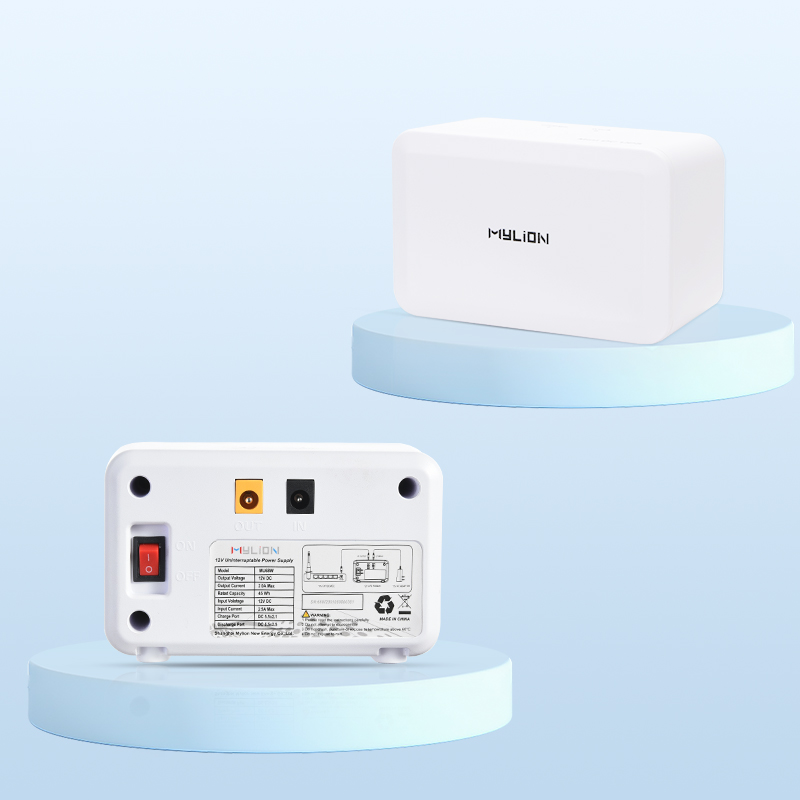
MYLION offers Mini UPS models for residential FTTH, higher-current telecom equipment, USB-C applications, and PoE or WISP deployments.
MYLION Model | Main Features | Recommended Application |
MU68 | 12V 3A, 45Wh Li-ion, 9V/12V support | Residential ONT and router backup |
MU35 | 12V 5A output | Higher-load ONT and router combinations |
MUC85 | USB-C PD output up to 65W | USB-C-powered and fast-recharging applications |
MU248 | 24V/48V outputs, LiFePO4 battery | WISP, PoE, rural, and industrial deployments |
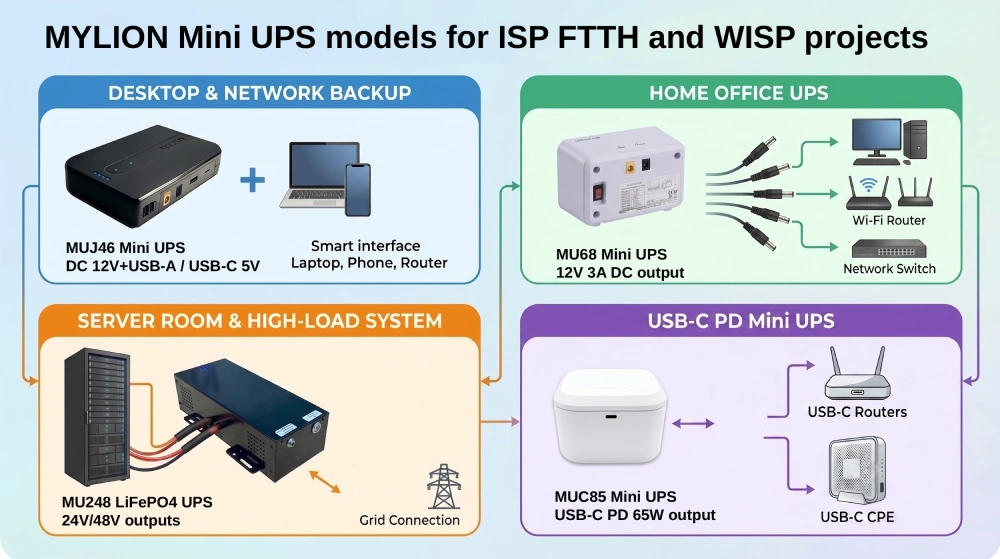
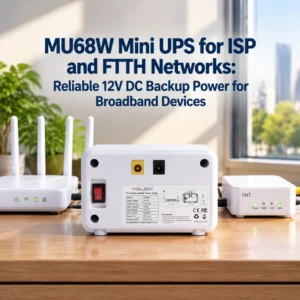
MYLION MU68
The MYLION MU68 is designed for common residential ONT and router combinations. It supports 9V and 12V equipment, provides up to 12V 3A output, and uses a 45Wh lithium-ion battery.
Depending on the connected load and operating conditions, it may provide approximately four to eight hours of backup for suitable equipment combinations.
The MU68 is a practical option for residential FTTH projects that require a balance between runtime, size, and cost.
MYLION MU35
The MU35 provides a 12V 5A output and is suitable for equipment with higher current requirements.
Potential applications include:
- High-performance Wi-Fi routers
- Power-intensive ONTs
- Combined ONT and router installations
- Business broadband gateways
Its higher output capacity provides more flexibility when a standard residential Mini UPS cannot reliably support the complete load.
MYLION MUC85
The MUC85 supports USB-C Power Delivery output up to 65W. It is designed for USB-C-powered devices and applications requiring faster charging.
It may be useful in areas where electricity is available only for limited periods and the Mini UPS must recharge efficiently before the next interruption.
USB-C PD compatibility should be confirmed according to the voltage profiles supported by the connected equipment.
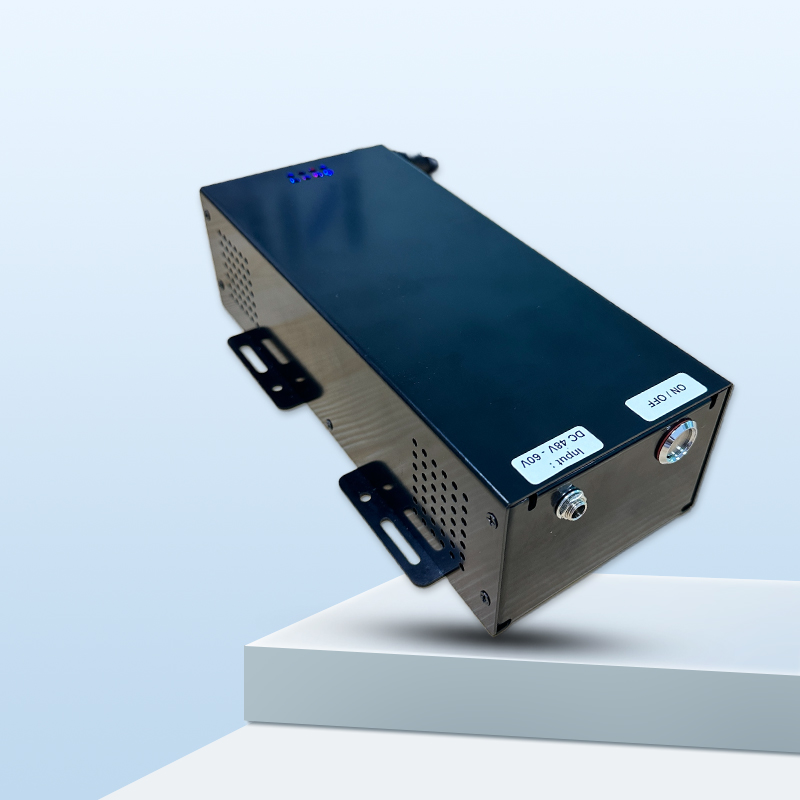
MYLION MU248
The MU248 is designed for higher-demand telecom and wireless applications. It supports 24V and 48V outputs and uses LiFePO4 battery technology.
It can be considered for:
- Wireless ISP equipment
- PoE access points
- Wireless bridges
- Outdoor CPE
- Rural broadband networks
- Industrial networking equipment
- Locations with frequent outages
Its LiFePO4 battery makes it particularly relevant when cycle-life potential and thermal stability are more important than compact product size.
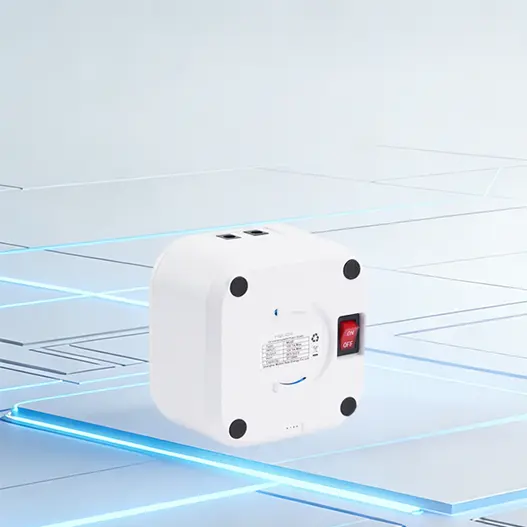
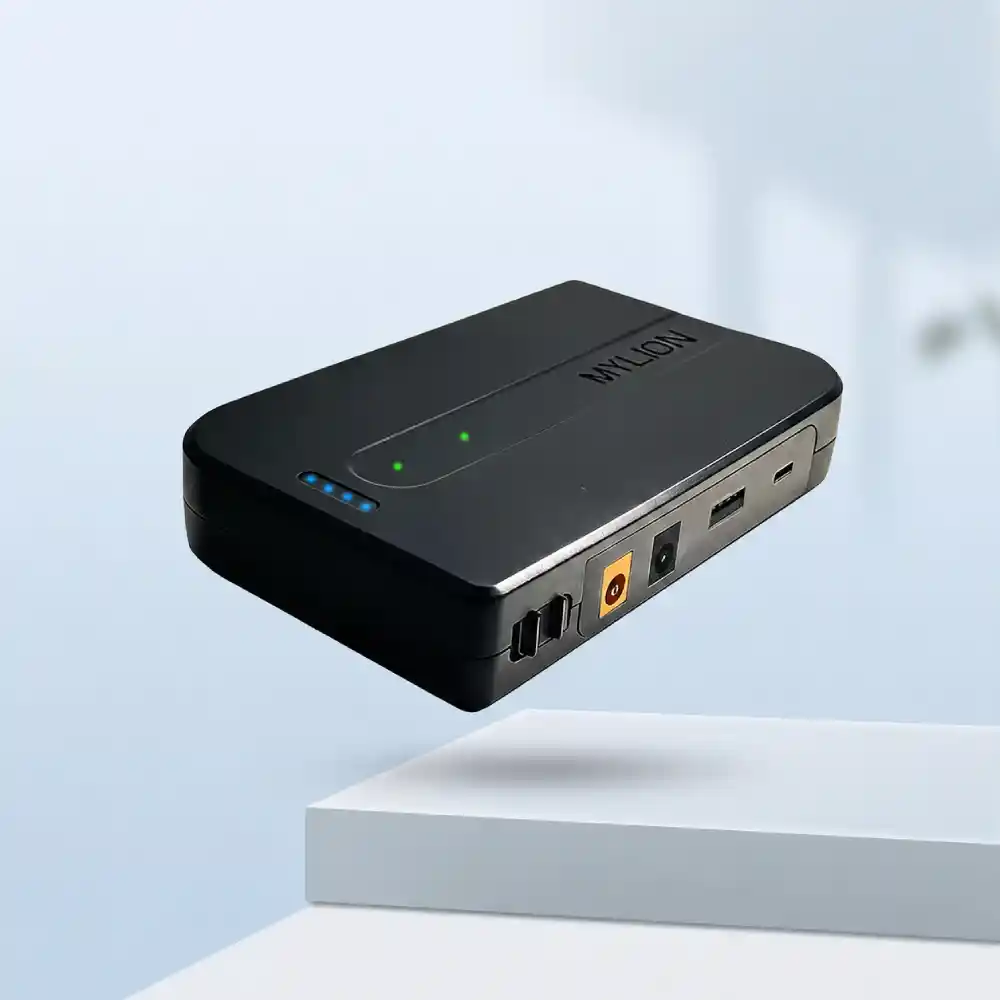
MU68 Mini UPS
MU35 Mini UPS
MUJ46 Mini UPS
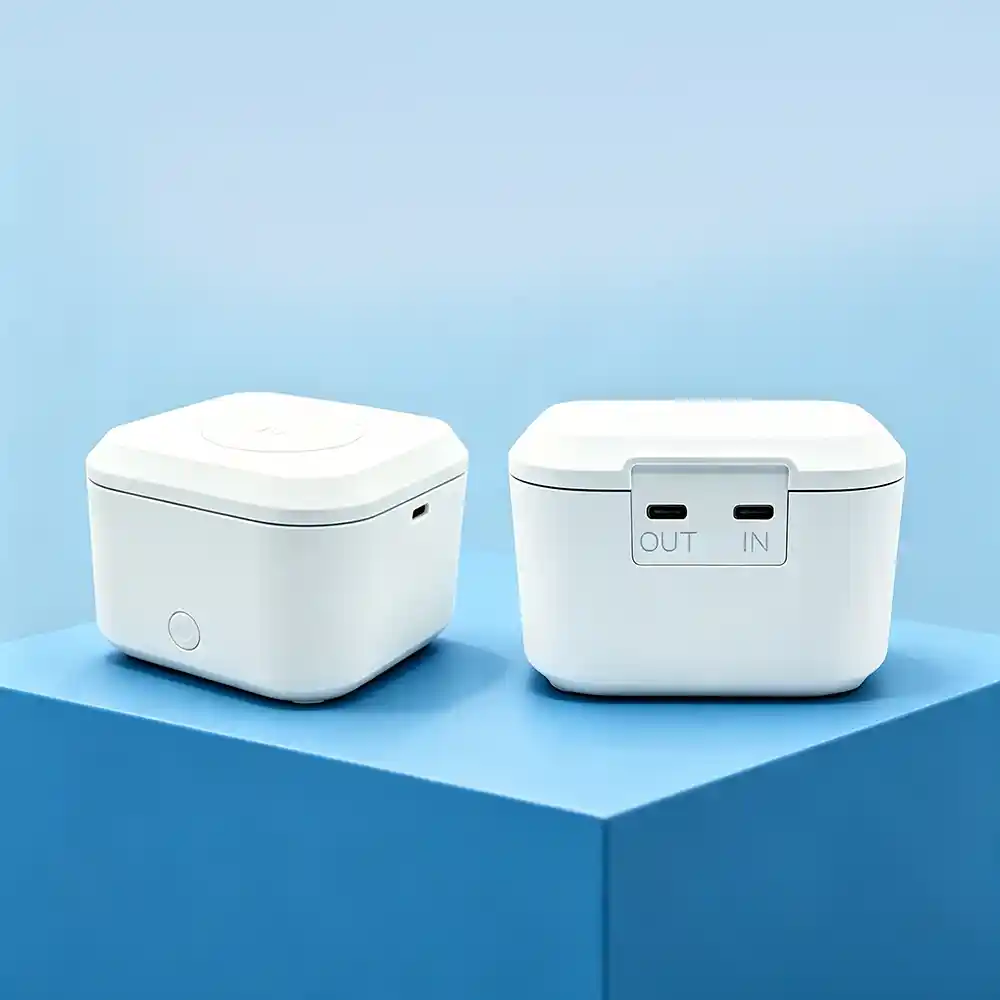
MUC85 Mini UPS
MU248 Mini UPS
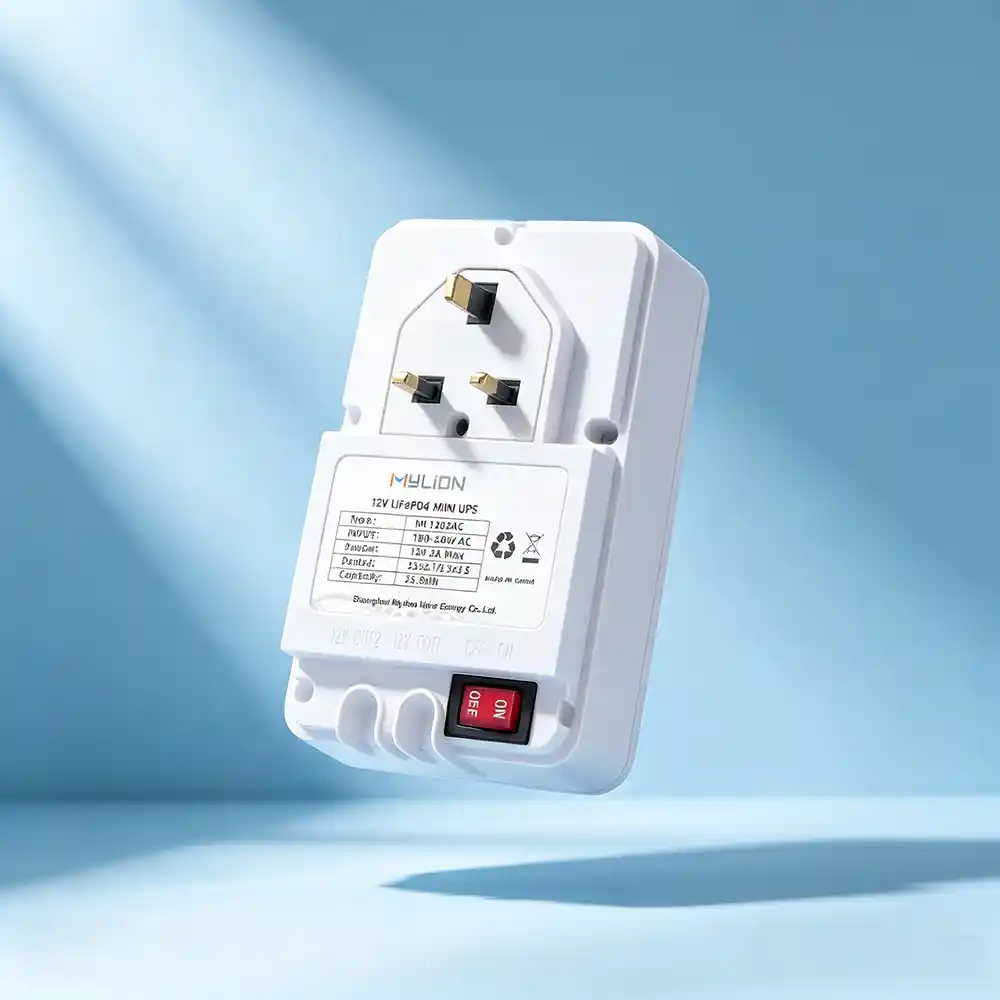
ML1202AC Mini UPS
FAQ
Q1: What is the best Mini UPS for an FTTH project?
Q2: How long can a Mini UPS power an ONT and router?
Q3: Can one Mini UPS power both an ONT and a router?
Q4: Is LiFePO4 better than Li-ion?
Q5: Can MYLION customize Mini UPS products?
Conclusion
Selecting a Mini UPS supplier for an ISP project is not simply a battery-purchasing decision. It affects network reliability, customer experience, field maintenance, and operating costs.
The selected solution must match the voltage, current, connector, runtime, and environmental requirements of the ISP’s actual equipment. The supplier should also provide reliable protection, consistent manufacturing quality, scalable production, technical documentation, and OEM or ODM support.
MYLION offers Mini UPS solutions for residential ONTs and routers, higher-current 12V equipment, USB-C PD devices, and 24V or 48V PoE applications.
 English
  简体中文
简体中文  Deutsch
  Français
  Italiano
  Español