

A solar-powered backup system can help keep low-voltage network equipment online at sites where grid power is unreliable or unavailable. A wireless CPE, rural access terminal, monitoring gateway, router, or communication controller may consume relatively little power, yet a local power interruption can still take the entire endpoint offline.
Traditional UPS systems are often too bulky, power-inefficient, and expensive to maintain in the field. This is where Solar Mini UPS technology steps in. Combining solar energy harvesting, high-efficiency Lithium Iron Phosphate (LiFePO4 ) battery storage, and intelligent DC-to-DC power management into a compact footprint, a Solar Mini UPS provides continuous, resilient power for low-power network hardware.
Why Remote Network Sites Need a Different Backup Strategy
A remote CPE, ONT, router, gateway, or communication controller may draw relatively little power, yet one local power interruption can disconnect an entire endpoint. Conventional indoor backup assumptions can fail when the equipment is exposed to variable sunlight, seasonal weather, long cable runs, difficult maintenance access, or inconsistent installation practices.
The operational consequences may include:
- Loss of connectivity at a remote endpoint while the wider network remains available.
- Repeated site visits to restore power, inspect wiring, or replace an undersized battery.
- A system that works in favorable weather but fails after one or more low-sun days.
- Voltage drop, reversed polarity, connector mismatch, or startup-current problems during deployment.
- Oversized equipment that increases procurement, transport, and installation cost without solving the actual site constraint.
The power solution must therefore be evaluated against the complete application and the least favorable realistic operating condition, not only against a nominal battery capacity or solar-panel wattage.
What Is a Solar Mini UPS System?
A solar Mini UPS is a compact DC power solution that can use solar energy and battery storage to support low-voltage equipment when grid power is unstable or unavailable.
For remote network projects, its role may include collecting energy during available sunlight, storing energy for later use, and supplying the connected device according to the confirmed electrical configuration. The exact operating logic depends on the selected product and project design.
A solar Mini UPS should not be assumed to fit every router, CPE, ONT, ONU, or communication terminal. Voltage, working current, peak current, connector, polarity, daily operating hours, and environmental conditions must all be checked before selection.
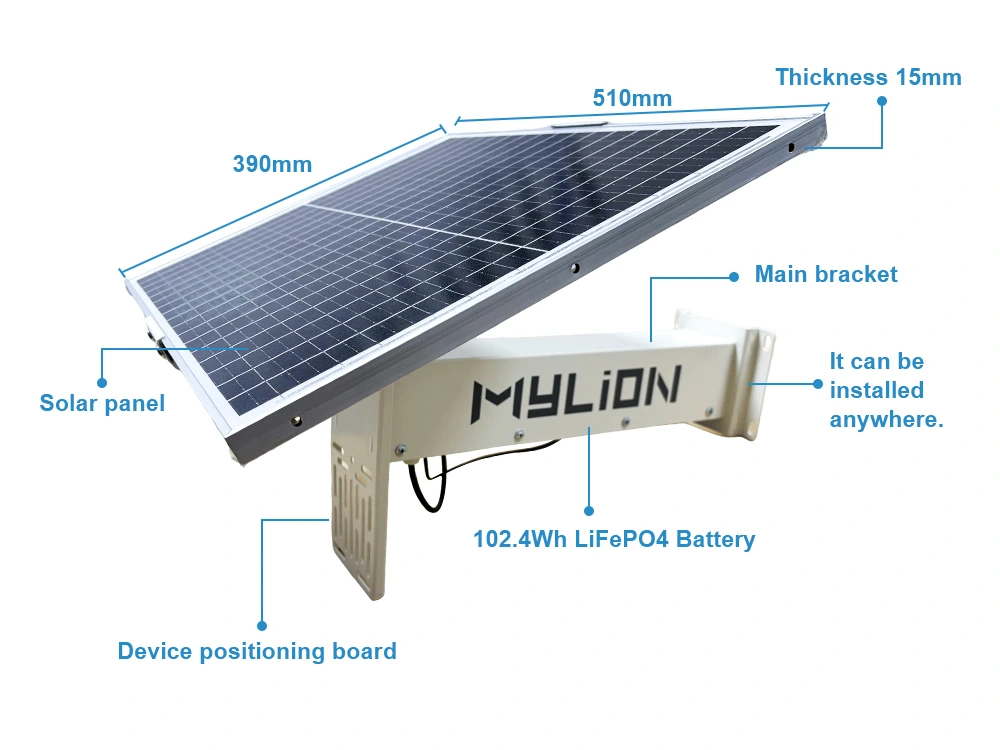
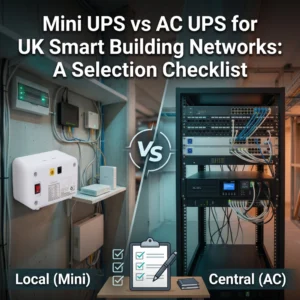
Comparison: Traditional AC UPS vs. Solar Mini UPS
Feature | Legacy AC UPS | Solar Mini UPS |
Power Topology | AC-DC-AC (Double Conversion Loss) | Pure DC-to-DC (High Efficiency) |
Primary Power Source | Grid AC Utility | Solar Panel (PV) / DC Input |
Battery Chemistry | Lead-Acid / Basic Li-ion | Industrial LiFePO4 |
Cycle Life | 300 – 500 Cycles | 2,000 – 4,000+ Cycles |
Footprint & Weight | Heavy, Large Form Factor | Compact, Lightweight, Enclosure-Ready |
Maintenance | Frequent Replacements | Multi-Year Maintenance-Free |
Typical Remote Network Applications
Remote Wireless CPE and Broadband Access
Wireless CPE and rural broadband endpoints may need continuity where grid access is weak or expensive to extend.
ONT, ONU, Router, and Gateway Sites
An ONT or ONU may be installed with a separate router or gateway. If more than one device must remain online, use the combined measured load and verify each voltage and interface.
Monitoring and IoT Communication Nodes
Telemetry terminals, environmental monitoring gateways, and network-connected sensors can be candidates when continued data transmission and low maintenance frequency matter.
Temporary or Difficult-to-Reach Sites
Temporary communication points or sites with costly AC infrastructure may also justify solar-backed DC power.
The MYLION Solar Mini UPS Solution
The MYLION Solar Mini UPS can be considered as a candidate solution for remote network applications that require project-based solar power evaluation. Final suitability should be confirmed against the actual equipment, site conditions, installation method, and target operating time.
The specific models are as follows:
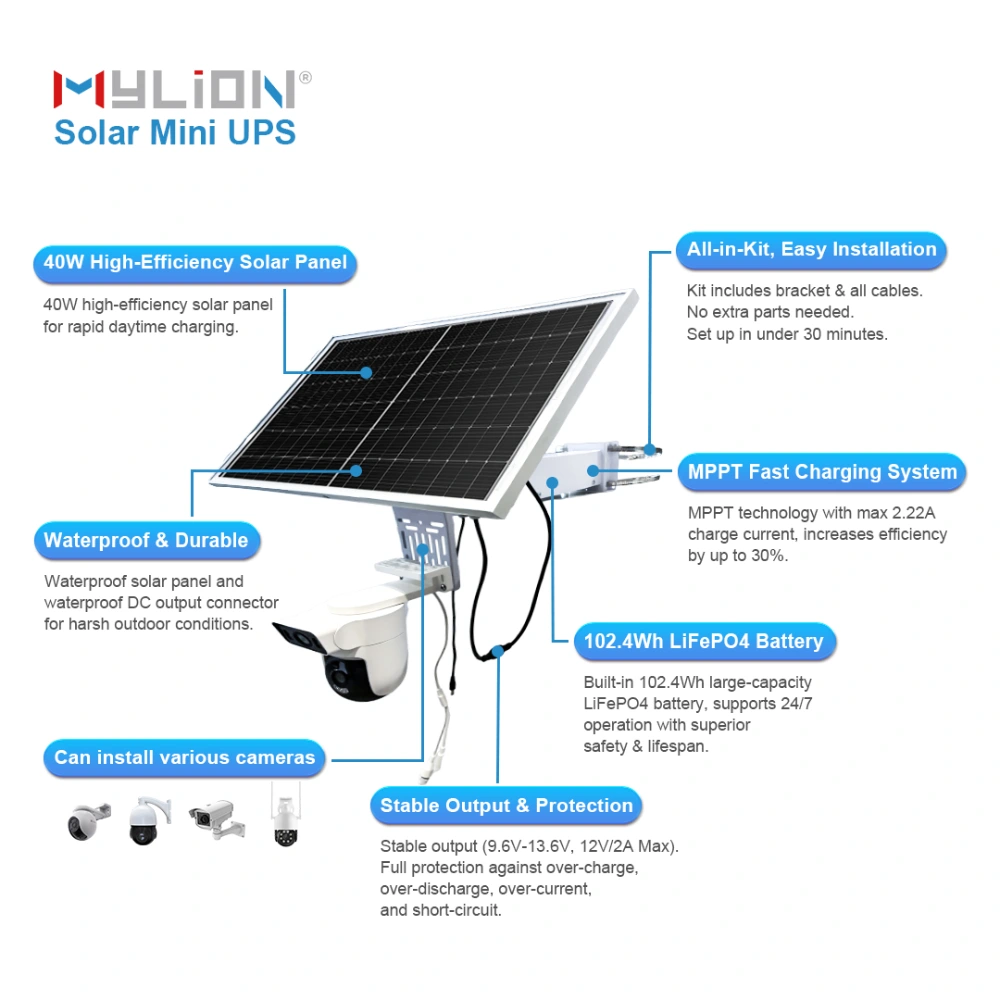
In addition, MYLION provides Mini UPS and DC backup solutions for telecom operators, ISPs, system integrators, distributors, and other project customers.
Model | Approved 12V output | Battery energy | Formula estimate at 12W | Initial evaluation direction |
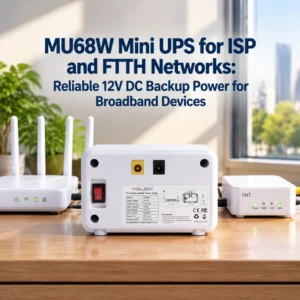
2.5A continuous / 3A max | 44.4Wh | 4 hours | Mainstream CPE, ONT, ONU, router, or modem backup where load and interfaces match. | |
2Amax | 25.6Wh | 2 hours | Dual 12V 2A outputs for two low-power devices | |
4A continuous / 5A max | 56.16Wh | 5 hours | Higher-load router, gateway, modem, or CPE evaluation. | |
4A continuous / 5A max | 75.6Wh | 7 hours | Higher-load applications that also require longer formula-estimated backup. | |
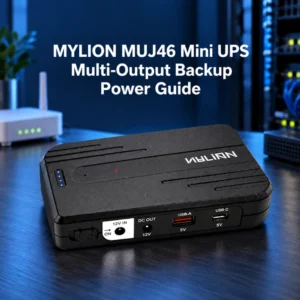
2Amax | 38.48Wh | 4 hours | Compact and flexible backup solution for mixed DC and USB device |
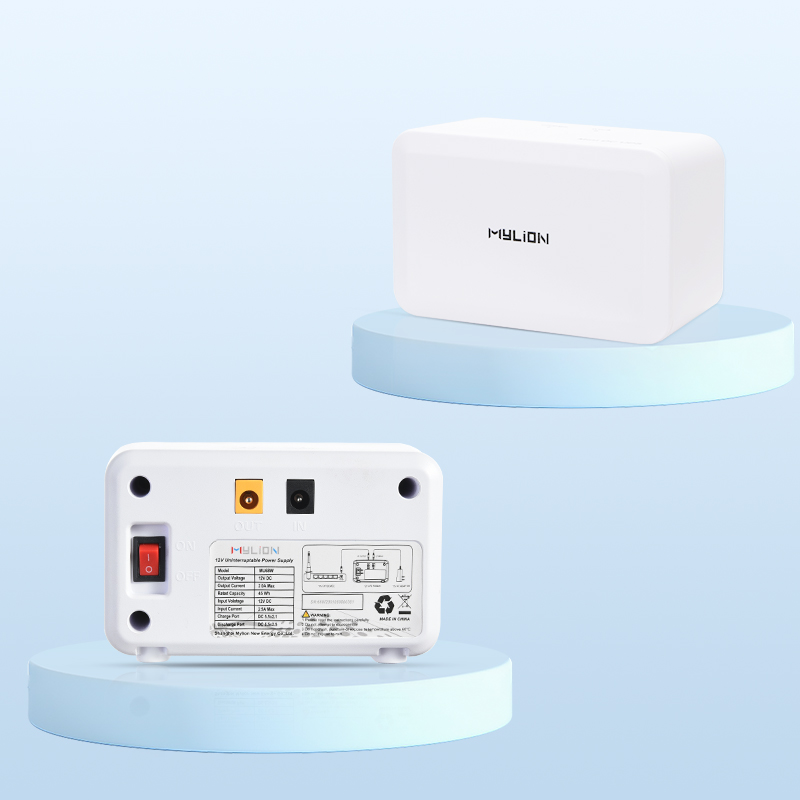
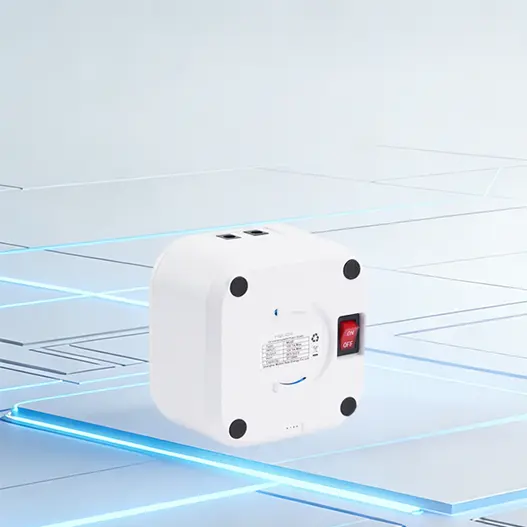
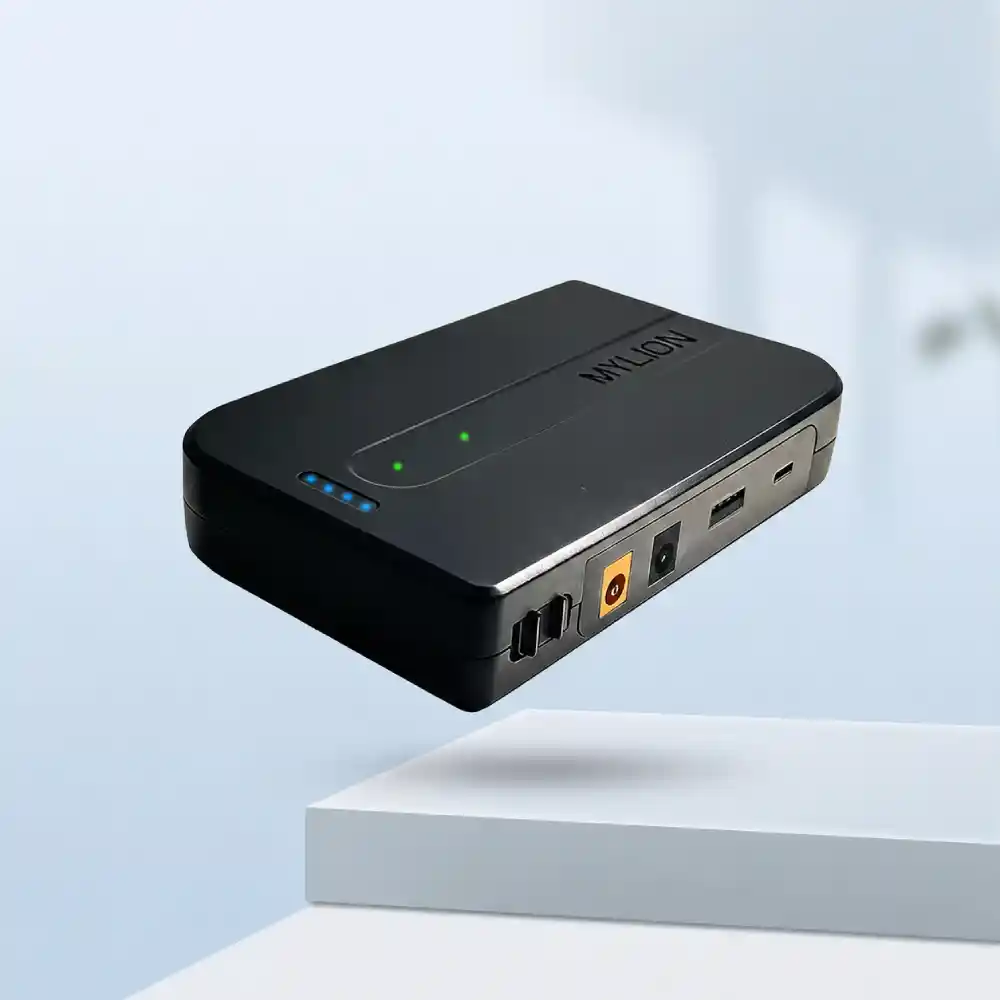
MU68 Mini UPS
MU35 Mini UPS
MUJ46 Mini UPS
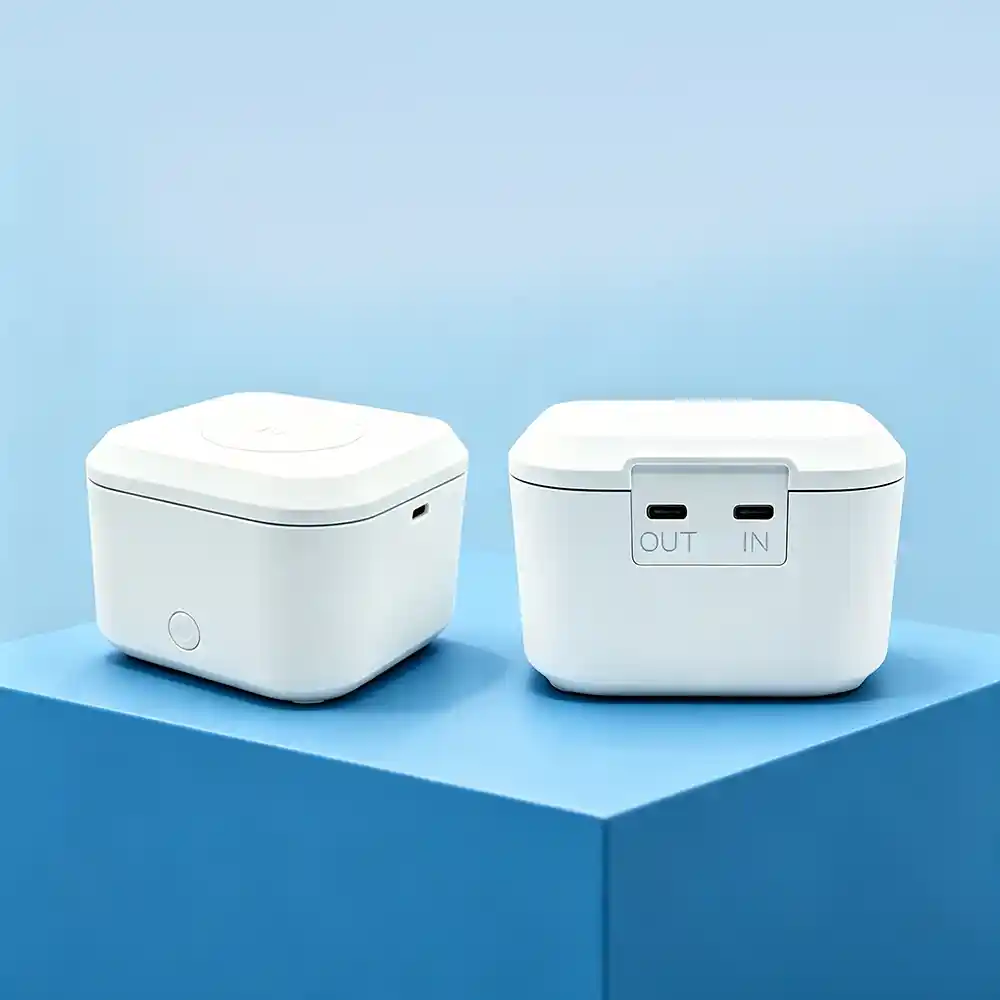
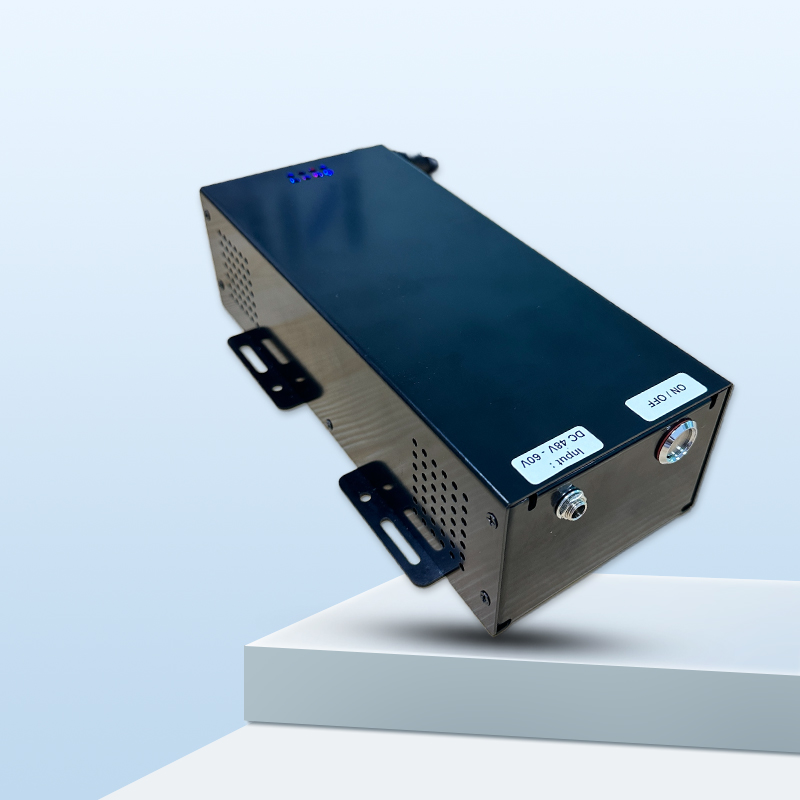
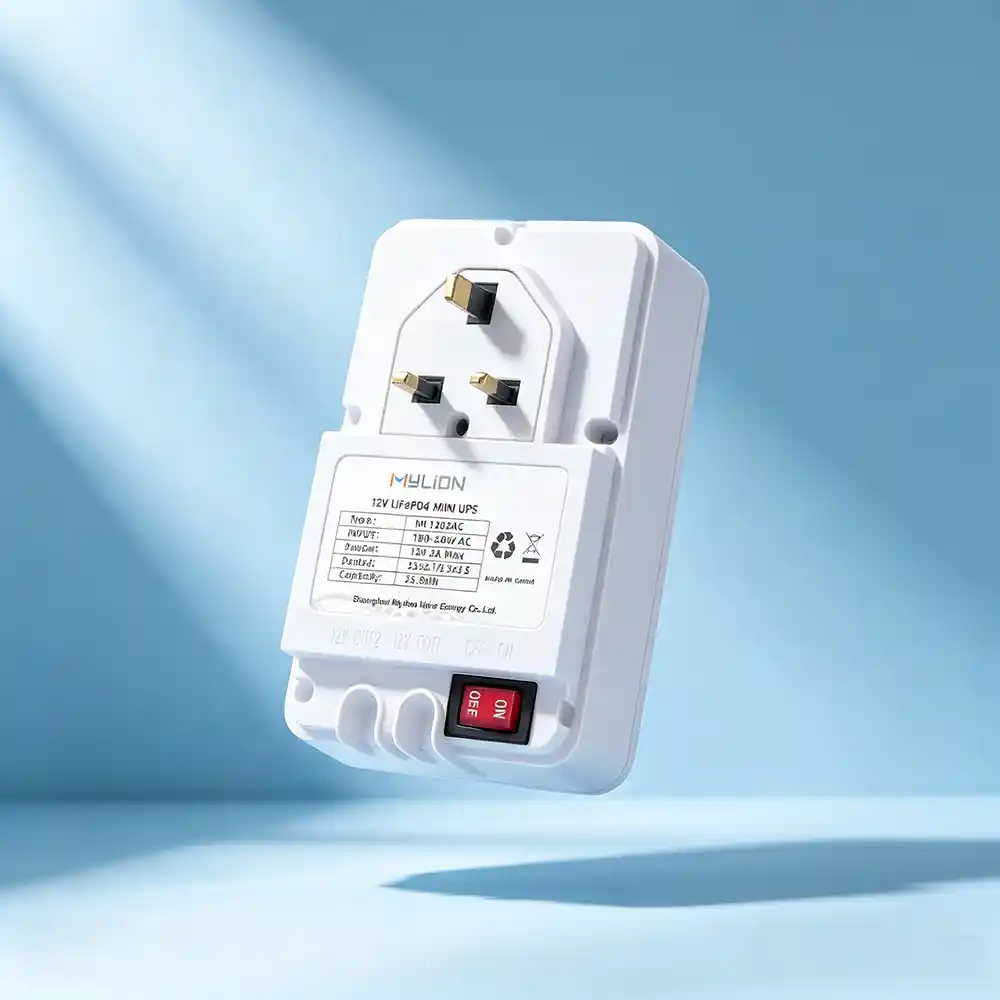
MUC85 Mini UPS
MU248 Mini UPS
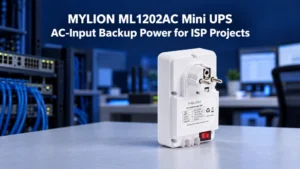
ML1202AC Mini UPS
How to Validate a Solar Mini UPS Before Deployment
A structured evaluation should include desktop sizing, sample testing, site-condition review, and a limited pilot before wider deployment.
Test the sample with the real network device under typical operation, startup, high-traffic, and expected environmental conditions. Record working power, peak behavior, changeover performance, charging behavior, and operating time under clearly defined test conditions.
For solar performance, document the panel location, orientation, weather, irradiance assumptions, charging window, and daily energy balance. Results from one site or one weather period should not automatically be treated as a universal guarantee.
FAQ
Q1: Can a solar Mini UPS power a remote wireless CPE?
Q2: How long will a solar Mini UPS run without sunlight?
Q3: Is every solar Mini UPS suitable for outdoor installation?
Q4: What information does MYLION need for a recommendation?
Q5: What is a solar Mini UPS?
Conclusion
Solar Mini UPS solutions represent a paradigm shift in how telecom operators, ISPs, and system integrators approach power continuity for CPE and remote network devices. By combining the efficiency of direct DC power with the sustainability of solar energy harvesting, these systems address the fundamental vulnerabilities of distributed telecom infrastructure.
When properly specified and deployed, solar Mini UPS solutions ensure reliable broadband continuity, reduce field failures, and lower long-term maintenance costs.
 English
  简体中文
简体中文  Deutsch
  Français
  Italiano
  Español