
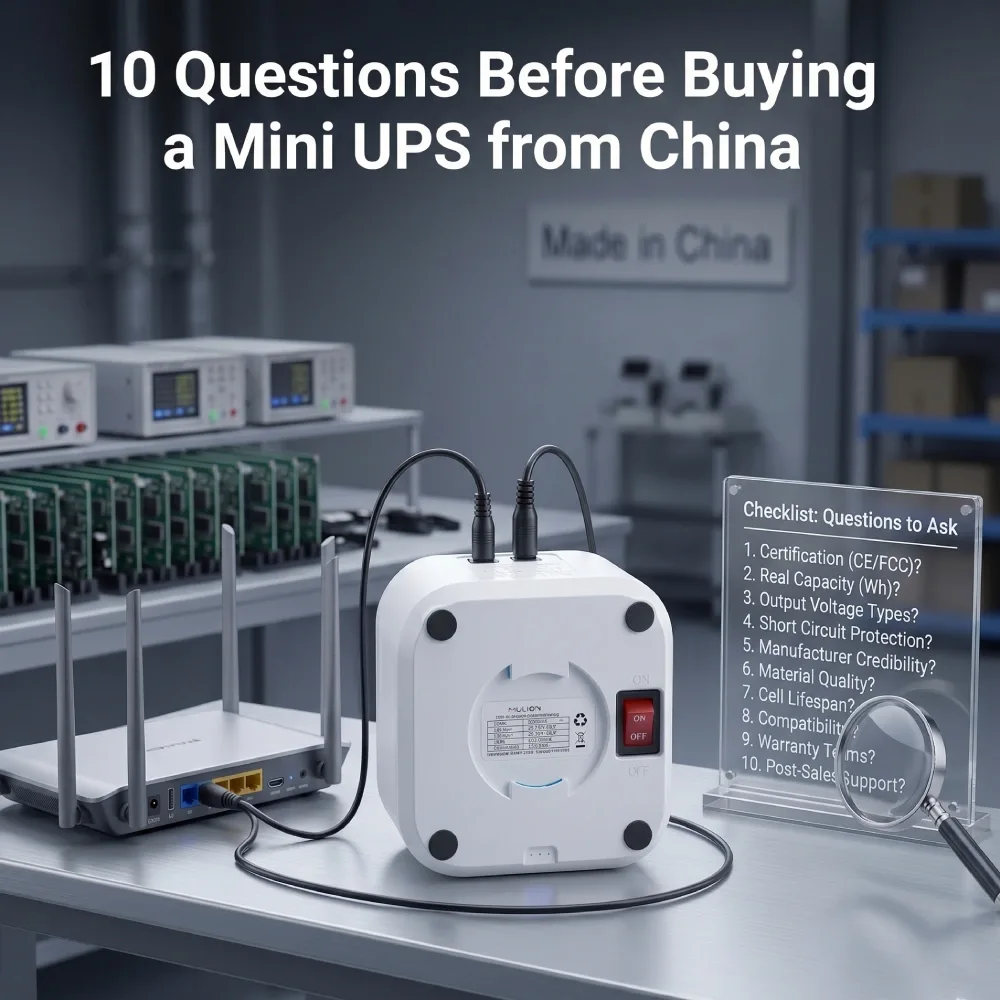
La Chine dispose d'une chaîne d'approvisionnement robuste pour les batteries au lithium et l'électronique de puissance. Cependant, la qualité de Mini-onduleurs Les prix varient considérablement d'un fournisseur à l'autre. Pour les opérateurs télécoms, les fournisseurs d'accès internet et les industriels, le prix unitaire le plus bas se traduit rarement par le coût total du projet le plus bas. Poser les bonnes questions vous permet d'identifier un partenaire fiable, et non pas seulement un produit bon marché.
Vous trouverez ci-dessous dix questions essentielles pour vous guider dans l'évaluation de vos fournisseurs, suivies de questions fréquemment posées et de conseils pratiques pour la suite.
1. À quelle application le produit est-il destiné ?
Un mini-onduleur destiné à l'alimentation de secours d'un routeur, d'un système de vidéosurveillance ou d'équipements de télécommunications peut nécessiter un courant de sortie, une conception de protection, une capacité de batterie et des types de connecteurs différents. Choisissez toujours un appareil adapté à votre application.
2. Quel est le courant de sortie continu réel ?
Ne vous fiez pas uniquement aux arguments marketing. Demandez le courant de sortie nominal, la puissance de crête et le seuil de protection contre les surintensités. Ces spécifications déterminent si l'appareil peut supporter des charges réelles.
3. Quelles sont les cellules de batterie utilisées ?
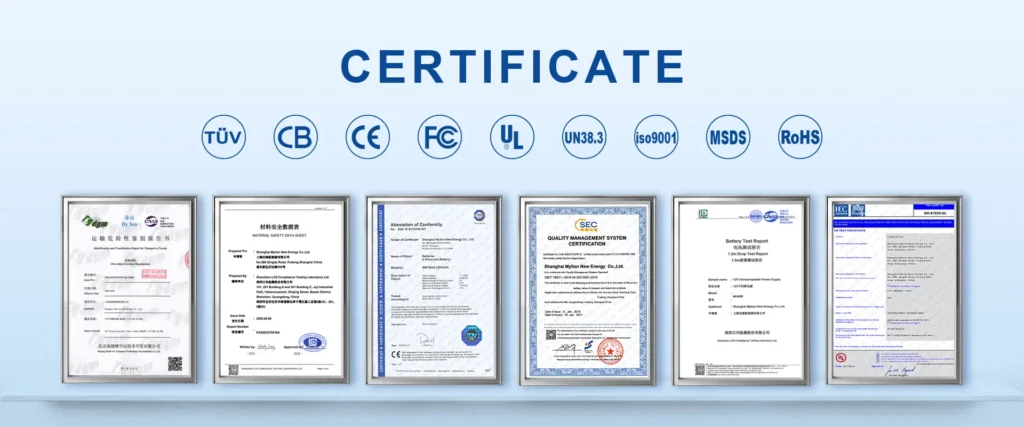
La marque, la capacité, la chimie (LiFePO₄, Li-ion, etc.) et la constance des cellules influent sur la sécurité, l'autonomie et la durée de vie. Un fournisseur fiable communiquera ces informations sans hésitation.
4. Quelles certifications et quels documents d'expédition sont disponibles ?
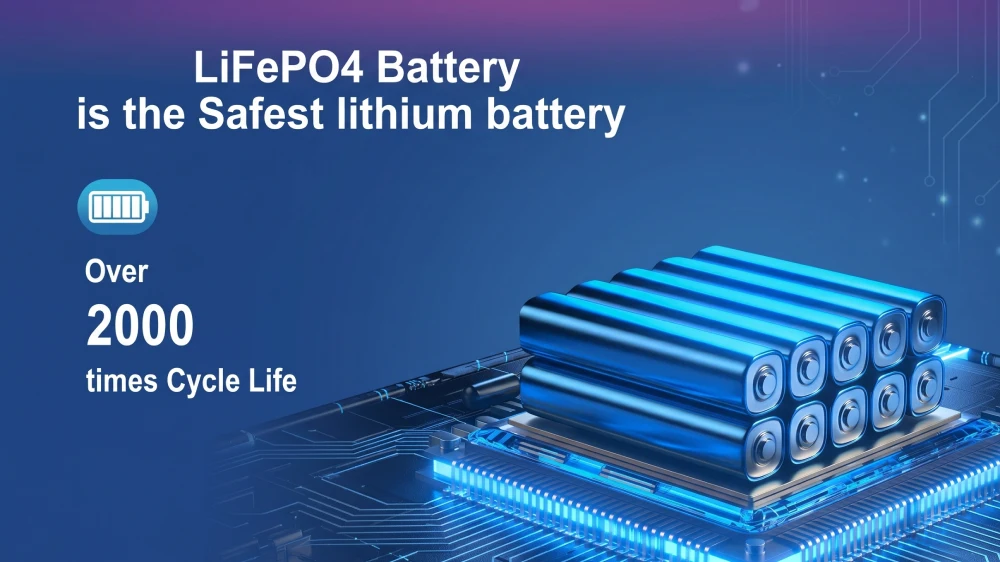
Veuillez demander les documents correspondant exactement au modèle et à la configuration de la batterie. Certifications courantes Inclure les certifications CE, RoHS, UN38.3 et la fiche de données de sécurité (FDS). Vérifier que les documents d'expédition (par exemple, le résumé des tests de la batterie) sont spécifiques au modèle.
5. Comment chaque unité est-elle testée avant expédition ?
Un fournisseur professionnel tient à jour les registres d'inspection à réception, de tests fonctionnels et d'inspection avant expédition. Demandez les rapports de test ou une présentation vidéo de son processus de contrôle qualité.
6. Le fournisseur peut-il prendre en charge la personnalisation ?
Les projets B2B nécessitent souvent des câbles, des connecteurs, des étiquettes, des emballages, des manuels, des micrologiciels ou des paramètres de protection personnalisés. Vérifiez si le fournisseur dispose des ressources d'ingénierie nécessaires pour gérer ces modifications.
7. La version échantillon approuvée est-elle figée pour la production en série ?
La dérive de version est un risque courant et souvent insoupçonné. Assurez-vous que les unités de production correspondent à l'échantillon approuvé, sauf si un ordre de modification documenté est approuvé et revalidé.
8. Comment le fournisseur gère-t-il les réclamations relatives à la qualité ?
Exigez une analyse des causes profondes fondée sur des preuves, et non de simples excuses ou promesses de remplacement. Un bon fournisseur partagera des rapports sur les actions correctives et mettra en œuvre des améliorations de processus.
9. Le fournisseur peut-il assurer la communication relative au projet ?
Les projets de télécommunications et de fournisseurs d'accès Internet nécessitent une coordination technique, commerciale, qualité et logistique. Vérifiez si le fournisseur désigne un interlocuteur ou un chef de projet dédié.
10. Le fournisseur comprend-il votre marché ?
Un fournisseur familier avec les applications de sauvegarde des FAI, des télécommunications et des entreprises (B2B) réduit les coûts de communication et les risques liés aux projets. Il saura anticiper les difficultés telles que les surtensions, les températures extrêmes ou les problèmes de conformité aux réglementations régionales.
FAQ
Q1 : Une société commerciale est-elle toujours risquée ?
Q2 : Le mini-onduleur le moins cher convient-il aux projets des fournisseurs d’accès Internet ?
Q3 : Quelle est la meilleure première étape pour évaluer un fournisseur ?
Q4 : À quelle garantie et assistance technique puis-je m'attendre de la part d'un fournisseur professionnel de mini-onduleurs ?
Comment MYLION accompagne les acheteurs
MYLION se spécialise dans Mini-onduleur CC B2B et des solutions de batteries lithium-ion pour les télécommunications, les fournisseurs d'accès Internet et les applications industrielles. Nous accompagnons nos clients avec :
- Sélection des produits et validation des échantillons
- exigences personnalisées en matière de câbles et d'étiquettes
- Préparation des documents de certification (CE, RoHS, UN38.3, etc.)
- Documentation relative à l'inspection de la production et à l'expédition
Notre objectif est de réduire les risques liés à votre projet, et non pas seulement de fournir un produit.
Besoin d'un mini-onduleur ou d'une solution de secours par batterie au lithium pour votre ONT, ONU, routeur, CPE ou équipement de télécommunications ? Contactez MYLION !
Note de conformité
Les exigences de certification dépendent de la configuration du produit, du marché cible, de l'adaptateur secteur, de la capacité de la batterie et de l'application finale. Les acheteurs doivent vérifier les exigences applicables avant la production en série.
 Français
  English
  简体中文
简体中文  Deutsch
  Italiano
  Español