
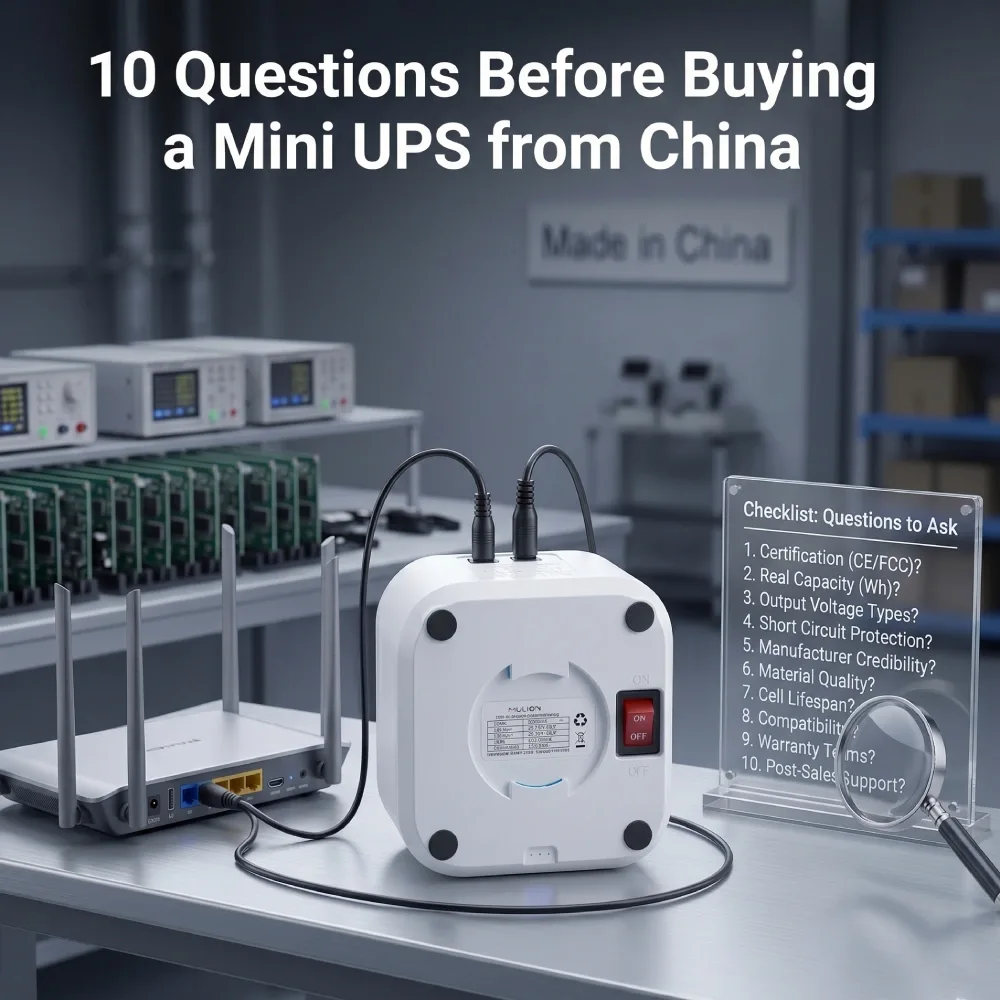
China bietet eine robuste Lieferkette für Lithiumbatterien und Leistungselektronik. Die Qualität von Mini-USV-Geräte Die Preise variieren stark zwischen den Anbietern. Für Telekommunikationsunternehmen, Internetdienstanbieter und Industriekunden führt der niedrigste Stückpreis selten zu den niedrigsten Gesamtprojektkosten. Die richtigen Fragen helfen Ihnen, einen zuverlässigen Partner zu finden – und nicht nur ein günstiges Produkt.
Nachfolgend finden Sie zehn wichtige Fragen, die Ihnen bei der Lieferantenbewertung helfen sollen, gefolgt von häufig gestellten Fragen und praktischen nächsten Schritten.
1. Für welchen Anwendungsbereich ist das Produkt konzipiert?
Eine Mini-USV, die für die Notstromversorgung von Routern, Videoüberwachungsanlagen oder Telekommunikationsgeräten gedacht ist, kann unterschiedliche Ausgangsströme, Schutzmechanismen, Akkukapazitäten und Anschlussarten erfordern. Wählen Sie das Gerät immer passend zu Ihrem Anwendungsfall.
2. Wie hoch ist der tatsächliche kontinuierliche Ausgangsstrom?
Verlassen Sie sich nicht allein auf Marketingaussagen. Fragen Sie nach dem Nennausgangsstrom, der maximalen Ausgangsleistung und dem Überstromschutzschwellenwert. Diese Spezifikationen entscheiden darüber, ob das Gerät den Anforderungen im realen Einsatz gewachsen ist.
3. Welche Batteriezellen werden verwendet?
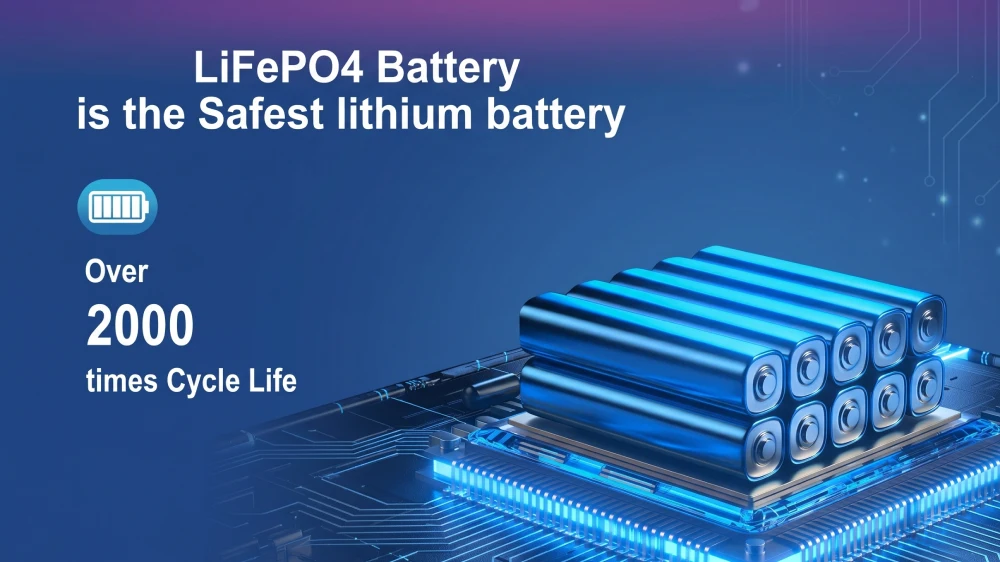
Zellmarke, Kapazität, Zellchemie (LiFePO₄, Li-Ion usw.) und Konsistenz beeinflussen Sicherheit, Überbrückungszeit und Zyklenlebensdauer. Ein zuverlässiger Lieferant wird diese Informationen ohne Zögern offenlegen.
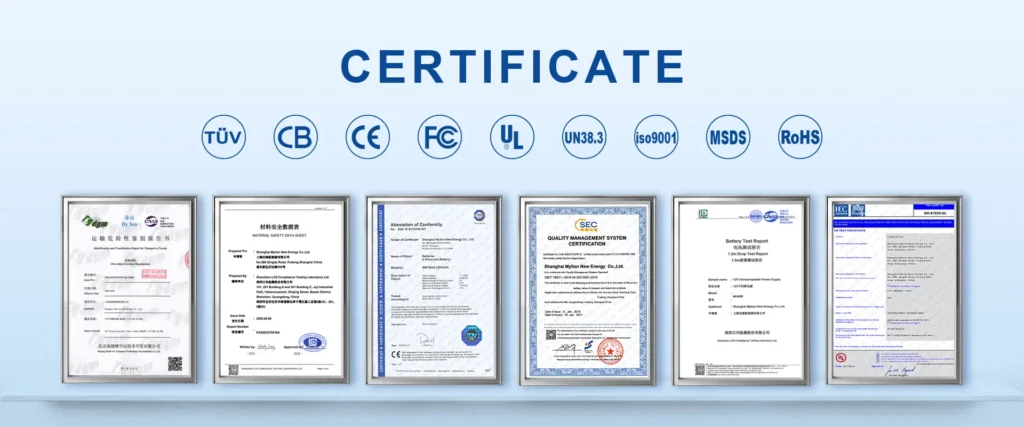
4. Welche Zertifizierungen und Versanddokumente sind verfügbar?
Fordern Sie Dokumente an, die genau zum Modell und zur Batteriekonfiguration passen. Gängige Zertifizierungen Fügen Sie CE-, RoHS-, UN38.3- und Sicherheitsdatenblätter hinzu. Prüfen Sie, ob die Versanddokumente (z. B. die Zusammenfassung des Batterietests) modellspezifisch sind.
5. Wie wird jedes einzelne Gerät vor dem Versand geprüft?
Ein professioneller Lieferant führt Aufzeichnungen über Wareneingangsprüfung, Funktionstests und Warenausgangsprüfung. Fragen Sie nach den Prüfberichten oder einer Videoführung durch den Qualitätskontrollprozess.
6. Kann der Lieferant kundenspezifische Anpassungen unterstützen?
B2B-Projekte erfordern häufig kundenspezifische Kabel, Stecker, Etiketten, Verpackungen, Handbücher, Firmware oder Schutzparameter. Prüfen Sie, ob der Lieferant über die notwendigen technischen Ressourcen verfügt, um diese Änderungen umzusetzen.
7. Ist die genehmigte Musterversion für die Massenproduktion freigegeben?
Versionsabweichungen stellen ein häufiges, oft übersehenes Risiko dar. Stellen Sie sicher, dass die Produktionseinheiten dem freigegebenen Muster entsprechen, es sei denn, ein dokumentierter Änderungsauftrag wurde genehmigt und erneut validiert.
8. Wie geht der Lieferant mit Qualitätsreklamationen um?
Achten Sie auf eine faktenbasierte Ursachenanalyse, nicht nur auf Entschuldigungen oder Ersatzversprechen. Ein guter Lieferant wird Berichte über Korrekturmaßnahmen bereitstellen und Prozessverbesserungen umsetzen.
9. Kann der Lieferant die Projektkommunikation unterstützen?
Telekommunikations- und ISP-Projekte erfordern eine Koordination in den Bereichen Technik, Vertrieb, Qualitätssicherung und Logistik. Prüfen Sie, ob der Anbieter einen festen Ansprechpartner oder Projektmanager bereitstellt.
10. Versteht der Lieferant Ihren Markt?
Ein Anbieter mit Erfahrung in Backup-Anwendungen für Internetdienstanbieter, Telekommunikationsunternehmen und B2B-Unternehmen senkt die Kommunikationskosten und Projektrisiken. Er kann Herausforderungen wie Spannungsspitzen, extreme Temperaturen oder regionale Vorschriften frühzeitig erkennen und bewältigen.
Häufig gestellte Fragen
Frage 1: Ist ein Handelsunternehmen immer riskant?
Frage 2: Ist die günstigste Mini-USV für ISP-Projekte geeignet?
Frage 3: Was ist der beste erste Schritt bei der Bewertung eines Lieferanten?
Frage 4: Welche Garantie und welchen technischen Support kann ich von einem professionellen Mini-USV-Anbieter erwarten?
Wie MYLION Käufer unterstützt
MYLION ist spezialisiert auf B2B Mini-DC-USV und Lithium-Batterie-Backup-Lösungen für Telekommunikations-, ISP- und Industrieanwendungen. Wir unterstützen unsere Kunden mit:
- Produktauswahl und Mustervalidierung
- Kundenspezifische Kabel- und Etikettenanforderungen
- Erstellung von Zertifizierungsdokumenten (CE, RoHS, UN38.3 usw.)
- Produktionsprüfung und Versanddokumentation
Unser Ziel ist es, Ihr Projektrisiko zu minimieren – nicht nur ein Produkt zu liefern.
Benötigen Sie eine Mini-USV oder eine Lithium-Batterie-Backup-Lösung für ONT, ONU, Router, CPE oder Telekommunikationsgeräte? Kontaktieren Sie MYLION!
Hinweis zur Einhaltung der Vorschriften
Die Zertifizierungsanforderungen hängen von der Produktkonfiguration, dem Zielmarkt, dem Netzteil, der Akkukapazität und der endgültigen Anwendung ab. Käufer sollten die geltenden Anforderungen vor der Serienproduktion prüfen.
 Deutsch
  English
  简体中文
简体中文  Français
  Italiano
  Español