
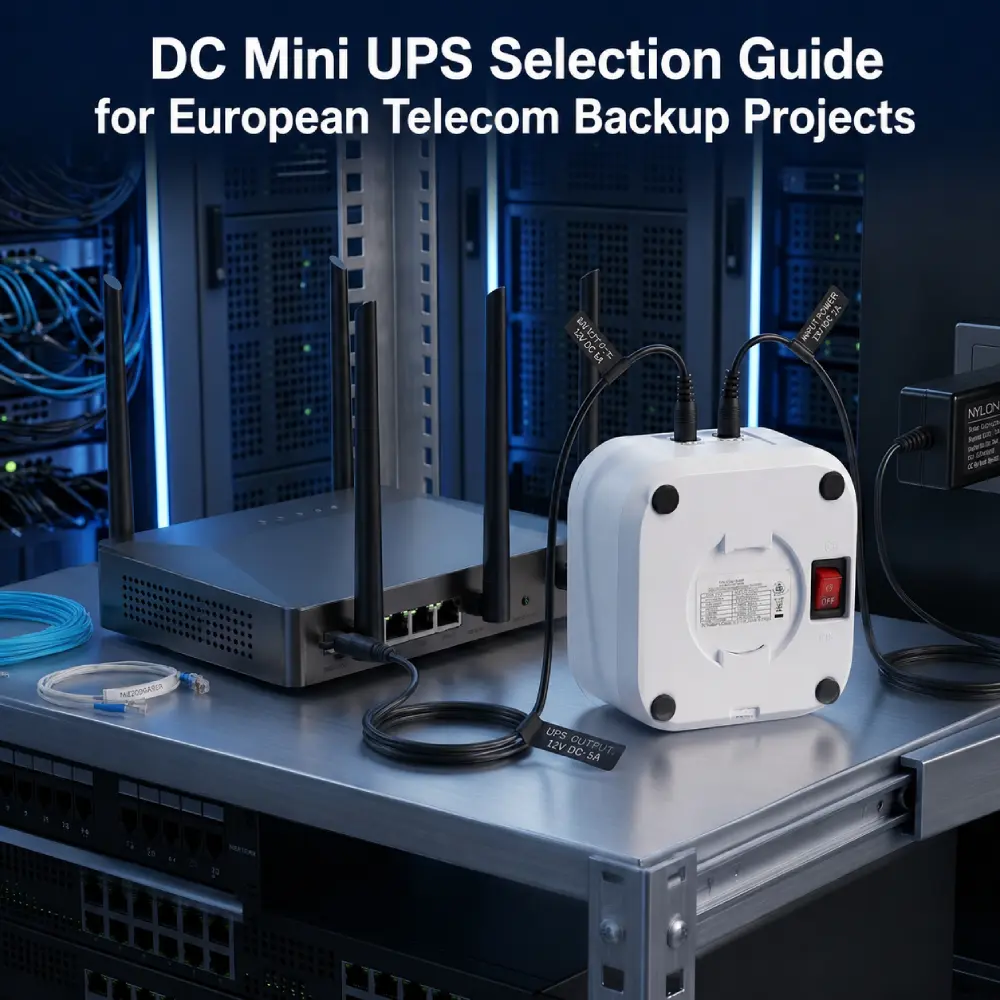
Introduction: Increasing Demand for Backup Power in European Telecommunications
The digital infrastructure in Europe is undergoing an unprecedented expansion. However, at the edge of every network connection, there is a critical vulnerability: power failures at the “last mile.” Driven by 5G rollouts and FTTH large-scale deployments, DC mini UPS is critical to ensuring network reliability.
When the local main power supply is interrupted, customer terminal devices such as ONUs, ONTs, and routers will immediately stop functioning, resulting in the complete disruption of broadband connections. This is no minor issue. For ISPs in Europe, service disruptions directly lead to a sharp increase in the number of helpdesk tickets, customer churn, damaged brand reputation, and even fines from regulatory authorities.
Therefore, for system integrators, base station operators, and last-mile connection service providers in Europe, choosing the appropriate DC Mini UPS solution for their telecom backup projects has become a crucial decision.
Why Does the Telecom Backup Project Require Mini DC UPS?
Telecom backup differs fundamentally from general-purpose UPS applications. Edge network devices—ONUs, ONTs, routers, small-cell base stations, and customer-premises equipment—typically operate on low-voltage DC power (5V, 9V, or 12V).
Traditional AC UPS units are fundamentally mismatched for this application. They suffer from three critical inefficiencies:
- Energy conversion losses: Converting wall AC→battery DC→AC→back to DC via the device‘s adapter typically yields only 70-80% efficiency, wasting substantial energy.
- Overspecification: An ONU drawing 12W does not need a 1kVA industrial UPS.
- Physical footprint: Traditional UPS units are large, heavy, and often require professional installation, making them unsuitable for space-constrained CPE cabinets.
By contrast, a purpose-built DC Mini UPS delivers direct DC output matching the native input requirements of telecom devices, eliminating all unnecessary conversion steps and achieving 90-95% efficiency. And its size is very compact, fitting into the smallest CPE enclosure. This is a reasonable choice for European projects.
How Mini UPS Addresses the Pain Points in European Telecom Projects
A high-performance DC Mini UPS — such as the Mylion MINI UPS — resolves the specific pain points experienced by European telecom operators:
Pain point 1: Micro-outages cause device reboot
Solution: Zero-millisecond automatic failover. The integrated Battery Management System (BMS) switches to battery power instantly. The ONU/router never resets — connectivity remains seamless.
Pain point 2: Space constraints in outdoor cabinets
Solution: Ultra-compact footprint. The Mylion MINI UPS fits inside existing CPE enclosures, street cabinets, and small-cell poles without requiring enclosure upgrades.
Pain point 3: Different climatic environment challenges
Solution: LiFePO₄ chemistry operates reliably from -20°C to +60°C with no capacity degradation below freezing — unlike SLA which loses 30–50% capacity at 0°C.
Pain point 4: Higher deployment costs and time
Solution: The Mini UPS is installed using plug-and-play method, requiring no complex configuration. It is directly connected to the telecom equipment through standard cylindrical connectors. This significantly reduces deployment costs and time.
Mylion MINI UPS: Designed Specifically for Deployment in Telecom Projects
The Mylion Mini UPS is engineered from the ground up for European telecom infrastructure. It combines LiFePO₄ safety and longevity with precision DC output, smart BMS, and plug and play installation.
Model | Output | Battery Configuration | Telecom Deployment | Core Technical Advantages |
MU26 | 12V DC, 3A Max | High-Density Lithium | Standard FTTH ONT/ONU & Residential CPE | Compact ABS casing for rapid deployment. |
MU35 | 12V DC, 5A Max | High-Capacity Lithium | Wi-Fi 7 Hubs, High-Current Enterprise Gateways | Sustains 5A peak loads to prevent boot-loops during localized network recovery. |
ML1202AC | AC Input to 12V 2A DC | Deep Cycle LiFePO4 | Rural Access Nodes, Mission-Critical Hardware | >2000 cycles, preventing premature battery death in harsh environments. |
The Practical Application of Mylion UPS in European Telecom Projects
Mylion MINI UPS deployments directly eliminate the operational expenditures (OPEX) of localized power failures by shifting from reactive maintenance to proactive infrastructure hardening across four core use cases:
- ONU/ONT Backup for FTTH Networks
Deployed alongside subscriber CPE, the Mylion MU26 Mini UPS (12V 3A DC) utilizes a high-density lithium core to deliver hours of bridging time during grid sags. This edge deployment immunizes ISPs against micro-outages, preventing subscriber churn and costly Level 1 support ticket surges.
- 5G Small Cell Backup
Decentralized 5G nodes demand absolute power continuity for ultra-low latency handoffs. The Mylion MUC85 Mini UPS delivers specialized USB output with precision regulation, bypassing legacy AC thermal waste to sustain mission-critical proprietary hubs during municipal power fluctuations.
- Street Cabinet Backup
Operating in harsh, non-climate-controlled environments rapidly degrades traditional VRLA batteries. The Mylion ML1202AC Mini UPS integrates deep-cycle LiFePO4 technology (>2000 cycles, 5-8 year lifespan) to structurally lower TCO, guaranteeing SLA compliance while eradicating the massive OPEX drain of routine “truck roll” battery replacements.
- Smart City Infrastructure
Heavy-draw municipal edge devices (AI surveillance, Wi-Fi 7 hubs) face severe inrush currents. The Mylion MU35 Mini UPS sustains continuous 5A peak loads, providing the vital electrical headroom to prevent hardware boot-loops during network recovery and ensuring IoT gateways meet strict public sector uptime mandates.
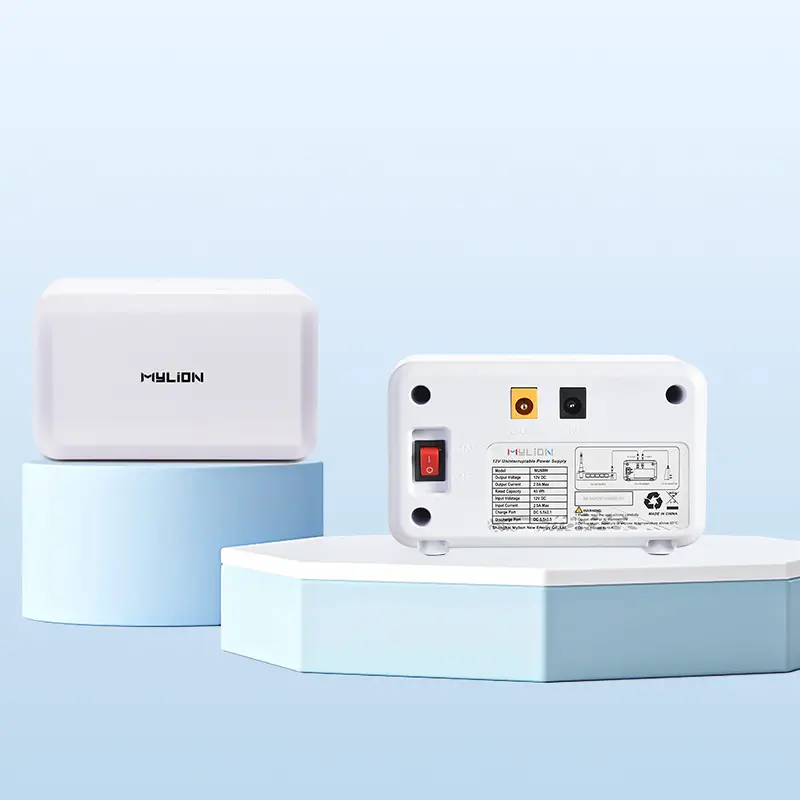
12V 3A MU26 Mini UPS
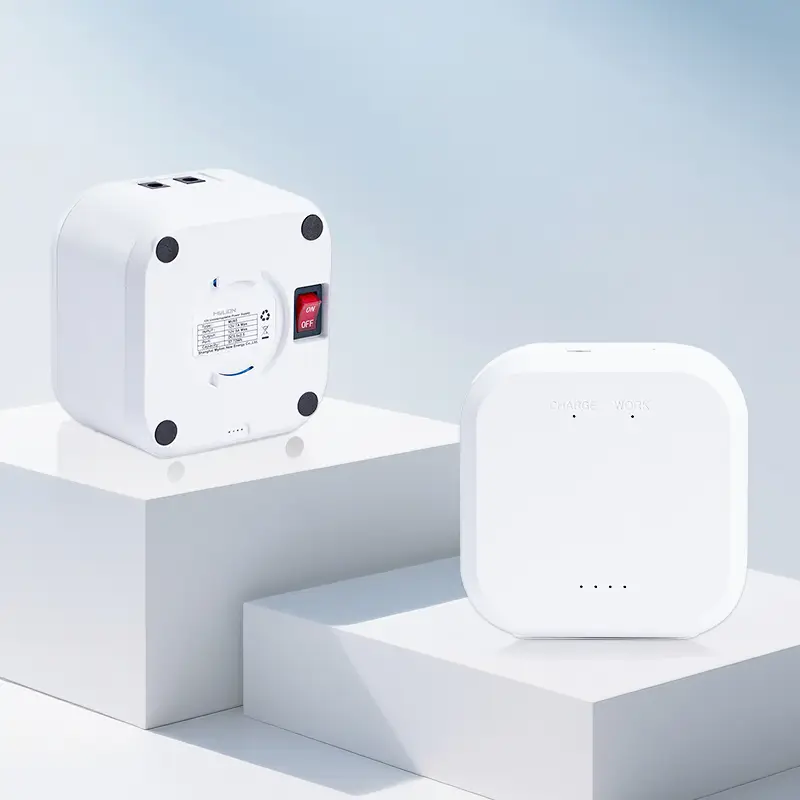
12V 5A MU35 Mini UPS
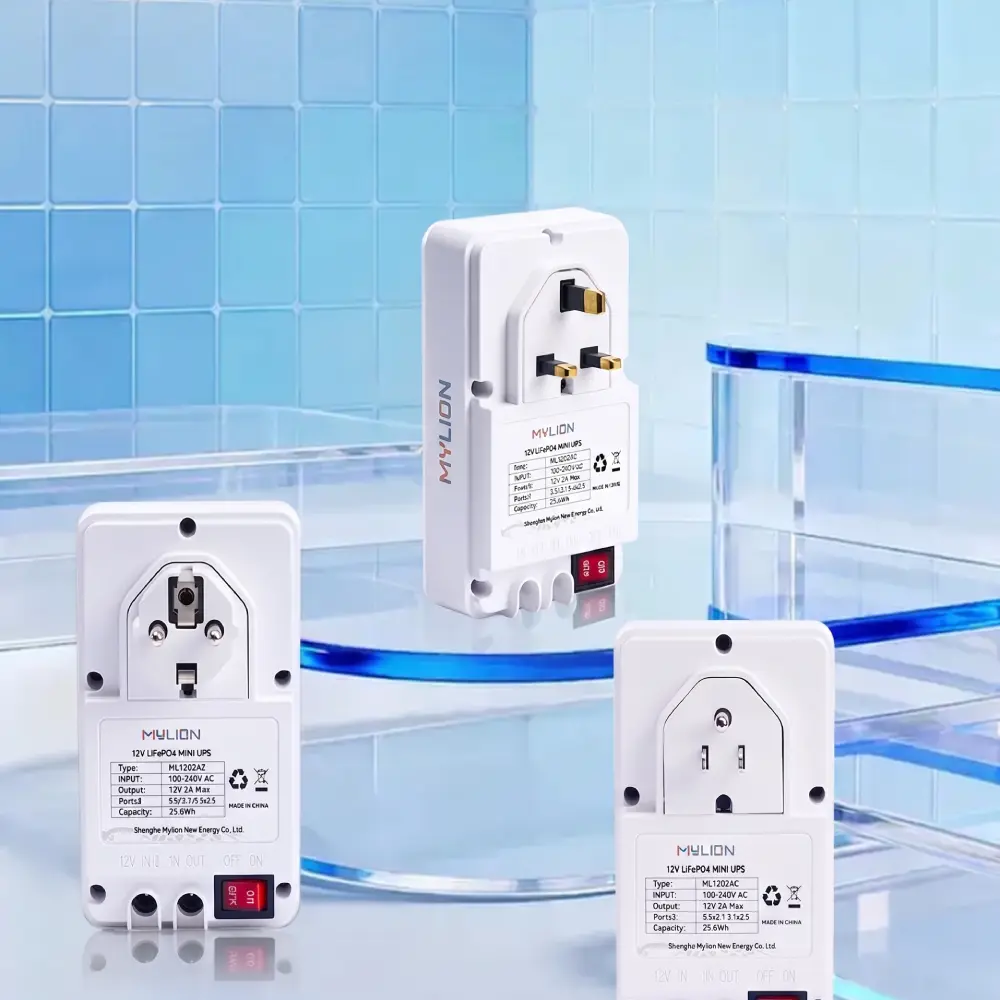
12V 2A ML1202AC Mini UPS
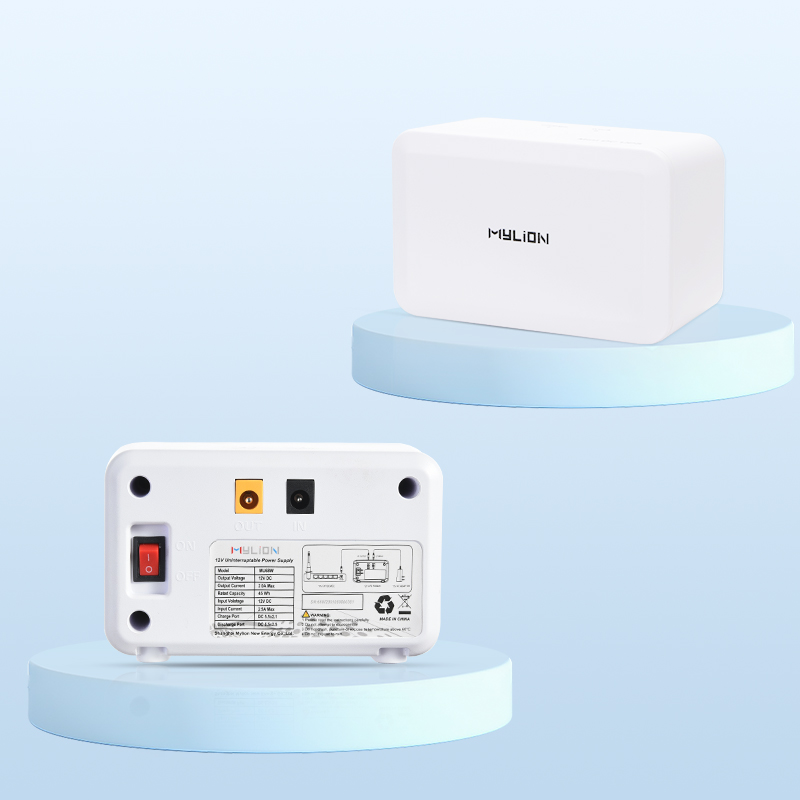
12V 3A MU68 Mini UPS
Why choose Mylion as the power backup service provider for the telecom project
European telecom projects demand more than just a battery — they require a partner with technical depth, manufacturing excellence, and a proven track record.
- 10+ years of battery manufacturing experience.
- Dedicated telecom engineering team: we understand ETSI standards, carrier requirements, and field deployment constraints.
- Fully EU-compliant: CE, RoHS, REACH, and ETSI EN 300 132-2 certified. No customs or regulatory delays.
- Customization options: output voltage, connector types, enclosure IP rating, and battery capacity can be tailored to your project.
- Global logistics: fast shipping from European warehouses (Germany & Netherlands). No minimum order quantity for pilot projects.
- Technical support: pre-sales consultation, BMS integration guidance, and after-sales support from our in-house engineers.
FAQ
Q1: What is the typical runtime of Mylion MINI UPS for an ONU?
Q2: Can Mylion Mini UPS units sustain the inrush current of commercial edge routers?
Q3: What is the expected lifespan of Mylion's LiFePO4 models?
Q4: Can I get a sample before committing to volume?
Conclusion
The European telecom landscape is transforming — 5G and fibre are pushing reliability expectations higher than ever. At the same time, traditional lead-acid batteries are proving incapable of meeting the demands of modern edge infrastructure. They are inefficient, short-lived, maintenance-intensive, and increasingly non-compliant with EU environmental regulations.
The Mylion MINI UPS is the future-proof answer for European telecom backup projects. Whether you are protecting ONUs in residential FTTH deployments, small cells on motorways, or aggregation cabinets in rural areas, Mylion delivers reliable, maintenance-free, and cost-effective DC backup power.

 English
  简体中文
简体中文  Deutsch
  Français
  Italiano
  Español