
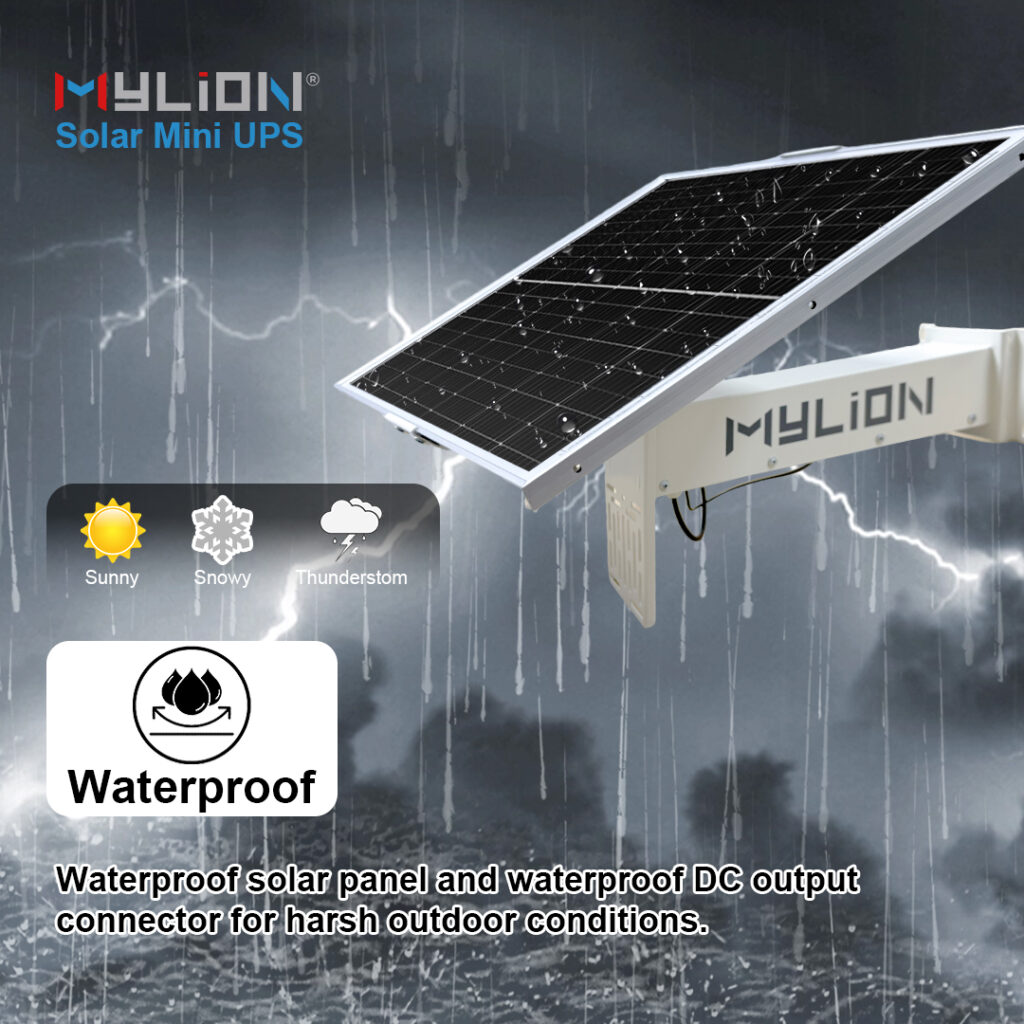
In the week of October 13–19 2025, several high-profile developments underscored the accelerating shift in how we generate, store and use electricity. At the same time, demands for reliable, flexible small-scale power storage are rising as the broader infrastructure evolves. It’s in this context that the MUL268S becomes a compelling offering.
Market / Policy Flashpoints
1. In the United States, utility-scale energy storage installations are forecast to hit a record ~16.2 GW in 2025, led by growing demand, cheaper batteries and more renewables — but deployment is expected to slow from 2026 onward amid new regulation (the so-called “Foreign Entity of Concern” rules under the One Big Beautiful Bill Act) that impact eligibility for investment tax credits.
2. In the UK, the government approved a massive 700 MW solar-farm project in Lincolnshire (enough to power~300,000 homes), signalling that large-scale solar deployment is very much on.
3. Simultaneously, the U.S. government has seen lawsuits and pushback as federal clean-energy funding is rescinded or re-shaped, creating headwinds for some segments of the distributed solar + storage market.

Why This Matters for a Product Like the MUL268S
- These headlines point to two linked trends:first, the growth and institutionalisation of large-scale solar + storage; second, the intensification of policy, supply-chain and material-content scrutiny. For a smaller, off-grid / edge product like the MUL268S, that means:
- Edge and decentralised applications matter more: As the grid becomes more complex, there is rising demand for small-scale, flexible energy-storage solutions for sites that may not rely solely on large utility-scale plants — e.g., remote sensors, outdoor monitoring, rural / off-grid situations.
3.Supply chain and regulatory pressures make simplicity an asset: With looming rules about domestic sourcing, “foreign entity” status, battery content and manufacturing location, a compact product with standard solar panel + LiFePO₄ battery may bypass some of the complexity focussed on large-scale installations.
Solar + storage at the “micro” level complements the macro‐trend: While large solar farms scale up, there are many smaller, distributed use-cases that still need reliable backup, remote power, or independence from the main grid.
The Value Proposition
- Off-grid & remote applicability: With a 40 W solar panel and 102.4 Wh battery, the MUL268Sis well suited for low-power devices in remote locations — for example, CCTV, communications modules, environmental sensors, or lights.
- Reliable power independence: In regions with unreliable grid power or frequent outages, or in outdoor installations with no grid connection, a self-contained solar + LiFePO₄ solution offers resilience.
- Battery chemistry advantage: LiFePO₄ is known for better cycle-life and safety compared with some other lithium chemistries — an important point given increasing scrutiny of battery systems and safety concerns.
- Aligns with decentralised energy trends: As energy systems shift towards distributed generation and storage (at homes, edge sites, IoT/industrial edges), products like the MUL268Sfill a growing niche.
- Simpler regulatory and logistics burden: Unlike large utility-scale storage installations — which face major permitting, supply-chain, and domestic-content issues — smaller modules may have fewer barriers.

Strategic Messaging: Why Now
Given the recent news:
- As large-scale installations face regulatory tightening or supply-chain bottlenecks, the “edge” market is less visible but still ripe for innovation and adoption.
- With solar deployments scaling (e.g., the UK’s new large solar project) but often far from end-users, having localised solar + storage solutions closes the gap between generation and use.
- For international markets — especially regions with less stable infrastructure — a compact, plug-and-play solar UPS product offers cost-effective entry into reliable renewable-powered systems.
- As policy landscapes shift (for example in the U.S.), products geared toward distributed use may enjoy agility and market opportunity.
Key Considerations & Recommended Messaging
When positioning the MUL268S, you might emphasise:
- “24/7 power where grid cannot reach”— highlighting remote/off-grid suitability.
- “Solar + storage in one compact kit”— simplifying procurement, installation and maintenance.
- “Safer LiFePO₄ chemistry for long life and reliability”— giving confidence in durability.
- “Optimised solar harvesting via MPPT controller”— showing efficiency advantage.
- “Ideal for edge-IoT, remote monitoring, security, lighting, communications”— tying to applications relevant to customers.
- “Buffering against grid instability, outages and rising energy costs”— connecting to broader energy-trend pain points.

A Caveat & Opportunity
Of course, the MUL268S is not targeted at utility-scale storage — its capacity is modest in that context. But that is exactly its advantage: while large systems become highly regulated, costly and complex, smaller systems like this can move faster, serve niche/edge applications and open new markets. The key is to clearly segment your target audiences (e.g., remote installs, IoT, security, rural connectivity) and highlight how this product solves real pain points.
 English
  简体中文
简体中文  Deutsch
  Français
  Italiano
  Español