
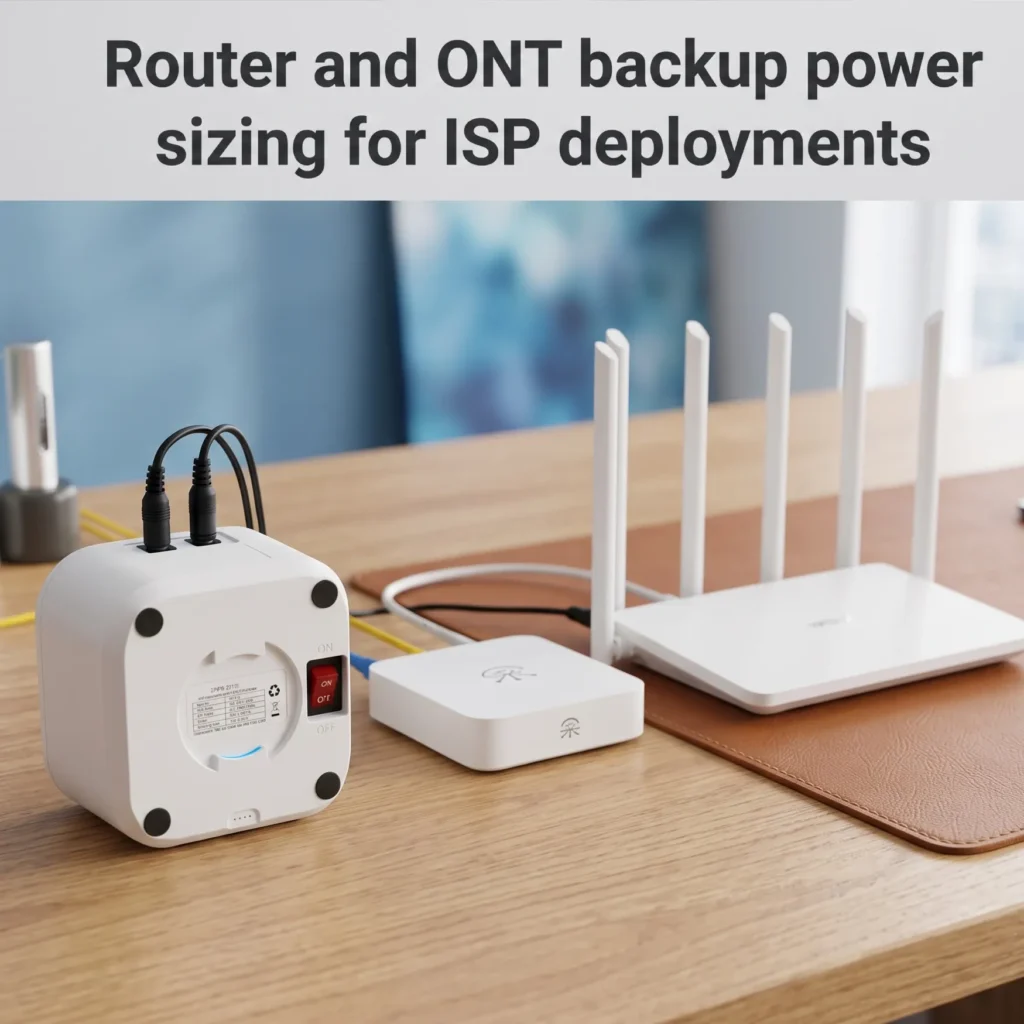
Introduction : Le risque caché des alimentations de secours de passerelle
Les réseaux de fibre optique offrent des débits sans précédent, mais ils présentent une vulnérabilité critique : la dépendance à l’alimentation électrique locale. Contrairement aux lignes de cuivre traditionnelles, les câbles à fibre optique ne transportent pas de courant électrique. En cas de coupure de courant localisée, la liaison optique est immédiatement interrompue. alimentation de secours fiable pour routeur et ONT.
Pour les FAI, le déploiement d'une infrastructure de taille appropriée Mini-onduleur est une exigence opérationnelle obligatoire. Ce guide détaille les calculs précis, les exigences matérielles et les stratégies de déploiement pour la mise à l'échelle de réseaux résilients à l'aide d'un Mini-onduleur pour routeur et ONT configurations.
Le rôle crucial de la connectivité ininterrompue dans les réseaux FAI modernes
Les coupures de courant menacent directement la rentabilité et la réputation des fournisseurs d'accès à Internet. Les consommateurs exigent une connexion permanente pour le télétravail, la télémédecine et la sécurité de leur domicile.
Impacts directs des pannes sur les entreprises :
- Taux de désabonnement des clients :Les fréquentes coupures de connexion poussent les abonnés à se tourner vers des fournisseurs concurrents.
- Pénalités SLA :Les entreprises clientes exigent une disponibilité garantie, ce qui rend Alimentation de secours pour routeur et ONT essentiel pour éviter les sanctions financières.
- Frais de soutien :Les pannes de courant locales entraînent des pics massifs de demandes d'assistance et des interventions coûteuses de techniciens.
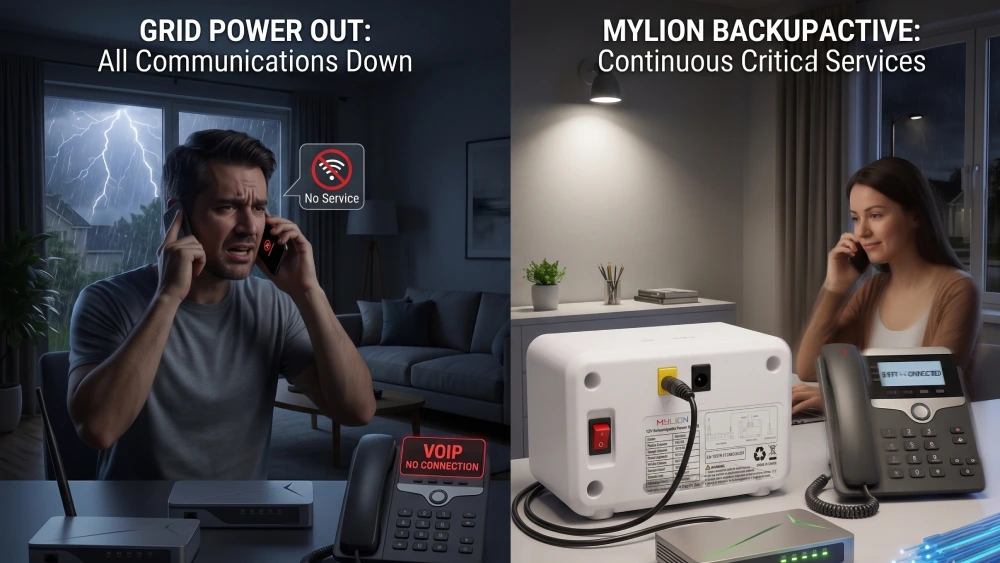
La transition vers la fibre optique
Le passage à la fibre optique impose une alimentation de secours locale aux terminaux. L'équipement chez le client (CPE) nécessite une source d'alimentation locale active, idéalement via un réseau dédié. Mini-onduleur.
Type de réseau | Méthode de distribution d'énergie | Vulnérabilité aux pannes |
Cuivre Héritage | Courant continu basse tension provenant du central téléphonique | Faible (Autonome en énergie pendant les pannes de courant) |
Fibre active (FTTH) | Alimentation électrique locale chez le client | Élevé (Nécessite) Alimentation de secours pour routeur et ONT) |
En déployant un Mini-onduleurs pour déploiements FAILes fournisseurs éliminent cette vulnérabilité. Une alimentation de secours proactive utilisant une alimentation de haute qualité Mini-onduleur Il protège le matériel, réduit les coûts de support et garantit un service ininterrompu.
Calcul de la consommation électrique des routeurs et des ONT
Un calcul précis de la puissance empêche une décharge prématurée de la batterie de votre appareil. Mini-onduleur pour routeur et ONT Il permet d'adapter les configurations et d'éviter les dépenses inutiles liées à des unités surdimensionnées.
La formule de base
Le calcul de la consommation électrique repose sur des mesures électriques standard. La plupart des équipements de périphérie des télécommunications fonctionnent en courant continu (CC).
- Formule:Watts = Volts × Ampères (W = V × A)
Consommation électrique typique du matériel CPE
Différentes configurations matérielles exigent des performances très différentes. Alimentation de secours pour routeur et ONT niveaux.
Type d'équipement | Tension typique | Ampérage typique | Consommation électrique estimée (watts) |
ONT résidentiel standard | 12V | 0,5 A – 1,0 A | 6W – 12W |
Routeur Wi-Fi de base | 12V | 1,0 A | 12W |
Routeur Wi-Fi 6/7 | 12V | 2,0 A – 3,0 A | 24W – 36W |
Consommation électrique de pointe par rapport à la consommation électrique au ralenti
Les FAI doivent dimensionner tout Mini-onduleurs pour déploiements FAI basé sur la charge de pointe, et non sur la consommation en veille.
- Charge à vide :La puissance consommée lorsque le réseau est inactif.
- Charge de pointe :La puissance consommée lors de transmissions de données importantes (streaming 4K, téléchargements volumineux).
Tailles Mini-onduleur Se baser uniquement sur la consommation en veille entraînera une surcharge et un arrêt du système de secours en cas de forte utilisation.
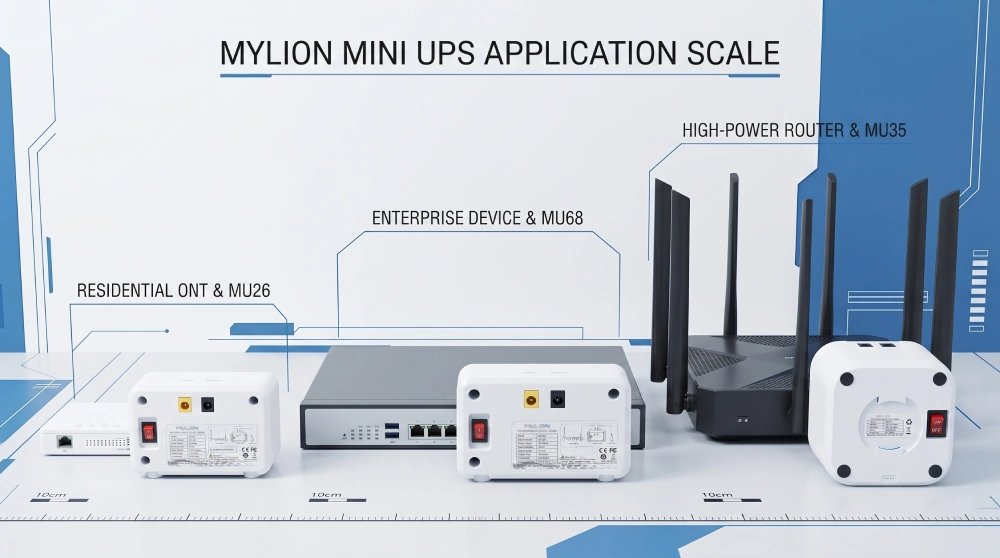
Éléments clés à prendre en compte pour dimensionner vos systèmes d'alimentation de secours
Conversion de la puissance du CPE en capacité réelle de la batterie pour un Mini-onduleur pour routeur et ONT nécessite d'évaluer les objectifs d'autonomie, la chimie de la batterie et les inefficacités inhérentes au système.
La formule fondamentale est simple :
Capacité de la batterie (Wh) = Puissance de l'appareil (W) × Autonomie souhaitée (heures)
6W × 4 heures = 24Capacité minimale de la batterie (Wh)
Niveaux d'exécution pour les déploiements FAI
Tous les déploiements ne requièrent pas le même environnement d'exécution. Les FAI doivent définir des cibles d'exécution pour leurs déploiements. Alimentation de secours pour routeur et ONTL'essentiel est d'adapter l'environnement d'exécution au cas d'utilisation spécifique :
Étage | Cible d'exécution | Cas d'utilisation | Capacité recommandée |
Court | 15 à 30 min | Brèves oscillations, zones de grille stables | 19–25 Wh |
Standard | 1 à 2 heures | Déploiements en banlieue, stabilité modérée du réseau | 30–40 Wh |
Étendu | 3 à 6 heures | Pannes fréquentes, déploiements en zone rurale | 45–70 Wh |
Long | 6 heures et plus | Réseaux électriques instables, infrastructures critiques | 70+ Wh |
Pour la plupart des projets de fournisseurs d'accès Internet, l'objectif est de pallier les coupures de courant intermittentes ou les pannes localisées qui durent. 2 à 4 heures.
Évaluation de la chimie des batteries
Moderne Mini-onduleurs pour déploiements FAI nécessitent un stockage d'énergie compact et efficace.
Fonctionnalité | Mini-onduleur lithium-ion / LiFePO4 | Onduleur traditionnel au plomb-acide |
Densité énergétique | Élevé (Empreinte compacte) | Bas (Encombrant et lourd) |
Cycle de vie | Plus de 2 000 cycles | 300 à 500 cycles |
Entretien | Aucun entretien | Nécessite un remplacement régulier |
Vitesse de recharge | Rapide (2 à 4 heures) | Lent (8 à 12 heures) |
Pertes d'efficacité et dégradation de la batterie
UN Mini-onduleur ne fournit pas 100% de son énergie stockée à l'appareil.
- Pertes onduleur/BMS :Calculez une perte de puissance de 15% à 20% pour le système de gestion de batterie interne (BMS).
- Dégradation liée à l'âge :Les batteries au lithium perdent de la capacité totale au cours de leur durée de vie.
Pour garantir 4 heures Alimentation de secours pour routeur et ONT Au cours de la cinquième année d'un déploiement, les FAI devraient surdimensionner la capacité initiale en Wh d'environ 20%.
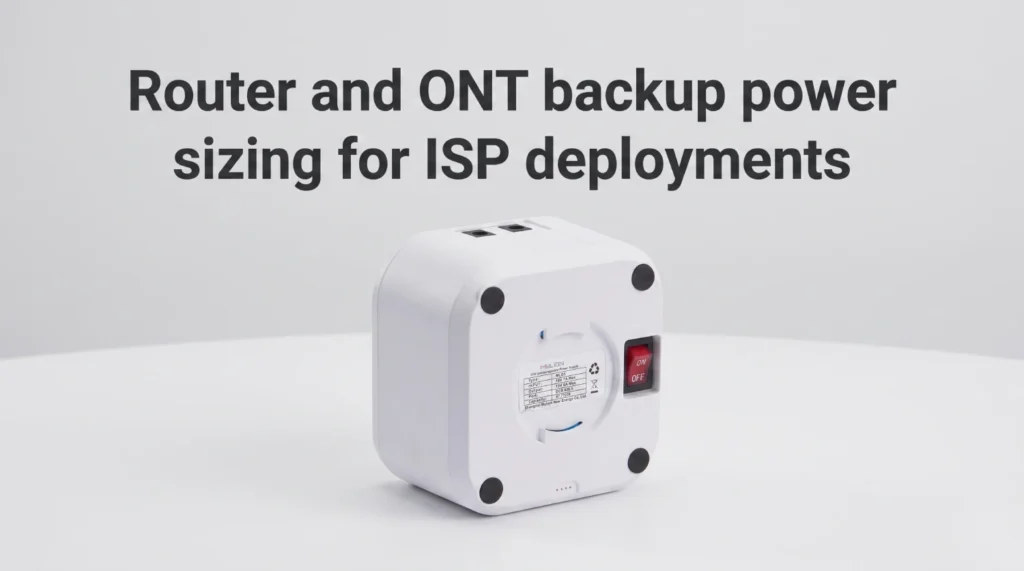
Adaptation des modèles Mylion aux scénarios de déploiement spécifiques des FAI
Mylion structure sa gamme de produits par niveau de puissance, autonomie et architecture de tension afin de vous garantir le déploiement de la solution parfaitement adaptée à vos besoins. Mini-onduleurs pour déploiements FAI.
En évaluant la stabilité du réseau régional, les FAI peuvent adapter stratégiquement les modèles Mylion réels à l'environnement de l'abonné :
Scénario de déploiement | Condition de grille | Modèle Mylion recommandé | Caractéristiques principales et application |
Brèves oscillations et zones de grille stables | Haute stabilité | (12V 3A) | 19,24 Wh. Idéal pour les ONT résidentiels de base. |
Déploiements en banlieue avec une stabilité de réseau modérée | Chutes occasionnelles | (12V 3A) | 44,4 Wh. Offre un équilibre optimal entre coût et autonomie pour les configurations à double routeur/ONT. |
Pannes fréquentes et déploiements en zone rurale | Alimentation électrique instable | (12V 5A) | 77,7 Wh. Forte capacité pour une autonomie prolongée hors ligne. |
Réseaux électriques instables et infrastructures critiques | Problèmes graves de réseau électrique | (24 V 3 A / 48 V 1 A )
| LiFePO4. Conçu pour les petites stations de base et l'IoT critique. |

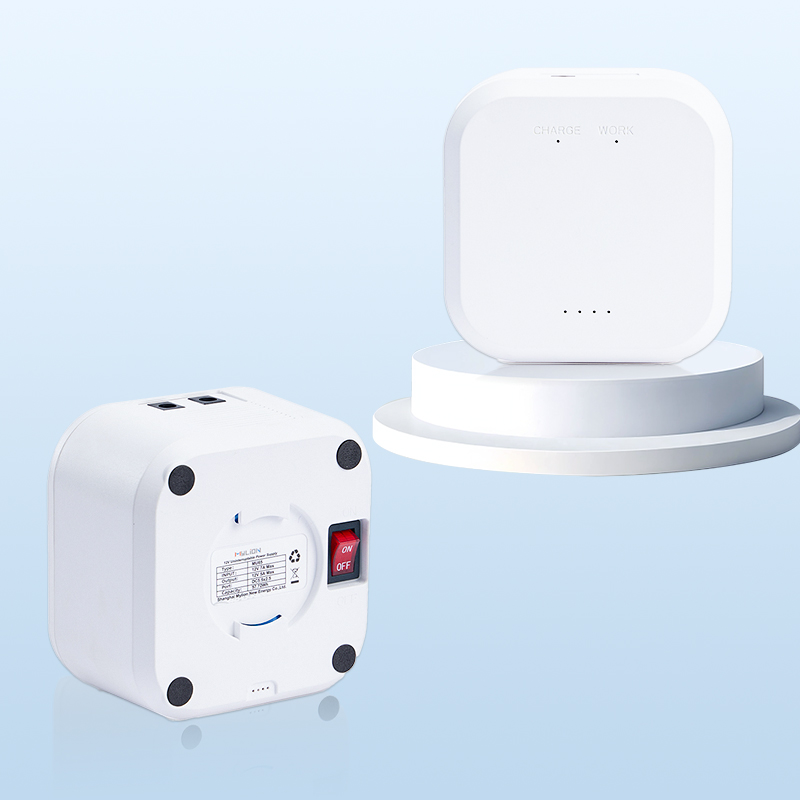
Mini-onduleur MU68
Mini-onduleur MU35
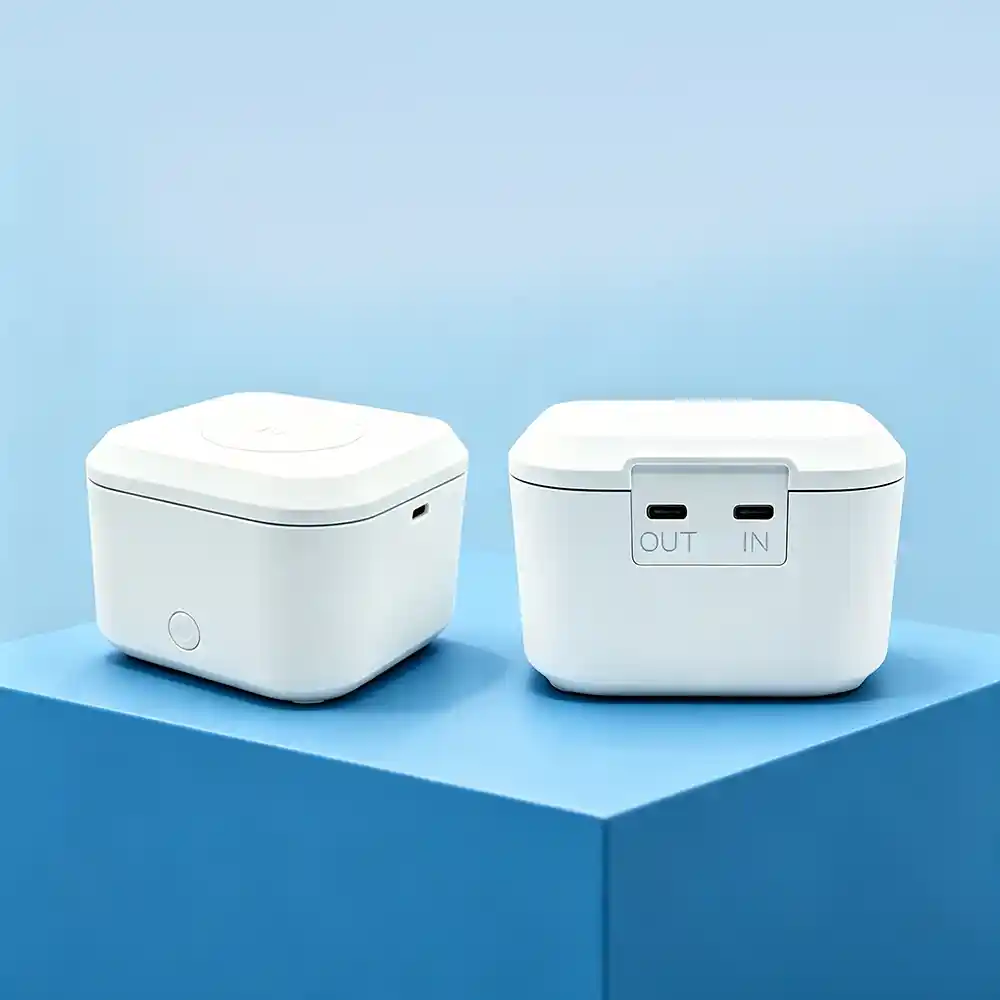
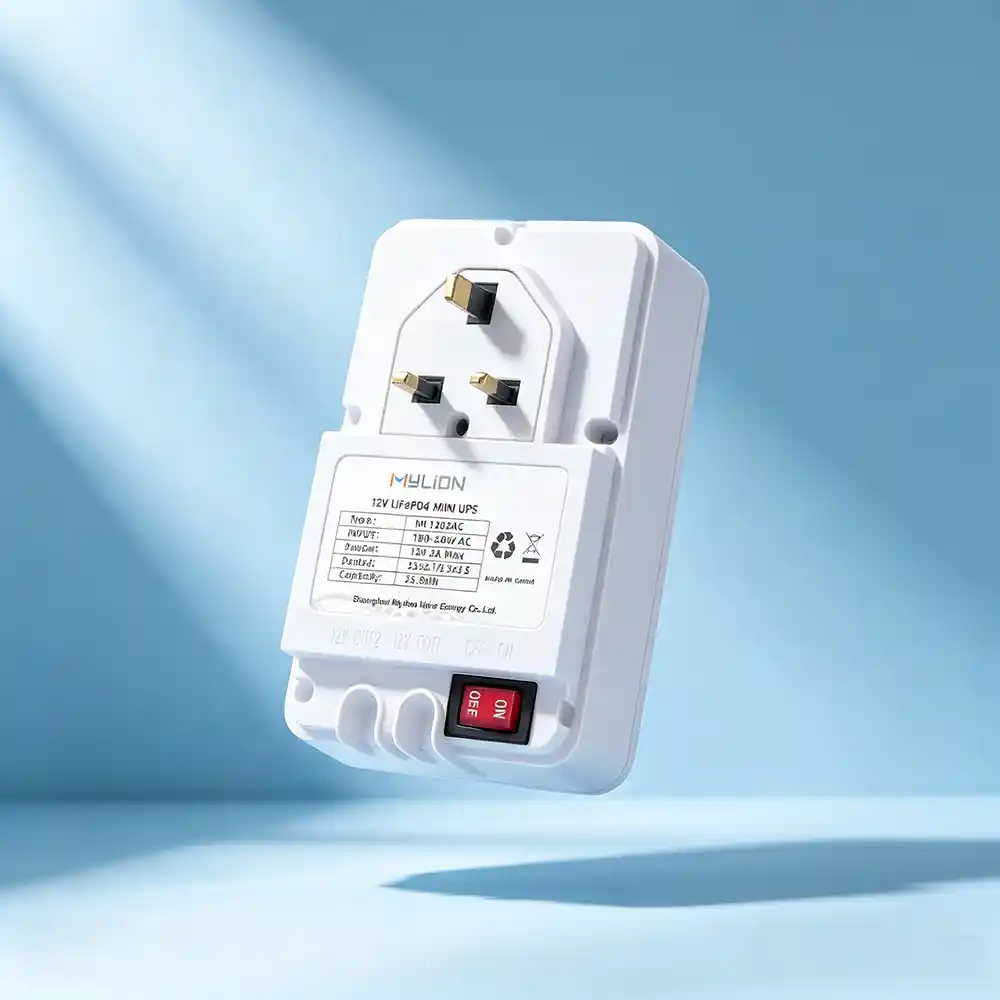
Mini-onduleur MUC85
Mini-onduleur ML1202AC
Optimisation des déploiements FAI grâce aux solutions Mini UPS de Mylion
Mylion conçoit du matériel spécifiquement adapté aux exigences des télécommunications B2B. Mini-onduleur pour routeur et ONT offre une efficacité maximale en fonctionnant entièrement en courant continu (CC), en contournant les pertes de puissance associées aux adaptateurs muraux CA-CC.
Caractéristiques essentielles des télécommunications
- Sorties CC polyvalentes :Les ports sélectionnables ou dédiés (PoE 5 V, 9 V, 12 V, 24 V) permettent aux FAI de standardiser une seule alimentation. Mini-onduleur modéliser à travers différentes générations de matériel CPE.
- Piles au lithium haute capacité :Les cellules de batterie haut de gamme offrent un stockage d'énergie dense pour une autonomie prolongée. Alimentation de secours pour routeur et ONT dans un format compact, idéal pour un bureau.
- Système de gestion de bâtiments intelligent :Des contrôleurs intégrés dans chaque Mini-onduleurs pour déploiements FAI protéger contre la surcharge, la décharge profonde, les courts-circuits et les événements thermiques.
FAQ
Q1 : Comment puis-je déterminer la consommation électrique réelle de mon ONT ou de mon routeur ?
Q2 : Quel environnement d'exécution dois-je cibler pour mon déploiement FAI ?
Q3 : Puis-je alimenter à la fois un ONT et un routeur à partir d’un seul mini-onduleur ?
Q4 : Quelle est la durée de fonctionnement standard requise pour un ONT lors d'une panne de courant résidentielle typique ?
Q5 : Quelle est la durée de vie prévue et les exigences de maintenance d'un Mini UPS dans un déploiement standard ?
Conclusion
Le dimensionnement de l'alimentation de secours pour les routeurs et les ONT nécessite de dépasser les hypothèses simplistes. Il est essentiel de déployer une alimentation de secours adaptée aux routeurs et aux ONT via un réseau dédié. Mini-onduleur minimise le taux de désabonnement des clients, réduit considérablement les frais généraux liés au support technique et assure la connectivité ininterrompue que les consommateurs exigent.
Mylion fournit un Solution Mini UPS conçue à cet effet Adaptée à tous les scénarios de déploiement FAI, MYLION offre, grâce à ses options de tension flexibles, sa compatibilité avec des connecteurs personnalisés et un contrôle qualité rigoureux, la fiabilité exigée par les opérateurs réseau.


 Français
  English
  简体中文
简体中文  Deutsch
  Italiano
  Español