
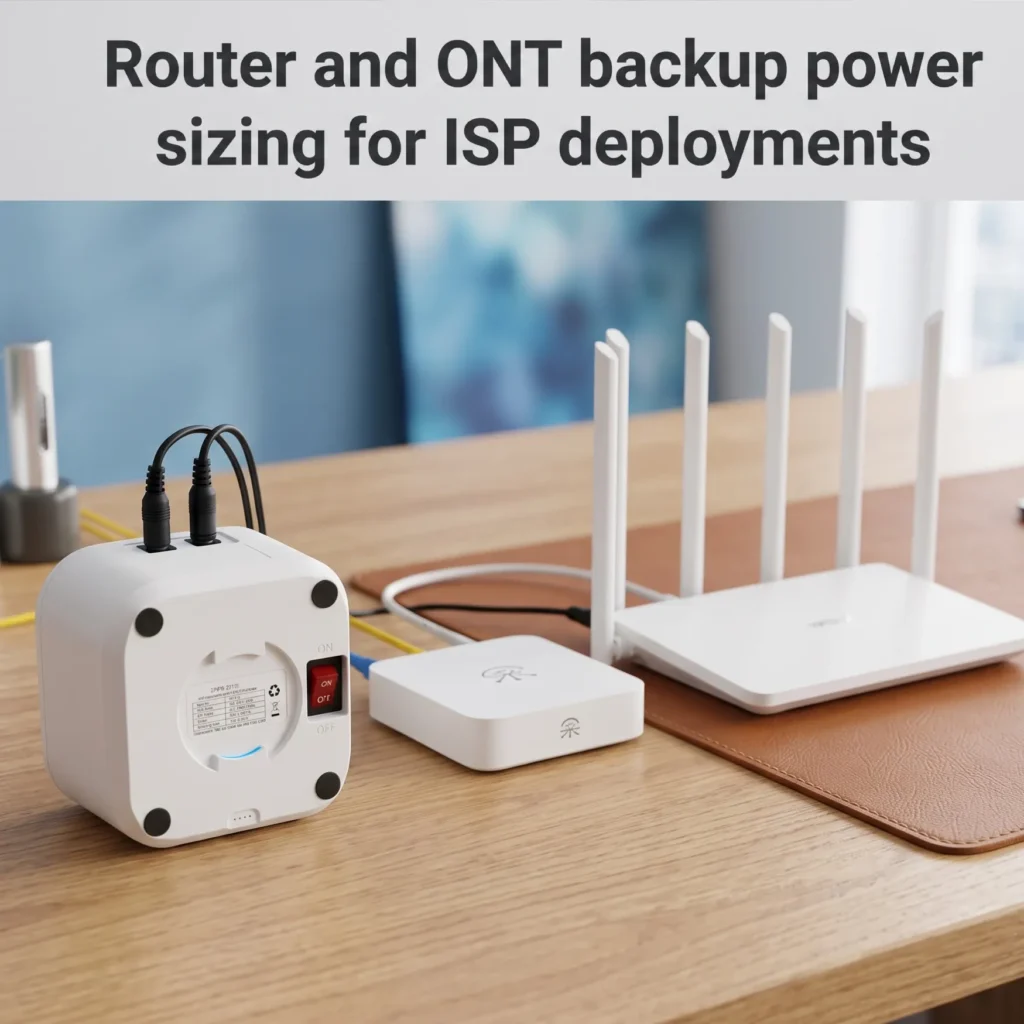
Introduction: The Hidden Risk in Gateway Backup Power
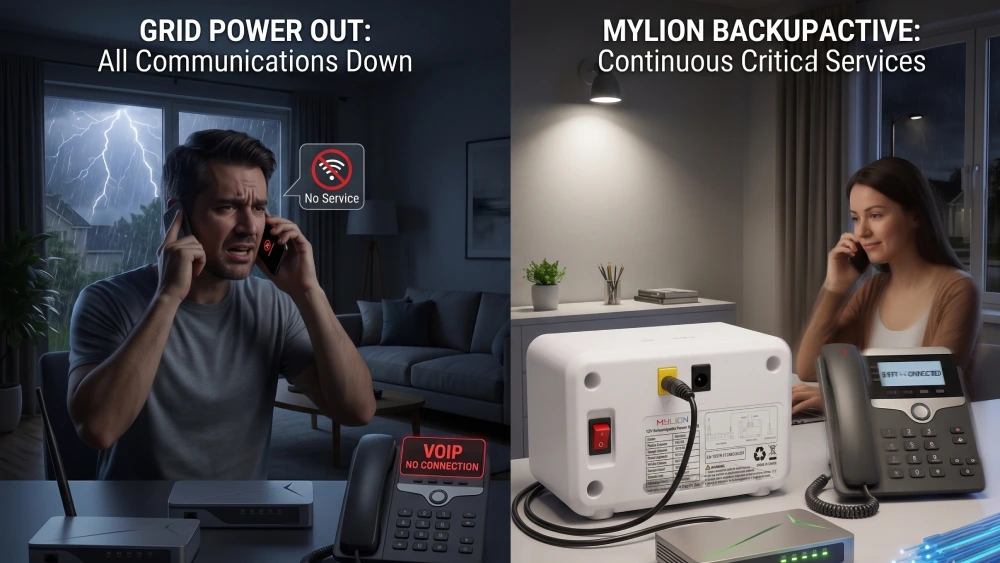
Fiber optic networks deliver unprecedented speed, but they introduce a critical vulnerability: dependency on local power. Unlike legacy copper lines, fiber optic cables do not carry electrical current. When a localized grid outage occurs, the optical link fails immediately without reliable Router and ONT backup power.
For ISPs, deploying an appropriately sized Mini UPS is a mandatory operational requirement. This guide breaks down the precise calculations, hardware requirements, and deployment strategies for scaling resilient networks using a Mini UPS for Router and ONT setups.
The Critical Role of Uninterrupted Connectivity in Modern ISP Networks
Grid power outages directly threaten ISP profitability and brand reputation. Consumers expect always-on connectivity for remote work, telehealth, and home security.
Direct Business Impacts of Outages:
- Customer Churn:Frequent connectivity drops push subscribers to competing providers.
- SLA Penalties:Enterprise clients require guaranteed uptime, making Router and ONT backup power essential to avoid financial penalties.
- Support Costs:Local blackouts trigger massive spikes in support tickets and costly technician dispatches.
The Transition to Fiber Optics
The shift to fiber mandates localized endpoint backup. Customer Premises Equipment (CPE) requires an active, local power source, ideally via a dedicated Mini UPS.
Network Type | Power Delivery Method | Outage Vulnerability |
Legacy Copper | Low-voltage DC from central exchange | Low (Self-powered during blackouts) |
Active Fiber (FTTH) | Local wall power at customer premises | High (Requires Router and ONT backup power) |
By deploying a Mini UPS for ISP deployments, providers eliminate this vulnerability. Proactive power backup using a high-quality Mini UPS protects hardware, reduces support costs, and guarantees uninterrupted service.
Calculating Power Consumption for Routers and ONTs
Accurate power calculation prevents premature battery depletion in your Mini UPS for Router and ONT configurations and avoids wasteful over-spending on oversized units.
The Core Formula
Power calculation relies on standard electrical metrics. Most telecommunications edge devices operate on Direct Current (DC).
- Formula:Watts = Volts × Amps (W = V × A)
Typical Power Draws for CPE Hardware
Different hardware configurations demand vastly different Router and ONT backup power levels.
Equipment Type | Typical Voltage | Typical Amperage | Estimated Power Draw (Watts) |
Standard Residential ONT | 12V | 0.5A – 1.0A | 6W – 12W |
Basic Wi-Fi Router | 12V | 1.0A | 12W |
Wi-Fi 6/7 Router | 12V | 2.0A – 3.0A | 24W – 36W |
Peak vs. Idle Power Consumption
ISPs must size any Mini UPS for ISP deployments based on peak load, not idle draw.
- Idle Load:The power consumed when the network is inactive.
- Peak Load:The power consumed during heavy data transmission (4K streaming, large downloads).
Sizing Mini UPS based only on idle consumption will cause the backup system to overload and shut down during heavy usage.
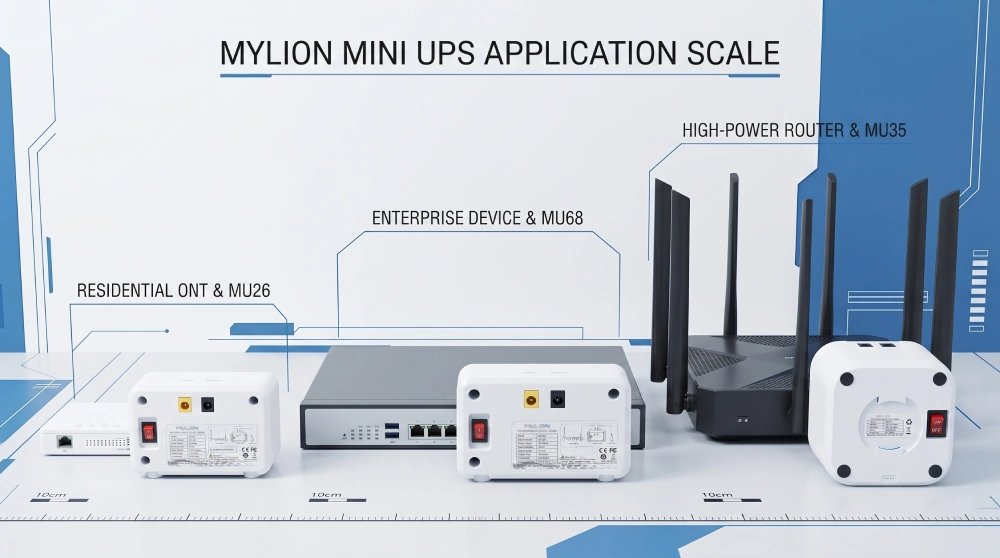
Key Considerations for Sizing Your Backup Power Systems
Converting CPE wattage into actual battery capacity for a Mini UPS for Router and ONT requires evaluating runtime goals, battery chemistry, and inherent system inefficiencies.
The fundamental formula is straightforward:
Battery Capacity (Wh) = Device Load (W) × Desired Runtime (hours)
6W × 4 hours = 24Wh minimum battery capacity
Runtime Tiers for ISP Deployments
Not every deployment requires the same runtime. ISPs must define runtime targets for their Router and ONT backup power. The key is matching runtime to the specific use case:
Tier | Runtime Target | Use Case | Recommended Capacity |
Short | 15–30 min | Brief flickers, stable grid areas | 19–25 Wh |
Standard | 1–2 hours | Suburban deployments, moderate grid stability | 30–40 Wh |
Extended | 3–6 hours | Frequent outages, rural deployments | 45–70 Wh |
Long | 6+ hours | Unstable power grids, critical infrastructure | 70+ Wh |
For most ISP projects, the goal is to bridge the gap during intermittent power flickers or localized outages lasting 2 to 4 hours.
Evaluating Battery Chemistry
Modern Mini UPS for ISP deployments require compact, efficient energy storage.
Feature | Lithium-ion / LiFePO4 Mini UPS | Traditional Lead-Acid UPS |
Energy Density | High (Compact footprint) | Low (Bulky and heavy) |
Cycle Life | 2,000+ cycles | 300 – 500 cycles |
Maintenance | Zero maintenance | Requires regular replacement |
Recharge Speed | Fast (2-4 hours) | Slow (8-12 hours) |
Efficiency Losses and Battery Degradation
A Mini UPS does not deliver 100% of its stored energy to the device.
- Inverter/BMS Loss:Calculate a 15% to 20% power loss for the internal Battery Management System (BMS).
- Age Degradation:Lithium batteries lose total capacity over their lifespan.
To guarantee a 4-hour Router and ONT backup power runtime at year five of a deployment, ISPs should oversize the initial Wh capacity by roughly 20%.
Matching Mylion Models to Specific ISP Deployment Scenarios
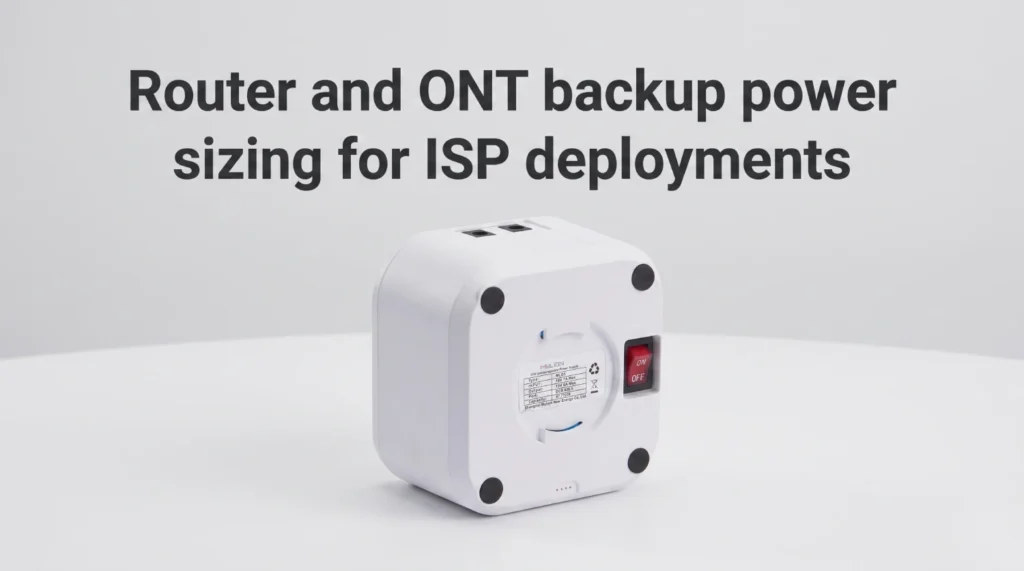
Mylion structures its product line by power level, runtime capacity, and voltage architecture to ensure you deploy the exact right Mini UPS for ISP deployments.
By assessing regional grid stability, ISPs can strategically match actual Mylion models to the subscriber’s environment:
Deployment Scenario | Grid Condition | Recommended Mylion Model | Key Specs & Application |
Brief flickers and stable grid areas | High stability | (12V 3A) | 19.24Wh. Ideal for basic residential ONTs. |
Suburban deployments with moderate grid stability | Occasional drops | (12V 3A) | 44.4Wh. Balances cost and runtime for dual Router/ONT setups. |
Frequent outages and rural deployments | Unreliable power | (12V 5A) | 77.7Wh. High output for extended offline hours. |
Unstable power grids and critical infrastructure | Severe grid issues | (24V 3A / 48V 1A )
| LiFePO4. Built for small base stations and critical IoT. |

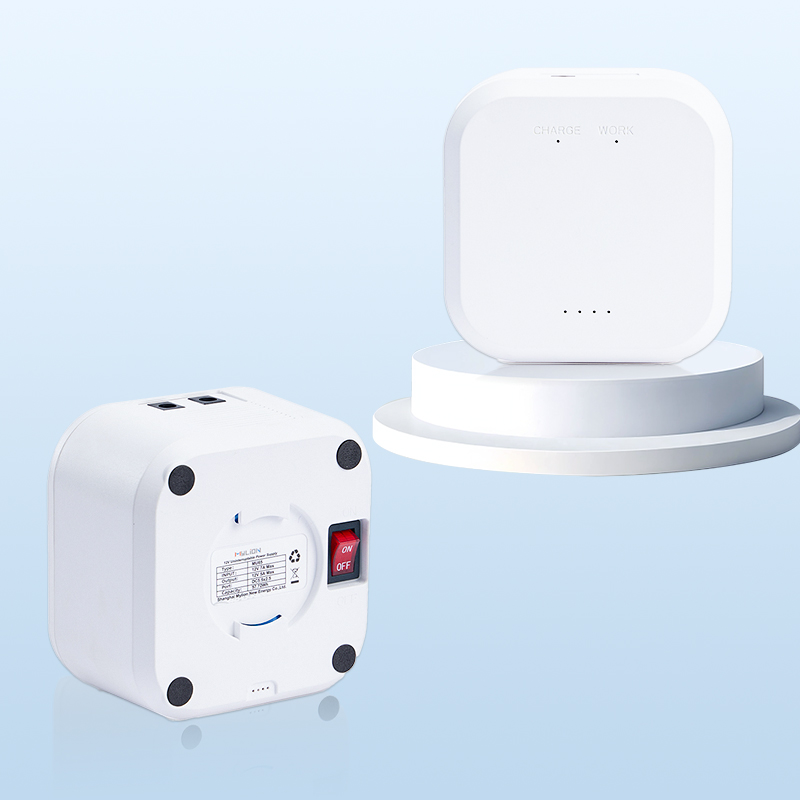
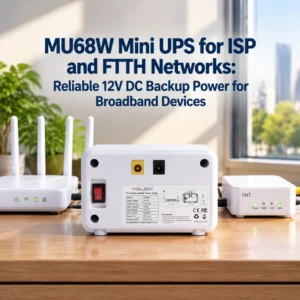
MU68 Mini UPS
MU35 Mini UPS
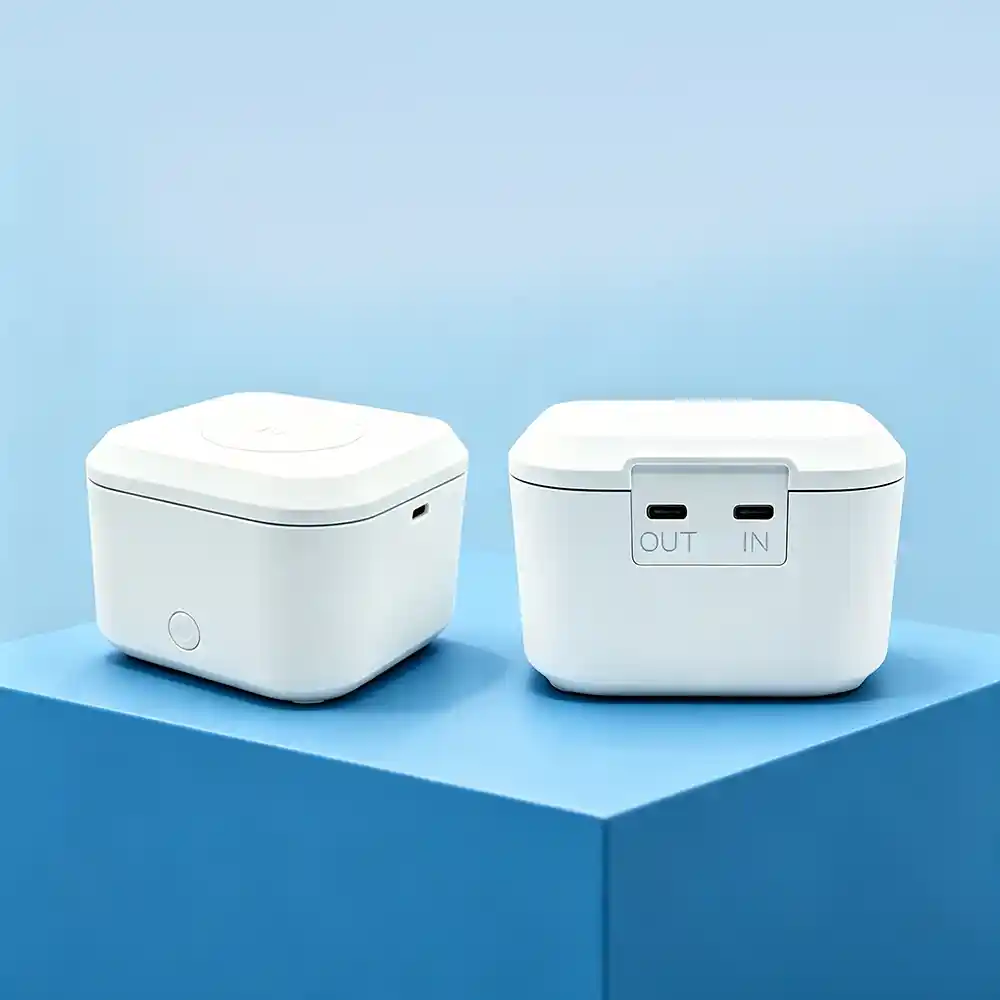
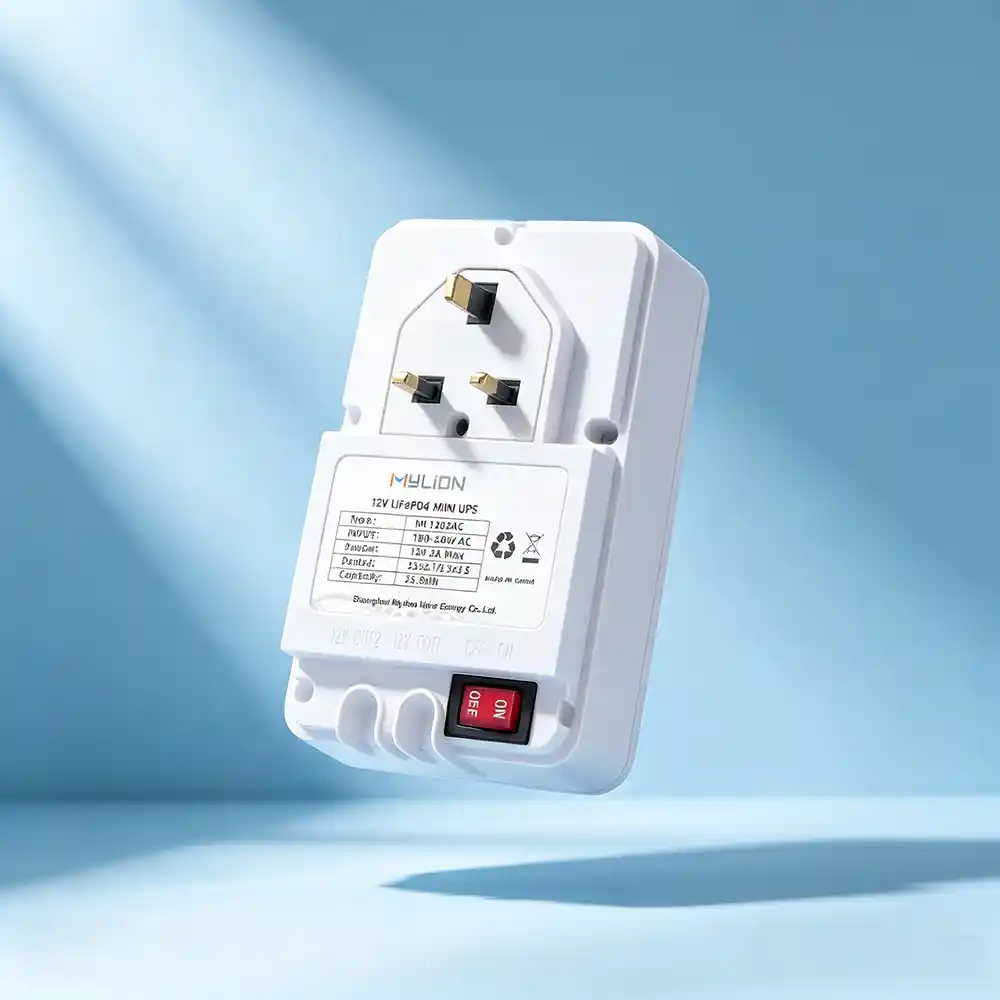
MUC85 Mini UPS
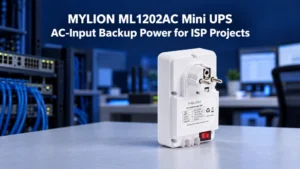
ML1202AC Mini UPS
Leveraging Mylion Mini UPS Solutions for Optimized ISP Deployments
Mylion engineers hardware specifically for the demands of B2B telecommunications. A Mylion Mini UPS for Router and ONT provides maximum efficiency by operating entirely on Direct Current (DC), bypassing the power losses associated with AC-to-DC wall adapters.
Critical Features for Telecommunications
- Versatile DC Outputs:Selectable or dedicated ports (5V, 9V, 12V, 24V POE) allow ISPs to standardize a single Mini UPS model across various CPE hardware generations.
- High-Capacity Lithium Cells:Premium battery cells offer dense energy storage for extended Router and ONT backup power in a compact, desk-friendly form factor.
- Intelligent BMS:Integrated controllers in every Mini UPS for ISP deployments protect against overcharging, deep discharging, short circuits, and thermal events.
FAQ
Q1: How do I determine the actual power consumption of my ONT or router?
Q2: What runtime should I target for my ISP deployment?
Q3: Can I power both an ONT and a router from a single Mini UPS?
Q4: What is the standard runtime required for an ONT during a typical residential power outage?
Q5: What is the expected lifespan and maintenance requirement for a Mini UPS in a standard deployment?
Conclusion
Sizing backup power for router and ONT deployments requires moving beyond simple assumptions. Deploying right-sized Router and ONT backup power via a dedicated Mini UPS minimizes customer churn, drastically reduces technical support overhead, and delivers the uninterrupted connectivity consumers demand.
Mylion provides a purpose-built Mini UPS solution for every ISP deployment scenario. With flexible voltage options, custom connector support, and rigorous quality control, MYLION delivers the reliability that network operators require.
 English
  简体中文
简体中文  Deutsch
  Français
  Italiano
  Español