
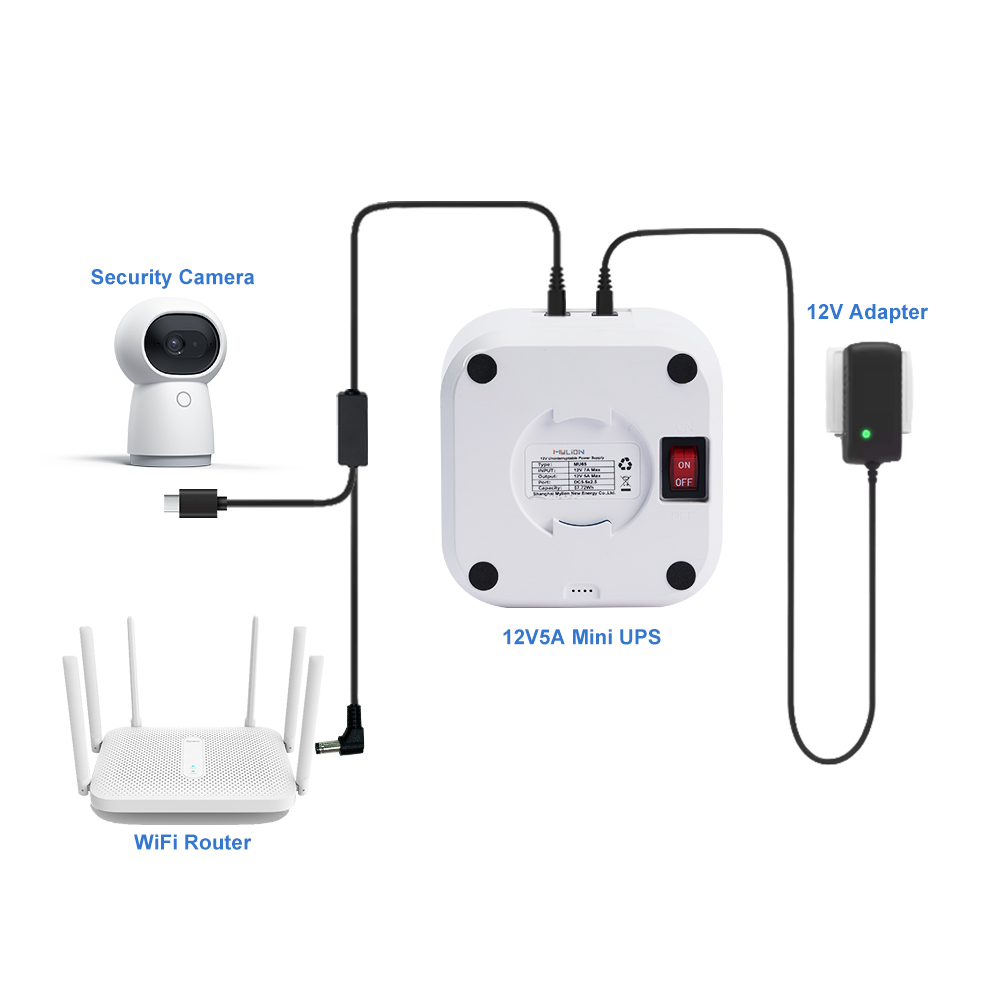
Mini UPS (Uninterruptible Power Supply) and power banks are often mistaken for being essentially the same devices, with only differences in size or capacity. In reality, they are built for distinctly different purposes, with notable differences in design, functionality, and application scenarios. In this article, we’ll break down the key differences between the two to help you make an informed decision for your specific needs.

1. Core Feature Comparison
| Feature | Mini UPS | Power Bank |
| Primary Purpose | Uninterrupted power backup | Temporary charging |
| Switch Time | ≤10ms (instantaneous) | No auto-switching (manual) |
| Output Stability | Voltage regulation | Basic 5V/9V/12V output |
| Typical Loads | Routers, NAS, PCs | Phones, tablets |
2. Key Differences Explained
(1) Instant Switchover: The UPS Advantage
Uses static switches for 0ms automatic cutover
Zero-crossing switching prevents voltage spikes
Power Bank:
No automatic switching (requires manual plugging)
Even with inverters, switch time >50ms (may reboot PCs)
(2) Load Compatibility
| Device | Mini UPS | Power Bank | Risk Warning |
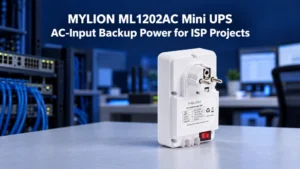
| Wi-Fi Router | √(ML1202AC) | ❌ (needs adapter) | Unstable voltage |
| Laptop | √(MU68) | ❌ (requires PD trigger) | May damage ports |
| NAS Storage | √(MU05) | ❌ | Sudden power loss risks data |
| Medical Devices | √(MU35) | ❌ | Voltage spikes are dangerous |
2. Usage Scenarios
(1) When to Use Mini UPS
Network equipment (routers, modems)
NAS/servers (prevents HDD corruption)
Surveillance systems (continuous recording)
(2) When a Power Bank Suffices
Charging phones/tablets outdoors
Powering Bluetooth speakers temporarily
Emergency lighting
3. Common Myths Debunked
Q1: Can a power bank + inverter work as a Mini UPS?
Technically yes, but impractical:
Switch time >50ms
No voltage regulation (may harm devices)
Inverter efficiency drops to 80-90%
Q2: Why do some “power banks” claim Mini UPS functionality?
Marketing gimmicks:
Just add AC plugs (slow switching)
Basic voltage sensing (no fast response)
4. Buying Guide
(1) Choose Mini UPS If:
Protecting network/data equipment
Devices are voltage-sensitive
Unattended operation needed (e.g., smart home hub)

Top Picks:
- Output power: 45Wh/12000mAh
- Output current: Max 3A
- Built-in smart chip and PCB: provide overcharge, over discharge, overload, short circuit, temperature protection and other functions to protect the battery.
- Use Grade A certified and high-quality batteries.
- Use ABS fireproof shell, safe and reliable.

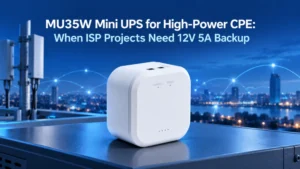
- Output power: 77.7Wh/21000mAh
- Output current: Max 5A
- Built-in smart chip and PCB: provide overcharge, over discharge, overload, short circuit, temperature protection and other functions to protect the battery.
- 5A high current charging and discharging can meet the needs of more devices.
- Use ABS fireproof shell, safe and reliable.

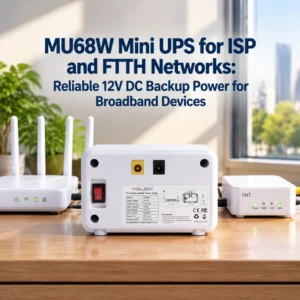
- Output power: 25.6Wh/8000mAh
- Output current: Max 2A
- Built-in AC input, no need to configure an additional charger, also known as a smart adapter, plugs are available in US/UK/Australian/European
- Using lithium iron phosphate LiFePo4 battery cells, the number of cycles can reach more than 2000 times
With two output ports, you can connect more devices.

(2) Choose a Power Bank If:
Mobile charging only
Load <50W
Manual switching is acceptable
Conclusion
The fundamental difference:
Mini UPS = Power insurance (active protection)
Power bank = Power supplement (manual operation)
 English
  简体中文
简体中文  Deutsch
  Français
  Italiano
  Español