
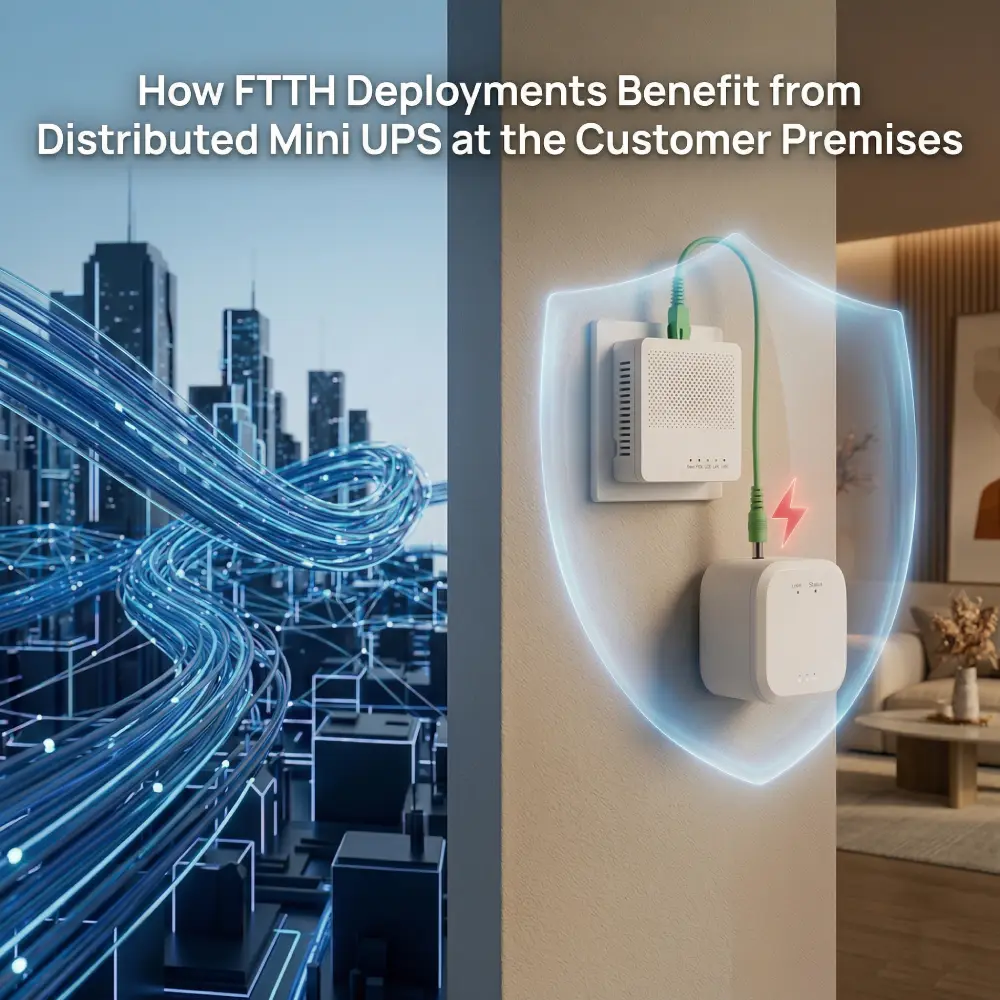
FTTH deployments typically focus on OLT redundancy, fiber path protection, and central office backup power. However, even the most resilient networks cannot prevent service disruptions when power is lost at the user’s ONT or router.
This is where deploying distributed mini UPS units at each customer premises becomes critical. By directly placing compact backup power at the user’s site, FTTH providers can protect the final connection point, achieving true end-to-end uptime.
This article explores the technical and operational considerations behind why shifting backup power from central hubs to the distributed edge is becoming a non-negotiable standard in premium FTTH deployments.
Why Core Network Redundancy Cannot Guarantee Client Equipment Uptime
In the telecom ecosystem, millions of dollars are invested to secure “five nines” (99.999%) availability. This is primarily achieved through dual-homing, diverse fiber routing, and massive lead-acid or LiFePO4 battery banks located in the Central Office (CO) or headend. While these systems ensure the signal reaches local distribution points, they cannot guarantee the uptime of CPE.
The “last mile” is often the most vulnerable link, as it relies on the residential power grid. When localized power outages occur:
- The reliability of core links becomes irrelevant.
- Service Level Agreement (SLA) breaches are triggered.
- “False truck rolls” and unnecessary support tickets surge.
What Does Distributed Backup Power Mean in an FTTH Environment?
Distributed backup power in FTTH refers to the strategic deployment of small, typically lithium-ion-based UPS at each customer premises. In the context of FTTH, this means directly integrating a Mini DC UPS between the wall outlet and the ONT/router.
Unlike traditional, bulky AC UPS systems used for PCs, distributed mini UPS units utilize DC-to-DC conversion. This avoids the energy loss associated with inverting DC battery power to AC, thereby offering higher efficiency and a smaller footprint, allowing them to blend perfectly into residential environments.
Distributed mini UPS units are specifically designed to support low-power devices (ONTs/ONUs, and potentially a single router), with sufficient runtime to bridge short-term power outages. Typically, this runtime ranges from 2 to 8 hours, depending on battery capacity and load requirements.
Distributed vs. Centralized: A Technical Comparison
Features | Centralized CO Backup | Distributed Mini UPS |
Protection Scope | Core switches, OLTs, servers | ONTs, ONUs, Wi-Fi routers |
Power Source | High-voltage battery banks | Individual 12V/9V/5V DC units |
Installation | Rack-mounted (Professional-grade) | Plug-and-play (User/Technician) |
Failure Impact | High (Affects thousands) | Low (Affects a single household) |
Primary Function | Network integrity | Service continuity & End-user experience |
Strategic FTTH Deployment Scenarios & Mylion Product Recommendations
Deploying backup power is not a one-size-fits-all endeavor. To optimize the balance between reliability and capital expenditure (CapEx), Mylion categorizes its solutions based on distinct Internet Service Provider (ISP) deployment environments.
1. High-Density Residential & Standard Indoor Nodes
In over 90% of FTTH deployments, ISPs require a standardized, high-volume solution that can be easily installed at the customer premises or in small ISP cabinets.
Recommended Series: Main Deployment Series ( MU35,MU26, MU68).
Application: These units deliver stable DC output (up to 5A) and are tailored for indoor ONT/OLT hardware. Their compact design ensures they can be integrated into standard wall-mounted junction boxes without causing structural deformation.
2. Modern Smart Homes & Compact Racks
As network equipment transitions to the USB-C standard, deployment speed becomes a critical metric for reducing labor costs.
Recommended Series: Rapid Deployment Series (MUC66).
Application: Featuring USB Type-C connectivity, these models are ideal for modern routers and compact indoor cabinets. Their plug-and-play nature significantly reduces installation time for large-scale deployments.
3. Critical Infrastructure & Industrial Environments
In scenarios where maintenance access is difficult or temperature fluctuations are extreme, operational lifespan outweighs the initial unit cost.
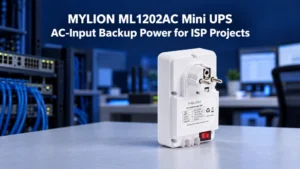
Recommended Series: Lifetime High-Reliability Series (ML1202AC).
Application: Utilizing Lithium Iron Phosphate (LiFePO4) technology, these batteries offer superior safety and cycle life. They are the professional choice for mission-critical nodes demanding “zero maintenance.”
4. Remote Street Cabinets & Outdoor Nodes
FTTH expansion frequently necessitates placing equipment in harsh environments susceptible to rain, dust, and humidity.
Recommended Series: Harsh Environment Series (MA825, MU248).
Application: Encased in industrial-grade waterproof and weatherproof housings, these devices ensure outdoor street cabinets remain operational even under extreme weather conditions.
5. Off-Grid & Green Energy Deployments
In rural regions or areas lacking utility grid infrastructure, ISPs must rely on renewable energy sources.
Recommended Series: Special Application Series (MUL268S).
Application: Purpose-built for solar-integrated FTTH nodes, the MUL268 provides a reliable bridge for off-grid connectivity.
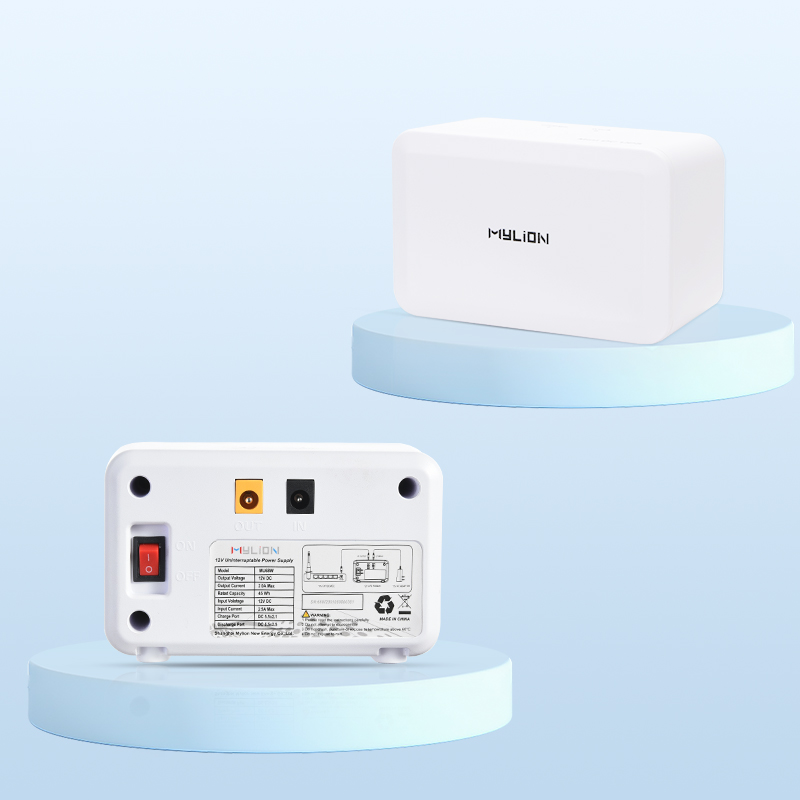
12V 2A MU26 Mini UPS
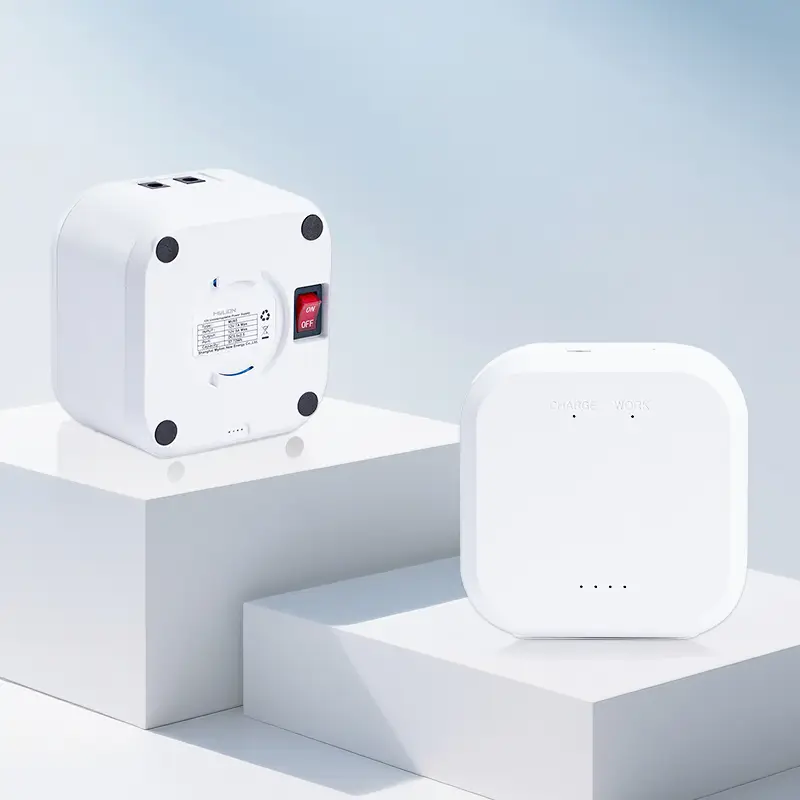
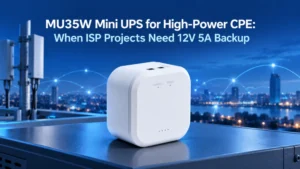
12V 5A MU35 Mini UPS
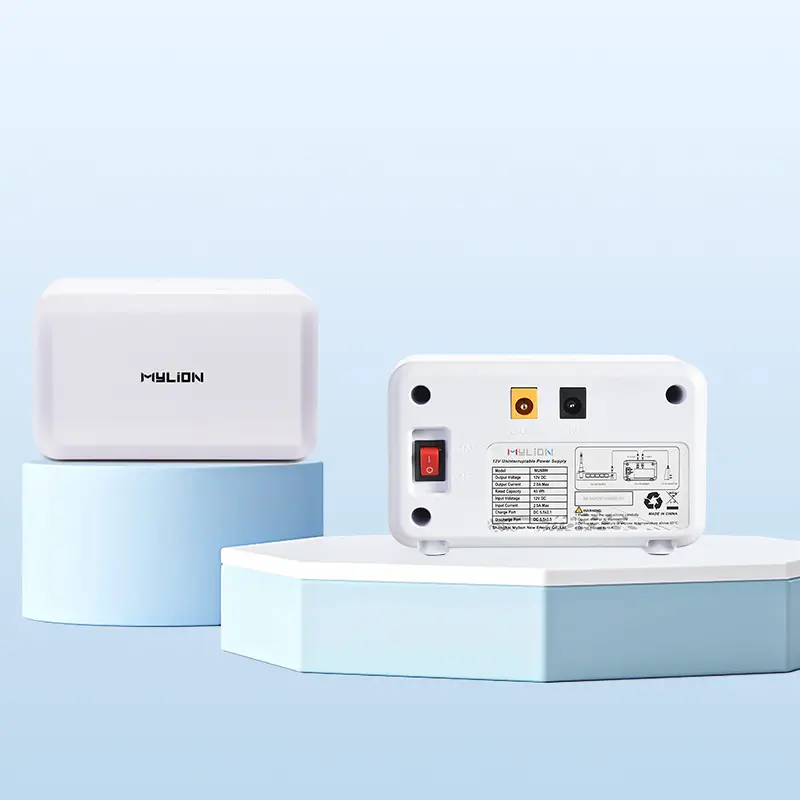
12V 3A MU68 Mini UPS
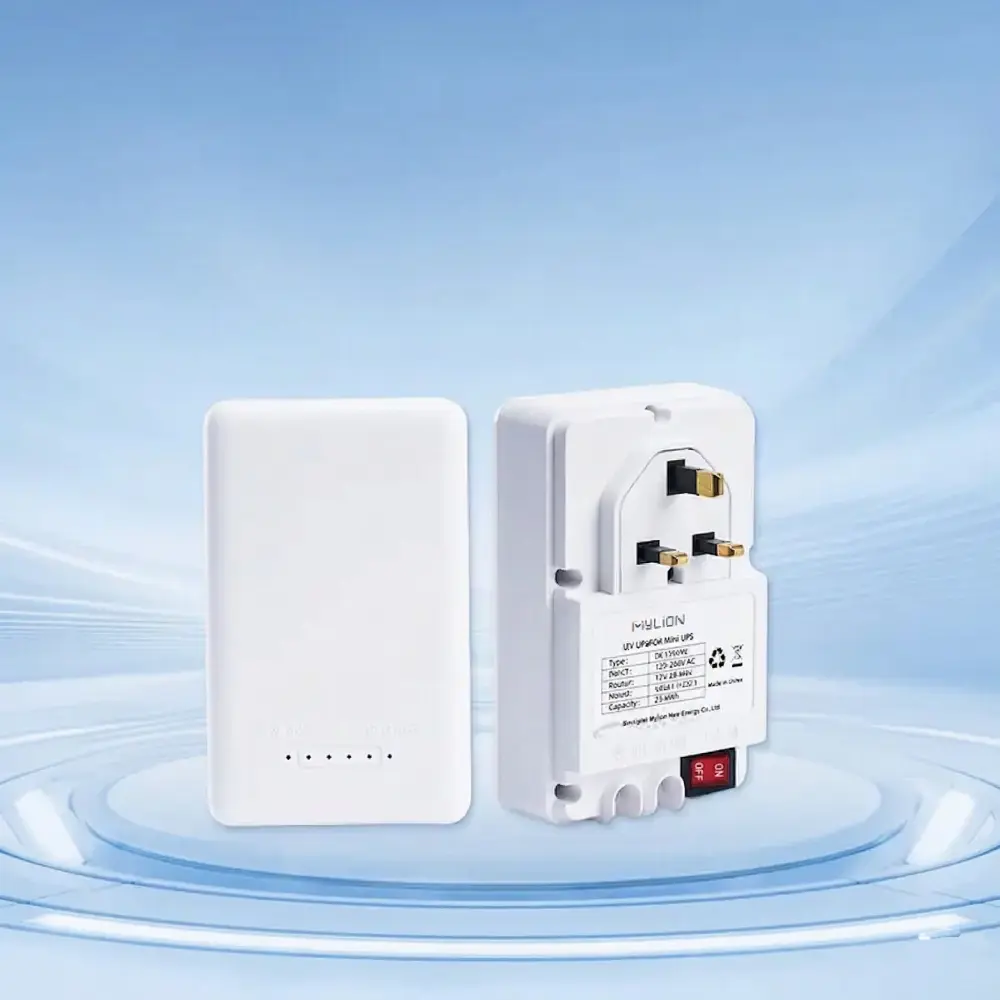
12V 2A MU1202 Mini UPS
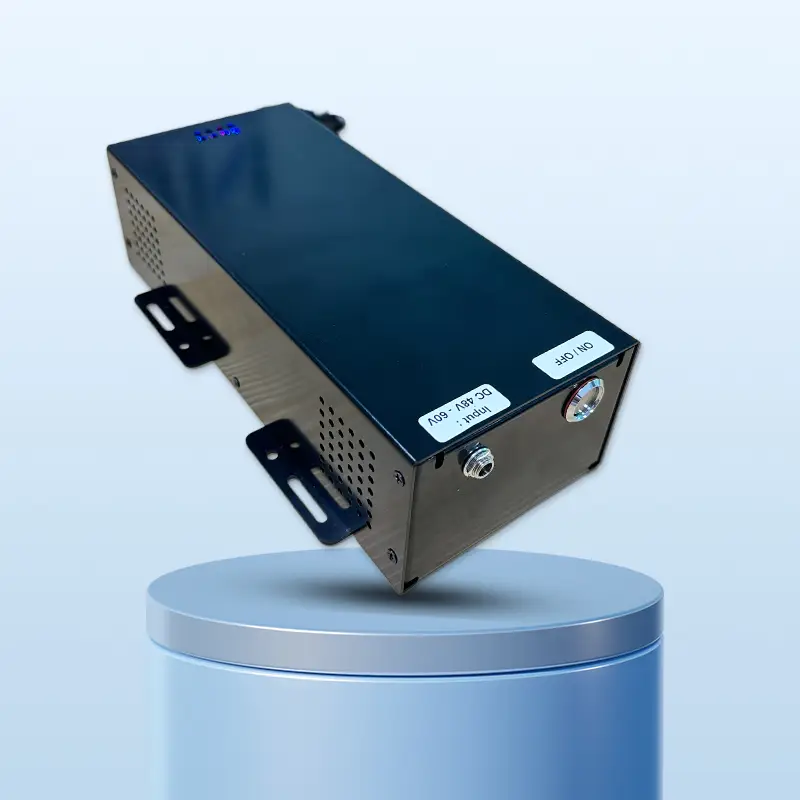
24V/48V MU248 Mini DC UPS
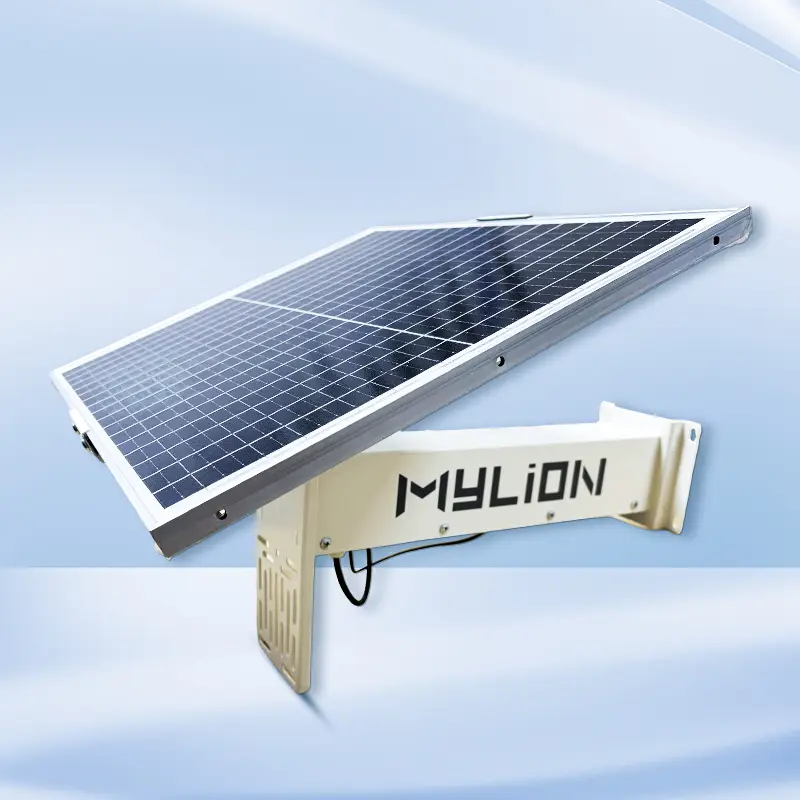
MUL268S Solar Mini UPS
Key Advantages of Distributed Mini UPS in FTTH Systems
Deploying distributed mini UPS devices in FTTH systems yields benefits that extend far beyond simply maintaining network connectivity during power outages:
- Maintaining Network Continuity
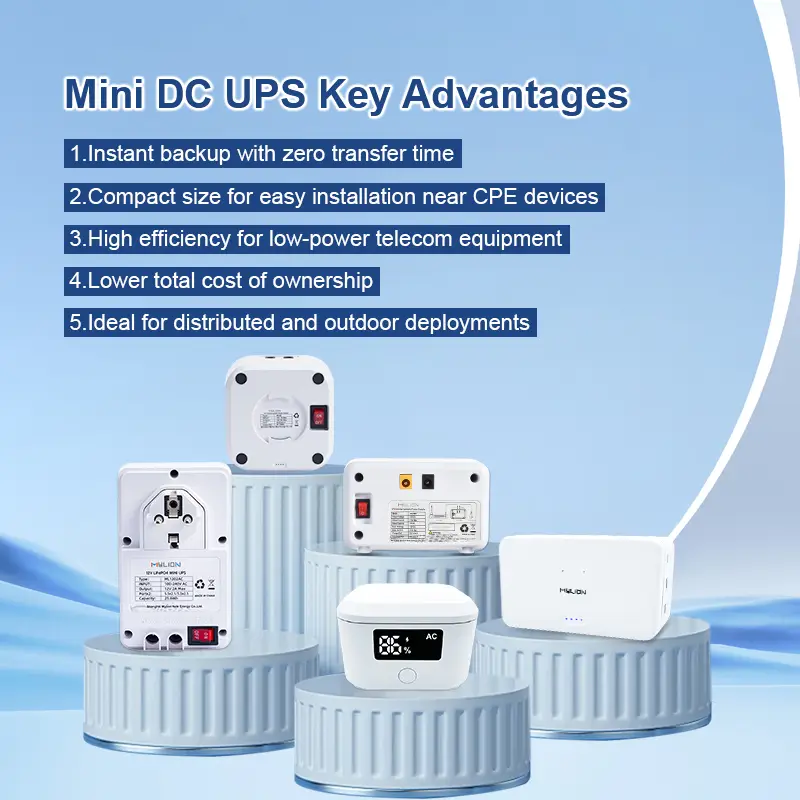
The primary advantage is the elimination of the “reboot cycle.” When grid power fails, a mini UPS provides zero-millisecond switching, ensuring uninterrupted network connectivity so users can maintain online education, remote work, and VoIP calls.
- Surge Protection
Most mini UPS devices act as a buffer. They regulate input voltage, shielding sensitive ONT chipsets from the “dirty power” frequently encountered when the grid is restored after an outage. This significantly extends the lifespan of the CPE.
- Compact Distributed Deployment
Mini UPS devices feature a small footprint and compact design, making them easy to install on interior walls, in communication cabinets, or near network terminals. Most Mylion Mini UPS units feature plug-and-play designs, effectively reducing maintenance requirements and simplifying installation.
- Lower TCO
While there is an initial hardware CapEx, the procurement cost of a mini UPS is low, and they utilize lithium-ion or LiFePO4 battery technologies. Consequently, downstream maintenance and OpEx are significantly lower.
How Mini UPS Systems Support ONTs/ONUs at Every Endpoint
The technical architecture for deploying a mini UPS at the endpoint is straightforward but highly effective. Most modern ONTs are powered by 12V DC. A distributed mini UPS is connected in series within the optical network line:
Wall Outlet (AC) → Power Adapter (DC) → Mini UPS → ONT/Router
Key Technical Specifications for FTTH Support:
- Battery Chemistry: High-density lithium-ion or LiFePO4 batteries, featuring a cycle life of 500-1000+ cycles.
- Capacity: Typically ranging from 10,000mAh to 30,000mAh, providing 4 to 10 hours of backup power.
- Auto-Start: Even if the battery is completely depleted, the UPS will automatically power the ONT the moment AC power is restored.
Modern distributed mini UPS devices, such as those provided by Mylion, are engineered for seamless physical integration. They typically feature:
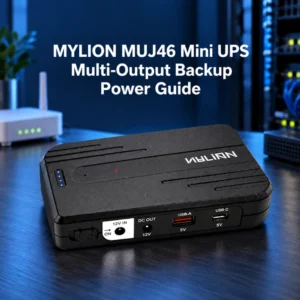
- Dual Voltage Output: Many FTTH ONTs require 12V DC, whereas routers might utilize 9V or 5V USB-C interfaces. Versatile mini UPS units offer regulated DC outputs to power both devices directly, bypassing inefficient AC/DC conversion.
- Wall-Mount Brackets: The units can be neatly stacked behind the ONT or mounted on adjacent walls, maintaining a clean and aesthetically pleasing setup.
The Trade-off Between Cost and Reliability in Large-Scale FTTH Projects
In a project encompassing over 100,000 households, cost is the ultimate deciding factor. Procurement teams must weigh unit costs against the resulting reliability enhancements.
Cost Analysis Table
Metric | Without Mini UPS | With Distributed Mini UPS |
Initial CPE Cost | Base $ | Base Price + $15-$25 |
Annual Support Calls | High (Power-related reboots) | Low (Filtered power/Backup) |
Customer Retention | Average | High (Increased loyalty) |
Brand Perception | Standard ISP | Premium/Reliable Provider |
For FTTH projects vulnerable to thunderstorms or winter ice storms, the decision transcends mere economics—it is a strategic consideration. Offering a distributed mini UPS as a standard installation component or as a low-cost managed service add-on can differentiate a provider in a saturated market.
Mylion’s Competitive Edge in Distributed Power Solutions
As a leader in premium mini UPS solutions, Mylion has designed a comprehensive portfolio specifically engineered to meet the stringent demands of the telecommunications industry.
- Scalable Supply Chain: For large-scale FTTH deployments requiring tens of thousands of units, we deliver consistent manufacturing quality paired with global logistics support.
- Premium Certifications: Fully compliant with CE, FCC, and RoHS standards, ensuring seamless integration into EU and US markets.
- Customization for ISPs: We offer OEM/ODM services tailored to specific DC output requirements (5V, 9V, 12V, 15V, 24V) and branding needs.
- Safe Lithium-Ion Chemistry: Our UPS devices utilize high-quality LiFePO4 and advanced lithium-ion batteries. These offer not only exceptional thermal stability but also a cycle life that far exceeds standard market alternatives.
FAQ
Q1: What does “Distributed Mini UPS” mean in an FTTH system?
It entails placing a dedicated, small-form-factor backup power unit at each customer premises to power the ONT, rather than relying solely on central office backup power.
Q2: Can distributed backup replace the Central Office UPS?
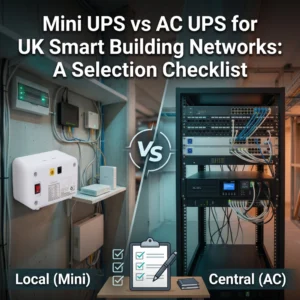
No. Central office backup protects the core network; distributed mini UPS units protect the customer endpoints. They serve as complementary tiers within a resilient infrastructure.
Q3: Is a distributed mini UPS cost-effective for large-scale FTTH deployments?
Yes. The reduction in customer churn rates and support calls, combined with the ability to offer “premium uptime” as a value-added service, easily justifies this investment for Tier-1 operators.
Q4: Does adopting distributed Mini UPS increase ISP maintenance workloads?
No. Distributed Mini UPS units are designed to lower Total Operating Expenses (OpEx). Because the device prevents routers from constantly rebooting during short power interruptions, ISP customer complaints and repair calls decrease significantly.
Q5: If a customer’s ONT utilizes the latest USB-C interface, are existing Mini UPS units compatible?
Yes, Mylion’s Mini UPS series (MUC66/MUC85) feature native USB-C output, enabling seamless integration with the latest Wi-Fi 7 routers and ONTs.
Conclusion
In markets plagued by unstable power grids (such as Southeast Asia, parts of Africa, and rural US/EU regions), the cost of failing to provide backup power—realized through frequent equipment replacements and support expenditures—far exceeds the initial hardware investment. A distributed mini UPS guarantees that the final segment of the fiber network remains resilient against power supply uncertainties.
By integrating Mylion’s professional mini UPS solutions, ISPs can effectively mitigate churn risk and slash exorbitant operational costs.
 English
  简体中文
简体中文  Deutsch
  Français
  Italiano
  Español