
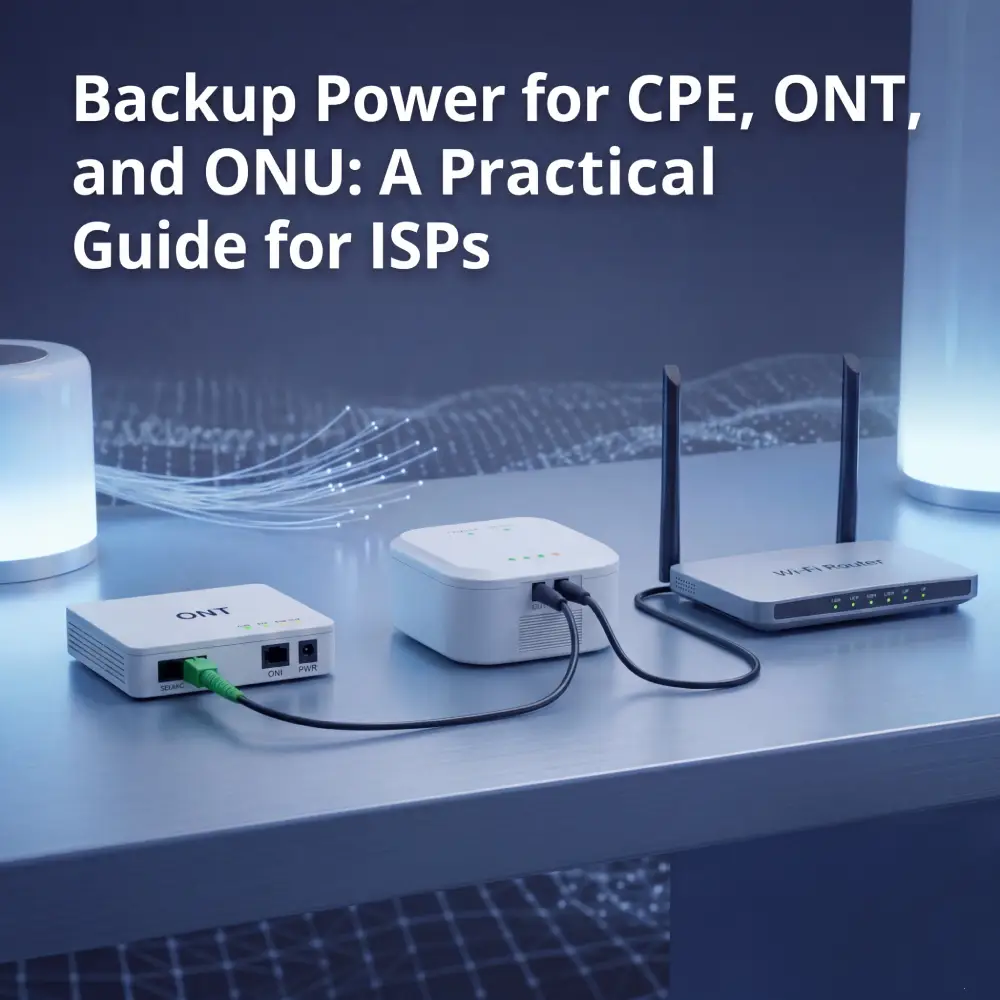
For ISPs, service continuity often depends on the reliability of customer premises equipment, including CPE, ONT, and ONU devices. During a power outage, these devices may stop working even if the main telecom network is still operating. A well-matched backup power solution helps reduce downtime, improve customer experience, and support more stable service delivery in broadband and FTTH environments.
With the continuous expansion of FTTH and the increasing penetration rate of broadband, providing stable backup power for CPE and optical network terminals (ONT/ONU) has become a strategic priority for telecom operators. This guide explores why well-matched Mini DC UPS systems play a crucial role in mitigating these end-user risks.
As a professional Mini UPS supplier, Mylion offers highly reliable, commercial-grade mini direct current (DC) uninterruptible power supply solutions specifically designed for ONT, ONU, and CPE backup. Through these backup power solutions, ISPs can reduce downtime, enhance customer experience, and ensure stable network continuity across various deployment scenarios, including residential, enterprise, rural, and outdoor environments.
Why Customer Premises Equipment is Vulnerable During Power Outages
Telecom core networks are designed with an extremely high degree of redundancy. Central offices are equipped with large diesel generators and massive battery banks to ensure uninterrupted operation. However, this robust architecture rarely extends down to the customer premises equipment level.
The Last-Mile Disconnect
The problem lies at the very edge of the network. The local devices responsible for converting optical signals into usable Ethernet or Wi-Fi signals—CPE (Customer Premises Equipment), ONT (Optical Network Terminal), and ONU (Optical Network Unit)—typically rely on standard residential or commercial AC power supplies.
When a localized power outage occurs:
- The optical fiber remains illuminated and is in a fully normal working state.
- The terminal device loses power and immediately stops operating.
- The user experiences a complete network interruption.
The Impact on ISPs
For ISPs, ignoring the power supply gap in the last mile leads to quantifiable financial and operational losses. When customer premises equipment loses power, the resulting offline status triggers a series of consequences:
- False power outage alerts.
- Unnecessary truck rolls (vehicle dispatches).
- Hardware aging and degradation.
- Increased customer churn rates.
- Damaged brand reputation.
This fundamentally weakens the ISP’s market authority and its B2B market positioning. Therefore, choosing a reliable power backup solution tailored for ISPs can maintain the continuous operation of CPE, ONT, and ONU devices.
Differences in Power Requirements for CPE, ONT, and ONU
Although often grouped together, CPE, ONT, and ONU actually represent different hardware categories. They possess highly specific power consumption characteristics, input voltage requirements, and deployment environments. To select the appropriate backup solution, ISPs must first understand the different power profiles of their deployed equipment:
- CPE :Typically refers to routers, wireless network gateways, or modems. Due to the need for wireless network transmission and routing processing, these devices usually require higher power. Common requirements are 12V DC with a current of 1A to 2A.
- ONT: Commonly used in FTTH deployments, this device serves as the termination point for the optical fiber line. Compared to a full router, an ONT generally has lower power consumption, with typical operating voltages of 12V DC or 5V DC.
- ONU : Its function is similar to an ONT, and it typically serves multiple users in Multi-Dwelling Units (MDUs). These devices are critical; if the ONU loses power, the optical signal cannot be converted into an Ethernet signal.
Understanding these technical details is essential for selecting the right backup power supply. Below is a detailed technical comparison of CPE, ONT, and ONU:
| Equipment Type | Deployment Environment | Typical Voltage | Average Power Draw |
| ONT (Optical Network Terminal) | Indoor/Outdoor (Wall mounted) | 12V DC | 5W – 15W |
| CPE (Routers/Gateways) | Indoor (Desk/Rack) | 9V or 12V DC | 12W – 24W+ |
| ONU (Optical Network Unit) | Outdoor/MDU (Basement/Pole) | 12V, 24V, 48V DC | 15W – 50W+ |
Why DC Backup Power is Preferred
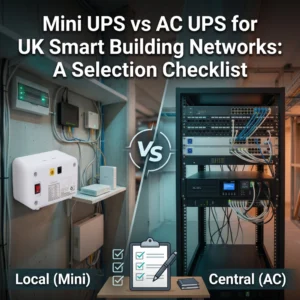
When considering backup power options, ISPs generally have two choices: Alternating Current (AC) Uninterruptible Power Supply (UPS) devices or Direct Current (DC) backup power. However, for modern telecom deployments, mini DC UPS systems have become the industry standard.
Traditional AC UPS devices are bulky, expensive, and inefficient. In contrast, mini DC UPS solutions avoid this inefficiency. They supply power directly at the voltage required by the CPE, ONT, or ONU. They possess significant performance advantages:
- Zero transfer time.
- Maximum runtime.
- Reduced footprint.
- Higher efficiency.
- Suitability for large-scale deployments.
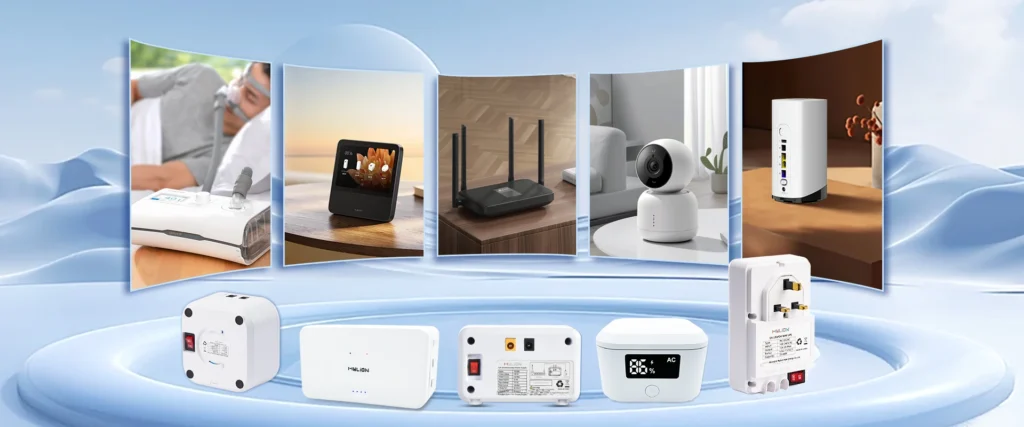
The MYLION Mini UPS series is exclusively designed for CPE, ONT, and ONU devices, capable of providing clean DC power with preset voltage options (5V/9V/12V).
For low-power CPE, ONT, and ONU devices, Mylion offers:
- 12V 2A MU26 Mini UPS
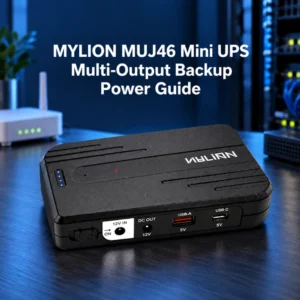
- 12V 2A MUJ46 Mini UPS
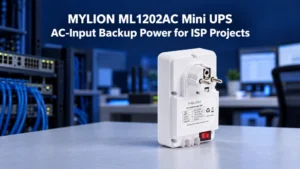
- 12V 2A ML1202AC LiFePO4 Battery Mini UPS
These models are suitable for basic FTTH ONTs and single-band routers. Utilizing advanced Lithium Iron Phosphate (LiFePO4) battery technology, they offer an extended cycle life and higher safety, making them ideal for long-term ISP deployments.
For standard CPE, ONT, and ONU devices, Mylion offers:
- 12V 3A MU48 Mini UPS
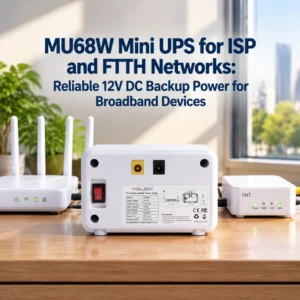
- 12V 3A MU68 Mini UPS
- 12V 3.5A Type-C MUC66 Mini UPS
- 12V 3.5A Type-C MUC85 Mini UPS
These models are suitable for Modern Wi-Fi 5/6 CPE gateways and common residential ONUs. These mini UPS units provide stable and reliable DC output and support versatile Type-C connectivity, effectively preventing local packet loss and significantly lowering the Total Cost of Ownership (TCO).
For high-power CPE, ONT, and ONU devices, Mylion offers:
- 12V 5A MU35 Mini UPS
- 12V 5A MU05 Mini UPS
- 12V 5A MU65 Mini UPS
These models are suitable for Multi-tenant ONUs (MDUs), enterprise gateways, and high-load Wi-Fi 6E/7 client devices. The MU35 Mini UPS utilizes a 12V 5A design, possessing maximum current output capability. This is crucial for ISP projects that require robust and stable output under high loads.
What ISPs Should Consider Before Large-Scale Deployment
Deploying peripheral devices to all users on a massive scale requires significant logistical effort. ISPs must strictly evaluate backup power from the perspectives of hardware lifespan, failure rates, and long-term TCO.
- Battery Chemistry and Lifespan
Legacy solutions using Sealed Lead-Acid (SLA) batteries degrade quickly and pose environmental hazards. Modern applications require high-quality lithium-ion batteries:
- Lithium-ion / LiFePO4: These battery chemistries feature extremely high energy density.
- Deep Cycle Durability: They can endure thousands of deep discharge cycles before their capacity drops below 80%.
- Weight Reduction: They are significantly lighter than SLA products, thereby reducing shipping and installation costs.
- Intelligent Battery Management System (BMS)
A premium backup power solution must be equipped with a rigorous BMS. The BMS is the core component of the battery, actively preventing the following situations:
- Overcharging and deep discharging.
- Thermal runaway and overheating.
- Short circuits and voltage spikes.
- Industrial Visual and Physical Standards
Consumer-grade plastics are inadequate in telecom environments. Reliable backup power equipment must meet the following requirements:
- Zero-Deformation Casings: The physical hardware must be resistant to impact, structural deformation, and environmental erosion.
- Environmental Adaptability: Devices placed in utility rooms or garages must be able to withstand temperature fluctuations without compromising their structural stability.
Connector, Voltage, and Load Matching
In backup power deployments, the most common point of failure lies at the interface between the UPS and the terminal device. Even with the largest capacity battery, if the connection is unstable, its function will be meaningless.
Strict Voltage Compatibility
Hardware damage is possible if voltages are mismatched.
- Over-voltage: Supplying 12V ONTs with over-voltage will instantly destroy their internal circuitry.
- Under-voltage: Providing 9V to a 12V device will cause the device to enter a continuous boot loop malfunction.
- Solution: Deployment strategies must strictly match the DC UPS output to the OEM specifications of the terminal equipment.
Amperage and Continuous Load Capacity
The UPS must be able to sustain the maximum continuous load of the device during high data traffic.
- If an ONU’s current consumption is 2.5A during peak usage periods, the UPS’s rated current must be at least 3A.
- Failing to account for peak loads will cause the internal safety circuits of the UPS to trip, thereby interrupting the network connection.
Precision Pin Configuration
DC plug casings come in various micro-dimensions (e.g., 5.5 x 2.1 mm vs. 5.5 x 2.5 mm). Procuring matching output cables is an essential step to prevent micro-disconnects caused by loose connections.
Supplier Selection and Customization Options
Choosing a manufacturing partner is just as important as the hardware specifications themselves. Telecommunications infrastructure requires suppliers with the capability to meet commercial standards in large-scale production.
When evaluating B2B battery suppliers, ISPs must demand the following:
- Authoritative R&D Capabilities: Suppliers must have dedicated engineering teams to customize PCB designs and battery cell configurations according to regional grid characteristics.
- Global Certifications: They must possess valid CE, FCC, RoHS, and UL certifications to mitigate legal and safety liability risks.
- Supply Chain Stability: Ensuring access to high-quality lithium-ion batteries and maintaining strict production schedules is critical for meeting aggressive IoT deployment timelines.
Advantages of Choosing Mylion as Your Mini UPS Supplier
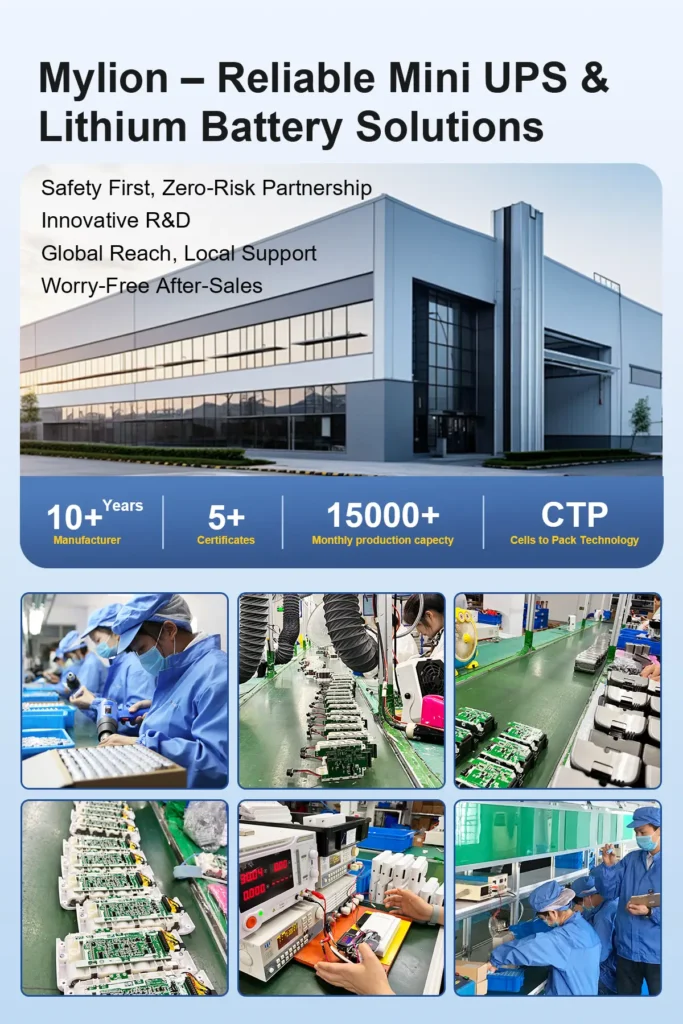
Regarding mini UPS solutions for CPE, ONT, and ONU applications, MYLION has built a strong reputation for reliability, flexibility, and industrial-grade quality—attributes that perfectly align with the demands of massive ISP deployments.
- 100% Factory Testing: Every MYLION mini UPS undergoes comprehensive functional testing before leaving the factory.
- Quality Assurance and Reliability: MYLION implements rigorous quality control processes throughout its entire supply chain.
- Multiple Certifications for Global Deployment: MYLION’s mini UPS products are certified to meet international safety and electromagnetic compatibility standards, including CE, FCC, RoHS, and UL options.
- OEM and ODM Customization Services: MYLION provides comprehensive OEM and ODM services, enabling ISPs to make personalized customizations.
- Designed for Large-Scale Deployment: MYLION mini UPS devices feature a compact design suitable for massive deployments. Intuitive LED status indicators simplify routine maintenance tasks.
- Long-Life and Safe Lithium Battery Design: All MYLION mini UPS devices utilize advanced lithium battery technology, offering options for both standard Lithium-ion and LiFePO4 chemistries.
FAQ
Q1: How long can a mini DC UPS keep an ONT online during a power outage?
Runtime depends entirely on the battery capacity (measured in mAh or Wh) and the device’s power consumption. A standard Mylion mini UPS can typically keep a standard 10W ONT running for 4 to 8 hours, which is sufficient to handle most rolling blackouts and localized grid failures.
Q2: Will installing a DC UPS system affect broadband connection speeds?
No. The DC UPS system strictly controls power delivery. By providing stable, clean power, it actually prevents micro-disconnects and data packet loss that devices might experience when facing unstable grid voltages, thereby ensuring the promised SLA bandwidth.
Q3: Can one UPS simultaneously power both a fiber ONT and a Wi-Fi router?
Yes, provided that the UPS has multiple output ports or a splitter, and the combined power of the two devices does not exceed the maximum output rating of the UPS.
Q4: What is the typical lifespan of a lithium-based mini UPS?
Under standard environmental conditions, high-quality lithium-based UPS systems like Mylion’s can be used for approximately 3 to 5 years before the battery capacity degrades to the point of requiring replacement.
Q5: How can I determine if a backup device is compatible with my specific ONT or router?
Compatibility depends on voltage, current capacity, and connector type. Reliable suppliers will provide compatibility charts or customized cable kits.
Conclusion
By adopting purpose-built and highly efficient DC backup solutions, telecom operators can ensure zero downtime at the terminal level. By carefully matching voltage, current, and connector specifications, and by partnering with premium manufacturers focused on high-end enterprise-grade solutions, ISPs can guarantee a seamless and reliable FTTH experience, keeping users online.
 English
  简体中文
简体中文  Deutsch
  Français
  Italiano
  Español