
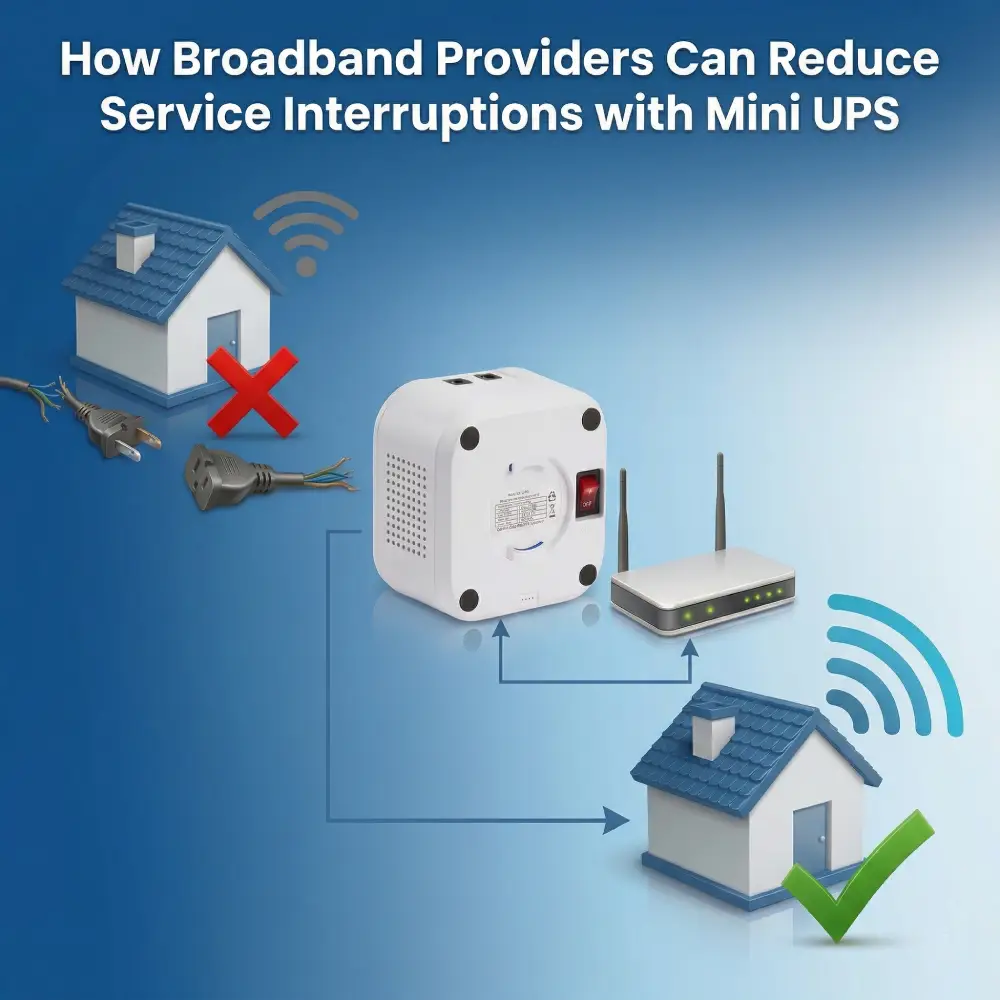
Broadband service providers typically focus on network infrastructure, but many service interruptions begin with local power failures at the customer premises. Even if the broader network remains available, devices such as routers, ONTs, and CPEs may power down.
A mini UPS can effectively resolve this issue. By utilizing mini UPS products to provide low-voltage backup power, broadband service providers can increase uptime, reduce complaints, and enhance service reliability in unstable power environments.
Why service interruptions often start at the customer side
When a local power outage occurs, client-side equipment such as routers, ONT, and CPE may immediately shut down, even if the broader broadband network is still operating. This creates a gap between network availability and the user experience:
- From the broadband service provider’s perspective, the service may still be active.
- From the user’s perspective, the internet is down.
When users discover a network connection interruption, they often assume there is a problem with the service provider’s network. This leads to unnecessary troubleshooting calls, increases pressure on customer service teams, and causes frustration for both parties.
For broadband service providers, every service interruption brings the following impacts:
- SLA Penalties
- Wasted Operational Expenditure (OPEX)
- Hardware Degradation
- Higher Customer Churn Rate
- Damaged Brand Reputation
In markets that frequently experience brief power outages or voltage fluctuations, these issues repeat daily and can damage the user’s perception of the service, even if the core infrastructure remains stable.
How backup power improves service continuity
A mini UPS provides dedicated backup power for low-voltage broadband devices at the user end. Unlike traditional large UPS systems designed for computers or whole-house backup, mini UPS units are compact, highly efficient, and tailor-made for routers, ONTs, ONUs, and modems.
When grid power fails, the mini UPS automatically switches to battery mode within milliseconds, ensuring client-side equipment stays online. During the backup runtime, the broadband connection remains active—typically long enough to bridge brief power outages or provide a window for a smooth shutdown. For service continuity, this means the actual number of interruptions from the user’s perspective is reduced, even if the grid power is unstable.
Which broadband devices benefit most from mini UPS
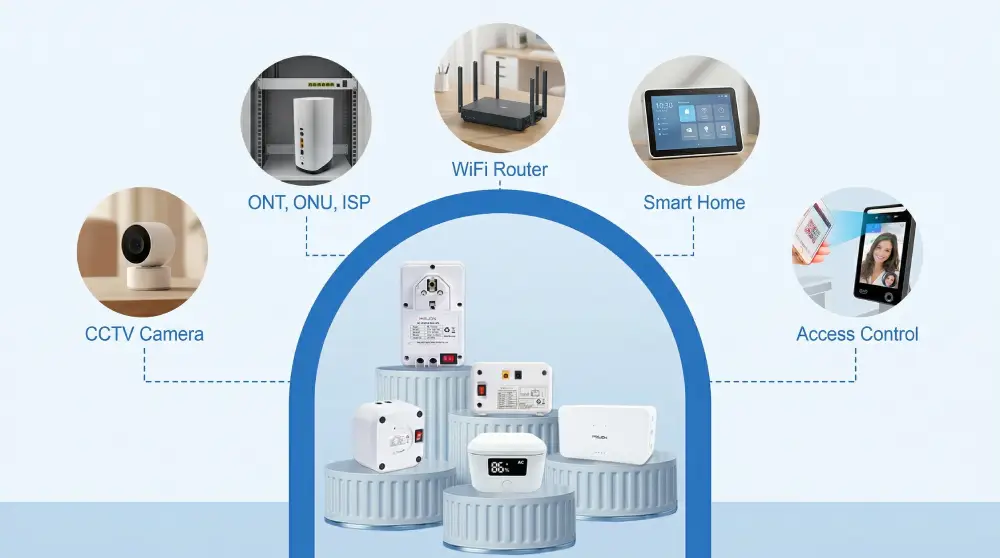
Mini UPS solutions are designed specifically for low-voltage DC-powered network equipment. The devices that benefit the most include:
- Routers— The core devices distributing networks within homes or businesses.
- ONTs — Devices that convert fiber optic signals into signals usable by customers; if power is lost, fiber service is interrupted at the customer premises.
- ONUs — Similar to ONTs, commonly used in Fiber to the Home (FTTH) deployments.
- Modems— Cable, DSL, or fixed wireless modems used to terminate Wide Area Network (WAN) connections.
- CPE Devices— Equipment that integrates routing, modem, and telephone functions.
These devices typically operate on 5V, 9V, or 12V DC power, which matches the output of most mini UPS products. By focusing backup power on these specific devices, broadband service providers can achieve maximum uptime improvements with minimal hardware costs and physical space requirements.
Operational benefits for ISPs and telecom providers
Deploying mini UPS backups at customer premises brings significant operational advantages:
- Reduction in Support Tickets— When customers remain online during brief power outages, they will not call to report “network interruptions” that are actually power-related.
- Fewer On-Site Maintenance Visits— Technicians do not need to frequently travel to the site to diagnose false network failures caused by local power outages.
- Increased Customer Satisfaction— From the end-user’s perspective, the frequency of service interruptions is reduced, making the service feel much more reliable.
- Stronger Brand Perception— Providers that maintain connectivity during grid fluctuations stand out, especially in regions with unstable power.
- Reduced Customer Churn— Reliable service encourages customer retention, even during minor outages, and supports premium service tiers.
For ISPs operating in highly competitive or price-sensitive markets, these operational savings typically outweigh the cost of deploying mini UPS equipment, particularly when deployed strategically.
Deployment models for different markets
Broadband providers can adopt mini UPS solutions in various ways depending on market conditions and business objectives. The Mylion MINI UPS series features a flexible architecture that can adapt to multiple deployment models, allowing ISPs to effectively align their TCO strategies.
Comparison of Mini UPS Deployment Models
Market Type | Grid Conditions | Primary ISP Objective | Recommended MYLION Model |
Tier 1 (EU/US Cities) | Highly Stable (Rare outages) | SLA Protection & Premium Value-Added Services | MU68 / MU35 |
Tier 2 (Suburban/FTTH) | Moderate (Weather events, blackouts) | Support Ticket Reduction | MU48 / MUJ46 |
Emerging Markets | Unstable (Frequent outages) | Core Service Viability | MU26 |
MYLION Mini UPS Series
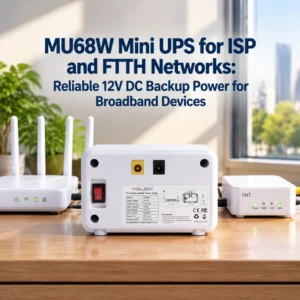
- MU68 MINI UPS:A 45Wh flagship product widely popular in the EU/US markets. It provides 6-12 hours of backup power for ONTs and routers; it is the top choice for FTTx and last-mile bulk deployments.
- MU35 MINI UPS:Features a 7Wh capacity with a powerful 12V 5A high-current output. It provides 8-24 hours of backup power and is designed specifically for high-power gateway and router combination devices.
- MU48 MINI UPS:Designed exclusively for dual-device backup (e.g., a dual-device router and CPE combo). It offers 5V/12V/24V (3A stable output) and can provide continuous power for 6-10 hours.
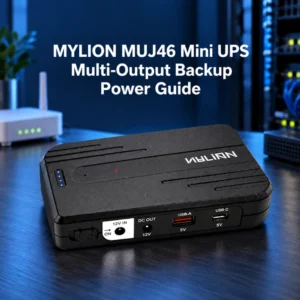
- MUJ46 MINI UPS: A highly compact design optimized for FTTH client-side installations and seamless home deployments. Equipped with 3 ports, it delivers stable backup power.
- MU26 MINI UPS:Offers 2-6 hours of backup and is ultra-compact and lightweight. Designed for space-constrained environments and entry-level ISP bulk projects where maintaining basic connectivity is critical.
What buyers should review before implementation
Before selecting a mini UPS for broadband deployment, technical procurement personnel and purchasing teams should evaluate the following factors:
- Equipment Compatibility— Verify the voltage requirements (5V, 9V, 12V), connector types (barrel jack, USB-C, terminal block), and polarity of existing client-side equipment.
- Runtime Expectations— Determine whether 1-2 hours of backup time is sufficient, or if longer runtimes are required for markets with extended power outages.
- Battery Type and Replaceability— Lithium-ion batteries have a longer lifespan and compact size; some designs allow for user-replaceable batteries, while others are sealed.
- Installation and Setup— Consider whether the mini UPS can be placed alongside existing routers, wall-mounted, or installed within a Customer Premises Equipment (CPE) enclosure.
- OEM and Branding Needs— For large-scale projects, providers may require customized enclosures, logo branding, specific connector interfaces, or integration with existing remote monitoring systems.
- Safety Certifications— Ensure compliance with local electrical safety standards, especially for devices operating unattended in customer homes.
Why choose MYLION mini UPS solutions
Choosing the right backup power partner is crucial for broadband providers. With over 12 years of manufacturing experience in the telecom backup sector, MYLION provides mini DC UPS and lithium battery solutions to partners in Europe, the Americas, and global markets.
Below are MYLION’s unique advantages in ISP and telecom projects:
- Telecom-focused Mini UPS product line
- OEM and customization capabilities
- Compact design suitable for large-scale deployments
- Global compliance and safety
- Proven ISP track record
- Easy installation and long battery life
Partnering with an experienced manufacturer like MYLION helps broadband providers navigate these options and avoid compatibility issues at scale.
FAQ
Q1: How does a mini UPS help broadband providers?
It ensures service continuity by keeping client-side devices online during power outages. This directly reduces support tickets and prevents unnecessary truck rolls.
Q2: Which devices benefit most from a mini UPS?
Low-voltage network equipment like routers, ONTs, ONUs, and modems benefit the most. These 5V-12V DC devices are highly vulnerable to immediate shutdown during grid failures.
Q3: Are mini UPS units useful in unstable power markets?
Yes, they stabilize internet access in areas with frequent voltage drops or brief blackouts. This minimizes customer churn and protects the provider’s brand reputation.
Q4: How does MYLION ensure consistency during large-scale mini UPS deployments?
Every batch undergoes rigorous factory testing, including switch-time validation and aging tests. This guarantees reliable, uniform performance across massive deployment volumes.
Q5: Can mini UPS units be customized for OEM projects?
Yes, many B2B projects require customized voltages, connectors, branding logos, or packaging, and MYLION supports such OEM/ODM customization needs.
Conclusion
The cause of broadband service interruptions often lies not in the core network, but in local power supply issues for client-side equipment. For broadband providers planning their service continuity strategies, a mini UPS is a critical component for enhancing the user experience. Select a matching mini UPS backup solution and establish a partnership with a manufacturer capable of bulk delivery.
 English
  简体中文
简体中文  Deutsch
  Français
  Italiano
  Español