
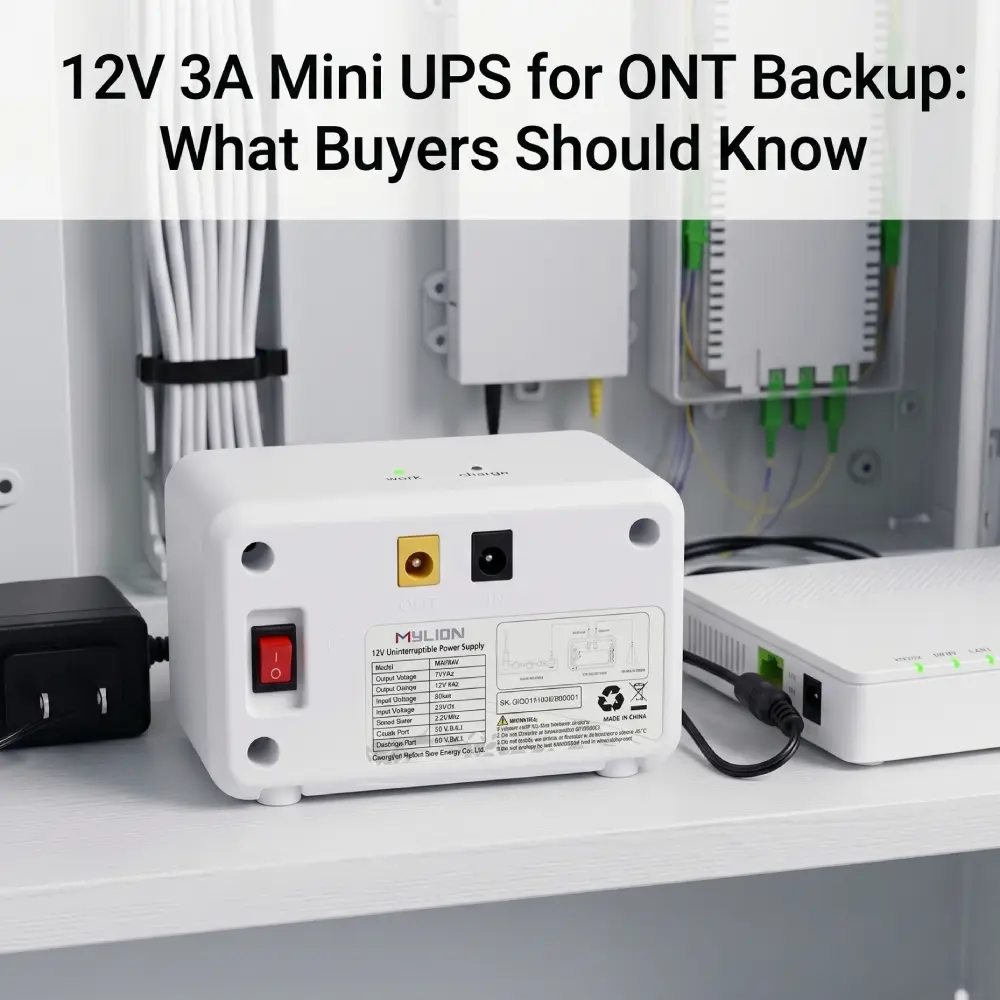
For many FTTH and broadband deployments, ONT backup is one of the most practical uses of a Mini UPS. When grid power fails, the optical line may still be available from the network side, but the subscriber loses connectivity immediately if the ONT shuts down.
That is why a 12V 3A Mini UPS is often considered for ONT backup in ISP and telecom applications. A 12V 3A Mini UPS can be a suitable and cost-effective solution for ONT backup, but only if it matches the real device load, backup target, and deployment condition.
Why ONT Backup Matters
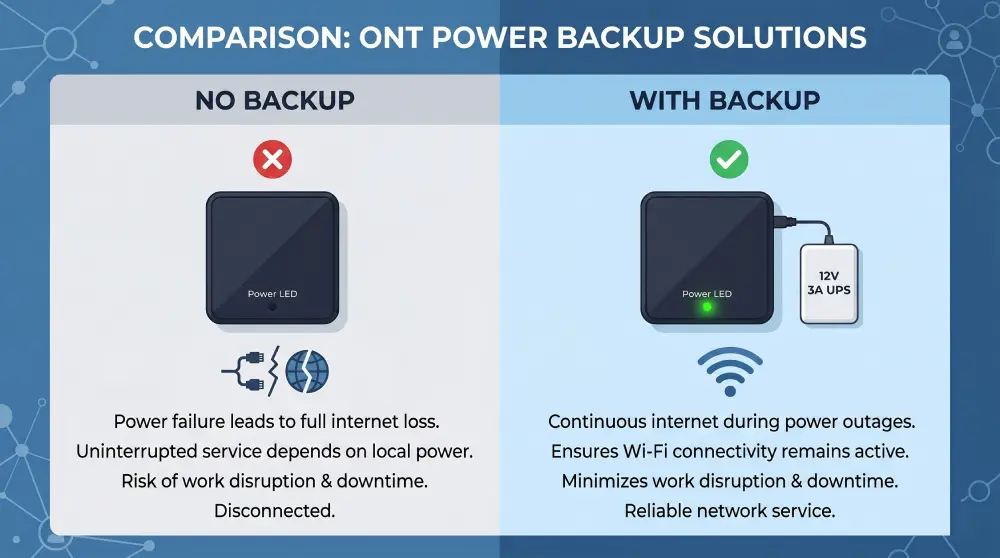
In FTTH networks, the ONT is a critical customer-side device. It converts the optical signal into usable broadband access for the subscriber. If the ONT loses power during an outage, internet service is interrupted at the customer end even when the upstream network is still operating.
For ISPs, this can mean:
- more subscriber complaints
- reduced service continuity
- higher support pressure
- weaker user experience during outages
This is why ONT backup is not just a small hardware add-on. It is part of protecting broadband continuity at the edge.
Why 12V 3A Is a Common Choice for ONT Backup
Many ONT devices operate on 12V DC and have moderate power demand. That makes 12V 3A Mini UPS solutions a practical option in many ONT backup scenarios.
A 12V 3A Mini UPS is often attractive because it can offer:
- suitable output for standard 12V ONT devices
- compact size for indoor deployment
- lower system cost compared with higher-current solutions
- practical runtime for short to medium backup targets
- easier deployment in standardized FTTH scenarios
For many standard ONT-only applications, 12V 3A is enough. But it is not correct to assume that all ONT backup projects should automatically use 12V 3A.
What 12V 3A Actually Means
A 12V 3A Mini UPS provides 12V DC output and supports up to 3A output current. In power terms, that means the maximum output power is typically up to 36W.
This is usually sufficient for many standard ONT devices, especially where:
- the operating current is well below 3A
- the startup load is modest
- the backup is for a single device only
- the target is broadband continuity rather than supporting multiple devices together
However, buyers should not focus only on the “3A” label. The important point is whether the real ONT load stays within the comfortable working range of the Mini UPS.
When a 12V 3A Mini UPS Is Usually Suitable
A 12V 3A Mini UPS is usually suitable when the project involves:
- standard ONT backup
- low to moderate power ONU backup
- single-device deployment
- clear 12V input requirement
- real current demand that remains safely within 3A
- moderate runtime targets such as short or medium outage coverage
This type of solution is often appropriate for:
- residential FTTH deployments
- basic broadband continuity support
- standardized ISP backup kits
- compact customer-side backup scenarios
In these cases, 12V 3A can deliver a good balance of size, cost, and practicality.
However, a 12V 3A Mini UPS is not the right solution for every network device.It may be insufficient when:
- the ONT has unusually high current demand
- the project also requires router backup from the same unit
- the connected gateway or router has high startup current
- the deployment includes mixed devices with higher load uncertainty
- the project requires stronger current margin for field conditions
This is where many selection errors happen. When selecting a suitable 12V 3A Mini UPS for ONT, the specific project conditions should be taken into consideration. In real deployment, actual load, startup behavior, connector compatibility, and backup target all matter.
How to Evaluate a 12V 3A Mini UPS for ONT Backup
Before selecting a 12V 3A Mini UPS, buyers should confirm the following points.
- ONT Voltage
Check that the ONT requires 12V DC input.If the ONT uses another voltage, 12V output is not suitable.
- Actual Current Requirement
Check the ONT operating current and, if possible, startup current. A 12V 3A Mini UPS is suitable only if the load remains comfortably within its output range.
- Single Device or Additional Device
Confirm whether the Mini UPS will support ONT only or ONT plus router. A solution that works for one device may not be suitable for two.
- Required Backup Time
Define the runtime target clearly. A 12V 3A Mini UPS with smaller battery energy may support short outages well, while larger-capacity models may support longer backup time.
- Connector and Adapter Compatibility
Check DC connector size, polarity, and adapter compatibility. Incorrect connector setup can cause deployment failure even when electrical specifications are correct.
- Deployment Consistency
For ISP projects, the supplier should support repeatable quality across batches, not only one successful sample.
Typical Use Cases for 12V 3A Mini UPS in FTTH Projects
In real telecom and FTTH projects, 12V 3A mini UPS units are widely used in the following typical scenarios:
1. Residential FTTH Single Device Backup
- Scenario: Ordinary household users only need the ONT to stay online during an outage; routers and other devices are not backed up.
- Requirements: Small size, silent operation, easy installation.
- Recommended configuration: 12V 3A output, battery capacity 20- 50Wh, supporting 2 – 4 hours of backup.
- Value: Solves the “zero tolerance for disconnection” pain point at the lowest cost.
2. Small Office Network Backup
- Scenario: An office has one ONT and one light-loadrouter – both must remain online.
- Requirements: Total load ≤25W; the UPS should have dual output ports or appropriate splitting capability.
- Recommended configuration: 12V 3A (with at least 20% margin), battery capacity 50-80Wh
- Note: Verify that the router’s startup surge does not exceed limits.
3. Smart Home / IoT Gateway Combo Backup
- Scenario: ONT and a low-power IoT gateway (e.g., smart home controller) share the same power source.
- Requirements: The Mini UPS must handle small current fluctuations without unexpected shutdown.
- Recommended configuration: 12V 2- 3A, with battery management optimization and deep discharge protection.
4. Rural and Remote Area FTTH Deployment
- Scenario: Unstable mains power with frequent short outages, each typically lasting less than one hour.
- Requirements: High cost-effectiveness, easy battery replacement in the field, wide temperature operation (-10°C to 40°C).
- Recommended configuration: 12V 3A, LiFePO₄or high-cycle-life lithium-ion batteries, fast charging.
5. ISP Broadband Backup
- Scenario: ISP equips all new FTTH users or a dedicated service unit with backup power as a value-added service or premium-package standard.
- Requirements: High batch consistency, easy installation, low operational costs.
- Recommended configuration: Standardized 12V 3A module with removable battery and simple status LED.
These cases show that a 12V 3A mini UPS is not a one-size-fits-all solution; it must be adapted to the specific load, runtime, and environment. This is exactly the design philosophy behind MYLION’s Mini UPS product line.
How MYLION Supports 12V 3A ONT Backup Applications
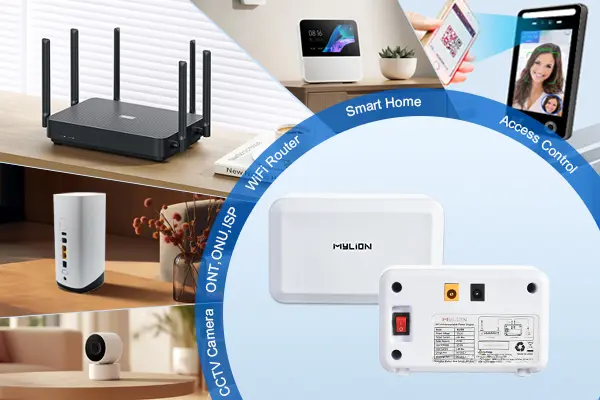
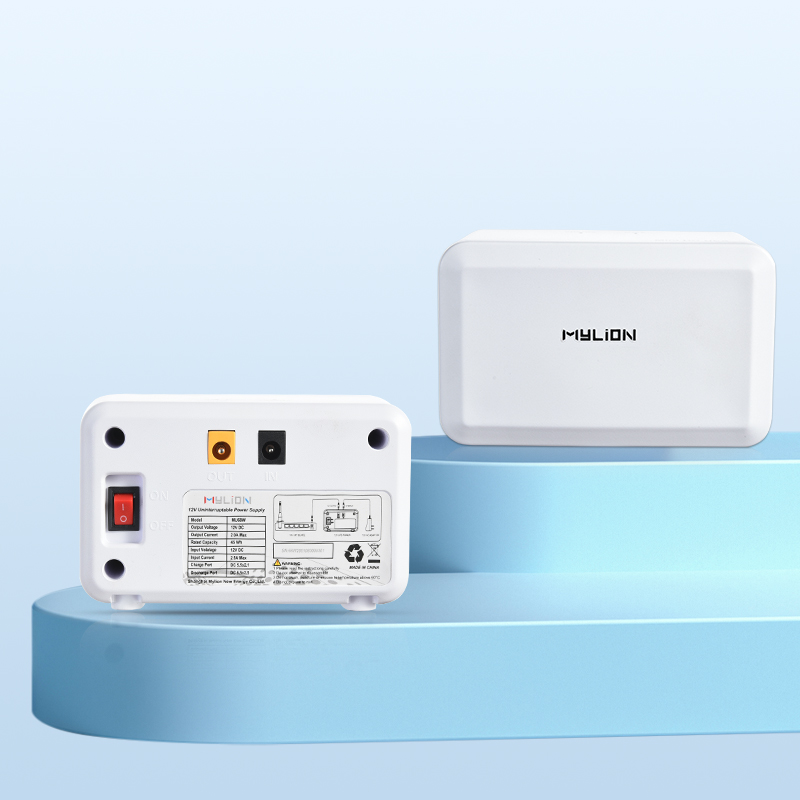
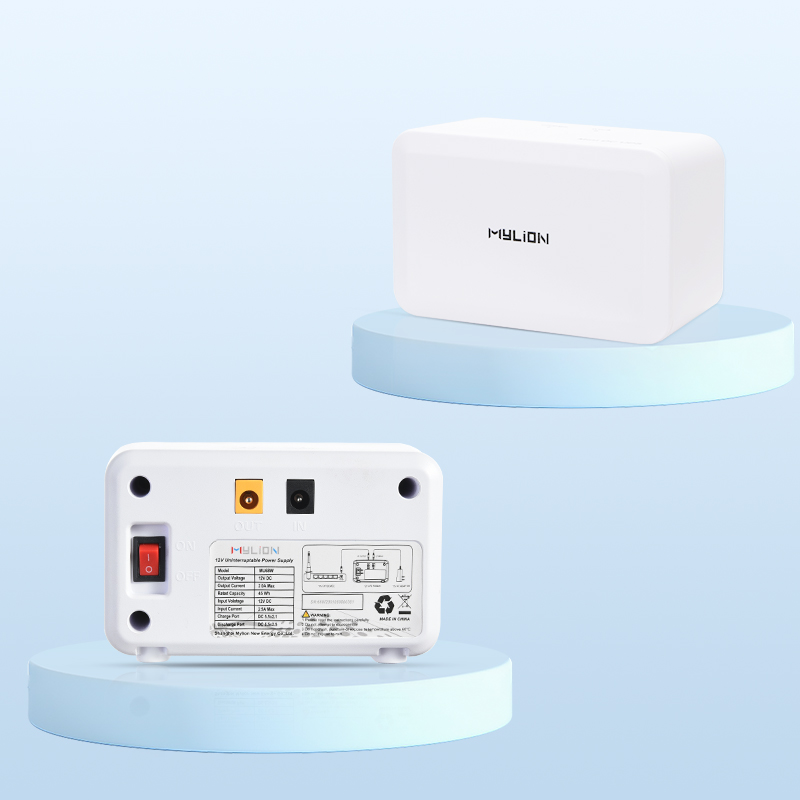
MYLION focuses on providing highly reliable mini UPS solutions for ONT, ONU, and low-power broadband devices. For 12V 3A backup needs, we offer three main models – MU26 Mini UPS, MU48 Mini UPS, and MU68 Mini UPS– each designed for different backup durations and application scenarios.
Product Comparison Table
Model | Rated Output | Battery Type | Typical Backup Time (12W load) | Applicable Scenarios |
MU26 | 12V 3A | Li-ion | 2 hours | Residential single-ONT backup, short outage coverage |
MU48 | 12V 3A | Li-ion | 3 hours | Small office ONT+router, or residential use requiring longer backup |
MU68 | 12V 3A | Li-ion | 4 hours | Remote areas, critical nodes, ISP premium projector |
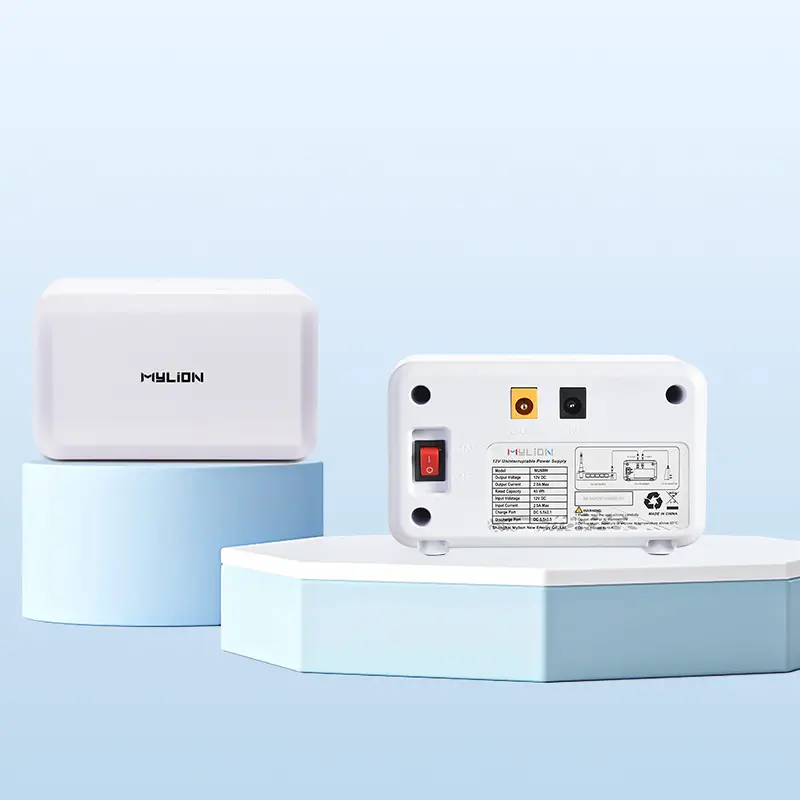
12V 3A MU26 Mini UPS
12V 3A MU48 Mini UPS
12V 3A MU68 Mini UPS
MYLION's B2B Service Advantages
For Internet service providers, system integrators, and telecommunications projects, MYLION offers:
- Customized output cables:Pre-configured connectors for your specific ONT model to reduce on-site adjustment errors.
- Batch consistency testing: Conduct tests for each batch of products at high and low temperatures, load switching, and full discharge capacity to ensure quality control.
- Designed specifically for B2B and ISP deployment: Designed for telecommunications operators, system integrators, distributors, and project procurement, rather than for individual consumers.
- Safe lithium battery technology: Utilizes lithium-ion batteries or lithium iron phosphate batteries, with long cycle life, stable performance, and all-day operation.
FAQ
Q1: Is a 12V 3A Mini UPS suitable for ONT backup?
Q2: Can a 12V 3A Mini UPS support both ONT and router?
Q3: Does 12V 3A mean long backup time?
Q4: Why is 12V 3A popular for FTTH backup?
Q5: What should buyers check before choosing a 12V 3A Mini UPS?
Q6: What happens if the ONT load is too high for 12V 3A?
Conclusion
A 12V 3A mini UPS can be a practical and cost-effective ONT backup solution – but only when matched to the actual device load, backup duration, and deployment environment. For FTTH and broadband projects, B2B buyers should look beyond the output label and verify voltage, current, connector compatibility, backup goals, and whether the application is truly single-device.
MYLION’s MU26, MU48, and MU68 12V 3A series cover everything from short-duration backup to industrial-grade long runtime, with customization services to help ISPs and integrators achieve reliable ONT backup at a reasonable cost.

 English
  简体中文
简体中文  Deutsch
  Français
  Italiano
  Español