
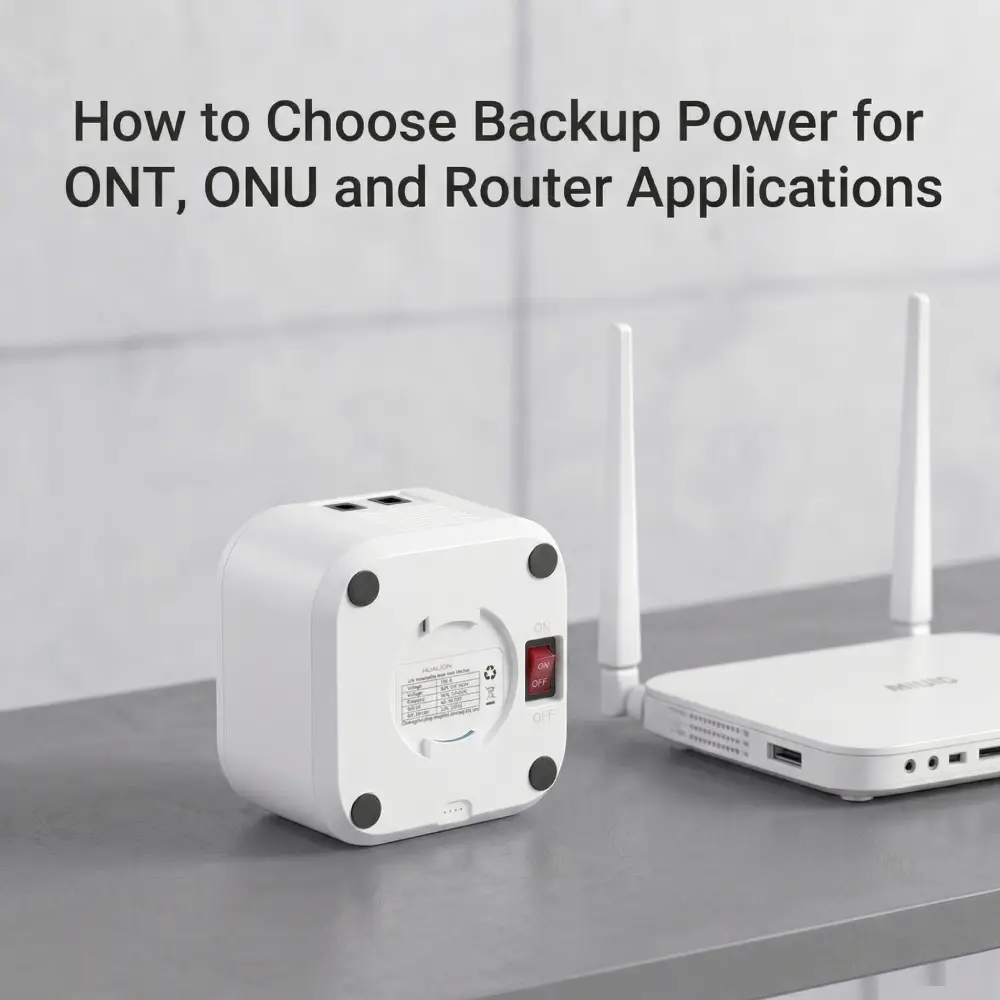
When choosing backup power for ONT, ONU and router applications, simply checking the battery capacity is not enough. Buyers need to understand information such as device voltage, connector type, backup time, installation space, and project scale. A suitable backup power solution should meet technical needs and adapt to actual deployment situations, and consistency is especially important in ISP and telecom projects.
Mylion provides professional Mini DC UPS solutions, specifically designed for ONT, ONU, and router backup power. This guide provides a professional framework for ISPs, distributors, and telecom equipment procurement teams to select the most efficient backup power solutions.
Identify the device type and power requirement
The first step in selecting a backup power solution is to conduct a comprehensive audit of edge devices. Not all network devices are identical in terms of power consumption.
- ONT/ONU Devices:These devices typically convert fiber-optic signals into Ethernet signals. Depending on whether they support POTS (Plain Old Telephone Service) or high-speed GPON/XGS-PON, their power consumption usually fluctuates between 5W and 15W.
- High-Performance Routers: Modern Wi-Fi 6 or Wi-Fi 7 routers equipped with MU-MIMO functionality and multiple antennas have significantly higher peak power requirements, usually between 15W and 30W.
Some optical network units require a large instantaneous current (2 to 3 times the steady-state current) when starting up. If the backup power supply cannot handle this instantaneous peak, the system may restart. Please ensure that your mini UPS can handle this situation.
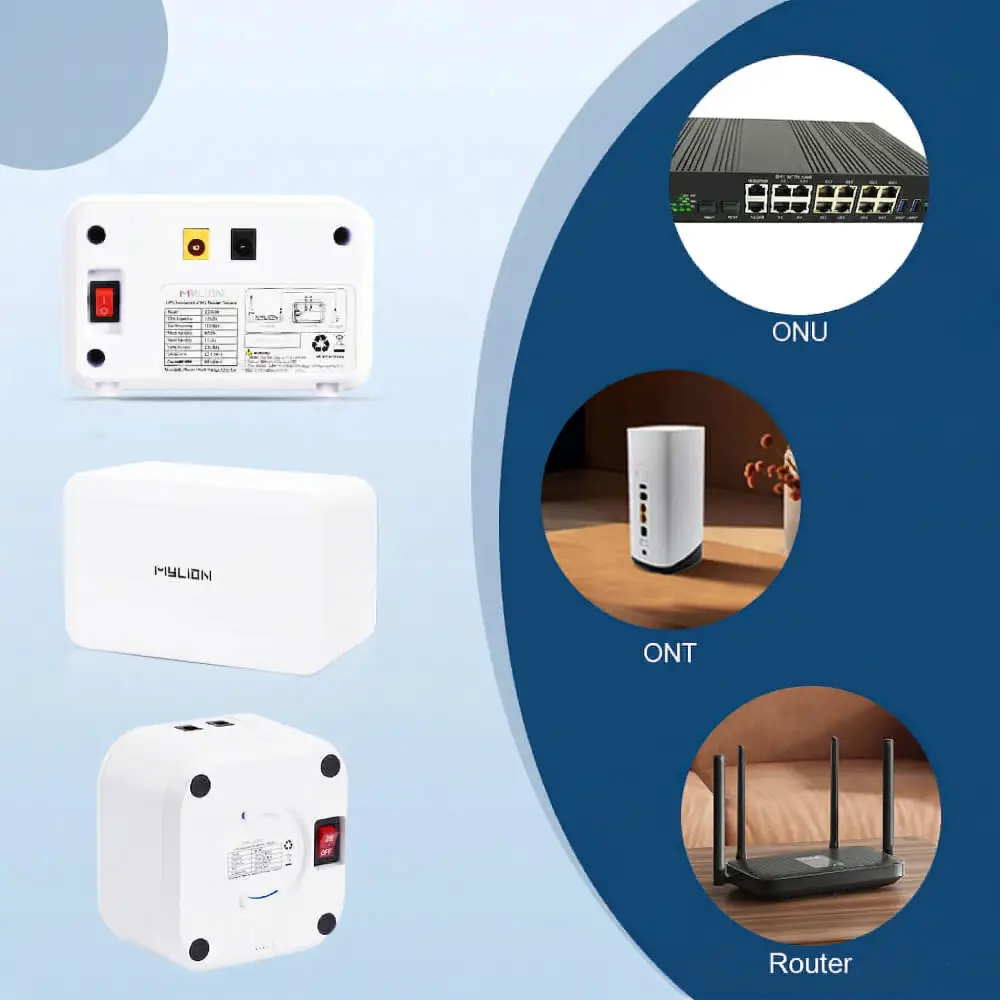
Check voltage, current and plug compatibility
Voltage mismatch is the fastest way to damage an Optical Network Terminal (ONT) or router. Unlike AC UPS systems that output a universal 110V/230V, mini DC UPS systems provide direct DC-to-DC power, which is significantly more efficient but requires precise matching.
- Voltage (V)
Most network devices use a 12V DC power supply, although some older or dedicated enterprise-level devices may require a 5V or 9V power supply. Ideally, a professional-grade backup solution should provide multi-voltage outputs or dedicated regulated rails to prevent overvoltage damage.
- Current (A)
The UPS must provide a current equal to or greater than that of the device’s original power adapter. For example, if your ONU is rated for 12V/1.5A, then a UPS rated for 12V/2A is very suitable.
- Connector Type
The industry standard is the 5.5 x 2.1mm or 5.5 x 2.5mm DC barrel jack. For ISP deployments involving multiple hardware types, ensuring the UPS is equipped with a “Y-cable” or various interchangeable plugs is crucial for fast on-site installation.
Decide the required backup time
For most ISP projects, the goal is to bridge the gap during intermittent power flickers or localized power outages lasting 2 to 4 hours.
Backup Duration (Hours) | Typical Application Scenario | DC Power | UPS Model |
2–6 | Home router only | 12V | MU26 Mini UPS |
3–8 | Router + Small CPE | 2V | MU35 Mini UPS |
6–12 | Router + Optical Modem | 12V | MU48 Mini UPS |
6–10 | Areas with frequent power outages | 12V | MU68 Mini UPS |
In areas with unstable power grids, ISPs usually specify a battery life requirement of more than 6 hours. In these cases, high-density Lithium-ion (Li-ion) or Lithium Iron Phosphate (LiFePO4) batteries must be used to make the UPS device compact enough to be placed on a desktop or mounted on a wall.
Compare mini UPS, power bank and traditional UPS options
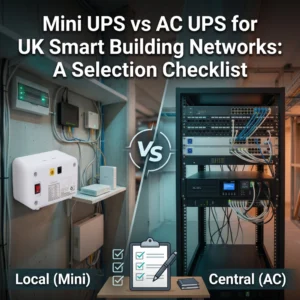
For ONT/ONU/router applications, there are two other backup methods: standard Alternating Current (AC) Uninterruptible Power Supply (UPS) systems and power banks. However, analyzed from the perspective of industrial reliability and efficiency, small Direct Current (DC) UPS are undoubtedly the winner in telecommunication applications.
Feature | Traditional AC UPS | Power Bank | Mini DC UPS |
Energy Conversion | Double conversion (DC-AC-DC) | DC-DC (incompatible with DC input) | Direct DC-DC converter (high efficiency) |
Efficiency | Approx. 60-70% (high loss) | Approx. 70-80% | >90% |
Switching Time | Less than 10 ms | Manual or incompatible | 0 ms (always online) |
Battery Life | 2-3 years (lead-acid battery) | 1-2 years (consumer grade) | 5-10 years (Li-ion/LiFePO4) |
Appearance design | Large/Heavy | Portable but messy cables | Compact/Industrial design |
Safety | High temperature/Bulky | Overheating risk | BMS protection/Flame retardant |
Applicable Scenarios | Entire office + AC equipment | 5V router, business trip use | ONT/ONU/router, ISP field deployment |
For dedicated ONT/ONU/router backup, small uninterruptible power supplies have the lowest total cost of ownership due to higher efficiency, longer service life, and simpler installation.
Why Mini UPS Wins in the ISP Field
Traditional UPS systems waste a lot of energy by converting the battery’s DC power into AC power, which the router’s power adapter then converts back into DC power. Mini DC UPS eliminates this “double conversion” loss and can extend the runtime by up to 30% when using the same battery capacity. Furthermore, unlike power banks, Mini UPS features pass-through charging, allowing it to be permanently connected to a wall outlet without degrading battery performance.
Consider Installation Environment and User Scenarios
The deployment environment dictates the physical requirements of the backup unit.
- Residential Use:Aesthetics and silence are key. The device should feature zero-noise operation (fanless) and a compact form factor that can be installed behind a TV or inside a media cabinet.
- Commercial/ISP Deployment:Stability and heat dissipation are crucial. If the device is placed together with an Optical Network Unit (ONU) in a small, poorly ventilated enclosure, it must be equipped with a high-quality Battery Management System (BMS) to prevent thermal runaway.
- Vandalism Protection and Durability: For public infrastructure or shared corridors, wall-mounted devices with screw-locked DC ports can prevent accidental or intentional disconnections.
Choose a supplier that supports your project stage
For large-scale ISP tenders and telecom infrastructure projects, hardware is only half the battle. You need to evaluate the supplier’s capabilities, which determines the success or failure of project deployment. Focus on the following aspects:
- R&D and Prototyping: Does the supplier offer custom voltage configurations or branding services (OEM/ODM)?
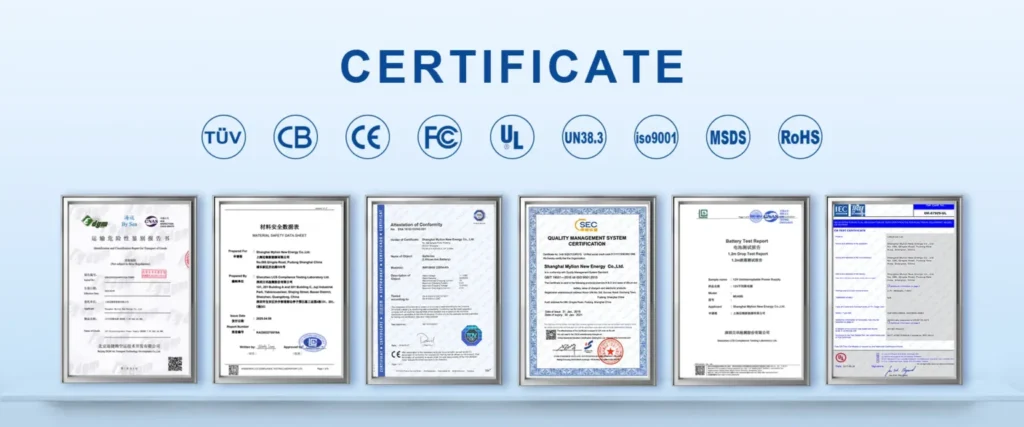
- Certification: For the EU and US markets, CE, RoHS, FCC, and UN38.3 (for battery transportation) are non-negotiable.
- Supply Chain Stability: Can the manufacturer guarantee consistent battery quality (e.g., Grade A cells) during the rollout of 50,000 units?
- Technical Support: For Chief Technology Officers (CTOs), having access to engineers who understand Service Level Agreement (SLA) requirements and Total Cost of Ownership (TCO) is crucial.
Mylion — A Reliable Supplier of Mini DC UPS for ISPs and Integrators
- Designed for B2B and ISP Deployments, Not for Retail Markets
Mylion’s entire product and service chain is geared towards telecom operators, system integrators, distributors, and project procurement teams—not individual consumers.
- Wide Range of DC Voltage Outputs – 5V / 9V / 12V / 24V
Mylion mini UPS devices support 5V, 9V, 12V, and 24V DC outputs, capable of meeting the power needs of the vast majority of routers, CPE (Customer Premises Equipment), ONT (Optical Network Terminals), ONU (Optical Network Units), security cameras, and small network switches.
- Reliable Commercial PC Backup Power – 2 to 24 Hours of Runtime
Depending on the model and connected load, Mylion mini UPS can provide 2 to 24 hours of backup runtime—ensuring uninterrupted network connectivity during power outages.
- Safe Lithium Battery Technology — Li-ion or LiFePO4 Options
Mylion uses premium Li-ion or LiFePO4 batteries. Both battery chemistries feature a long lifespan and stable performance, suitable for 24-hour uninterrupted operation.
- Multi-Layer Safety Protection
Every Mylion mini UPS is equipped with a comprehensive Battery Management System (BMS), featuring the following protection functions:
- Overcharging
- Over-discharging
- Short circuit
- Extreme temperatures
This ensures that the device can safely remain in standby mode and continue operating normally over years of field use.
- Proven ISP Power Solutions — Large-Scale Application
Mylion’s mini UPS solutions have been successfully deployed in large-scale Internet Service Provider (ISP) and enterprise network projects. Actual field data confirms their reliability, extremely low return rates, and reduction in operational costs.
For B2B buyers: Mylion is more than just a component supplier—we are a long-term project partner, offering voltage matching, custom cables, brand authorization, global certifications (CE, FCC, RoHS, UN38.3, IEC62133), and 100% pre-shipment testing services.
FAQ
Q1. What is the difference between a mini UPS and a traditional UPS used for ONT and router backup power?
A mini UPS can output DC power directly with an efficiency of 88% – 93%, whereas a traditional UPS converts DC to AC and then back to DC, wasting 30% – 50% of the energy. For ONT and router backup power, a mini UPS is smaller, has a lower cost per port, and is more efficient.
Q2. How long can a mini UPS power an ONU and router combination during a power outage?
Runtime depends on battery capacity and load. A typical 50Wh mini UPS can power a 10W ONU + router combination for about 4 to 5 hours; a 77.7Wh device can last for 6 to 8 hours.
Q3. Can a single mini UPS simultaneously power an ONT (12V) device and a router requiring a different voltage (9V or 5V)?
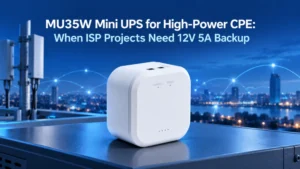
Yes—many mini UPS models, such as the Mylion MU35 series, are equipped with dual output ports and can be set to different voltages (e.g., 12V + 9V or 12V + USB 5V).
Q4. Which battery chemistry type—Li-ion or LiFePO4—is better for outdoor ONT backup power in high-temperature environments?
LiFePO4 batteries are more suitable for outdoor and high-temperature environments. Their temperature resistance range can reach 60 – 75 degrees Celsius, and they can achieve over 2000 life cycles, whereas Li-ion battery performance degrades when the temperature exceeds 40 degrees Celsius.
Q5. What certifications should B2B buyers look for when procuring mini UPS for ISPs and telecom projects?
Key certifications include CE, FCC, RoHS, UN38.3, IEC62133, and IEC62368-1. For specific markets, certifications such as UL, PSE, KC, or BSMI should also be considered to ensure customs clearance and project approval.
Conclusion: Optimize Your Network Reliability Today
Selecting backup power for ONT, ONU, and router applications is a strategic procurement decision for ISPs and system integrators. Mini DC UPS can provide the efficiency, lifespan, and reliability required for professional telecom projects. With the right mini DC UPS supplier, ISPs can significantly improve their service reliability and brand reputation.
 English
  简体中文
简体中文  Deutsch
  Français
  Italiano
  Español