

Why Networking Equipment Needs a Dedicated Mini DC UPS?
Modern networking infrastructure depends on continuous power availability. Routers, ONT/ONU devices, WiFi access points, IP cameras, and IoT gateways are the backbone of digital connectivity in homes, offices, smart cities, and industrial environments. Even a brief power interruption can result in network downtime, data loss, security blind spots, or service-level agreement (SLA) violations.
Unlike traditional AC UPS systems, Mini DC UPS units are designed specifically for low-voltage networking equipment. They provide higher efficiency, compact installation, seamless power switchover, and longer runtime for DC-powered devices.
For ISPs, system integrators, and infrastructure operators, selecting the right Mini DC UPS is not a consumer-level decision—it is a network reliability strategy.
Understand Your Networking Device Power Requirements
Output Voltage Matching
The first and most critical factor is output voltage compatibility. Most networking devices operate at fixed DC voltages, commonly:
- 5V (USB-powered devices, IoT gateways)
- 9V / 12V (routers, ONT, WiFi APs)
- 24V (certain enterprise APs and telecom devices)
A Mini DC UPS must match the device’s rated input voltage precisely. Using an incorrect voltage can cause instability or permanent damage.
MYLION Mini DC UPS systems are designed around stable, regulated DC output, ensuring seamless compatibility with mainstream networking equipment used by ISPs and integrators.
Output Current and Load Margin
Beyond voltage, current capacity (A) determines whether a UPS can support the device under peak load. Networking devices may draw higher current during startup, firmware updates, or heavy traffic.
A professional selection rule is to maintain at least 20–30% current headroom.
For example:
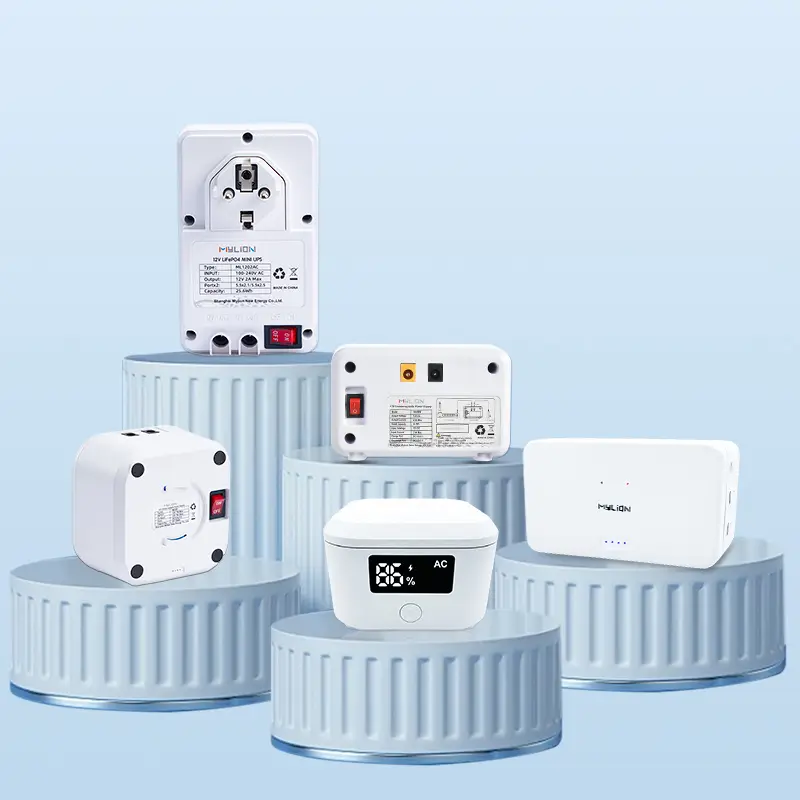
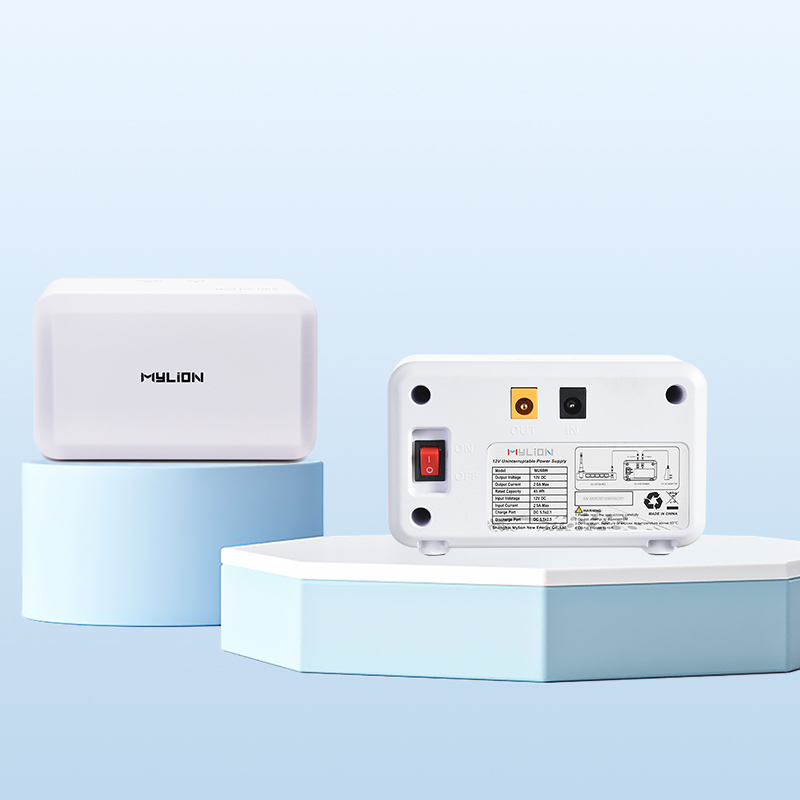
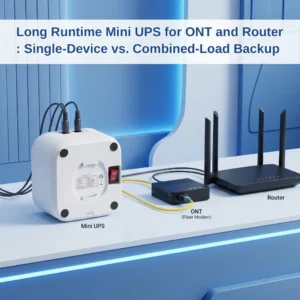
- Entry-level routers and ONT devices are well supported by 2A models such as MU26 Mini UPS
- Higher-performance routers or APs benefit from 3A solutions like MU48 or MU68 Mini UPS
- Multi-device or high-power loads may require 5A models such as MU05, MU65, or MU35 Mini UPS
MYLION offers multiple current ratings to ensure stable operation without overload risk.
Calculate Power Consumption and Backup Time
Typical Networking Device Power Profiles
Different networking devices have distinct power consumption patterns:
- ONT / ONU: 5–10W
- Home or SME Router: 8–15W
- WiFi Access Point: 10–25W
- IP Camera: 6–12W
- IoT Gateway: 5–10W
Understanding the actual power draw helps avoid overdesign while ensuring sufficient backup time.
Choosing the Right Battery Capacity
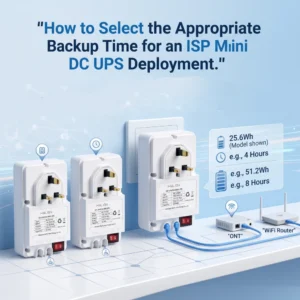
Battery capacity determines how long the device remains operational during an outage. For most networking applications, the target backup time ranges from 2 to 8 hours, depending on SLA requirements.
MYLION Mini DC UPS models are engineered for high energy density and efficient DC conversion, allowing longer runtime in a compact form factor. Models like MU48 and MU68 are commonly selected for ISP deployments requiring extended uptime without increasing cabinet size.
Battery Technology: Li-ion vs LiFePO4
When Li-ion Is the Right Choice
Lithium-ion batteries offer:
- Compact size
- High energy density
- Cost efficiency for standard indoor applications
Li-ion-based Mini DC UPS models such as MU26, MU48, MU68, and MU05 are widely used in residential broadband and enterprise networking environments.
When LiFePO4 Is the Better Long-Term Solution
LiFePO4 batteries provide:
- Longer cycle life
- Higher thermal stability
- Better safety performance
- Lower degradation over time
For infrastructure-grade applications, MYLION offers ML1202AC LiFePO4 Mini UPS, ideal for operators prioritizing long service life and reduced maintenance.
| Comparison Item | Lithium-ion (Li-ion) | Lithium Iron Phosphate (LiFePO4) |
|---|---|---|
| Typical Use Case | Residential broadband, enterprise networking | Infrastructure, telecom, long-term deployments |
| Energy Density | High – compact size for limited installation space | Moderate – slightly larger for the same capacity |
| Physical Size | Smaller and lighter | Slightly larger and heavier |
| Backup Efficiency | High efficiency for short to medium runtime | Stable efficiency for long runtime scenarios |
| Cycle Life | ~500–800 cycles | ~2000–5000 cycles |
| Thermal Stability | Good under controlled indoor temperature | Excellent, highly resistant to thermal runaway |
| Operating Temperature Range | Best suited for indoor environments | Suitable for wider temperature ranges |
| Safety Performance | Standard protection with BMS | Inherently safer chemistry with enhanced stability |
| Capacity Degradation Over Time | Gradual capacity fade | Significantly lower degradation |
| Maintenance Requirement | Standard replacement cycle | Reduced maintenance over long service life |
| Cost Structure | Lower initial cost | Higher upfront cost, lower total cost of ownership |
| Recommended MYLION Models | MU26, MU48, MU68, MU05 | ML1202AC LiFePO4 Mini DC UPS |
| Ideal Buyer Profile | Cost-sensitive projects with standard uptime needs | Operators prioritizing reliability and lifecycle value |
Output Interface: DC Plug vs Type-C
Traditional DC Output for Networking Equipment
Most routers, ONT devices, and cameras still rely on barrel-type DC connectors. MYLION’s DC-output Mini UPS systems are designed for plug-and-play replacement, simplifying deployment for integrators.
Type-C PD Mini UPS for Modern Devices
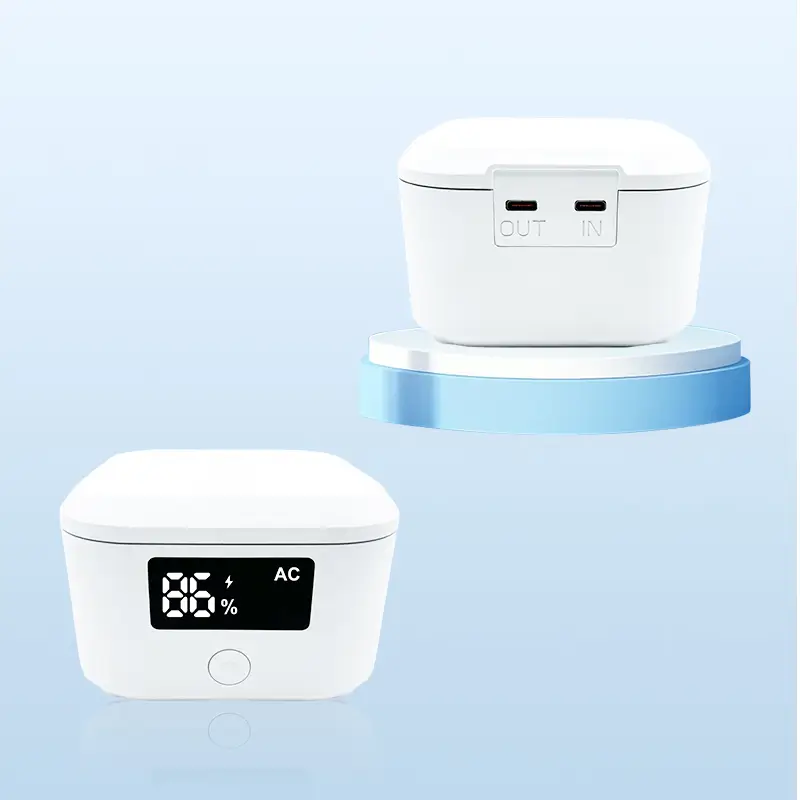
With the adoption of USB-C PD in networking and IoT devices, Type-C Mini UPS solutions are becoming essential.
MYLION’s MUC66 Mini UPS and MUC85 Type-C Mini UPS provide stable 3.5A output, supporting modern gateways, edge computing devices, and smart terminals without adapters.
| Comparison Item | Traditional DC Output Mini UPS | Type-C PD Mini UPS |
|---|---|---|
| Typical Devices Supported | Routers, ONT / ONU, WiFi APs, IP cameras | IoT gateways, edge computing devices, smart terminals |
| Output Interface | Barrel-type DC connectors | USB Type-C (Power Delivery) |
| Common Output Voltage | 9V / 12V / 24V | 5V / 9V / 12V (PD negotiation) |
| Current Capability | 2A – 5A (model dependent) | Up to 3.5A |
| Power Negotiation | Fixed voltage output | Automatic PD voltage negotiation |
| Installation Method | Direct plug-and-play DC replacement | Direct Type-C connection, no adapter required |
| Deployment Complexity | Very low – ideal for large-scale rollout | Low – simplified cabling for modern devices |
| Compatibility with Legacy Devices | Excellent | Limited to Type-C powered devices |
| Future-Proof Design | Standardized but device-specific | High – aligned with next-generation device interfaces |
| Recommended MYLION Models | MU26, MU48, MU68, MU05, MU65, MU35 | MUC66 Mini UPS, MUC85 Type-C Mini UPS |
| Ideal Deployment Scenario | ISP broadband, CCTV systems, traditional networking | Smart city nodes, IoT, edge computing infrastructure |
Deployment Environment: Indoor, Outdoor, and Harsh Conditions
Indoor Commercial and Residential Networking
For indoor deployments, compact design, low noise, and stable thermal performance are key. Models such as MU48 Mini UPS, MU68 Mini UPS, and MU65 Mini UPS are optimized for telecom cabinets, offices, and residential installations.
Outdoor, Waterproof, and High-Temperature Scenarios
Outdoor networking introduces challenges such as:
- Heat
- Humidity
- Dust
- Rain exposure
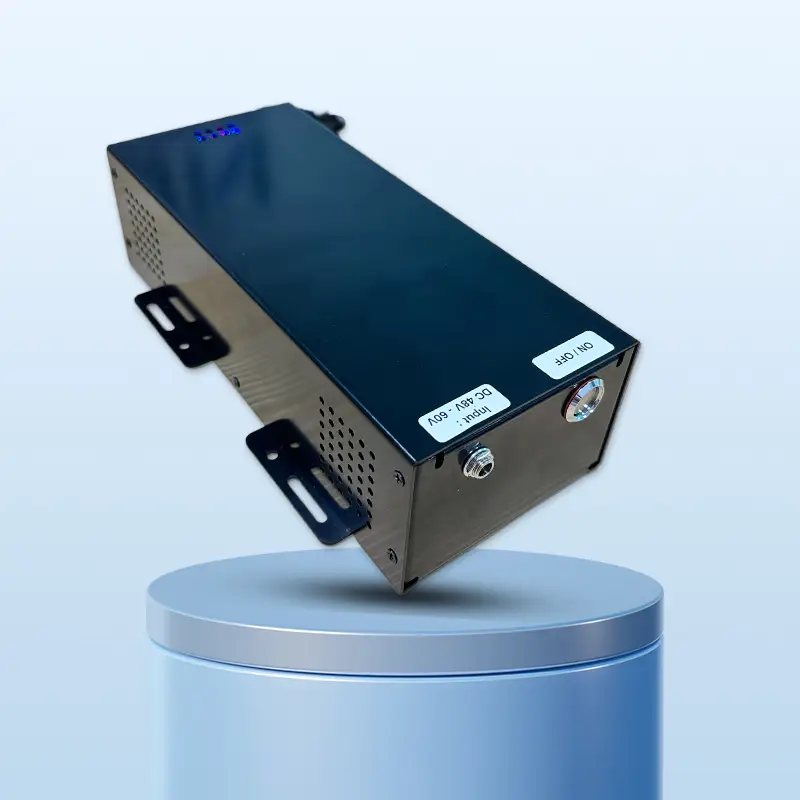
MYLION addresses these needs with MA825 Waterproof Mini UPS and Outdoor MU248 Mini DC UPS, designed for CCTV systems, outdoor APs, and smart city infrastructure.
Solar-Compatible and Off-Grid Networking Applications
In remote or off-grid locations, grid power may be unavailable or unstable. Solar-powered networking is increasingly used in:
- Rural broadband
- Traffic monitoring
- Environmental sensors
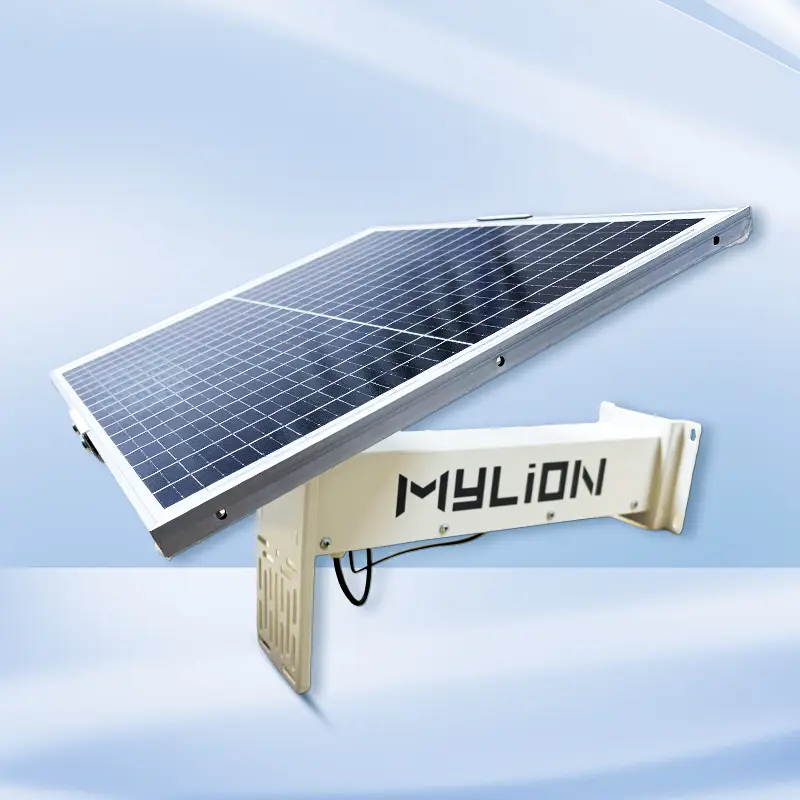
MYLION’s MUL268 Solar Mini UPS supports solar input, enabling autonomous networking nodes with energy independence.

Safety Certifications and Long-Term Reliability
For B2B buyers, safety and compliance are non-negotiable. A professional Mini DC UPS must incorporate:
- Overcharge and over-discharge protection
- Short-circuit and overload protection
- Thermal management
- Stable DC regulation
MYLION implements strict quality control and component selection, ensuring consistent performance across large-scale deployments.
Matching MYLION Mini DC UPS Models to Real-World Scenarios
Rather than a one-size-fits-all solution, MYLION provides a modular Mini DC UPS portfolio:
Entry-level networking backup → MU26 Mini UPS
Standard ISP router and ONT → MU48 / MU68 Mini UPS
High-power networking nodes → MU05 / MU65 / MU35 Mini UPS
USB-C powered gateways → MUC66 / MUC85 Mini UPS
Outdoor CCTV and APs → MA825 / MU248 Mini UPS
Long-life infrastructure → ML1202AC LiFePO4 Mini UPS
Off-grid solar networking → MUL268 Mini UPS
This approach allows integrators to optimize cost, performance, and reliability per project.


Why System Integrators and ISPs Trust MYLION?
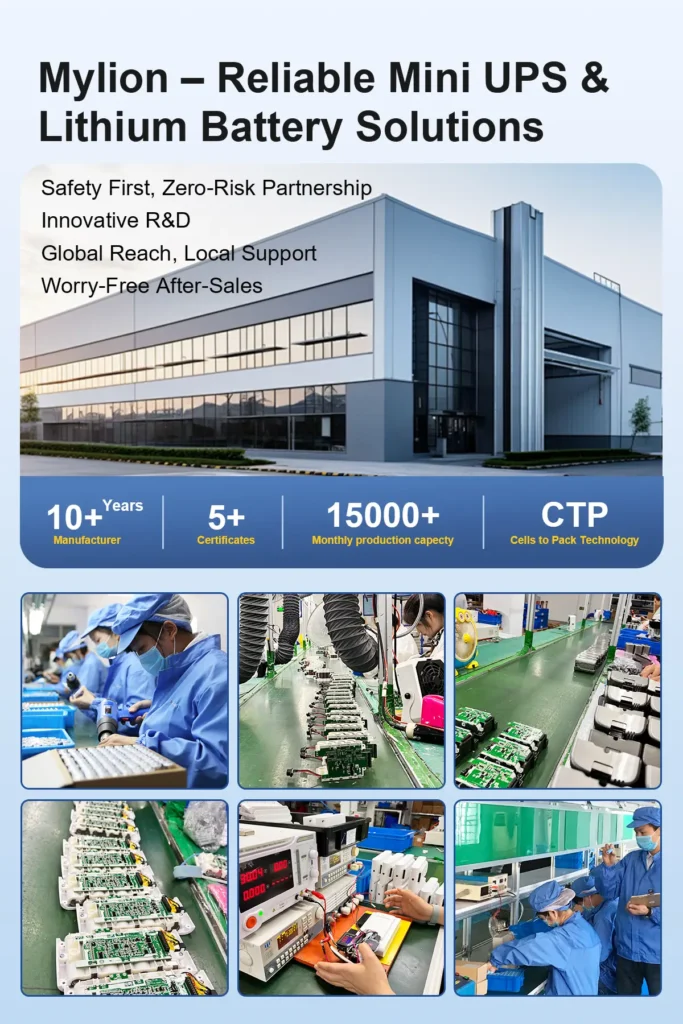
MYLION is not a consumer UPS brand—it is a Mini DC UPS manufacturer focused on networking infrastructure.
Key advantages include:
- OEM / ODM customization capability
- Stable production and supply chain
- Long battery lifecycle design
- Engineering-driven product development
- Proven performance in ISP and smart city projects
MYLION Mini DC UPS solutions are designed to keep networks online when power fails.
Conclusion – Choosing the Right Mini DC UPS Is a Strategic Infrastructure Decision
Selecting a Mini DC UPS for networking equipment is not just about backup power—it is about network continuity, service reliability, and long-term operational efficiency.
By evaluating voltage, current, battery technology, environment, and deployment scenario, buyers can choose a solution that truly fits their infrastructure needs.
With a comprehensive product portfolio and manufacturer-level expertise, MYLION is a trusted Mini DC UPS partner for ISPs, system integrators, and infrastructure providers worldwide.
Reliable networks start with reliable power—and that starts with the right Mini DC UPS.

 English
  简体中文
简体中文  Deutsch
  Français
  Italiano
  Español