
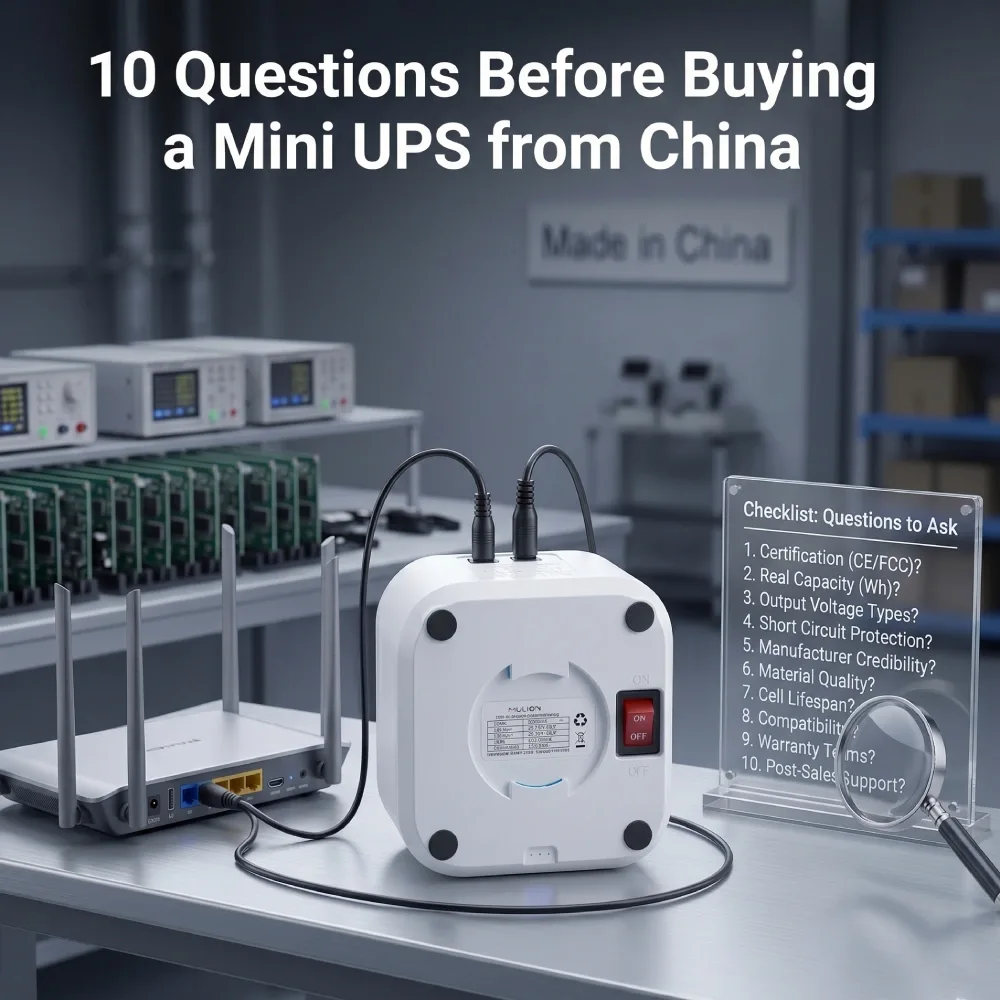
China offers a robust supply chain for lithium batteries and power electronics. However, the quality of Mini UPS units varies significantly between suppliers. For telecom, ISP, and industrial buyers, the lowest unit price rarely leads to the lowest total project cost. Asking the right questions helps you identify a reliable partner — not just a cheap product.
Below are ten essential questions to guide your supplier evaluation, followed by frequently asked questions and practical next steps.
1. What application is the product designed for?
A Mini UPS meant for router backup, CCTV backup, or telecom equipment may require different output current, protection design, battery capacity, and connector types. Always match the unit to your specific use case.
2. What is the real continuous output current?
Don’t rely on marketing claims alone. Ask for the rated output current, peak output capability, and overcurrent protection threshold. These specifications determine whether the unit can handle real-world loads.
3. Which battery cells are used?
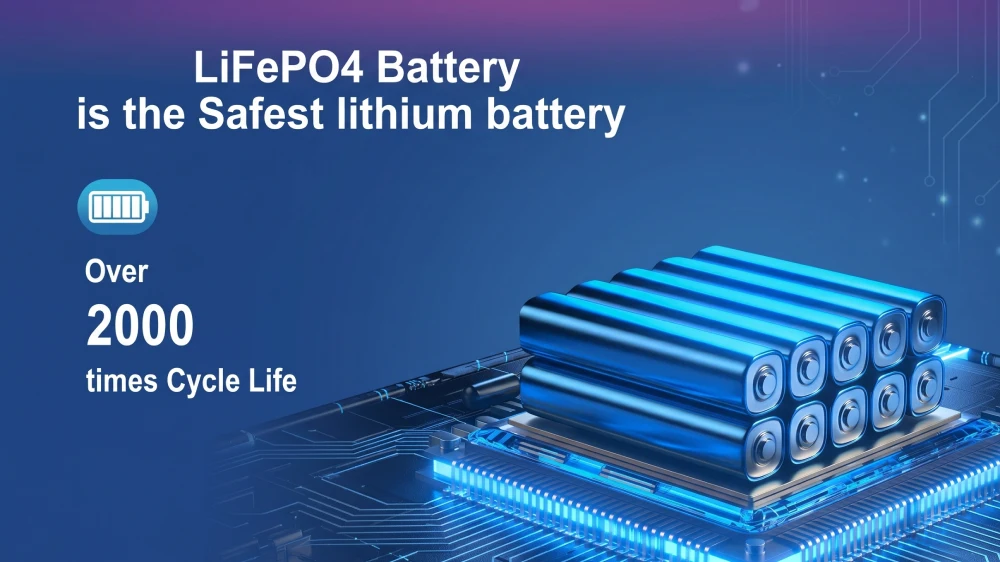
Cell brand, capacity, chemistry (LiFePO₄, Li-ion, etc.), and consistency affect safety, backup time, and cycle life. A reliable supplier will disclose this information without hesitation.
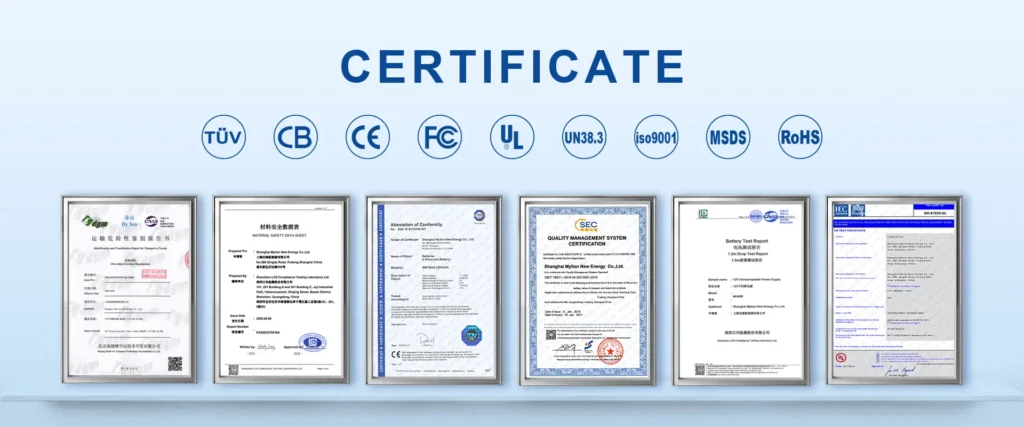
4. What certifications and shipping documents are available?
Request documents that match the exact model and battery configuration. Common certifications include CE, RoHS, UN38.3, and MSDS. Verify that shipping documents (e.g., battery test summary) are model-specific.
5. How is every unit tested before shipment?
A professional supplier maintains incoming inspection, functional testing, and outgoing inspection records. Ask for test reports or a video walkthrough of their quality control process.
6. Can the supplier support customization?
B2B projects often require custom cables, plugs, labels, packaging, manuals, firmware, or protection parameters. Assess whether the supplier has engineering resources to handle these changes.
7. Is the approved sample version frozen for mass production?
Version drift is a common hidden risk. Ensure that production units match the approved sample unless a documented change order is approved and re-validated.
8. How does the supplier handle quality complaints?
Look for evidence-based root cause analysis, not only apology or replacement promises. A good supplier will share corrective action reports and implement process improvements.
9. Can the supplier support project communication?
Telecom and ISP projects need technical, sales, quality and logistics coordination. Evaluate whether the supplier assigns a dedicated contact or project manager.
10. Does the supplier understand your market?
A supplier familiar with ISP, telecom, and B2B backup applications reduces communication costs and project risks. They will anticipate challenges like voltage spikes, extreme temperatures, or regional compliance.
FAQ
Q1: Is a trading company always risky?
Q2: Is the cheapest Mini UPS suitable for ISP projects?
Q3: What is the best first step when evaluating a supplier?
Q4: What warranty and technical support can I expect from a professional Mini UPS supplier?
How MYLION Supports Buyers
MYLION specializes in B2B Mini DC UPS and lithium battery backup solutions for telecom, ISP, and industrial applications. We support customers with:
- Product selection and sample validation
- Custom cable and label requirements
- Certification document preparation (CE, RoHS, UN38.3, etc.)
- Production inspection and shipment documentation
Our goal is to reduce your project risk — not just supply a product.
Need a Mini UPS or lithium battery backup solution for ONT, ONU, router, CPE or telecom equipment? Contact MYLION!
Compliance Note
Certification requirements depend on product configuration, target market, power adapter, battery capacity, and final application. Buyers should confirm the applicable requirements before mass production.
 English
  简体中文
简体中文  Deutsch
  Français
  Italiano
  Español